
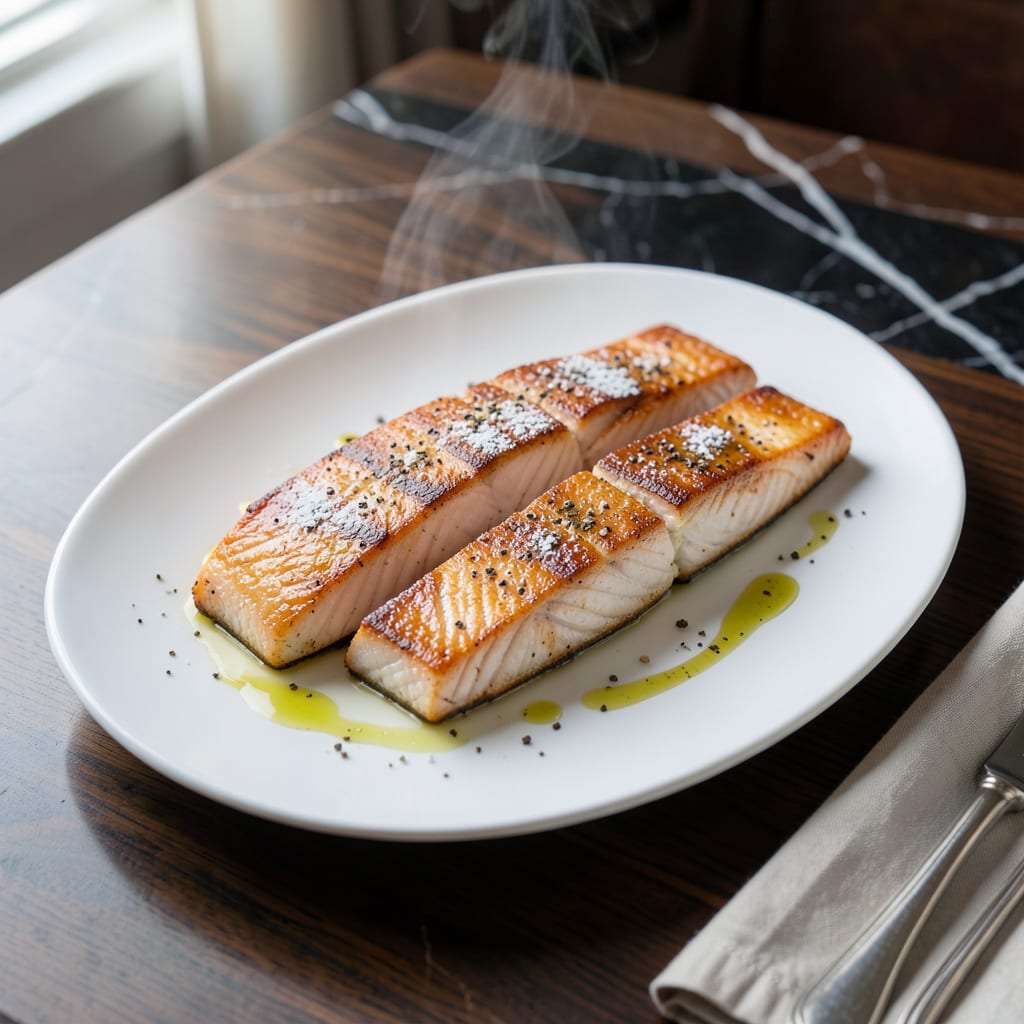
This restaurant-quality dish brings the elegance of Chilean sea bass to your home kitchen. The secret lies in a simple pan-searing technique that creates a golden crust while keeping the fish tender and flaky.
Paired with a bright lemon caper sauce, this recipe delivers the rich, buttery flavor that made Ruth’s Chris famous. The sauce balances the fish’s mild taste with tangy and briny notes, creating a perfect bite every time.
Ingredients for Ruth Chris Chilean Sea Bass
Elegant sea bass meets bright lemon caper sauce for a restaurant-worthy dinner at home.
| Ingredient | Amount | Notes |
|---|---|---|
| Chilean Sea Bass Fillets 🐟 | 4 whole | Skin-on, about 6 oz each |
| Kosher Salt 🧂 | 1 ½ tsp | Divided for seasoning fish |
| Freshly Ground Black Pepper 🌶️ | 1 tsp | Divided for seasoning fish |
| All-Purpose Flour 🌾 | ¼ cup | For light dredging |
| Unsalted Butter 🧈 | 4 tbsp | Divided for cooking and sauce |
| Olive Oil 🫒 | 2 tbsp | High smoke point preferred |
| Garlic Cloves 🧄 | 3 cloves | Minced for sauce |
| Shallot 🧅 | 1 whole | Finely diced for sauce |
| Dry White Wine 🍷 | ½ cup | Sauvignon Blanc or Pinot Grigio |
| Fresh Lemon Juice 🍋 | ¼ cup | About 2-3 lemons |
| Capers 🌿 | 3 tbsp | Drained and rinsed |
| Heavy Cream 🥛 | ¼ cup | For sauce richness |
| Fresh Parsley 🌿 | 2 tbsp | Chopped for garnish |
| Lemon Zest 🍋 | 1 tsp | From 1 lemon |
The Chilean sea bass is the star here. Wild-caught is ideal—look for sustainably sourced fillets at Whole Foods or a trusted fishmonger. Skin-on fillets crisp up better in the pan. The butter matters too—Plugrá or European-style has the right fat content for that luxurious mouthfeel. Don’t skimp on quality here; the dish’s richness depends on it.
No white wine? Substitute chicken stock with a splash of lemon juice. Out of capers? Chopped green olives at half the amount work in a pinch. Fresh parsley can be swapped for fresh tarragon if you want a slightly anise note. The flour dredge is optional but gives that golden crust—almond flour for a gluten-free version.
The sauce keeps 3-4 days in the fridge—reheat gently to avoid separation. Cooked sea bass is best served immediately, but leftovers hold up 1-2 days if stored properly. Freezing isn’t recommended for the fish, but the sauce can be frozen for up to 1 month.
Why You’ll Love This Recipe
- 5-Ingredient Magic: I love that this only needs sea bass, salt, pepper, flour, and butter—no frantic grocery runs.
- Buttery Crisp Perfection: That golden flour crust sizzling in butter? It’s the reason I make this every time we want restaurant-quality at home.
- Impress Without Stress: I’ve served this to dinner guests and my picky nephew—both asked for seconds. Honestly, it feels fancy but takes 20 minutes.
- Leftovers? Unlikely: Between us, there’s never any left, but if there were, it reheats beautifully for a next-day treat.
Step-by-Step Instructions for Chilean Sea Bass With Lemon Caper Sauce
Master this restaurant-worthy dish with precise technique and perfectly balanced flavors.
Step 1: Season and Dredge the Chilean Sea Bass Fillets
Pat the 4 whole Chilean Sea Bass Fillets completely dry with paper towels. This removes excess moisture so the flour adheres properly and the skin crisps evenly. Season both sides with 1.5 tsp Kosher Salt and 1 tsp Freshly Ground Black Pepper, dividing evenly among the fillets.
Lightly dredge each fillet in the 0.25 cup All-Purpose Flour, shaking off any excess. The flour creates a delicate crust that protects the fish during cooking and helps thicken the sauce later. Set the dredged fillets aside on a clean plate while you prepare the pan.
Step 2: Sear the Fillets to Golden Perfection
Heat 2 tbsp Olive Oil and 2 tbsp Unsalted Butter in a large skillet over medium-high heat until the butter stops foaming. Add the fillets skin-side down and press gently with a fish spatula for 10 seconds to prevent curling.
Cook undisturbed for 4-5 minutes until the skin is golden brown and crisp. Flip carefully and cook for another 3-4 minutes until the fish flakes easily with a fork. Transfer the fillets to a warm plate and tent loosely with foil to keep warm.
Step 3: Build the Lemon Caper Sauce Foundation
In the same skillet, reduce heat to medium and add the remaining 2 tbsp Unsalted Butter. Sauté the 1 whole Shallot (finely diced) and 3 cloves Garlic Cloves (minced) for 1-2 minutes until softened and fragrant. Don’t let the garlic brown or it will turn bitter.
Pour in the 0.5 cup Dry White Wine and scrape up any browned bits from the bottom of the pan with a wooden spoon. Simmer for 2-3 minutes until the liquid reduces by half. This deglazing step captures all the concentrated flavor from searing the fish.
Step 4: Finish the Sauce and Serve
Stir in the 0.25 cup Fresh Lemon Juice, 3 tbsp Capers (drained and rinsed), and 1 tsp Lemon Zest. Simmer for 1 minute, then reduce heat to low and whisk in the 0.25 cup Heavy Cream.
Cook for 1-2 minutes until the sauce thickens slightly and coats the back of a spoon. Taste and adjust seasoning if needed. Pour the sauce over the fillets, garnish with 2 tbsp Fresh Parsley (chopped), and serve immediately while hot. The sauce should be bright, tangy, and rich with a perfect balance of briny capers and creamy depth.
Pro Tips For Making Ruth Chris Chilean Sea Bass
- Pat Dry First: I learned this the hard way—moisture on your sea bass fillets means the flour won’t stick properly, and you’ll lose that perfect Ruth’s Chris crust. Give them a thorough pat with paper towels before seasoning.
- Hot Pan, Cold Butter: Start with a screaming-hot pan, then add your butter right before the fish goes in. This prevents the butter from burning while still giving you that rich, nutty flavor.
- Skip the Overcrowding: After burning a few batches, I finally figured out that sea bass needs space in the pan. Cook in batches if needed—this guarantees even browning and prevents steaming.
- Rest Before Serving: Sounds weird, but it works: let the sea bass rest for 3-4 minutes after cooking. It keeps the juices inside where they belong, instead of all over the plate.
Essential Equipment for This Recipe
The Right Pan
For restaurant-quality results, use a heavy-bottomed skillet—I swear by my All-Clad stainless steel 12-inch. It distributes heat evenly and can handle high temps without warping. A well-seasoned cast iron skillet works too, but requires careful temperature management.
Fish Spatula
A thin, flexible fish spatula is non-negotiable for flipping delicate fillets. Look for one with a beveled edge, like the Mercer Culinary model. It slides under the fish without tearing the skin, and the flexibility helps you maneuver in tight spaces.
Instant Read Thermometer
While you can test doneness with a fork, a digital instant-read thermometer gives precision. I use the ThermoWorks ThermaPen—it reads in 2-3 seconds and ensures perfect 145°F internal temp every time. 🌡️
Deglazing Tool
A wooden spoon is perfect for scraping up those flavorful browned bits. Avoid metal utensils with non-stick pans. I keep a dedicated teak spoon just for deglazing—it’s gentle on all cookware types.
Sauce Whisk
For that silky lemon caper sauce, a small balloon whisk works best. The OXO Good Grips 9-inch gives great control for emulsifying the butter and cream. It fits perfectly in a standard skillet too.
Warm Serving Plates
Nothing ruins a perfect sear like cold plates. I warm mine in a 200°F oven for 5 minutes while cooking. This keeps your sea bass hot during that final plating and saucing. 💡
Nutrition Facts
Frequently Asked Questions
What can I use instead of white wine?
Substitute with chicken stock plus 1 tbsp lemon juice. The acidity mimics wine’s brightness while the stock adds depth. Avoid red wine—it overpowers the delicate fish.
How do I prevent the sauce from breaking?
Keep the heat at low when adding cream and whisk constantly. If it separates, remove from heat and whisk vigorously—it will re-emulsify. Never boil the sauce.
Can I prepare this ahead of time?
The sauce can be made 1 day ahead—reheat gently. Cook the fish just before serving for best texture. Leftovers keep 1-2 days but the skin loses crispness.
Why is my fish sticking to the pan?
Ensure the pan is very hot and the fish is completely dry before adding. Don’t move it for 4-5 minutes—it will release naturally when ready.

- BBQ Sausage Recipe Oven: Smoky Depth Without the Grill - September 28, 2026
- BBQ Chicken Bowl Recipe Rice: Smoky Sweetness Over Fluffy Grains - September 28, 2026
- Beef Cutlet Recipe Ideas: Crispy Breaded Patties With Bold Seasonings - September 28, 2026