
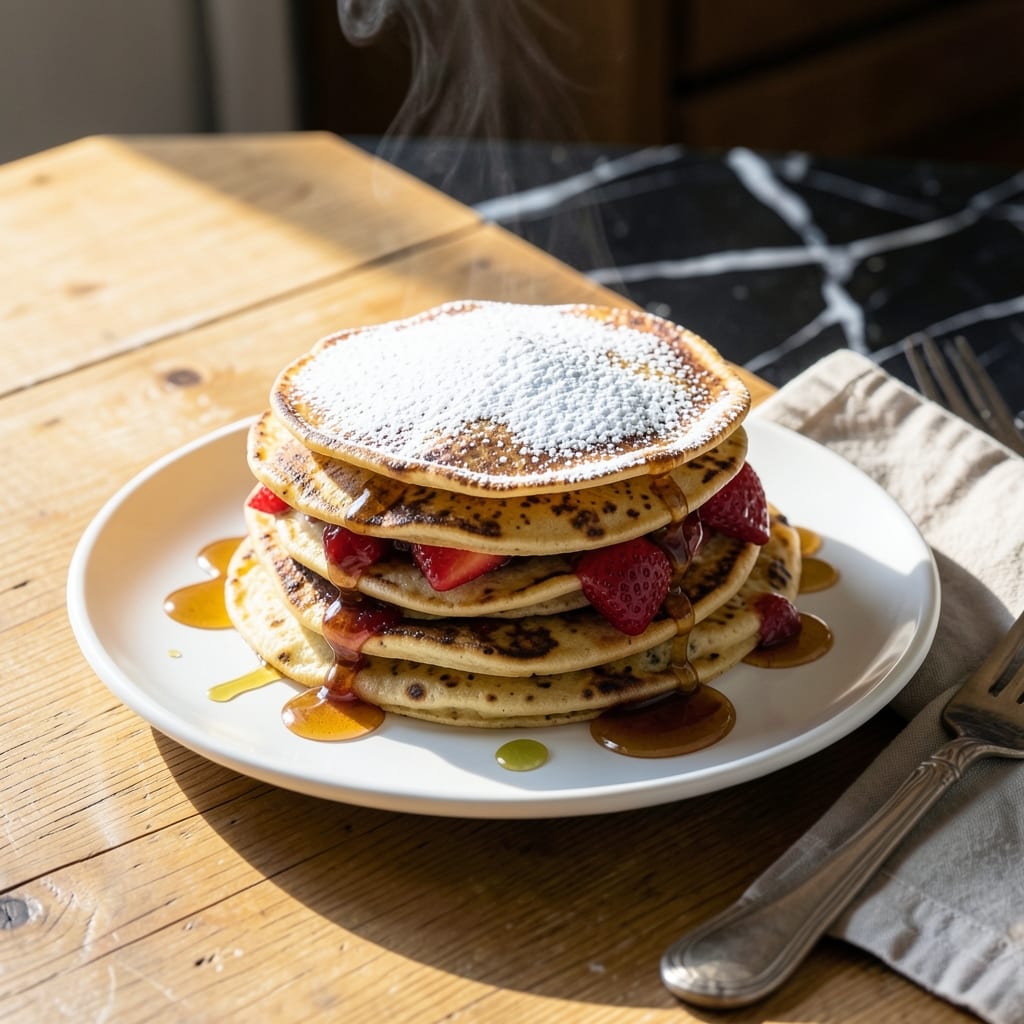
My blender method for crepe batter eliminates lumps and guarantees a smooth, thin consistency every time. The appliance does all the work, blending ingredients into a perfectly homogeneous mixture that pours effortlessly into the pan.
This approach simplifies the process while delivering perfect results. The high-speed blending creates air bubbles that contribute to light, delicate crepes with evenly distributed flavor throughout the batter.
You’ll achieve restaurant-quality crepes with minimal effort. The batter rests briefly to allow the flour to hydrate, ensuring the ideal texture for thin, lacy pancakes that cook evenly.
Ready in 5 minutes of prep time, this method transforms breakfast preparation. The blender makes quick work of the batter, so you can focus on achieving that golden, slightly crisp exterior.
Ingredients for Crepe Recipe Blender
Nine simple ingredients blend into perfectly smooth crepe batter in minutes.
| Ingredient | Amount | Notes |
|---|---|---|
| All-Purpose Flour 🌾 | 1 cup | Sifted for smooth batter |
| Large Eggs 🥚 | 2 whole | Room temperature preferred |
| Whole Milk 🥛 | 1 ½ cups | Cold for best blending |
| Unsalted Butter 🧈 | 2 tbsp | Melted and cooled |
| Granulated Sugar 🧂 | 1 tbsp | Optional for sweet crepes |
| Salt 🧂 | ¼ tsp | Fine sea salt preferred |
| Vanilla Extract 🌿 | 1 tsp | Pure extract for best flavor |
| Water 💧 | ¼ cup | Adjusts batter consistency |
| Vegetable Oil 🫒 | 1 tsp | For greasing the pan |
The flour is the foundation—King Arthur or Bob’s Red Mill all-purpose gives consistent results. Eggs at room temperature emulsify better with the butter, creating that ultra-smooth texture. Whole milk adds richness, but 2% works in a pinch (just don’t go lower). For the butter, European-style has higher fat content, which helps with browning.
No whole milk? Half-and-half plus water at a 1:1 ratio works. Out of vanilla? Almond extract at half the amount adds a nice depth. For savory crepes, skip the sugar and vanilla entirely. The water is key—it thins the batter to that perfect paint-like consistency. If your batter seems thick, add more 1 tbsp at a time.
Batter keeps 24 hours in the fridge—actually improves with a rest. Cooked crepes stack well with parchment between layers. Freeze extras for up to 1 month. Always bring batter to room temp before cooking for even texture.
Why You’ll Love This Recipe
- Blender Magic: I dump everything in the blender and hit pulse—flour, eggs, milk, butter, sugar—no whisking, no lumps, just smooth batter in seconds.
- Buttery Perfection: That hint of melted butter in the batter gives them a rich, golden taste that’s way better than plain crepes.
- Breakfast or Dessert: I’ve served these with jam for breakfast, Nutella for dessert, and even stuffed with ham and cheese for lunch.
- Pocket Change Feast: Honestly, a batch costs pennies—flour, eggs, milk, butter—and still feels like a fancy café treat.
Step-by-Step Instructions for Blender Crepes
This method guarantees a silky batter that yields delicate, evenly cooked crepes every time.
Step 1: Blend the Wet Ingredients
In your blender, combine the 2 whole Large Eggs, 1.5 cups Whole Milk, 2 tbsp Unsalted Butter (melted and cooled), 1 tbsp Granulated Sugar, 0.25 tsp Salt, and 1 tsp Vanilla Extract. I pulse these first to break up the eggs and create a smooth liquid base.
Blending the wet ingredients separately ensures the butter emulsifies properly with the milk. Run the blender on medium speed for 10-15 seconds until the mixture looks uniform and slightly frothy. This step prevents lumps in your final batter and guarantees a consistent texture.
Step 2: Incorporate the Dry Ingredients
Add the 1 cup All-Purpose Flour to the blender. Secure the lid tightly and start on low speed, gradually increasing to high. Blend for 20-30 seconds until the batter is completely smooth and free of any flour streaks.
The flour should fully hydrate during this process, creating a thin, pourable consistency. If the batter appears too thick after blending, add the 0.25 cup Water and pulse for 5-10 seconds to reach the perfect crepe-batter viscosity. You’re aiming for something resembling heavy cream.
Step 3: Rest the Batter
Transfer the batter to a bowl or large measuring cup and let it rest at room temperature for 15-20 minutes. This resting period allows the gluten in the flour to relax, which is crucial for achieving tender, easy-to-fold crepes.
During this time, you’ll notice the batter thickens slightly as the flour absorbs more liquid. Give it a quick stir before using—it should coat the back of a spoon but still pour easily. This step also helps eliminate any air bubbles from blending, ensuring a smooth surface when cooking.
Step 4: Cook the Crepes
Heat a nonstick skillet over medium-high heat and add ½ tsp Vegetable Oil, swirling to coat the pan evenly. Use a paper towel to wipe away any excess oil—this creates a thin, even layer that prevents sticking without frying the crepes.
Pour ¼ cup of batter into the center of the pan, immediately tilting and swirling to spread it into a thin, even layer. Cook for 1-2 minutes until the edges lift and the bottom is light golden brown. Flip and cook for an additional 30-45 seconds on the other side.
Repeat with the remaining batter, adding more Vegetable Oil as needed between crepes. Stack the finished crepes on a plate and cover with a clean kitchen towel to keep them warm and pliable until serving.
Pro Tips For Making Crepe Recipe Blender
- Rest the Batter: After blending, let the batter sit for at least 30 minutes at room temperature. I learned this the hard way—skipping this step gives you dense crepes instead of light, delicate ones.
- Use Room-Temp Ingredients: Take your eggs and milk out of the fridge 30 minutes before blending. Cold ingredients resist combining smoothly, and you’ll end up with lumps no matter how long you blend.
- Skip Overmixing: Pulse the blender just until the batter is smooth, about 10-15 seconds. Overmixing develops gluten in the flour, and your crepes will turn out tough instead of tender.
- Melt Butter First: Melt the unsalted butter and let it cool slightly before adding it to the blender. Hot butter will cook the eggs on contact, giving you scrambled bits in your batter—sounds weird, but it happens.
Health Benefits of This Recipe
Nutrient-Rich Base
This batter delivers a balanced mix of carbohydrates from flour and protein from eggs, providing steady energy to start your day. Each crepe contains about 100-120 calories, making it a light yet satisfying breakfast option. The eggs also supply choline, which supports brain health. 💪
Essential Vitamins
The milk in this recipe contributes calcium and vitamin D, both crucial for bone strength. A single serving provides about 15% of your daily calcium needs. Eggs add vitamin B12, which aids in red blood cell formation and energy metabolism.
Healthy Fats
Butter and whole milk supply healthy fats that help your body absorb fat-soluble vitamins like A, D, E, and K. The unsaturated fats in these ingredients support heart health when consumed in moderation. I find these fats keep me fuller longer than a carb-heavy breakfast.
Low Sugar Option
With only 1 tbsp sugar in the entire batch, this recipe keeps added sugars minimal. For a savory version, simply omit the sugar and vanilla. This makes the crepes versatile for both sweet and savory fillings without excess sugar intake.
Dietary Flexibility
You can easily adapt this recipe to dietary needs. Swap whole milk for almond milk to reduce calories, or use gluten-free flour for those avoiding wheat. The blender method works perfectly with these substitutions, maintaining that smooth texture. ✨
Portion Control
Each ¼ cup of batter produces a single crepe, making it simple to control portions. This is especially helpful for weight management. I often make a batch on Sunday and freeze extras for quick, portion-controlled breakfasts throughout the week.
Nutrition Facts
Frequently Asked Questions
Can I make the batter the night before?
The batter keeps well in the fridge for 24 hours and actually improves with a rest. Let it sit at room temperature for 30 minutes before cooking for best results.
Why is my batter too thick?
Add cold water 1 tbsp at a time until it reaches a heavy cream consistency. The flour absorbs liquid as it rests, so check thickness before cooking.
Can I use a hand mixer instead?
A blender works best for ultra-smooth results, but a hand mixer can work. Whisk vigorously for 2-3 minutes to avoid lumps, then strain if needed.

- Pina Colada Dip Recipe Red Lobster: Tropical Creaminess With Toasted Coconut - October 12, 2026
- Pickled Sweet Cherry Peppers Recipe Canning: Tangy Heat for Pantry Staples - October 12, 2026
- Peppercorn Sauce Recipe Vegan: Rich Umami Depth Without Cream - October 12, 2026