
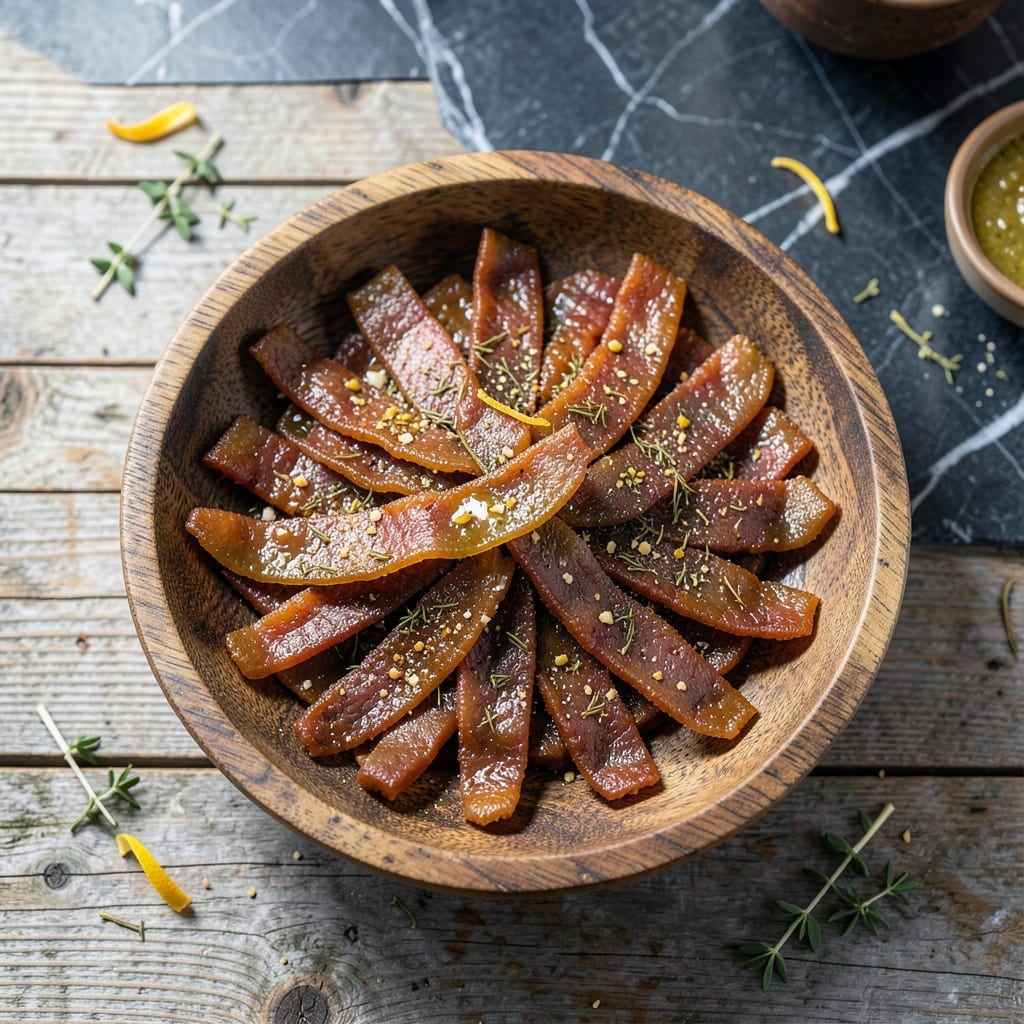
This dill pickle jerky delivers an intense, tangy flavor that’s impossible to find in store-bought versions. The secret lies in marinating thinly sliced beef in a bold blend of dill, vinegar, and spices before dehydrating to perfectly chewy perfection.
I’ve refined this method to ensure every bite packs that signature dill pickle punch without overpowering the meat. The dehydration process concentrates the flavors, creating a snack that’s both savory and irresistibly zesty.
With just a handful of ingredients and 6-8 hours in the dehydrator, you’ll have a high-protein snack that’s far superior to commercial jerky. The texture is spot-on—firm yet tender, with no artificial additives.
Ideal for road trips, lunchboxes, or anytime you crave a flavorful, protein-packed bite. This technique guarantees consistent results every time.
Ingredients for Dill Pickle Jerky
Thin beef slices meet bold pickle flavors for a snack unlike any store-bought version.
| Ingredient | Amount | Notes |
|---|---|---|
| Beef Top Round 🥩 | 1 ½ lb | Thinly sliced against grain |
| Dill Pickle Juice 🥒 | 1 cup | From high-quality dill pickles |
| White Vinegar 💧 | ¼ cup | Distilled preferred |
| Dried Dill Weed 🌿 | 2 tbsp | Fresh dill can substitute |
| Garlic Powder 🧄 | 2 tsp | Not garlic salt |
| Onion Powder 🧅 | 2 tsp | Fine ground preferred |
| Black Pepper 🌶️ | 1 tsp | Freshly ground for best flavor |
| Smoked Paprika 🌶️ | 1 tsp | Adds depth to flavor profile |
| Brown Sugar 🍚 | 2 tbsp | Light or dark variety |
| Salt 🧂 | 2 tsp | Kosher or sea salt preferred |
| Mustard Seeds 🌿 | 1 tsp | Yellow or brown variety |
| Liquid Smoke 🔥 | ½ tsp | Optional for added smokiness |
The beef is critical here. Top round is lean with enough marbling for flavor without excess fat that won’t dehydrate properly. Most butchers will slice it thin for jerky if you ask (about 1/4-inch thick). Whole Foods or Costco often carry pre-sliced beef for jerky, which saves time. Look for bright red color with no graying—freshness matters since the meat isn’t cooked before dehydrating.
No dill pickle juice? Combine 3/4 cup water with 1/4 cup vinegar and 1 tbsp dill weed as a substitute. Fresh dill can replace dried at three times the amount. Liquid smoke is optional but adds that classic jerky depth—Wright’s is the most widely available. For a vegetarian alternative, try this marinade with thick-cut portobello mushroom slices instead of beef.
Marinated beef keeps in the fridge for up to 24 hours before dehydrating. Store finished jerky in an airtight container with a paper towel to absorb moisture. Lasts 1-2 weeks at room temperature or 3 months frozen. The texture is best within the first week.
Why You’ll Love This Recipe
- 5-Minute Marinade: That tangy dill pickle juice and garlic powder mix comes together in a flash—no chopping, just pour and coat.
- Addictively Zesty: The vinegar and dill weed hit gives the beef that bold, lip-puckering kick I crave in every bite.
- Trail-Ready Snack: I toss a batch in my pack for hikes or road trips—stays good for weeks, no cooler needed.
- Budget Stretcher: A pound of top round turns into a month’s worth of protein-rich snacks for pennies per serving.
Step-by-Step Instructions for Dill Pickle Jerky
Master the dehydrating process with professional technique for consistent, flavorful results every time.
Step 1: Slice and Prepare the Beef
Begin by partially freezing the 1.5 lb beef top round for 30-45 minutes to firm it up, making it easier to slice thinly. Using a sharp knife, cut against the grain into ¼-inch thick strips. This cross-grain slicing is critical—it shortens the muscle fibers, ensuring tender jerky.
As you work, trim away any visible fat or connective tissue, as these won’t dehydrate properly and can cause spoilage. The strips should be uniform in thickness to ensure even drying. I maintain a consistent width of about ½ inch for optimal texture in the finished product.
Step 2: Create the Dill Pickle Marinade
In a large bowl, combine the 1 cup dill pickle juice, 0.25 cup white vinegar, 2 tbsp dried dill weed, 2 tsp garlic powder, 2 tsp onion powder, 1 tsp black pepper, 1 tsp smoked paprika, 2 tbsp brown sugar, 2 tsp salt, 1 tsp mustard seeds, and 0.5 tsp liquid smoke.
Whisk until the brown sugar and salt are fully dissolved. The acidity from the pickle juice and vinegar will begin breaking down the meat fibers while infusing bold flavor. I recommend using high-quality dill pickle juice for maximum tang and authentic dill character.
Step 3: Marinate the Beef Thoroughly
Submerge all the beef strips in the marinade, ensuring each piece is fully coated. Press down gently to remove any air bubbles and help the marinade penetrate. Cover and refrigerate for 8-12 hours, or ideally overnight. The longer marinating time allows the flavors to fully develop and the acids to tenderize the meat.
Stir the mixture once or twice during marinating to redistribute the flavors. You’ll notice the beef will absorb much of the liquid and take on a pale, pickled appearance. This transformation indicates the marinade is working effectively.
Step 4: Dry the Jerky Properly
Preheat your dehydrator to 160°F. Remove the beef strips from the marinade, allowing excess liquid to drip off, but don’t rinse. Arrange the strips on dehydrator trays in a single layer, ensuring they don’t touch or overlap. This spacing allows for proper airflow and even drying.
Dehydrate for 4-6 hours, checking periodically after 3 hours. The jerky is done when it’s dry to the touch but still pliable—it should bend without snapping. For food safety, the internal temperature should reach 160°F during the drying process.
Step 5: Cool and Store the Finished Jerky
Once properly dehydrated, remove the jerky from the trays and let it cool completely on a wire rack. This cooling step is essential—it allows any residual moisture to evaporate, preventing condensation that could lead to mold during storage.
Store the completely cooled jerky in an airtight container in the refrigerator for up to 2 weeks, or freeze for longer storage. For best texture, I recommend using vacuum-sealed bags if available. The jerky should maintain its bold dill pickle flavor and chewy texture throughout storage.
Pro Tips For Making Dill Pickle Jerky
- Slice Against Grain: Cut the beef top round into 1/4-inch strips against the grain for tender jerky that doesn’t turn into a chewy mess. I learned this the hard way after my first batch was nearly inedible.
- Use Cold Pickle Juice: Chill the dill pickle juice before marinating to help the beef absorb more flavor without cooking prematurely. Sounds weird, but it works.
- Pat Beef Dry: After marinating, pat the beef strips thoroughly dry with paper towels before dehydrating. Skip this and you’ll spend hours waiting for the jerky to finish.
- Boost Flavor Early: Add an extra teaspoon of garlic powder to the marinade—dried dill weed can be subtle, and the garlic really ties everything together. My grandmother swore by this, and she was right.
Storing and Reheating This Recipe
Room Temperature Storage
Store completely cooled jerky in an airtight container with a paper towel to absorb moisture. Use glass jars or Ziploc bags with all air pressed out. Kept in a cool, dark pantry, it stays fresh for 1-2 weeks with optimal texture and flavor. 🥗
Refrigerator Storage
For extended freshness, refrigerate in vacuum-sealed bags or airtight containers. The cold slows moisture absorption, preserving the chewy texture for up to 1 month. I always add a silica gel packet to absorb any lingering humidity.
Freezer Storage
Freeze in single layers on a tray first, then transfer to freezer-safe bags. This prevents clumping and maintains individual pieces. Properly stored, your jerky keeps for 3-4 months without freezer burn. Thaw at room temperature before eating.
Rehydrating for Texture
If jerky becomes too dry, place pieces in a sealed container with a damp paper towel for 1-2 hours. This restores slight moisture without making it soggy. Works best for jerky stored over 2 weeks.
Travel and On-the-Go
For road trips or lunchboxes, portion into snack-size bags and add a paper towel to each. Keeps well at room temperature for 3-4 days during travel. Avoid direct sunlight or heat sources which can accelerate spoilage. ❄️
Nutrition Facts
Frequently Asked Questions
What’s the best cut of beef for jerky?
Use lean top round or flank steak for ideal texture. These cuts have minimal fat, which prevents spoilage during dehydration.
Can I make this without a dehydrator?
Yes! Use an oven set to its lowest temperature (170°F or less) with the door slightly open. Expect drying to take 6-8 hours.
Why is my jerky too tough?
Over-drying is the most common cause. Check at 4 hours and stop when it bends but doesn’t snap. Slicing against the grain also helps tenderness.
How do I adjust the tanginess level?
For more zing, add 1-2 tbsp extra vinegar. For milder flavor, reduce pickle juice by ¼ cup and replace with water.

- Beef Cutlet Recipe Ideas: Crispy Breaded Patties With Bold Seasonings - September 28, 2026
- Bluefin Tuna Recipe Ideas: Sushi-Grade Seared and Sesame-Crusted - September 28, 2026
- Blue Zone Recipe Ideas: Longevity-Boosting Meals for Vibrant Living - September 28, 2026