
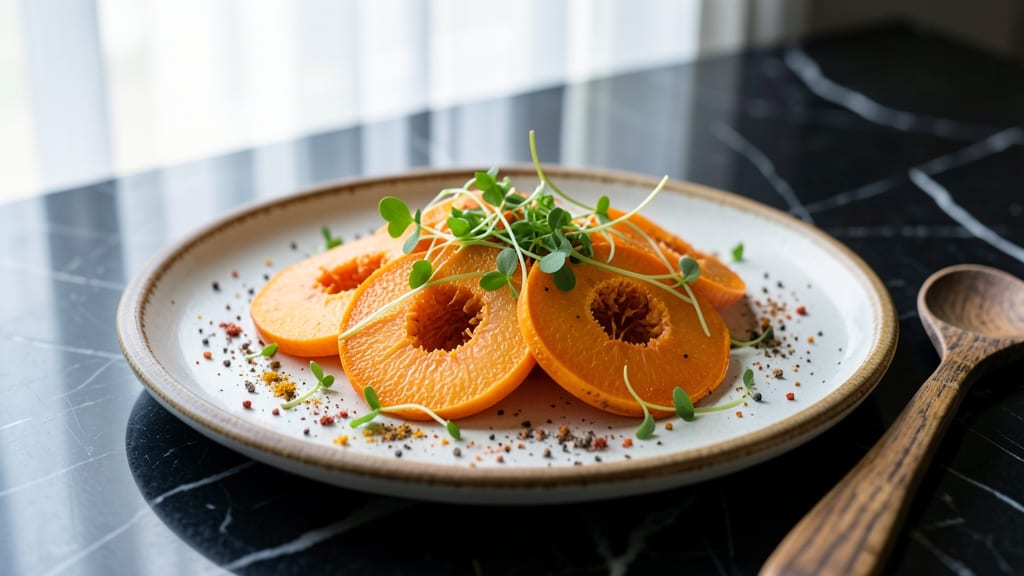
This dried cantaloupe recipe turns ripe cantaloupe into a sweet, crispy snack or savory medley—simpler than you’d expect, with results that shine. This dried cantaloupe recipe preserves the fruit’s natural sweetness while concentrating its flavor into chewy, caramelized bites, perfect for snacking or elevating salads and desserts.
I developed this method after discovering how versatile dehydrated fruit could be, turning a seasonal favorite into a pantry staple that lasts for months.
The process requires just a few key tools: ripe cantaloupe, a sharp knife, and either a dehydrator or oven set to low heat.
What makes this recipe special is the flexibility—you can dry the fruit plain for a natural sweetness, or enhance it with cinnamon, citrus zest, or a drizzle of honey before dehydrating. The texture becomes irresistibly chewy, with crispy edges that add satisfying contrast to every bite.
By the time you’re done, you’ll have a batch of dried cantaloupe that’s sweet, concentrated, and packed with flavor—ideal for snacking straight from the bag or adding to trail mixes, yogurt parfaits, or even savory dishes like roasted chicken salads.
The best part? No special equipment is needed beyond what you likely already have in your kitchen.
This method works with any ripe cantaloupe, and the dried pieces keep well in an airtight container for up to six months. Whether you’re prepping for a busy week or looking to extend summer flavors into fall, this recipe delivers restaurant-quality results with minimal effort. Let’s get started!
Ingredients for dried cantaloupe
Just eight ingredients transform ripe cantaloupe into chewy, crispy bites perfect for snacks or salads.
| Ingredient | Amount | Notes |
|---|---|---|
| Ripe Cantaloupe 🍈 | 2 whole | Medium-sized, ripe, no bruises |
| Extra-Virgin Olive Oil 🫒 | 1 tbsp | For tossing fruit slices |
| Ground Cinnamon 🌿 | 1 tsp | Optional for sweet flavor |
| Lemon Zest 🍋 | 1 tsp | Freshly grated for brightness |
| Honey 🍯 | 1 tbsp | Optional for extra sweetness |
| Sea Salt 🧂 | ½ tsp | Fine grain, for seasoning |
| Fresh Rosemary 🌿 | 2 sprigs | Optional for savory twist |
| Balsamic Glaze 🍷 | 1 tbsp | For finishing drizzle |
The cantaloupe is everything here—pick one that’s ripe but firm, with a golden yellow rind and no soft spots. Local farmers markets often have the best selection, but any grocery store cantaloupe will work if it smells sweet at the stem. I usually grab organic when I can find it, but regular cantaloupe tastes great too. For the drizzle, extra-virgin olive oil adds richness, while honey or balsamic glaze takes it to another level. The rosemary and lemon zest are optional but add that restaurant-quality touch without overpowering the fruit’s natural sweetness.
No honey? Maple syrup or agave nectar work just as well. Short on rosemary? Thyme or fresh mint brings a different vibe—just use half the amount. If you’re feeling lazy, skip the zest and use lemon juice instead. The cinnamon can be swapped for vanilla extract or cardamom if you’re feeling adventurous. For the savory version, toss the dried cantaloupe with crumbled feta and toasted nuts—game changer. And if you’re worried about the cantaloupe being too wet, pat the slices dry with a paper towel before dehydrating.
Store the dried cantaloupe in an airtight container with parchment paper between layers—keeps it crispy for 4-6 months. I portion mine into small bags for easy snacking. The flavor actually gets better with time as the fruit concentrates. For extra crispy edges, dehydrate at 135°F for 8-10 hours—no peeking! If you don’t have a dehydrator, low oven (170°F) works too, just leave the door cracked open.
Why You’ll Love This Recipe
- No-Core Work: Just slice the cantaloupe into thick wedges—no peeling, no dicing, no fuss. I’ll admit, it’s not the prettiest presentation, but those honey-kissed edges? Worth every zero-effort minute.
- Sweet Heat Magic: That cinnamon and lemon zest combo transforms ordinary fruit into something dangerously addictive. The olive oil keeps it tender while the honey caramelizes into a sticky, irresistible glaze—like dessert had a flavor upgrade.
- Snack Attack Ready: Between us, this is my go-to for lazy afternoons or when I need a quick breakfast. Toss a few in your lunchbox, serve with yogurt, or eat straight from the tray—no judgment here.
- Zero-Waste Win: Use every last bit of that cantaloupe, even the overripe ones. The dried slices keep for weeks in the fridge, so I’m basically turning grocery money into free snacks. Plus, the honey and olive oil are pantry staples I already own.
Step-by-step instructions for sweet and savory roasted medley with crispy edges
Here’s how to transform ripe cantaloupe into a caramelized, aromatic medley that balances sweet and savory perfectly.
Prep the Cantaloupe for Roasting
Cut the 2 whole ripe cantaloupes in half lengthwise, then scoop out the seeds and fibrous center using a spoon. You’ll want to create a flat surface for even roasting. I like to work on a large cutting board to contain the mess—cantaloupe juice can be slippery!
Slice each half into ½-inch thick wedges, keeping the rind intact where possible. This helps maintain shape during roasting. Arrange the wedges on a rimmed baking sheet in a single layer, leaving about ½ inch between each piece. This spacing ensures they crisp up properly rather than steaming.
Season and Toss for Maximum Flavor
In a small bowl, combine the 1 tablespoon extra-virgin olive oil, 1 teaspoon ground cinnamon, 1 teaspoon lemon zest, 1 tablespoon honey, and 0.5 teaspoon sea salt. The lemon zest adds a bright citrus note that cuts through the sweetness, while the cinnamon deepens the natural melon flavor.
Pour this mixture over the cantaloupe wedges and toss gently but thoroughly with your hands. You’ll notice the wedges immediately become glossy—this helps create that beautiful caramelized crust. Sprinkle the 2 sprigs fresh rosemary over the top, letting the needles rest against the fruit. The rosemary will infuse a subtle herbal aroma during roasting.
Roast Until Caramelized and Crisp
Preheat your oven to 400°F. Place the baking sheet on the middle rack and roast for 25-30 minutes, stirring once halfway through. You’re looking for wedges that develop deep golden-brown edges with some caramelization—this is where the magic happens. The interior should still hold some softness, but the outer edges should be crisp enough to hold their shape.
Here’s the thing—don’t overcrowd the pan. If you’re working with more than one sheet, rotate them halfway through for even browning. The high heat and open arrangement create that perfect contrast between crispy exterior and tender interior that makes this dish so special.
Finish with Balsamic Glaze
Remove the cantaloupe from the oven and let it cool for 5 minutes. While it’s cooling, drizzle the 1 tablespoon balsamic glaze evenly over the top. The acidity in the glaze cuts through the sweetness and adds a sophisticated tang. Let it sit for 2-3 minutes so the glaze can soak into the caramelized edges slightly.
Serve immediately while the edges are still crisp. The contrast between the warm, caramelized cantaloupe and the cool, slightly tangy glaze makes each bite exciting. For best results, serve as a side dish with grilled proteins or as a topping for yogurt bowls—just don’t wait too long, or those crispy edges will soften.
Pro Tips For Making Dried Cantaloupe
- Cut in Wedges: DESCRIPTION: Slice the cantaloupe into ½-inch thick wedges—thinner pieces dry faster and keep their shape better. I used to go for uniform slices, but these uneven wedges caramelize more evenly, especially when you toss them in olive oil and cinnamon.
- Toss, Don’t Drizzle: DESCRIPTION: Dump the cantaloupe chunks into a bowl with the olive oil, cinnamon, and lemon zest, then toss with your hands until every surface glistens. Drizzling just pools the oil—this way, every bite gets that sweet-spiced crust.
- Skip the Crowd: DESCRIPTION: Spread the cantaloupe on a single layer across your dehydrator trays or baking sheet—no overlapping. I learned this after my first batch stuck together into a sad, sticky mess. Trust me, the air needs room to work.
- Honey Last: DESCRIPTION: Brush on the honey after the cantaloupe has dried for 2–3 hours—just before the final hour. Too early, and it burns; too late, and it doesn’t caramelize. This is the sweet spot for that glossy, sticky finish.
Wine and beer pairings for these flavors
Wine Pairings
For this caramelized cantaloupe medley, I reach for dry Riesling from Germany or Alsace—its crisp acidity and mineral notes complement the fruit’s natural sweetness without clashing. The slight honeyed undertones in the wine mirror the caramelization beautifully.
If you prefer red, a Pinot Noir with bright cherry notes works wonderfully, especially if you’ve added rosemary to the dish. 🍷
Light Beer Options
A Belgian Witbier like Hoegaarden is my go-to for this dish—its citrusy coriander and orange peel flavors enhance the lemon zest in the recipe. The effervescence also cleanses your palate between bites of the caramelized cantaloupe.
For a lighter option, try a crisp Pilsner like Peroni, which provides a neutral backdrop that lets the fruit’s flavors shine.
Sweet Wine Contrast
If you’re serving this as a dessert or want to highlight the sweetness, a Moscato d’Asti from Italy brings perfect balance. Its light sweetness and bubbles create a delightful contrast with the caramelized edges.
I’ve also enjoyed pairing it with a demi-sec Champagne—the effervescence makes each bite feel celebratory. The acidity in these wines cuts through the honey and balsamic glaze beautifully.
Cocktail Pairings
For a fun twist, blend the dried cantaloupe into a cantaloupe margarita—muddle 4 dried cantaloupe pieces with 2 oz tequila, 1 oz lime juice, and ½ oz agave syrup.
The concentrated melon flavor adds depth without overpowering. Serve with a salt rim for that classic margarita touch. 🍹
Savory Beer Match
When serving this as a savory side dish with grilled meats, a German Helles Lager like Weihenstephaner provides the perfect neutral canvas. The subtle malty sweetness complements the caramelization without competing with the rosemary and balsamic glaze.
For a bolder option, try a Belgian Dubbel—its caramel and spice notes enhance the dish’s depth.
Non-Alcoholic Options
Don’t overlook sparkling water infused with cucumber and mint—it’s refreshing and highlights the dish’s bright citrus notes. For a more substantial option, try sparkling apple cider with a splash of lemon juice. The effervescence and acidity make every bite of caramelized cantaloupe feel special, even without alcohol. 💫
Nutrition facts
Frequently asked questions
Can I dehydrate cantaloupe without a dehydrator?
Use your oven set to 170°F with the door cracked open for airflow. Arrange slices on a parchment-lined baking sheet with space between them. Dehydrate for 6-8 hours, checking every 2 hours for crispness. The key is low heat and patience—rushing will leave them chewy instead of crispy.
How do I know when dried cantaloupe is done?
It’s ready when the edges are completely dry and slightly leathery, while the center remains soft but not wet. Test by pressing a slice—it should hold its shape but still feel slightly pliable. Drying time varies by thickness (thinner slices dry faster), but 6-12 hours is typical in a dehydrator or 8-12 hours in the oven.
What are the best ways to store dried cantaloupe?
Keep it in an airtight container with parchment paper between layers to prevent sticking. Store in a cool, dark place for up to 6 months. For longer storage, freeze for up to 1 year. The flavor actually improves over time as the fruit concentrates!
Can I use dried cantaloupe in savory dishes?
Yes! Toss it with crumbled feta, toasted nuts, and a drizzle of olive oil for a sweet-savory salad topping. It also works beautifully in grain bowls or as a garnish for roasted meats. The caramelized edges add texture while the sweetness balances rich flavors.
Why did my dried cantaloupe turn out mushy?
This usually happens from overcrowding or insufficient drying time. Always leave space between slices for airflow, and ensure your dehydrator/oven is set to 135°F or lower. If using oven, check frequently after 4 hours—high heat can steam the fruit instead of drying it.

- Chicken Pelau Recipe: Caribbean-Style Rice with Tender Chicken and Pigeon Peas - November 29, 2026
- Best Cream of Broccoli Soup Recipe with Heavy Cream: Velvety Richness in One Pot - November 29, 2026
- Authentic Thai Green Mango Salad Recipe: Zesty, Tangy, and Refreshing Balance - November 29, 2026