
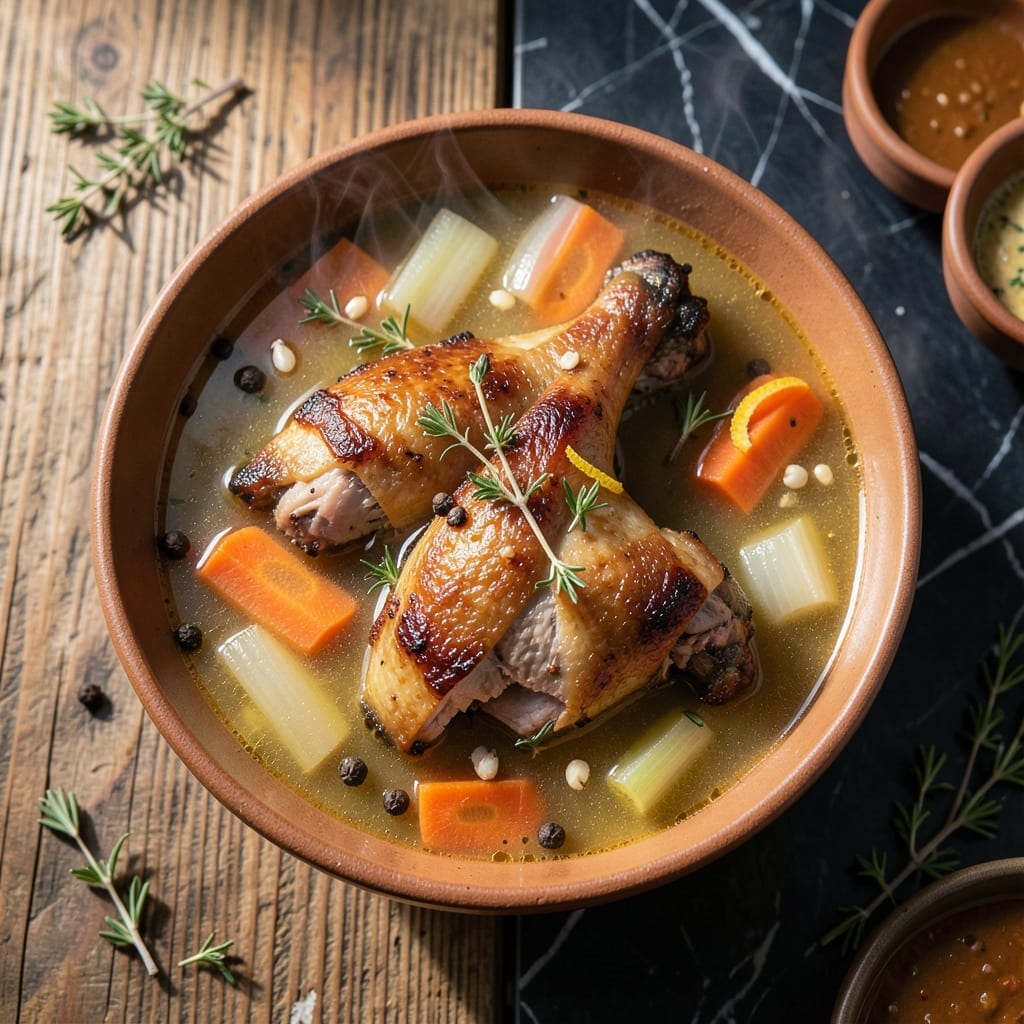
This duck soup delivers a rich broth with layers of herbal complexity that redefine comfort food. The slow simmering process extracts deep, savory notes from the duck while allowing aromatic herbs to infuse every spoonful.
I’ve refined this method over years of testing to ensure the meat stays tender while the broth develops its signature depth. The key is a careful balance of fresh herbs and a gentle cooking time that coaxes out maximum flavor without bitterness.
The result is a velvety, aromatic soup that’s hearty enough for a main course yet elegant enough for special occasions. Each bite offers the warmth of duck paired with the bright, earthy notes of thyme, bay, and parsley.
Serve with crusty bread to soak up every last drop of this satisfying dish.
Ingredients for Duck Soup
A handful of fresh herbs and rich duck create this velvety, aromatic broth.
| Ingredient | Amount | Notes |
|---|---|---|
| Duck Legs 🦆 | 4 whole | Skin-on, bone-in preferred |
| Yellow Onion 🧅 | 1 whole | Medium, diced |
| Carrots 🥕 | 2 whole | Peeled, chopped |
| Celery Stalks 🥬 | 2 whole | Chopped for base |
| Garlic Cloves 🧄 | 4 cloves | Minced for depth |
| Fresh Thyme Sprigs 🌿 | 4 whole | Tied with kitchen twine |
| Bay Leaves 🍃 | 2 whole | Dried or fresh |
| Fresh Flat-Leaf Parsley 🌿 | ½ cup | Chopped, for garnish |
| Water or Duck Stock 💧 | 8 cups | Low-sodium preferred |
| Kosher Salt 🧂 | 2 tsp | Adjust to taste |
| Black Peppercorns 🌶️ | 1 tsp | Whole, crushed |
| Olive Oil 🫒 | 2 tbsp | For browning duck |
| Dry White Wine 🍷 | ½ cup | Optional for deglazing |
The duck is non-negotiable here. Look for skin-on, bone-in legs at specialty butchers like Whole Foods or Asian markets—they render fat beautifully. Fresh herbs matter too: thyme, bay, and parsley should be vibrant green with no wilting. If using dried bay leaves, check they’re not dusty (old stock loses potency). A heavy pot like Le Creuset helps with even heat distribution.
No duck legs? Chicken thighs work in a pinch (use 6 to match richness). Swap fresh herbs for dried at one-third the amount. White wine not on hand? Skip or use extra stock. For the base, leeks can replace onions for a milder flavor. The olive oil can be swapped for avocado oil if that’s your preference.
Broth deepens overnight—tastes even better the next day. Store in the fridge for 4-5 days or freeze for 3 months. Skim fat before storing for cleaner reheating. Parsley garnish is best fresh, so add just before serving.
Why You’ll Love This Recipe
- One Pot Wonder: I just toss in duck legs, onion, carrots, celery and let it simmer – no fancy steps.
- Rich and Hearty: The duck fat melts into the broth with garlic and veggies for a deep, satisfying flavor.
- Feeds a Crowd: I make a big batch and it’s perfect for Sunday dinner or meal prep lunches all week.
- Leftovers Love: Honestly, it tastes even better the next day – and my wallet loves how far one duck goes.
Step-by-Step Instructions for Duck Soup
This method ensures a rich, deeply flavored broth with tender duck meat and aromatic vegetables.
Step 1: Brown the Duck Legs for Depth
Heat 2 tbsp Olive Oil in a large pot over medium-high heat. Season the 4 whole Duck Legs with 2 tsp Kosher Salt and 1 tsp Black Peppercorns, then place them skin-side down in the pot.
Sear for 5-7 minutes until the skin is deep golden brown and crisp. Flip and brown the other side for 3-4 minutes. This step renders fat and develops a rich fond that will flavor the broth. Remove the duck legs and set aside.
Step 2: Sauté the Aromatic Base
In the same pot, reduce heat to medium and add the 1 whole Yellow Onion, 2 whole Carrots, and 2 whole Celery Stalks. Cook for 5 minutes, stirring occasionally, until the vegetables begin to soften and the edges turn lightly golden.
Add the 4 cloves Garlic Cloves and cook for 1 minute until fragrant. Stir in the 4 whole Fresh Thyme Sprigs and 2 whole Bay Leaves. These aromatics form the flavor foundation of your soup.
Step 3: Deglaze and Simmer the Broth
Pour in 0.5 cup Dry White Wine and scrape the bottom of the pot to release all the browned bits. Let the wine reduce by half, which takes about 2-3 minutes. This deglazing step ensures no flavor is wasted.
Return the duck legs to the pot. Add 8 cups Water or Duck Stock and bring to a boil. Reduce heat to low and let it simmer gently for 1.5-2 hours, partially covered, until the duck meat is fall-off-the-bone tender.
Step 4: Shred the Duck and Finish the Soup
Remove the duck legs from the pot and let them cool slightly. Once cool enough to handle, shred the meat, discarding the skin and bones. Return the shredded meat to the pot.
Taste and adjust the seasoning with additional Kosher Salt if needed. Remove the thyme sprigs and bay leaves. Stir in 0.5 cup Fresh Flat-Leaf Parsley just before serving for a burst of freshness. The soup should have a rich, golden color and a deep, savory aroma.
Pro Tips For Making Duck Soup
- Render the Fat: Start by browning the duck legs skin-side down in a cold pan—this renders the fat slowly and evenly. I learned this the hard way after burning the skin by starting with a hot pan.
- Deglaze the Pan: After removing the duck, pour in a splash of water or broth to scrape up all those browned bits stuck to the bottom. That’s where most of the flavor lives.
- Skip the Peeling: Leave the carrots and celery unpeeled—just scrub them well. Sounds lazy, but it saves time and the extra fiber actually adds body to the soup.
- Simmer Low and Slow: Once everything’s in the pot, keep the heat low enough that the soup barely bubbles. A rolling boil turns the duck tough and the broth cloudy.
Essential Equipment for This Recipe
Heavy-Duty Stockpot
A 5-6 quart Dutch oven or heavy stockpot is essential for even heat distribution. I use my Le Creuset for this—its thick walls prevent hot spots. Avoid thin pots that can scorch the fond.
Sharp Chef’s Knife
Chopping the mirepoix requires precision. My 8-inch Wüsthof chef’s knife makes quick work of onions, carrots, and celery. Keep it sharp to prevent slipping and ensure clean cuts.
Wooden Spoon
Use a flat-edged wooden spoon to scrape up every bit of browned duck fat and fond from the pot bottom. This adds incredible depth to your broth. I keep one dedicated to my stockpot.
Fine-Mesh Skimmer
A stainless steel skimmer helps remove any foam or impurities that rise to the surface during simmering. Skim every 20-30 minutes for the clearest, cleanest broth. 💡
Instant-Read Thermometer
Check your duck reaches 165°F internal temperature before shredding. My ThermoWorks ThermaPen gives accurate readings in 2-3 seconds. This ensures both safety and perfect tenderness.
Kitchen Twine
Tie your thyme sprigs and bay leaves together with cotton kitchen twine. This makes removal easy and prevents stray leaves in the final soup. I always keep a roll in my drawer. ✨
Nutrition Facts
Frequently Asked Questions
Can I use duck breast instead of legs?
Yes, but adjust the cooking time. Duck breast cooks faster, so simmer for only 45-60 minutes to prevent dryness.
How do I make the broth clearer?
Skim foam and fat regularly during simmering. For extra clarity, strain through a cheesecloth-lined sieve before serving.
Can I make this in a slow cooker?
Brown the duck first, then transfer to a slow cooker with all ingredients. Cook on low for 6-7 hours.
What if my soup tastes bland?
Boost flavor with a splash of soy sauce or fish sauce. Also, ensure you’re using enough salt—taste and adjust gradually.

- BBQ Sausage Recipe Oven: Smoky Depth Without the Grill - September 28, 2026
- BBQ Chicken Bowl Recipe Rice: Smoky Sweetness Over Fluffy Grains - September 28, 2026
- Beef Cutlet Recipe Ideas: Crispy Breaded Patties With Bold Seasonings - September 28, 2026