
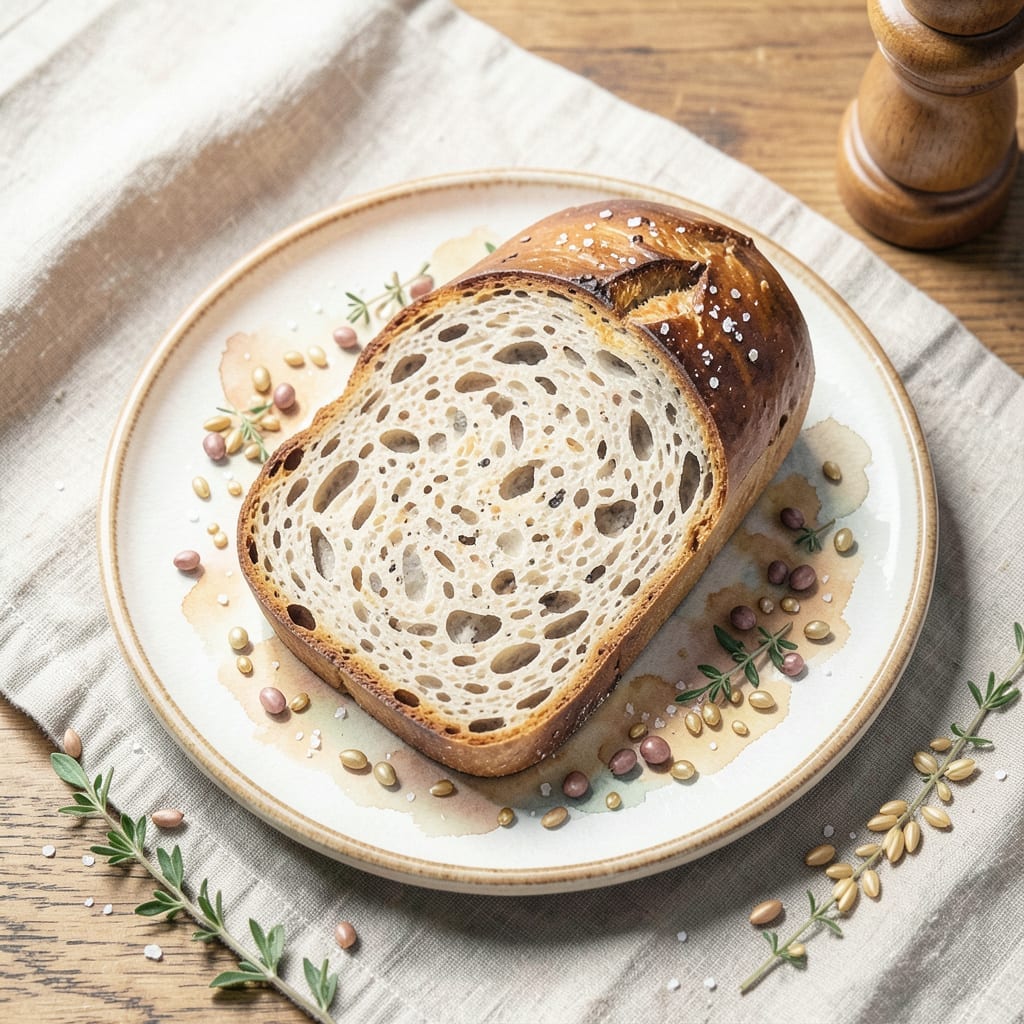
This ancient grain bread traces its roots to Scripture, offering nourishment as described in Ezekiel 4:9. The combination of sprouted grains creates a hearty, nutrient-dense loaf that stands apart from modern breads.
Making this at home delivers a vegan bread with a slightly nutty flavor and a texture that’s both dense and satisfying. The process honors tradition while fitting seamlessly into today’s kitchens.
Ingredients for Ezekiel Bread Recipe Bible
Ancient grains and simple additions create this traditional, nutrient-packed loaf with depth of flavor.
| Ingredient | Amount | Notes |
|---|---|---|
| Sprouted Wheat Berries 🌾 | 2 ½ cups | Rinsed and drained well |
| Sprouted Barley 🌾 | 1 cup | Rinsed and drained well |
| Sprouted Millet 🌾 | ½ cup | Rinsed and drained well |
| Sprouted Lentils 🥜 | ½ cup | Green or brown, rinsed |
| Sprouted Soybeans 🌱 | ½ cup | Rinsed and drained well |
| Sprouted Spelt 🌾 | ½ cup | Rinsed and drained well |
| Filtered Water 💧 | 3 ½ cups | Warm, for activating grains |
| Extra-Virgin Olive Oil 🫒 | 2 tbsp | For greasing and moisture |
| Sea Salt 🧂 | 1 tsp | Fine grain preferred |
| Raw Honey Substitute 🍯 | 2 tbsp | Agave nectar or maple syrup |
| Active Dry Yeast 🍞 | 2 ¼ tsp | One packet, for rising |
| Whole Wheat Flour 🌾 | 1 ½ cups | For structure and binding |
Sourcing sprouted grains can be tricky—Whole Foods and natural food co-ops are your best bet. Look for vibrant, plump grains without any musty smells. I order mine in bulk from Azure Standard when local options are limited. The quality of your sprouted grains directly impacts the bread’s texture and flavor, so don’t skip this step. Rinsing them thoroughly removes any residual starch that could inhibit rising.
No sprouted grains on hand? Unsprouted whole grains will work in a pinch, though the flavor and digestibility won’t be the same. For the honey substitute, maple syrup or agave are ideal—avoid refined sugar to keep the recipe’s integrity. If you’re missing one of the sprouted grains, quinoa or amaranth can stand in. The yeast must be fresh; test it in warm water with a pinch of sugar before committing.
The dough will be sticky—resist the urge to add more flour. Store the finished loaf wrapped in a clean towel at room temperature for up to 3 days, or slice and freeze for 1 month. Toasting revives older slices beautifully, bringing back that just-baked texture and warmth.
Why You’ll Love This Recipe
- One Bowl Wonder: I just dump all the sprouted grains and legumes in one bowl, mix, and let the dough rise—no complicated steps.
- Nutty Depth: The combination of sprouted wheat, barley, and lentils gives this bread a rich, earthy flavor that’s honestly addictive.
- Meal Prep Hero: I bake two loaves on Sunday and use them all week for toast, sandwiches, or even as a base for my avocado smash.
- Pantry Friendly: These sprouted grains and beans are cheap in bulk, and a single batch makes so much I freeze half for later.
Step-by-Step Instructions for Ezekiel Bread
Follow this precise method to transform sprouted grains into a nutritious, scripturally-inspired loaf with perfect texture.
Step 1: Sprout and Prepare the Ancient Grains
Begin by thoroughly rinsing the 2.5 cups Sprouted Wheat Berries, 1 cup Sprouted Barley, 0.5 cup Sprouted Millet, 0.5 cup Sprouted Lentils, 0.5 cup Sprouted Soybeans, and 0.5 cup Sprouted Spelt under cool running water. Drain them well in a fine-mesh strainer to remove all excess moisture.
Transfer the drained grains to a large bowl and cover with the 3.5 cups Filtered Water. Let them soak at room temperature for 8-12 hours or until small sprouts appear. This activation process unlocks the grains’ nutritional potential and ensures proper fermentation.
After sprouting, rinse and drain the grains again. I use a clean kitchen towel to pat them completely dry—this prevents excess moisture from throwing off the dough consistency later.
Step 2: Create the Dough Foundation
In a stand mixer fitted with the dough hook, combine the sprouted grain mixture with the 1.5 cups Whole Wheat Flour, 2.25 tsp Active Dry Yeast, 1 tsp Sea Salt, 2 tbsp Raw Honey Substitute, and 2 tbsp Extra-Virgin Olive Oil. The yeast should be distributed evenly throughout the mixture for consistent rising.
Mix on low speed for 2 minutes until all ingredients are fully incorporated. You’re looking for a shaggy, slightly sticky dough that pulls away from the sides of the bowl. The sprouted grains will give the dough a speckled appearance and a nutty aroma.
Increase the speed to medium and knead for 8-10 minutes until the dough becomes smooth and elastic. The gluten development during this stage creates the structure needed for a proper rise and good crumb.
Step 3: First Rise and Flavor Development
Lightly oil a large bowl with some of the Extra-Virgin Olive Oil and transfer the dough to it. Turn the dough once to coat all sides with oil, which prevents a dry crust from forming during the rise. Cover the bowl with a clean kitchen towel or plastic wrap.
Let the dough rise in a warm, draft-free place for 1 to 1.5 hours or until it has doubled in volume. I’ve found that placing it near (but not on) a preheating oven creates the ideal environment. The dough is ready when it springs back slowly when gently pressed with a finger.
This first rise allows the yeast to ferment the natural sugars in the sprouted grains, developing the complex flavors that make Ezekiel bread distinctive.
Step 4: Shape and Second Rise
Punch down the risen dough to deflate it and turn it out onto a lightly floured surface. Shape it into a loaf by folding the edges toward the center and then rolling it tightly. This creates surface tension for an even rise and a good oven spring.
Place the shaped loaf seam-side down in a greased 9×5-inch loaf pan. Cover it again and let it rise for 45 minutes to 1 hour or until the dough domes about 1 inch above the rim of the pan. The loaf should look puffy and feel light to the touch.
During this second rise, preheat your oven to 350°F to ensure it’s at the proper temperature when the bread is ready to bake.
Step 5: Bake to Perfection
Bake the loaf in the preheated 350°F oven for 45-50 minutes or until the top is deep golden brown and the internal temperature reaches 190-200°F when measured with an instant-read thermometer. The bread should pull away slightly from the sides of the pan.
If the top begins to brown too quickly, tent the pan loosely with aluminum foil to prevent over-browning while allowing the interior to cook through completely. The sprouted grains may cause the bread to brown more quickly than traditional breads.
Remove the bread from the pan and let it cool on a wire rack for at least 1 hour before slicing. This cooling period allows the crumb structure to set properly and makes the bread easier to slice cleanly.
Pro Tips For Making Ezekiel Bread Recipe Bible
- Soak Sprouted Grains: I learned this the hard way—give your sprouted wheat berries and barley a good 8-hour soak before blending. It makes a real difference in texture and helps prevent a dense, gummy loaf.
- Blend in Batches: After burning out my blender motor once, I now pulse the sprouted lentils and soybeans in small batches with just enough water to keep things moving. Overloading it turns your batter into a sad, lumpy mess.
- Skip Raw Flour: Sounds weird, but it works: this recipe doesn’t need added flour. The sprouted grains provide enough starch, and extra flour just weighs down the bread—my first few loaves were bricks until I figured this out.
- Bake Low and Slow: Crank the oven to 325°F and let it go for 1 hour 15 minutes. High heat browns the outside too fast while the inside stays wet—I ruined two loaves before I switched to this method.
Dietary Considerations for This Dish
Vegan and Plant-Based
This recipe is naturally 100% vegan, containing no animal products. The sprouted grains and legumes provide complete protein, making it a fantastic option for plant-based diets. I’ve served this to vegans and omnivores alike—everyone loves it. 🌱
Gluten Considerations
While this bread contains sprouted wheat and spelt, the sprouting process can make gluten easier to digest for some people. However, it’s not suitable for those with celiac disease or severe gluten sensitivity. For a gluten-free version, replace wheat and spelt with sprouted quinoa or buckwheat.
Nut-Free and Allergen Safe
This recipe is inherently nut-free, but always check your sprouted grains for cross-contamination warnings if allergies are a concern. The ingredients list is simple and free from common allergens like dairy, eggs, and nuts.
Low Glycemic Impact
The sprouting process reduces the glycemic index of the grains, making this bread a better choice for those monitoring blood sugar. The fiber content—about 5g per slice—also helps slow digestion. I notice it keeps me fuller longer than regular bread.
Sugar-Free Option
To make this completely sugar-free, simply omit the 2 tbsp honey substitute. The sprouted grains provide enough natural sweetness to balance the flavors. The yeast will still activate, though the rise might be slightly slower.
High Fiber Benefits
Each slice packs a serious fiber punch thanks to the whole sprouted grains. You’ll get about 8g of fiber per serving, which supports digestive health and keeps things moving smoothly. This makes it a great addition to any balanced diet. 💪
Nutrition Facts
Frequently Asked Questions
Why use sprouted grains in this bread?
Sprouted grains unlock more nutrients and improve digestibility. The process breaks down anti-nutrients, making vitamins and minerals more accessible.
Can I skip the honey substitute?
Yes, the sprouted grains provide natural sweetness. Omitting it will slightly slow the rise but won’t affect flavor.
How do I know when the bread is fully baked?
Check for a deep golden brown top and an internal temperature of 190-200°F. It should pull away from the pan edges.
What if my dough doesn’t rise?
Ensure your yeast is fresh and the environment is warm. Old yeast or cold temperatures can prevent proper rising.

- BBQ Sausage Recipe Oven: Smoky Depth Without the Grill - September 28, 2026
- BBQ Chicken Bowl Recipe Rice: Smoky Sweetness Over Fluffy Grains - September 28, 2026
- Beef Cutlet Recipe Ideas: Crispy Breaded Patties With Bold Seasonings - September 28, 2026