
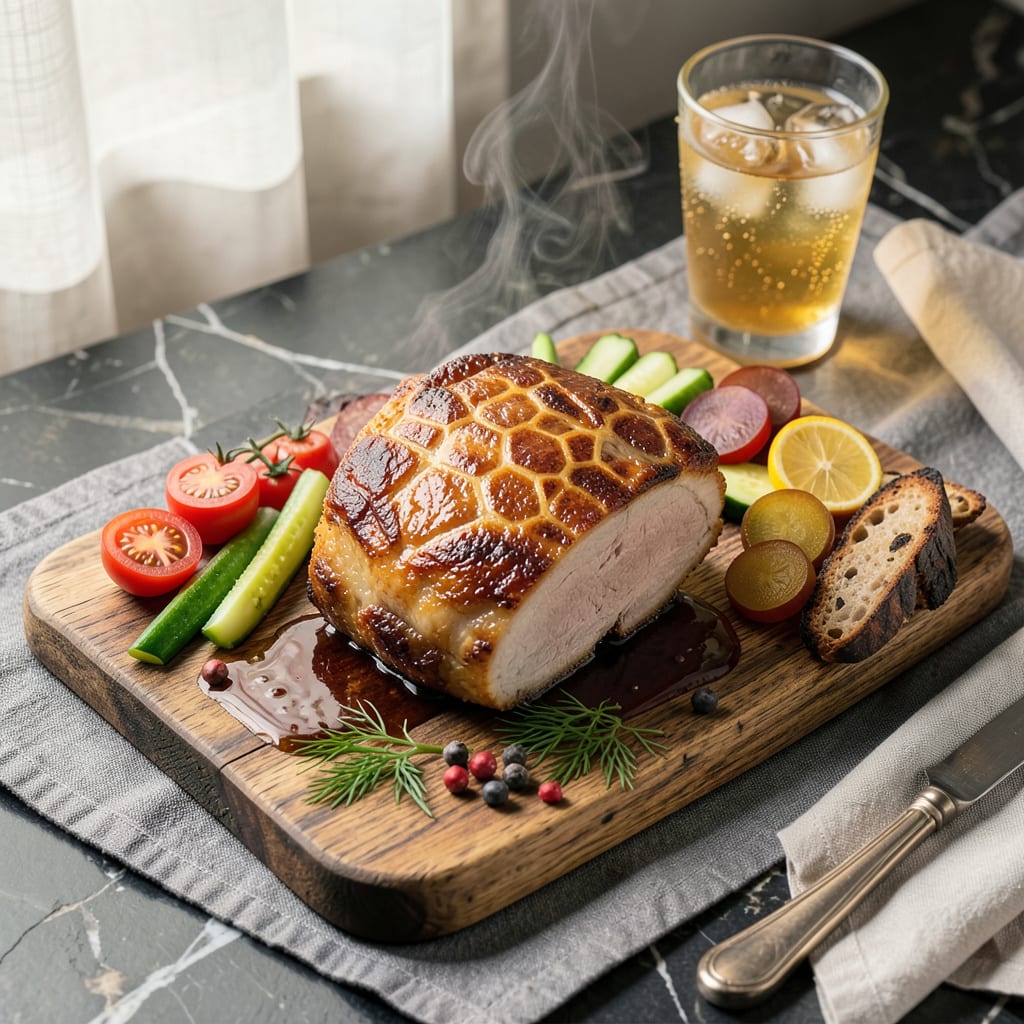
The Father of the Brine recipe is a classic wet brine solution using salt, sugar, and aromatic spices dissolved in water, designed to enhance moisture and flavor in meats like turkey or pork. Ideal ratios are 1 cup salt and ½ cup sugar per gallon of water, with optional herbs for depth.
This foundational technique transforms tough cuts into juicy masterpieces by leveraging osmosis. 🔥 The salt breaks down muscle proteins, allowing them to retain more liquid during cooking—critical for lean meats prone to drying out. What sets this method apart is its versatility: I’ve used it successfully on everything from Thanksgiving turkeys to weeknight pork chops. The sugar isn’t just for sweetness; it counters salt’s harshness and promotes better browning. For best results, maintain a 40°F brine temperature and never exceed 12 hours for poultry to avoid over-softening the texture.
💡 In This Article
- Science Behind the Father of the Brine Technique
- Customizing the Father of the Brine for Different Meats
Science Behind the Father of the Brine Technique
The magic starts with osmosis—salt in the brine creates a higher concentration outside the meat than inside. This forces water into the muscle cells while simultaneously breaking down proteins like myosin. The result? Meat that can absorb and retain up to 10% more moisture during cooking.
The ideal 1 cup salt per gallon ratio creates just enough osmotic pressure without making the meat taste overly salty. 🔥
Sugar plays a dual role beyond sweetness. It counters salt’s harshness by forming a light syrup that coats proteins, preventing them from tightening too much during cooking. The ½ cup sugar per gallon ratio also promotes Maillard reactions later, giving you that perfect golden-brown crust.
Cold water (40°F or below) is critical—warmer temps speed up absorption but can start cooking the outer layers prematurely.
Time transforms texture. For poultry, 4-12 hours lets the brine penetrate about ½ inch into the meat. Pork needs 12-24 hours for full effect. The muscle fibers actually swell during this process, creating microscopic pockets that hold onto juices when cooked. This is why brined turkey stays moist even when roasted to 165°F. ✨
Compare this to dry brining, where salt draws out moisture first before reabsorbing it. Wet brining skips the drying phase, making it better for lean cuts. Injection methods work faster but can’t achieve the even distribution of a full immersion.
The Father of the Brine’s genius lies in its balance—enough salt for science, enough sugar for flavor, and precise timing for texture.
Pro tip: Always use kosher salt (not table salt) for consistent measurements. The larger crystals dissolve more evenly, and you’ll need about 25% more by volume than fine salt for the same effect.
The difference between a properly brined bird and a dry one can be 30% more retained juices—that’s the power of good chemistry in your kitchen. 💫

- Blue Zone Recipe Ideas: Longevity-Boosting Meals for Vibrant Living - September 28, 2026
- Beefaroni Recipe With Tomato Soup: One-Pot Nostalgic Comfort - September 28, 2026
- Bread Recipe KitchenAid Mixer: Foolproof Loaf With Perfect Rise - September 28, 2026