
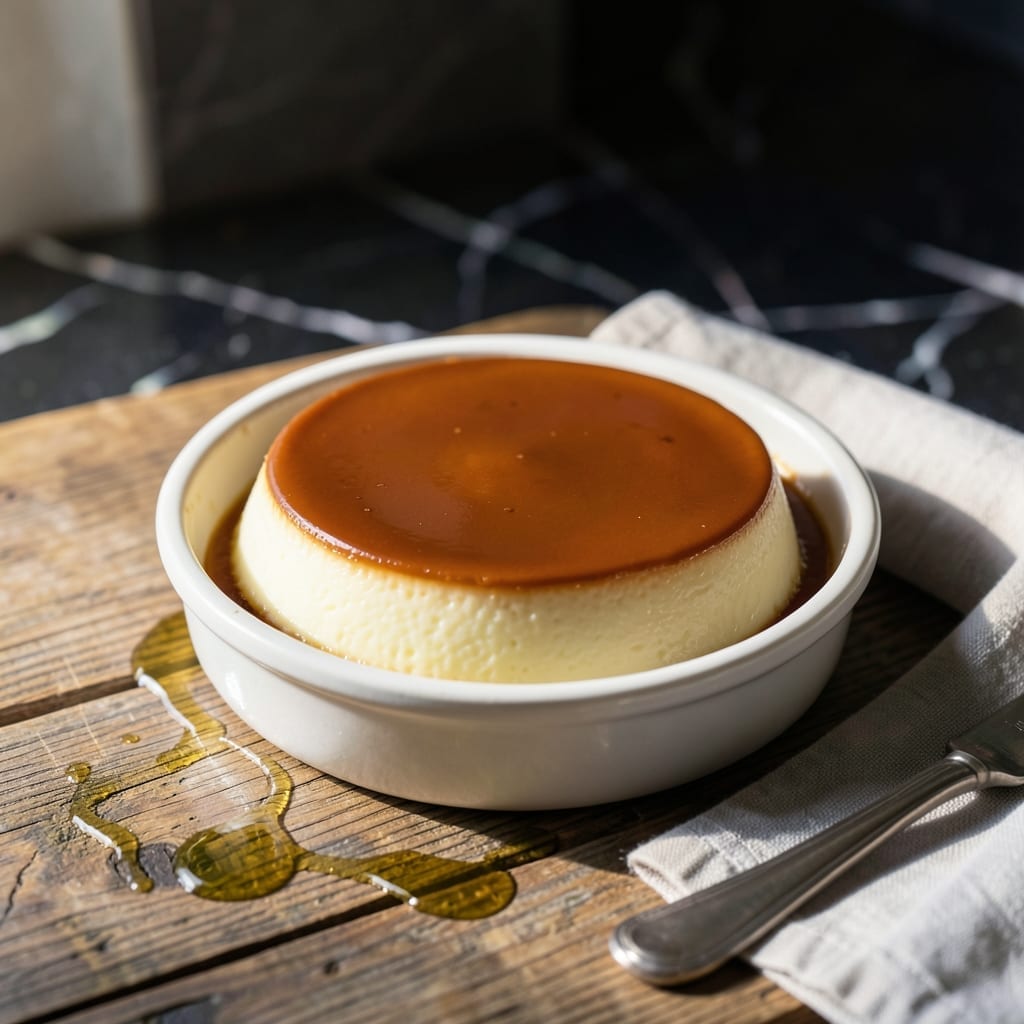
There’s something truly special about a perfectly executed Cuban flan—its silky texture and deep caramelized sugar topping create a dessert that’s both elegant and comforting. This recipe has been refined to deliver that signature smooth custard with just the right amount of sweetness.
The key lies in the balance of ingredients and precise baking. By carefully caramelizing the sugar first and then pouring the custard mixture over it, you ensure that rich, amber layer that defines authentic flan. The custard itself comes together with simple pantry staples.
As it bakes, the flan transforms into a creamy masterpiece with a glossy surface. The contrast between the firm caramel top and the velvety custard beneath is what makes this dessert unforgettable. Every bite offers that perfect harmony of textures.
This version stays true to traditional Cuban flan while being approachable for home cooks. The results speak for themselves.
Ingredients for Flan Recipe Cuban
Simple pantry staples create this elegant Cuban dessert with its signature caramel top.
| Ingredient | Amount | Notes |
|---|---|---|
| Granulated Sugar 🍚 | 1 cup | For caramel layer |
| Large Eggs 🥚 | 5 whole | Room temperature preferred |
| Sweetened Condensed Milk 🥛 | 1 can | 14 oz size |
| Evaporated Milk 🥛 | 1 can | 12 oz size |
| Vanilla Extract 🌿 | 1 tsp | Pure vanilla preferred |
| Whole Milk 🥛 | ½ cup | For custard mixture |
| Water 💧 | ¼ cup | For caramel syrup |
| Salt 🧂 | 0.125 tsp | Pinch for balance |
| Cinnamon Stick 🌿 | 1 whole | Optional for infusion |
The condensed and evaporated milk are non-negotiable here—Borden or Nestlé Carnation are the standard brands at any supermarket. Room temperature eggs incorporate more smoothly into the custard, so pull them out 30 minutes before starting. For the sugar, basic granulated works perfectly (no need for fancy raw or turbinado). The vanilla should be pure extract—not imitation—for that authentic depth of flavor.
No condensed milk? Simmer regular milk with sugar until reduced by half as a last resort, but the texture won’t be identical. Evaporated milk can be swapped with half-and-half for richness, though the custard may be slightly less firm. The water in the caramel helps prevent crystallization—don’t skip it. If you’re avoiding dairy, coconut condensed and evaporated milks work in a pinch, but the flavor profile shifts noticeably.
The custard mixture can sit for 10 minutes while your oven preheats—no harm done. Baked flan keeps 4-5 days refrigerated, though it’s best within 48 hours. Always cover with plastic wrap pressed directly onto the surface to prevent a skin from forming. Caramel may weep slightly after storage—this is normal.
Why You’ll Love This Recipe
- Five Ingredient Magic: I love that this only needs sugar, eggs, condensed milk, evaporated milk, and vanilla—no fancy shopping required.
- Caramelized Perfection: That first bite of silky custard with the bitter-sweet caramel on top? I make it just to have that moment.
- Dinner Party Hero: Honestly, it’s my secret weapon for potlucks—looks impressive but takes 10 minutes to mix.
- Fridge Friendly: Leftovers keep beautifully, so I can treat myself to a slice three days later without guilt.
Step-by-Step Instructions for Cuban Flan
Master the technique for a silky custard with a perfectly caramelized sugar topping.
Step 1: Prepare the Caramel Layer
In a small saucepan, combine the 1 cup Granulated Sugar and 0.25 cup Water. Cook over medium heat without stirring until the sugar dissolves completely. This should take 5-7 minutes.
Once dissolved, increase heat to medium-high and watch closely. Swirl the pan gently as the mixture turns golden amber, then deep amber—this happens quickly. Immediately pour into your flan mold, tilting to coat the bottom evenly.
For added depth, place the 1 whole Cinnamon Stick in the hot caramel before it sets. Let cool completely—the caramel will harden into a glossy layer.
Step 2: Blend the Custard Mixture
In a blender, combine the 5 whole Large Eggs, 1 can Sweetened Condensed Milk, 1 can Evaporated Milk, 0.5 cup Whole Milk, 1 tsp Vanilla Extract, and 0.125 tsp Salt. Blend until completely smooth, about 30 seconds.
The mixture should be pale yellow and silky with no streaks of egg or milk. I strain it through a fine-mesh sieve into a pitcher for extra smoothness—this ensures a flawless texture in the finished flan.
Let the mixture rest for 5 minutes to allow any bubbles to settle. This prevents air pockets from forming during baking.
Step 3: Assemble and Bake in Water Bath
Pour the custard mixture over the hardened caramel in the mold. Tap the mold gently on the counter to release any large air bubbles. Cover tightly with aluminum foil to prevent a skin from forming.
Place the mold in a larger baking dish and transfer to a preheated 350°F oven. Carefully pour hot water into the baking dish until it reaches halfway up the sides of the flan mold—this creates a gentle, even heat.
Bake for 50-60 minutes until the center is just set but still slightly jiggly, like gelatin. Overbaking results in a dense texture, so check at the 50-minute mark.
Step 4: Cool and Chill Completely
Remove the flan from the water bath and let it cool at room temperature for 1 hour. The custard will continue to set as it cools, and the caramel will loosen slightly.
Once cooled, refrigerate for at least 4 hours, but preferably overnight. This chilling time is crucial for the flan to fully set and develop its signature silky texture. The caramel will also soften, making it easier to invert later.
When ready to serve, run a thin knife around the edge of the mold to loosen, then invert onto a serving plate. The caramel should cascade over the custard in a glossy sauce.
Pro Tips For Making Flan Recipe Cuban
- Preheat the Oven: Set it to 350°F and give it a full 20 minutes to stabilize—flan hates temperature swings, and I learned this the hard way after my first few came out lopsided.
- Strain the Eggs: Whisk the eggs, then strain them through a fine sieve into the milk mixture. Sounds fussy, but it removes those pesky white streaks and makes the texture silky smooth.
- Skip the Dark Caramel: Cook the sugar just until it turns a light amber, not dark brown. After burning three batches, I finally figured out that bitter caramel ruins the delicate vanilla flavor.
- Use a Water Bath: Place your flan dish in a larger pan with about 1 inch of hot water. My grandmother swore by this, and she was right: it prevents cracks and ensures even cooking.
Dietary Considerations for These Flavors
Gluten-Free Naturally
This traditional Cuban flan is inherently gluten-free since it contains no wheat, barley, or rye ingredients. The custard relies solely on eggs and dairy, making it safe for those with celiac disease or gluten sensitivity. I always double-check my vanilla extract label to ensure no hidden gluten additives.
Dairy-Free Adaptation
For lactose intolerance, use coconut condensed milk and coconut evaporated milk—both are widely available at supermarkets like Whole Foods. Replace the whole milk with unsweetened almond milk. The flavor will have subtle coconut notes, but the texture remains silky.
Lower Sugar Option
To reduce sugar, use ½ cup granulated sugar for the caramel and add ½ tsp stevia to the custard mixture. The condensed milk still provides sweetness, but this cuts total sugar by about 30%. The caramel layer may be thinner but still delicious.
Egg Allergy Workaround
While challenging, you can make a custard using silken tofu and cornstarch as thickeners. Blend 12 oz silken tofu with 3 tbsp cornstarch and the milks. The texture won’t be identical, but it’s a viable alternative for egg allergies.
Vegan Version
Combine coconut condensed milk, coconut evaporated milk, and ½ cup full-fat coconut milk. Use agar-agar (1 tsp) as a setting agent instead of eggs. Dissolve it in warm milk before blending. Chill for 6 hours minimum. 💪
Diabetic Considerations
For diabetic diets, sugar-free condensed milk and a sugar substitute like Swerve in the caramel work well. Monitor portion sizes, as the custard still contains natural milk sugars. One ¼-cup serving has about 15g net carbs in the traditional version.
Nutrition Facts
Frequently Asked Questions
Why does my flan have bubbles on top?
Bubbles form when air gets trapped in the custard. To prevent this, blend the mixture thoroughly and let it rest for 5 minutes before pouring into the mold. Tap the mold gently on the counter to release any air pockets.
Can I make flan without a water bath?
It’s not recommended. A water bath (350°F oven) provides gentle, even heat which is crucial for that silky texture. Without it, the flan may cook unevenly or develop a rubbery texture.
How do I know when the flan is done?
The center should be just set but still slightly jiggly, like gelatin. Overbaking results in a dense texture, so start checking at the 50-minute mark. The custard will continue to set as it cools.
Can I use a different mold?
Yes, but avoid glass as it can crack in the water bath. A metal or ceramic flan mold works best. Ensure whatever you use can fit inside a larger baking dish for the water bath.

- Pina Colada Dip Recipe Red Lobster: Tropical Creaminess With Toasted Coconut - October 12, 2026
- Pickled Sweet Cherry Peppers Recipe Canning: Tangy Heat for Pantry Staples - October 12, 2026
- Peppercorn Sauce Recipe Vegan: Rich Umami Depth Without Cream - October 12, 2026