
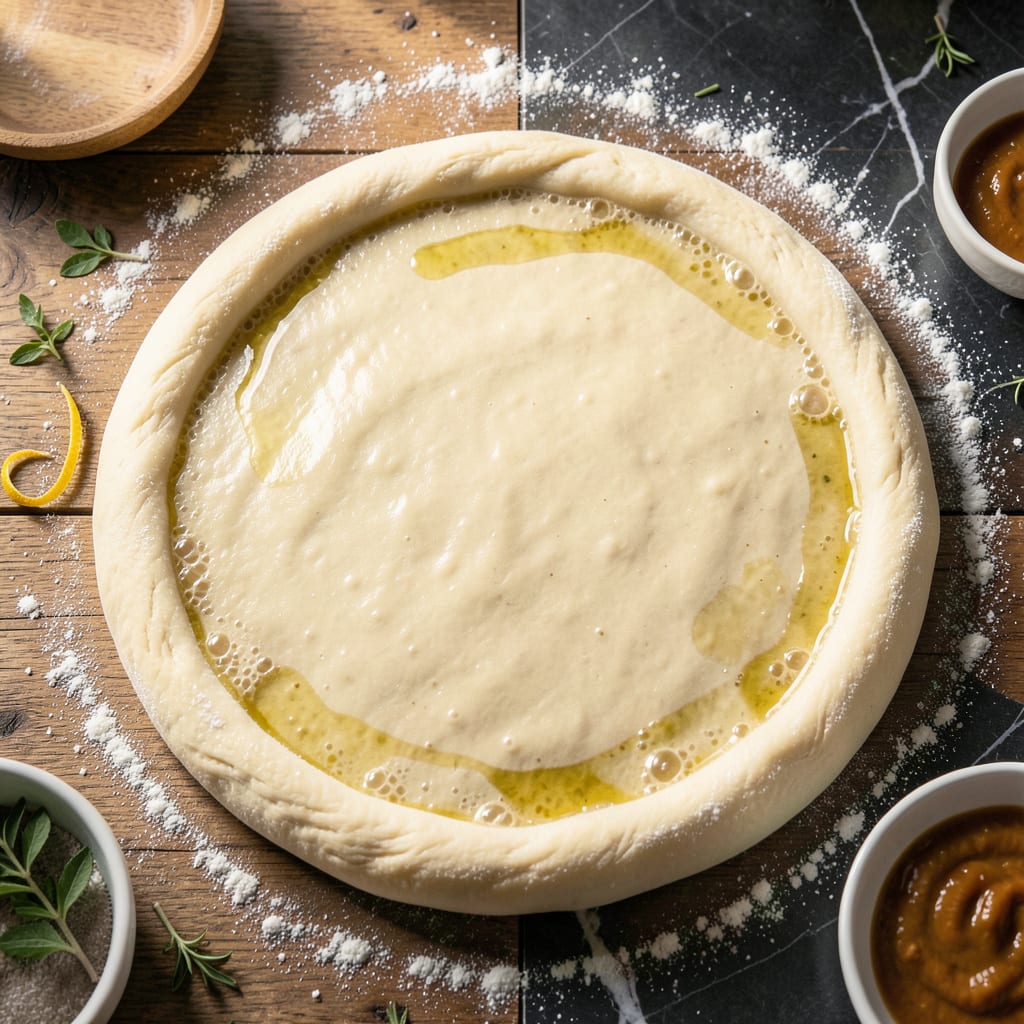
This pizza dough recipe delivers a chewy crust with an airy bite, using Fleischmann’s active dry yeast for reliable results every time.
With simple ingredients and a straightforward process, you’ll achieve a golden, flavorful base that holds toppings perfectly. The dough comes together quickly and rises beautifully for homemade pizza night.
Ingredients for Fleischmann’s Active Dry Yeast Pizza Dough
Fleischmann’s yeast and basic pantry staples create this reliable homemade pizza foundation with chewy texture.
| Ingredient | Amount | Notes |
|---|---|---|
| Fleischmann’s Active Dry Yeast 🍞 | 2 ¼ tsp | One packet, proofed in warm water |
| All-Purpose Flour 🌾 | 3 ½ cups | Plus extra for dusting surface |
| Warm Water 💧 | 1 ¼ cup | 105-110°F for yeast activation |
| Extra-Virgin Olive Oil 🫒 | 2 tbsp | Divided for dough and bowl |
| Granulated Sugar 🧈 | 1 tsp | Feeds the yeast for rising |
| Kosher Salt 🧂 | 1 ½ tsp | Diamond Crystal preferred for consistency |
| Cornmeal 🌽 | ¼ cup | For dusting pizza peel (optional) |
| Semolina Flour 🌾 | 2 tbsp | Alternative to cornmeal for dusting |
The yeast is non-negotiable here—Fleischmann’s Active Dry Yeast delivers consistent results every batch. Look for it in the baking aisle at any major supermarket (Walmart, Kroger, Safeway all stock it). Check the expiration date; old yeast won’t rise properly. The flour should be unbleached all-purpose for best texture. King Arthur or Gold Medal are excellent choices if you want to upgrade.
No Fleischmann’s on hand? Any active dry yeast works at the same ratio. Out of cornmeal? Semolina flour or extra all-purpose dusts the peel just fine. Sugar can be swapped for honey at half the amount, but stick to granulated for reliability. The olive oil matters—use extra-virgin for flavor depth. Don’t skip the salt; it’s what balances the dough’s sweetness.
Store yeast in the freezer for up to 1 year once opened. Flour keeps 6-12 months in a cool, dark pantry. The dough itself can rest in the fridge for 24-48 hours before baking, which actually enhances flavor development.
Why You’ll Love This Recipe
- One Bowl Wonder: Honestly, just mix the Fleischmann’s yeast, flour, warm water, and a drizzle of olive oil—no fancy tools, no mess.
- That Yeast Magic: The sugar wakes up the yeast so fast I can almost smell the dough rising before it even hits the oven.
- Friday Night Hero: I’ve used this dough for everything from pepperoni to veggie-loaded flatbreads—even the kids’ crazy dessert pizzas.
- Pennywise Perfection: A single packet of Fleischmann’s yeast makes two large pizzas, and it’s still cheaper than delivery.
Step-by-Step Instructions for Fleischmann’s Active Dry Yeast Pizza Dough
Master the technique for a perfectly chewy crust with an airy interior every time.
Step 1: Activate the Yeast
In a small bowl, combine the 2.25 tsp Fleischmann’s Active Dry Yeast, 1 tsp Granulated Sugar, and 1.25 cup Warm Water heated to 105-110°F. Stir gently and let sit for 5-10 minutes until the mixture becomes frothy and nearly doubled in volume.
The sugar feeds the yeast, while the precise water temperature ensures proper activation without killing the microorganisms. You’ll see bubbles forming at the surface and a distinct yeasty aroma—this confirms the yeast is alive and ready to leaven your dough.
Step 2: Form the Dough
In a large mixing bowl, combine the 3.5 cups All-Purpose Flour and 1.5 tsp Kosher Salt. Create a well in the center and pour in the activated yeast mixture along with 1 tbsp Extra-Virgin Olive Oil.
Using a wooden spoon or dough whisk, gradually incorporate the flour into the wet ingredients until a shaggy dough forms. Switch to kneading by hand on a lightly floured surface for 8-10 minutes, until the dough becomes smooth and elastic. It should spring back slowly when pressed with a finger.
Step 3: First Rise
Lightly grease a clean bowl with the remaining 1 tbsp Extra-Virgin Olive Oil and place the dough inside, turning to coat all sides. Cover with a damp kitchen towel or plastic wrap and let rise in a warm, draft-free area for 1-2 hours, or until doubled in size.
Pro tip: To test if the dough has risen sufficiently, gently press two fingers into it. If the indentations remain, the dough is ready. This first rise develops the gluten structure for that signature chewy texture.
Step 4: Shape and Second Rise
Punch down the risen dough to release the air, then divide it into 4 equal portions for individual pizzas. On a surface dusted with extra All-Purpose Flour, roll each portion into a ¼-inch thick circle.
For easy transfer to the oven, sprinkle a pizza peel or inverted baking sheet with 0.25 cup Cornmeal or 2 tbsp Semolina Flour to prevent sticking. Place the shaped dough on the prepared surface, cover loosely, and let rest for 15-20 minutes for a second rise while your oven preheats.
Step 5: Preheat and Prepare for Baking
Place a pizza stone or inverted baking sheet in your oven and preheat to 475°F for at least 30 minutes. This high heat mimics a professional pizza oven, ensuring a crisp crust with a properly cooked interior.
After the second rise, your dough should look slightly puffy with small bubbles on the surface. Top with your favorite sauce and toppings, then slide the pizza onto the preheated stone or baking sheet for baking. The preheated surface guarantees immediate cooking contact for optimal texture.
Pro Tips For Making Fleischmann’S Active Dry Yeast Pizza Dough
- Proof the Yeast: Always dissolve Fleischmann’s Active Dry Yeast in warm water (105-110°F) with a pinch of sugar first—if it doesn’t foam in 5-10 minutes, your dough won’t rise, and you’ll waste flour. I learned this the hard way after a flat, sad pizza night.
- Measure Flour Right: Spoon all-purpose flour into your measuring cup and level it off—scooping directly from the bag packs it down, and you’ll end up with dense, tough dough. Sounds fussy, but it actually changes the texture.
- Skip Cold Water: If your water is too cold, the yeast won’t activate, and if it’s too hot, you’ll kill it. Use a thermometer or test it on your wrist—it should feel warm, not hot. After ruining two batches, I finally started checking.
- Oil the Bowl: Coat the rising bowl with about 1 tablespoon of extra-virgin olive oil before adding the dough—it prevents sticking and makes cleanup easier. My grandmother swore by this, and she was right: it also gives the crust a subtle richness.
Common Mistakes When Making Great fleischmanns active dry yeast pizza dough
Water Temperature Issues
Using water that’s too hot (above 110°F) will kill the yeast instantly. I always use a kitchen thermometer to verify the temperature. Conversely, water below 105°F won’t activate the yeast properly, leaving you with dense dough. 🌡️
Incomplete Proofing
Rushing the first rise is a common mistake. The dough needs the full 1-2 hours in a warm spot to double in size. I check by pressing my finger into the dough—if the indentation stays, it’s ready.
Over-Flouring Surface
Adding too much flour while kneading can make your crust tough and dry. Dust your surface lightly with just 1-2 tbsp of flour at a time. The dough should feel slightly tacky but not sticky.
Skipping Second Rise
Don’t skip the 15-20 minute rest after shaping. This final rise helps the dough relax, making it easier to stretch and preventing it from shrinking back when you try to shape it.
Cold Ingredients
Using cold water or flour straight from the fridge slows yeast activation. I always let my ingredients come to room temperature first. This ensures consistent rising and better texture in your final crust. ✨
Improper Storage
If making ahead, store dough in an airtight container in the fridge for up to 48 hours. Let it sit at room temperature for 30 minutes before shaping to take the chill off.
Nutrition Facts
Frequently Asked Questions
Can I use instant yeast instead of active dry?
Yes, but adjust the method. Skip proofing and mix instant yeast directly with dry ingredients. Reduce quantity by 25% since it’s more potent.
Why isn’t my dough rising?
Check your yeast freshness first. Old yeast loses potency. Also ensure water was 105-110°F and your rising spot is warm. Cold environments slow activation.
How long can I refrigerate the dough?
Up to 48 hours in an airtight container. The cold slows fermentation, developing more flavor. Let it warm 30 minutes before shaping.
What’s the ideal thickness for pizza dough?
Roll to ¼-inch for a crispy yet chewy crust. Thinner dough bakes faster but may tear. Thicker takes longer and yields a breadier texture.

- Beef Cutlet Recipe Ideas: Crispy Breaded Patties With Bold Seasonings - September 28, 2026
- Bluefin Tuna Recipe Ideas: Sushi-Grade Seared and Sesame-Crusted - September 28, 2026
- Blue Zone Recipe Ideas: Longevity-Boosting Meals for Vibrant Living - September 28, 2026