
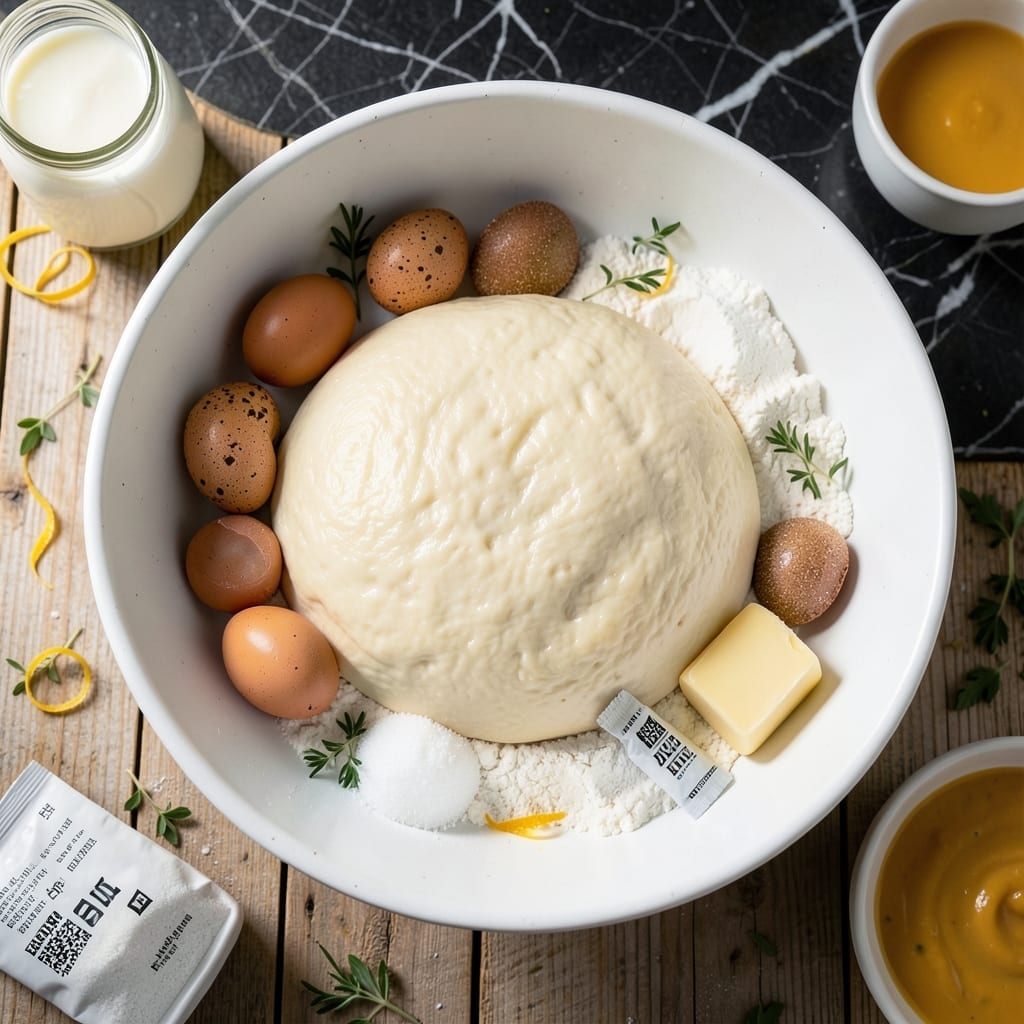
Mastering the art of perfect dough requires precision and patience, but the results are always worth it. This method delivers a texture so light and airy, it feels like biting into a cloud.
With just a few simple ingredients and the right technique, you can achieve consistently fluffy results every time. The key lies in proper kneading and allowing the dough to rise until doubled in size.
The first bite reveals layers of soft, pillowy goodness that melt in your mouth. Whether you’re making bread, rolls, or pastries, this foundation ensures professional-quality bakes.
Follow these steps carefully, and you’ll never settle for dense or tough dough again.
Ingredients for Fluffy Dough
Precision matters for pillowy texture in this versatile baked foundation.
| Ingredient | Amount | Notes |
|---|---|---|
| Bread Flour 🌾 | 4 cups | High-protein for structure |
| Whole Milk 🥛 | 1 cup | Warmed to 110°F |
| Large Eggs 🥚 | 2 whole | Room temperature preferred |
| Granulated Sugar 🍚 | ¼ cup | Activates yeast effectively |
| Active Dry Yeast 🍞 | 2 ¼ tsp | One packet plus extra |
| Unsalted Butter 🧈 | 4 tbsp | Softened to room temperature |
| Fine Sea Salt 🧂 | 1 ½ tsp | Enhances flavor balance |
| Vanilla Extract 🌿 | 1 tsp | Pure for best flavor |
| Honey 🍯 | 2 tbsp | Adds subtle sweetness |
| Olive Oil 🫒 | 1 tbsp | For greasing bowl |
The flour is non-negotiable—King Arthur Bread Flour is the gold standard for its 12.7% protein content, which builds the gluten structure needed for that cloud-like rise. Yeast freshness is critical; check the expiration date and store unopened packets in the freezer. Whole milk adds richness, but avoid ultra-pasteurized varieties as they can inhibit yeast activity. Plugrá or European-style butter gives superior flavor and texture.
No bread flour? All-purpose flour plus 1 tbsp vital wheat gluten per cup works in a pinch. Out of whole milk? Half-and-half diluted with water or even evaporated milk can substitute. Honey can be replaced with maple syrup or agave at a 1:1 ratio. The eggs provide structure, but for a richer dough, try adding one extra yolk. Skip the vanilla if making savory breads.
Dough rises best in a warm, draft-free spot—75-80°F is ideal. Refrigerate the butter and milk until ready to use. Store yeast in an airtight container in the freezer for up to 6 months. The dough itself can be refrigerated overnight for slow fermentation, enhancing flavor development.
Why You’ll Love This Recipe
- One Bowl Wonder: I just dump the bread flour, milk, eggs, sugar and yeast in one bowl—no fancy equipment, no fuss.
- Pillowy Perfection: The yeast and whole milk team up to create that cloud-like texture that’s impossible to resist.
- Endless Possibilities: I’ve turned this into cinnamon rolls, dinner rolls and even mini loaves for sandwiches.
- Budget Friendly Batch: A few pantry staples make enough dough for a week’s worth of meals, and it freezes beautifully.
Step-by-Step Instructions for Fluffy Dough
Here’s my proven method for achieving that perfect pillowy texture you’re after.
Step 1: Activate the Yeast and Warm the Milk
Start by warming the 1 cup Whole Milk to exactly 110°F—any hotter and you’ll kill the yeast, any cooler and it won’t activate properly. I use an instant-read thermometer for precision. In a small bowl, combine the warmed milk with the 0.25 cup Granulated Sugar and 2.25 tsp Active Dry Yeast.
Let this mixture sit for 5-10 minutes until it becomes frothy and doubles in volume. This visual confirmation tells you the yeast is alive and working. If it doesn’t foam, your yeast might be expired—start over with fresh yeast to ensure the perfect rise.
Step 2: Combine Wet and Dry Ingredients
In a large mixing bowl, whisk together the 4 cups Bread Flour and 1.5 tsp Fine Sea Salt. The high-protein content in bread flour gives your dough the structure it needs for that fluffy texture. In a separate bowl, beat the 2 whole Large Eggs with the 1 tsp Vanilla Extract and 2 tbsp Honey.
Pour the activated yeast mixture and the egg mixture into the dry ingredients. Add the 4 tbsp Unsalted Butter (softened to room temperature) and mix until a shaggy dough forms. The butter should be soft enough to blend easily but not melted—this ensures proper incorporation for a tender crumb.
Step 3: Knead Until Smooth and Elastic
Turn the dough out onto a lightly floured surface. Knead for 8-10 minutes by hand, or use the dough hook attachment on a stand mixer for 6-7 minutes on medium speed. You’re aiming for a smooth, elastic dough that bounces back when you press it with your finger.
If the dough feels too sticky, add a little more bread flour, 1 tablespoon at a time. If it’s too dry, add a splash of warm milk. The dough should be slightly tacky but not stick to your hands when properly kneaded. This step develops the gluten network essential for that perfect fluffy texture.
Step 4: First Rise Until Doubled in Size
Lightly grease a large bowl with the 1 tbsp Olive Oil and place the dough inside, turning to coat all sides. Cover the bowl with a clean kitchen towel or plastic wrap and let it rise in a warm, draft-free place for 1-2 hours, or until doubled in size.
I like to place mine in the oven with the light turned on for a consistent warm environment. The dough is ready for the next step when it has visibly doubled and a finger pressed into it leaves a slight indentation. This first rise is crucial for developing flavor and the airy structure that makes this dough so special.
Step 5: Punch Down and Shape for Final Rise
Once the dough has doubled, gently punch it down to release the air. Turn it out onto a lightly floured surface and shape it according to your recipe’s needs—whether that’s rolls, loaves, or individual portions.
Place the shaped dough on a parchment-lined baking sheet, cover loosely, and let it rise again for 30-45 minutes until puffy. This second rise ensures maximum fluffiness. Now your dough is ready to bake into whatever perfect creation you have in mind.
Pro Tips For Making Fluffy Dough
- Test Your Yeast: Always proof your active dry yeast in warm milk with a pinch of sugar first—if it doesn’t bubble within 5-10 minutes, your dough won’t rise. I learned this the hard way after wasting a whole batch of bread flour on dead yeast.
- Warm the Eggs: Take your large eggs out of the fridge 30 minutes before mixing, or soak them in warm water for 10 minutes. Cold eggs can shock the yeast and slow down the rise, leaving you with dense dough instead of fluffy.
- Skip the Over-Flouring: Resist the urge to add extra bread flour when kneading—stick to the recipe’s measurement. Too much flour toughens the dough and weighs it down, so your final texture suffers.
- Use Bread Flour Only: Sounds obvious, but swapping in all-purpose flour changes the outcome. Bread flour’s higher protein content gives the dough structure to trap air, which is what makes it light and fluffy.
Serving Suggestions for Leftovers
Fresh from the Oven
Serve warm rolls straight from the oven with a brush of melted butter and a sprinkle of flaky sea salt. The contrast of warm, soft dough with that salty crunch is irresistible. I always let my rolls cool for 5 minutes before serving to avoid burning little fingers. 💛
Sweet Breakfast Treats
Transform your dough into cinnamon rolls by spreading with 2 tbsp softened butter, ¼ cup brown sugar, and 1 tbsp cinnamon. Roll up, slice, and bake for a decadent breakfast. Drizzle with cream cheese frosting for the ultimate indulgence.
Savory Dinner Rolls
Shape into 12 equal balls for perfect dinner rolls. Brush with olive oil and sprinkle with dried herbs like rosemary or thyme before baking. These pair beautifully with soups, stews, or as a side for any meal.
Pull-Apart Bread
Bake in a 9×13-inch pan for pull-apart bread that’s perfect for sharing. Serve with a warm garlic-herb butter dip. I love making this for family gatherings—it disappears faster than any other bread I make.
Sweet Bread Options
Add ½ cup raisins or chopped dried fruit to the dough for a sweet twist. Shape into a loaf and bake for a delicious breakfast bread. A light glaze of powdered sugar and milk adds a finishing touch.
Make-Ahead Convenience
This dough also makes excellent overnight cinnamon rolls. Prepare the rolls the night before, cover, and refrigerate. In the morning, let rise for 1 hour at room temp, then bake as usual. Freshly baked rolls with zero morning effort! ✨
Nutrition Facts
Frequently Asked Questions
Why did my dough turn out dense?
Over-kneading or insufficient rising time often causes this. Knead just until smooth (8-10 minutes) and let it rise until doubled in a warm spot.
Can I use all-purpose flour instead?
Yes, but add 1 tablespoon vital wheat gluten per cup to mimic bread flour’s protein content. This ensures proper structure for fluffiness.
How do I know when the dough is ready to bake?
After shaping, let it rise until puffy and a finger pressed gently into the dough leaves a slight indentation that springs back slowly.
Can I make this dough ahead of time?
Prepare the dough, cover tightly, and refrigerate overnight. The cold fermentation enhances flavor and texture.

- BBQ Sausage Recipe Oven: Smoky Depth Without the Grill - September 28, 2026
- BBQ Chicken Bowl Recipe Rice: Smoky Sweetness Over Fluffy Grains - September 28, 2026
- Beef Cutlet Recipe Ideas: Crispy Breaded Patties With Bold Seasonings - September 28, 2026