
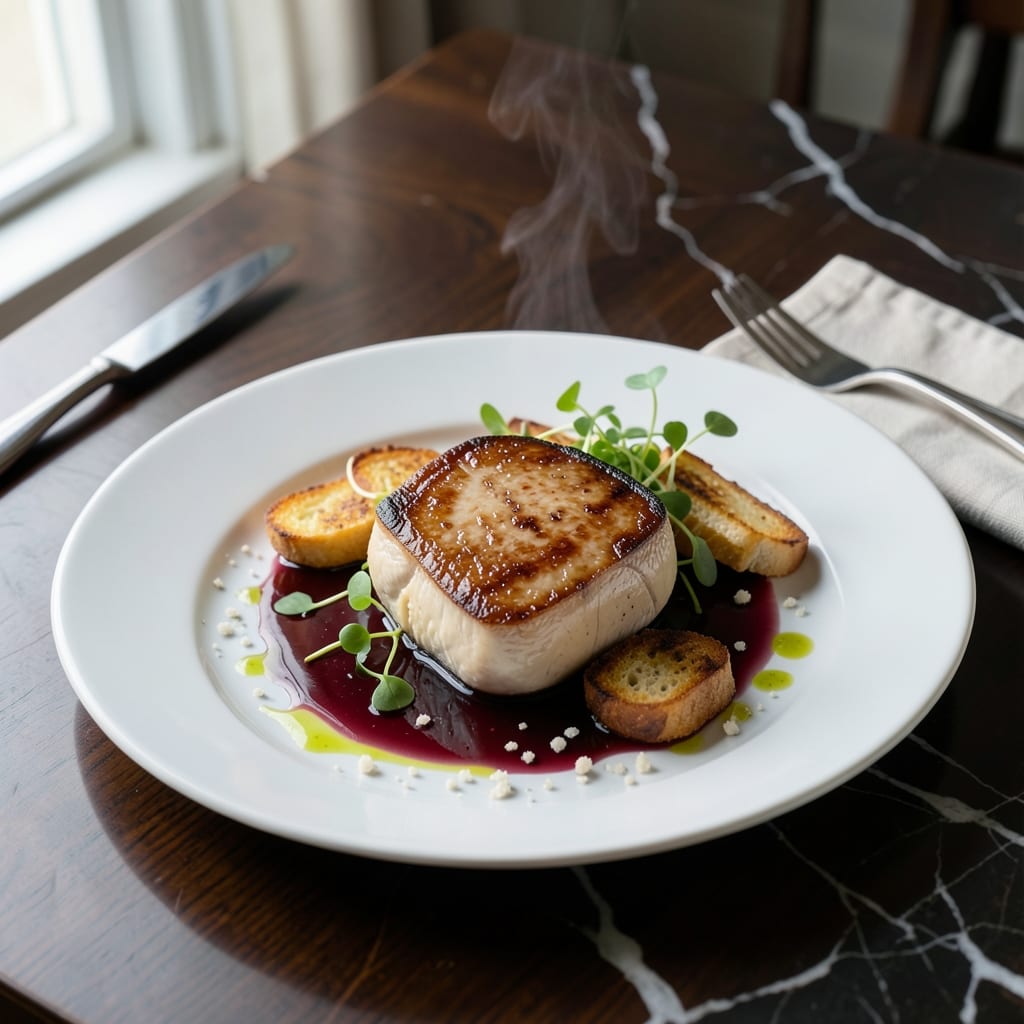
Achieving perfect seared foie gras requires precision and respect for the ingredient. This luxurious dish demands attention to detail, from selecting the finest lobe to mastering the cooking temperature.
The key lies in a hot pan and a watchful eye—the lobe should develop a golden crust while remaining tender and creamy inside. Every second counts when working with this delicate ingredient.
What results is a dish that embodies elegance: a crisp exterior giving way to a velvety, buttery interior. The contrast in textures makes each bite unforgettable.
Serve immediately with complementary accompaniments to highlight its natural richness. The technique is simple, but the outcome is extraordinary.
Ingredients for Foie Gras Recipe Gordon Ramsay
Luxury demands precision. These refined ingredients create an unforgettable seared masterpiece with crisp and creamy contrast.
| Ingredient | Amount | Notes |
|---|---|---|
| Grade A Foie Gras Lobe 🍖 | 1 whole | About 1 to 1.25 lb, veins removed |
| Kosher Salt 🧂 | 1 tsp | Diamond Crystal preferred for texture |
| White Pepper 🌶️ | ½ tsp | Freshly ground for subtle heat |
| Granulated Sugar 🍚 | 1 tsp | For balancing richness |
| Port Wine 🍷 | ½ cup | Reduction for deglazing pan |
| Unsalted Butter 🧈 | 2 tbsp | High-quality, European-style preferred |
| Neutral Oil 🛢️ | 1 tbsp | Grapeseed or avocado for high heat |
| Fresh Thyme Sprigs 🌿 | 4 whole | For infusion in port reduction |
| Shallot 🧅 | 1 whole | Finely minced for reduction |
| Balsamic Vinegar 🍯 | 1 tbsp | Aged for complexity |
| Black Peppercorns 🌶️ | ½ tsp | Lightly crushed for garnish |
| Fleur de Sel 🧂 | ¼ tsp | For finishing crystal texture |
The foie gras lobe is non-negotiable—sourced from reputable purveyors like Hudson Valley or La Belle Fermière. Grade A is essential for its firm texture and clean flavor. Look for lobes with uniform color and no bruising. Vein removal is critical (ask your butcher to prepare it) and must be done the day before cooking. Specialty butchers or online gourmet shops are your best bet for quality.
No port wine? Dry Madeira or sherry works as a substitute for deglazing. White pepper is preferred over black for its delicate flavor profile, but black pepper works in a pinch. The butter must be unsalted—salted butter will over-season the dish. European-style butters like Plugrá or Kerrygold have the ideal fat content for searing.
Foie gras must be cooked immediately after prepping. The port reduction can be made 1 day ahead and reheated gently. Serve the dish within 5 minutes of cooking—it loses its delicate texture quickly. Store raw lobes in the coldest part of your fridge for up to 3 days.
Why You’ll Love This Recipe
- One Pan Wonder: I just sear the lobe, deglaze with port, and it’s done—no fancy equipment, just a pan and 10 minutes.
- Luxury on a Plate: That silky foie gras with the sweet port reduction? Honestly, it tastes like a Michelin-starred bite at home.
- Special Occasion Stunner: I serve this for holidays or date nights, and it always feels like I’ve outdone myself.
- Leftovers Reinvented: The next day, I slice the extra foie gras thin and crisp it up for sandwiches—still ridiculous.
Step-by-Step Instructions for Luxurious Seared Foie Gras
Master this refined technique to achieve restaurant-quality results with velvety texture and caramelized crust.
Step 1: Prepare and Season the Foie Gras Lobe
Begin by carefully separating the Grade A Foie Gras Lobe into its two natural lobes while keeping the pieces intact. Gently remove any remaining veins or blood spots with the tip of a sharp paring knife, taking care not to tear the delicate flesh.
Pat the lobes completely dry with paper towels—moisture prevents proper searing. Season all surfaces evenly with 1 tsp Kosher Salt, 0.5 tsp White Pepper, and 1 tsp Granulated Sugar. The sugar enhances caramelization while the white pepper adds subtle heat without visible specks. Let the seasoned lobes rest at room temperature for 20 minutes to temper.
Step 2: Sear the Foie Gras to Perfection
Place a chilled skillet over medium-high heat and add 1 tbsp Neutral Oil. Once the oil shimmers, add the foie gras lobes, presentation side down first. Sear undisturbed for 1-2 minutes until a deep mahogany crust forms—this creates the signature caramelized exterior.
Using a thin metal spatula, carefully flip the lobes and sear the second side for 45-60 seconds until equally browned. The interior should remain pink and buttery—overcooking will render the fat and toughen the texture. Transfer to a warm plate, crust side up, to preserve the sear.
Step 3: Create the Port Wine Reduction
Reduce heat to medium and add 1 tbsp Unsalted Butter to the same skillet. When foaming subsides, add finely minced Shallot and cook for 1 minute until translucent. Pour in 0.5 cup Port Wine and 1 tbsp Balsamic Vinegar, scraping up the fond with a wooden spoon to incorporate those rich, caramelized bits.
Add 4 whole Fresh Thyme Sprigs and 0.5 tsp Black Peppercorns, then simmer for 5-7 minutes until the liquid reduces by half and coats the back of a spoon. The reduction should be glossy and syrupy, with a deep, complex aroma.
Step 4: Finish and Plate with Precision
Remove the thyme sprigs and peppercorns from the reduction. Off heat, whisk in the remaining 1 tbsp Unsalted Butter to achieve a velvety, emulsified sauce. Taste and adjust seasoning if needed.
To serve, spoon a small pool of reduction onto each warm plate. Place a foie gras lobe on top, crust side up. Finish with a pinch of 0.25 tsp Fleur de Sel for a delicate crunch and visual contrast. The final dish should showcase a perfect sear, a tender interior, and a sauce that complements without overpowering.
Pro Tips For Making Foie Gras Recipe Gordon Ramsay
- Chill the Foie Gras: I learned this the hard way—let the lobe sit in ice water for 2 hours before prepping to firm it up, or you’ll struggle to separate the veins without tearing.
- Score the Surface: Use a sharp knife to make a light crosshatch pattern on the fat side—this actually changes the outcome by helping it render evenly and crisp up.
- Skip the Overcook: After burning two lobes, I finally figured out it needs just 30-45 seconds per side in a screaming hot pan to stay creamy inside.
- Reduce the Port: Simmer the port wine until it coats the back of a spoon—this isn’t the prettiest step, but it’s the tastiest way to get that glossy, concentrated glaze.
Wine and Beer Pairings for These Flavors
Classic Wine Pairings
For this dish, I always reach for a Sauternes—its honeyed sweetness and acidity cut through the richness beautifully. The noble rot in these Bordeaux wines creates a perfect harmony with the foie gras. Serve chilled to 50-55°F for optimal balance. 🍷
Bold Red Options
A Pinot Noir from Burgundy offers earthy notes that complement without overwhelming. I prefer Domaine Drouhin for its bright acidity. For more intensity, try a Barolo with its tannic structure and cherry notes.
Sparkling Choices
Champagne is my secret weapon—the bubbles cleanse your palate between bites. A brut rosé from Ruinart adds a touch of berry fruit that pairs wonderfully. The acidity matches the dish’s richness perfectly.
Beer Alternatives
For beer lovers, a Belgian Tripel like Westmalle works surprisingly well. Its spicy yeast character and high carbonation stand up to the fat. Avoid hoppy IPAs—they’ll clash with the delicate flavors. 🍺
Dessert Wine Option
A Vintage Port from Graham’s offers deep fruit and chocolate notes that echo the port reduction in the recipe. Serve at 60-65°F to let the flavors open up. The sweetness balances the savory perfectly.
Nutrition Facts
Frequently Asked Questions
What’s the best way to handle the raw lobe?
Always keep it chilled until ready to cook. Handle gently to avoid tearing the delicate flesh. Pat it completely dry before seasoning for a perfect sear.
Can I use a different wine for the reduction?
Yes, dry Madeira or sherry work as substitutes. The key is using a wine with enough acidity and depth to complement the rich flavor.
How do I know when it’s perfectly cooked?
Look for a deep mahogany crust with a pink, buttery interior. It should feel slightly springy when pressed and reach 125-130°F internally.
What if my pan isn’t cold enough before searing?
Start with a chilled skillet to prevent the fat from rendering too quickly. If the pan is too warm, the exterior may burn before the interior cooks.

- BBQ Sausage Recipe Oven: Smoky Depth Without the Grill - September 28, 2026
- BBQ Chicken Bowl Recipe Rice: Smoky Sweetness Over Fluffy Grains - September 28, 2026
- Beef Cutlet Recipe Ideas: Crispy Breaded Patties With Bold Seasonings - September 28, 2026