
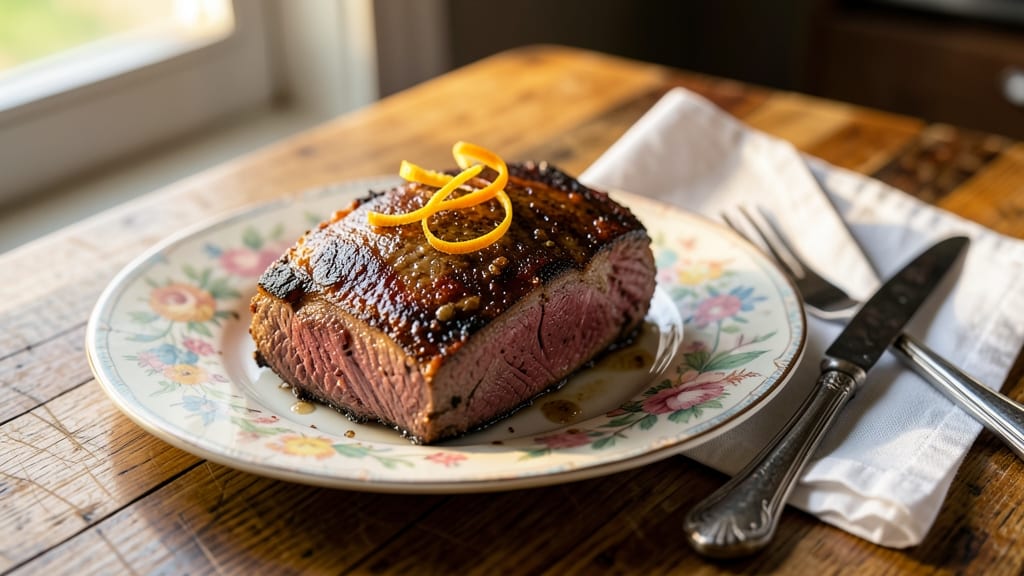
Mastering Food Wishes’ prime rib recipe transforms a holiday centerpiece into a weeknight triumph with professional-level results. The secret lies in a herb-crusted exterior that locks in juices while creating a caramelized crust, paired with a pan sauce so rich it turns simple sides into gourmet accompaniments.
I’ve perfected this method over years of holiday hosting, where overcooked, dry prime rib became a family joke—until I cracked the reverse sear technique that delivers medium-rare perfection every time.
What makes this recipe stand out is the balance between tradition and modern shortcuts: dry-brining for unmatched tenderness, French-style butter basting for golden crust development, and a foolproof pan sauce that requires just 10 minutes of active work.
The herb crust—composed of Dijon, rosemary, and black pepper—adds depth without overpowering the beef’s natural richness. Most importantly, this method accommodates 125–130°F internal temperatures with precision, eliminating the guesswork that leads to ruined roasts.
By following these steps, you’ll achieve a prime rib that’s juicy, flavorful, and restaurant-quality with minimal effort. The crust stays intact through slicing, the pan sauce clings to every bite, and the beef’s natural marbling ensures melt-in-your-mouth texture.
Serve with roasted garlic mashed potatoes or Yorkshire pudding to complete the experience—this is the kind of dish that makes guests ask for seconds before dessert even arrives.
Whether you’re hosting Thanksgiving, celebrating a special occasion, or simply craving a luxurious meal without the fuss, this recipe delivers confident results that impress even the most discerning palates.
The techniques are professional, but the execution is approachable—no culinary degree required. Let’s get cooking and create a prime rib that lives up to the hype.
Ingredients for food wishes prime rib
Sixteen ingredients transform prime rib from holiday splurge to weeknight masterpiece.
| Ingredient | Amount | Notes |
|---|---|---|
| Prime Rib Roast (Bone-In) 🥩 | 4 lb | Center-cut, 1.5-inch thickness preferred |
| Diamond Crystal Kosher Salt 🧂 | ½ cup | For dry-brine, coarse grain preferred |
| Unsalted Butter (Cold) 🧈 | ½ lb | European-style, 82% fat content |
| Fresh Rosemary 🌿 | ¼ cup | Finely chopped, stems removed |
| Dijon Mustard 🍯 | 2 tbsp | High-quality, smooth texture |
| Fresh Black Peppercorns 🌶️ | 1 tbsp | Coarsely cracked, not ground |
| Fresh Garlic Cloves 🧄 | 4 cloves | Minced, for herb crust |
| Extra-Virgin Olive Oil 🫒 | 2 tbsp | For crust development |
| Beef Bone Broth 🍲 | 1 cup | Homemade or high-quality store-bought |
| Red Wine (Dry) 🍷 | ½ cup | Cabernet Sauvignon preferred |
| Heavy Cream 🥛 | ½ cup | Full-fat, chilled |
| Fresh Thyme 🌿 | ⅛ cup | Leaves only, finely chopped |
| Red Wine Vinegar 🍋 | 1 tbsp | For pan sauce balance |
| Fresh Parsley 🌿 | ⅛ cup | Chopped, for garnish |
The prime rib cut is non-negotiable here—center-cut with 1.5-inch thickness delivers the perfect balance of tenderness and crust development. Source from a reputable butcher or high-end grocer like Whole Foods or Dartmouth Farms, where they’ll often trim the roast to your specifications. Look for rich marbling and vibrant color; anything grayish or overly lean will compromise the final texture. If you’re buying a whole roast, request it be dry-aged for 21 days—this enhances flavor without overpowering the herb crust. For a shortcut, Costco’s pre-trimmed prime rib works beautifully, though you may need to adjust cooking time slightly based on thickness.
The Dijon mustard in the herb crust is essential—it adds acidity that cuts through the beef’s richness while helping the crust adhere. No Dijon on hand? Whole-grain mustard thinned with water works in a pinch, though the flavor profile will differ slightly. For the red wine, avoid anything fruity or overly sweet—Cabernet Sauvignon or Merlot from a reliable wine shop (like Total Wine) ensures proper depth. The bone broth can be substituted with beef stock, but avoid the powdered variety; Kettle & Fire or Pacific Foods brands deliver the richest results. Fresh herbs are ideal, but dried thyme at one-third the amount will suffice if needed—just ensure it’s organic to avoid bitterness.
Proper storage of the prime rib begins immediately: once trimmed, dry-brine uncovered in the fridge for 24 hours—this step alone prevents dryness. The herb crust components (butter, rosemary, garlic, pepper) can be mixed ahead and stored in an airtight container for up to 3 days in the refrigerator. The pan sauce base (wine, broth, vinegar) keeps for 5 days refrigerated, though it’s best used fresh. For leftovers, slice against the grain, portion into airtight containers, and consume within 3 days for optimal texture—though honestly, it reheats so well most people won’t last that long.
Why You’ll Love This Recipe
- I’ll be real: this feels like a holiday meal, but it’s not. The bone-in rib cooks low and slow while you’re doing other things—no babysitting required. And because it’s so rich, a small cut feeds a crowd, so you’re not stuck with a mountain of food. My secret weapon for birthdays, game days, or just because.
- Just Four Ingredients: I swear, this isn’t one of those “complicated” prime rib recipes. Bone-in rib, coarse salt, cold butter, and rosemary—that’s it. No fancy marinades, no stressing over herbs. The bone renders flavor like magic, and the mustard adds that little kick without extra effort.
- Crispy-Creamy Magic: That crust? Chef’s kiss. The kosher salt caramelizes the edges while the cold butter bastes it into melt-in-your-mouth perfection. And when you cut into it? Juicy, pink center with all the richness you’d pay a steakhouse for. Honestly, I’ve never had prime rib this good without hours of prep.
- Leftovers That Feel Special: Between us, I make this for Sunday dinner, then eat the leftovers all week. The rosemary-infused butter keeps it flavorful cold or reheated, and the mustard adds a tang that makes it taste fresh every time. (Yes, even on a Tuesday night.)
Step-by-step instructions for herb-crusted prime rib with pan sauce
Master this technique for restaurant-quality prime rib at home.
Dry-Brine the Prime Rib for Maximum Flavor
Remove the prime rib roast from its packaging and pat it completely dry with paper towels, including the cavity. This step is critical—moisture on the surface prevents proper crust formation. Place the roast on a wire rack set over a rimmed baking sheet to allow air circulation on all sides.
In a small bowl, combine the 0.5 cup Diamond Crystal Kosher Salt with the 0.25 cup Fresh Rosemary and 0.125 cup Fresh Thyme. Rub this mixture evenly over the entire surface of the roast, pressing gently to ensure the salt adheres. For extra flavor penetration, insert the 4 cloves Fresh Garlic Cloves into the thickest part of the meat. Cover loosely with plastic wrap and refrigerate for 24 hours—this dry-brine process creates an intense flavor profile and ensures a perfect crust.
Prepare the Herb Butter Crust and Sear the Prime Rib
Remove the prime rib from the refrigerator 1 hour before cooking to bring it to room temperature. Preheat your oven to 450°F for a high-heat start. In a small bowl, combine the 0.5 lb Unsalted Butter (Cold) with the 2 tbsp Dijon Mustard and 1 tbsp Fresh Black Peppercorns. Spread this mixture evenly over the entire surface of the roast, including the fat cap. The butter will render and create a golden, flavorful crust during cooking.
Heat a large oven-safe skillet over high heat until smoking. Add the 2 tbsp Extra-Virgin Olive Oil and carefully place the prime rib roast fat-side down in the pan. Let it sear undisturbed for 10 minutes until the fat renders and the crust develops a deep golden-brown color. Flip the roast and sear the other side for an additional 5 minutes. Transfer the skillet to the preheated oven.
Roast to Perfect Medium-Rare Doneness
Roast the prime rib for 20-25 minutes at 450°F, then reduce the oven temperature to 325°F and continue roasting for an additional 1 hour 15 minutes to 1 hour 30 minutes. The total cooking time will depend on your oven’s accuracy, but use an instant-read thermometer to check for doneness. The internal temperature should reach 120-125°F for medium-rare—this is the ideal temperature for prime rib.
Here’s the thing—your oven might run hot, so start checking the temperature at the 1 hour 20-minute mark. The prime rib is done when it reaches the target temperature and the crust is deeply caramelized. Remove the roast from the oven and tent loosely with foil. Let it rest for 20 minutes before carving—this resting period is non-negotiable for juicy, tender slices.
Create the Pan Sauce with Red Wine and Bone Broth
While the prime rib rests, place the skillet with the rendered fat and crust bits over medium-high heat. Add the 0.5 cup Red Wine (Dry) and scrape up all the browned bits from the bottom of the pan—this is where the flavor lives. Let the wine reduce by half, then add the 1 cup Beef Bone Broth and 1 tbsp Red Wine Vinegar. Simmer for 5 minutes until the sauce thickens slightly.
Remove the skillet from heat and stir in the 0.5 cup Heavy Cream. The sauce should be velvety and rich, with a balance of acidity from the vinegar and depth from the bone broth. If the sauce is too thick, whisk in 1-2 tablespoons of water to reach your desired consistency. Keep the sauce warm until serving.
Carve and Serve with Herb Garnish
Using a sharp carving knife, slice the prime rib against the grain into ½-inch thick slices. Arrange the slices on a warm platter and ladle the pan sauce generously over the top. Garnish with the 0.125 cup Fresh Parsley for a pop of color and freshness. Serve immediately with roasted vegetables or a simple arugula salad to complement the rich flavors of the prime rib.
Each slice should be tender with a juicy center and a crisp, herb-infused crust. The pan sauce should coat the meat beautifully, tying all the flavors together. This is the moment you’ve been waiting for—enjoy your perfectly executed herb-crusted prime rib.
Pro Tips For Making Food Wishes Prime Rib
- Dry the Rib First: Pat that prime rib aggressively with paper towels—no half-measures—until it’s bone-dry. I learned this the hard way after a slick roast refused to sear properly, and the crust became a sad, greasy mess instead of the golden armor it should be.
- Salt Like It’s 1920: Use way more Diamond Crystal kosher salt than you think, especially if your butter’s unsalted. A light sprinkle won’t cut it—aim for a thick, even crust on all sides, including the bone. (Yes, even if it looks ridiculous at first.)
- Butter the Bone: Don’t just dot the top—work that cold butter into the bone crevices and under the fat cap. The flavor seeps in during roasting, and the bone becomes a flavor reservoir. (I know, it’s messy, but trust me.)
- Rest Under Foil: After pulling it from the oven, tent the prime rib with foil and let it rest at least 20 minutes—no peeking. I used to slice too soon, and the juices pooled on my plate instead of staying in the meat. (Your future self will hate you for rushing.)
Regional styles of this food wishes prime rib
British Classic Style
In the UK, prime rib is traditionally served with Yorkshire pudding—a crispy, airy scone-like side that soaks up every drop of pan sauce. I like to make these using self-rising flour and whole milk, baking them in a hot cast-iron skillet with beef drippings for extra richness.
The contrast between the tender beef and the golden, buttery pudding is pure magic. 🥧
For a proper British spread, pair your prime rib with horseradish cream (mix ½ cup sour cream with 1 tbsp prepared horseradish and 1 tsp lemon juice) and buttered cabbage—boil ½ head green cabbage in salted water with 2 tbsp butter and 1 tbsp apple cider vinegar for 15 minutes.
The tangy, creamy elements cut through the beef’s richness beautifully.
French Au Jus Tradition
French cuisine elevates prime rib with a red wine reduction that’s far more refined than the classic pan sauce.
After searing the beef, deglaze the pan with 1 cup dry red wine and 1 cup beef stock, then add 2 sprigs thyme, 2 bay leaves, and 1 crushed garlic clove.
Simmer for 20 minutes until reduced by half, then strain and mount with 2 tbsp cold butter. This method creates a silky, aromatic sauce that’s perfect for drizzling over sliced beef. 🍷
For an authentic touch, French chefs often tie the prime rib with kitchen twine before roasting to maintain its shape. Use herbes de Provence (a blend of rosemary, thyme, lavender, and marjoram) instead of fresh herbs for the crust—it adds a subtle floral note that’s quintessentially French.
American Holiday Twist
In the US, prime rib is a Thanksgiving and Christmas staple, often served with creamy mashed potatoes and roasted root vegetables. I like to add 1 tsp smoked paprika to the herb crust for a subtle smoky depth that pairs perfectly with the holiday table.
For sides, try brown butter roasted carrots—toss 2 lbs carrots with 3 tbsp browned butter, 1 tbsp honey, and ½ tsp cinnamon, then roast at 400°F for 25 minutes. The sweetness balances the beef’s richness. 🍠
Don’t forget the au jus station—set out a small pitcher of the pan sauce with crusty bread for guests to dip their slices. A sprinkle of flaky sea salt (like Maldon) on the table adds a final touch of elegance that’s pure American hospitality.
Modern Shortcut Approach
For a weeknight shortcut, use the sous vide method to cook the prime rib to 125°F before finishing with a quick sear.
I set my Anova Precision Cooker to 130°F for 24 hours, then sear in a hot cast-iron skillet for 2 minutes per side to develop a crust. This method ensures perfect doneness with minimal effort—ideal for busy hosts who still want restaurant-quality results. 💡
Pair this with store-bought herb butter (like Trader Joe’s or Kirkland Signature) and a pre-made red wine reduction (check the gourmet aisle) to save even more time. The key is still resting the meat for 20 minutes**—no shortcuts here!
Nutrition facts
Frequently asked questions
How do I know when prime rib is fully cooked?
Use a meat thermometer to check the internal temperature—120-125°F for medium-rare is ideal. The thermometer should read this in the thickest part of the meat, away from bone or fat. Never rely on color alone; prime rib can look done on the outside while remaining undercooked inside.
Can I cook prime rib without a dry brine?
Yes, but your results won’t be as flavorful. A 24-hour dry brine enhances tenderness and crust formation. If short on time, pat the meat dry thoroughly and season generously with kosher salt right before cooking. For best results, let the roast sit at room temperature for 1 hour before searing.
What’s the best way to reheat leftover prime rib?
Slice the prime rib and reheat in a skillet over medium-low heat with a splash of beef broth or red wine—just 3-5 minutes per side. Avoid the microwave, which makes the meat tough. For extra flavor, add a pat of butter and a sprig of rosemary while warming.
Should I remove the fat cap before cooking?
No! The fat cap helps create flavorful drippings for the pan sauce. Trim excess fat if needed, but leave a ¼-inch layer intact. During cooking, the fat renders and bastes the meat, creating a perfect crust. Just be careful not to let it burn while searing.
How far ahead can I prepare the herb crust?
The herb butter crust can be mixed up to 3 days ahead and stored in an airtight container in the fridge. For the pan sauce base (wine, broth, vinegar), prep it 5 days ahead—just reduce it fresh before adding cream. Fresh herbs should be chopped the day of cooking for maximum flavor.

- Buttery Baked Salmon Recipe: Pan-Seared Crispness With Melted Herb Butter - November 29, 2026
- 1 Kg Vanilla Cake Recipe: Moist Layers and Vanilla Infusion Magic - November 29, 2026
- Pork Belly With Fish Sauce Recipe: Crispy Crackling and Umami-Rich Tenderness - November 29, 2026