
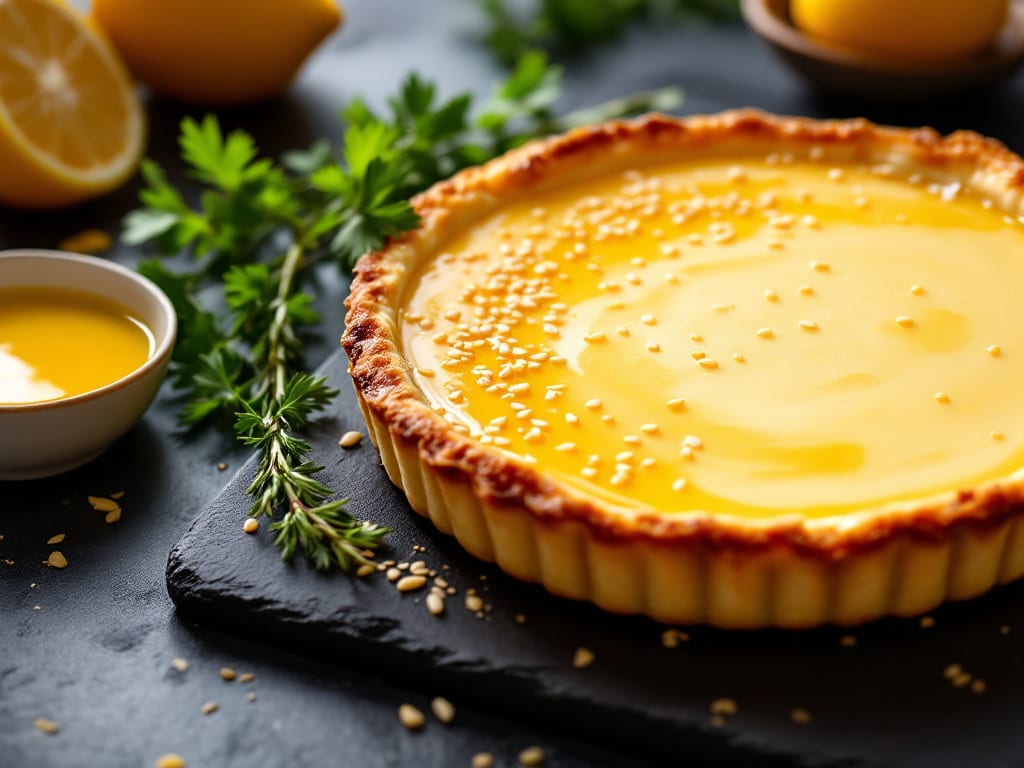
This French lemon tart recipe delivers the perfect balance of buttery crust and vibrant citrus filling that defines classic French pâtisserie.
The secret lies in a crisp, flaky shell that holds its shape while blind-baking, paired with a velvety lemon curd that’s bright yet rich enough to stand up to the tart’s structure.
I’ve perfected this recipe over years of baking, ensuring every bite delivers that signature French elegance without requiring advanced techniques.
The process begins with a traditional tart shell made from simple ingredients—flour, butter, and a touch of sugar—that comes together in minutes but requires patience to blind-bake properly.
Once the crust is golden and set, the lemon curd filling transforms ordinary lemons into a luxurious texture that’s neither too sweet nor overly acidic. This is where the magic happens: the curd must be cooked just long enough to thicken without curdling, creating that signature glossy finish.
What you’ll end up with is a dessert that looks as impressive as it tastes—golden crust edges framing a smooth, vibrant lemon filling that’s perfectly set. The contrast between the crisp shell and silky filling makes every slice feel like a restaurant-quality treat.
Whether you add a meringue torched to golden perfection or a simple powdered sugar dusting, this tart is the centerpiece any dessert table deserves.
Ready in about 90 minutes with just 30 minutes of active prep time, this recipe is ideal for special occasions or when you want to impress guests with a dessert that feels both elegant and approachable.
The key to success is attention to detail during the blind-baking and curd-making stages—steps that ensure professional results even for home bakers.
Ingredients for french lemon tart
Simple ingredients transform into a restaurant-worthy French lemon tart with perfect balance.
| Ingredient | Amount | Notes |
|---|---|---|
| All-Purpose Flour 🌾 | 1 ½ cups | Sifted for light texture |
| Unsalted Butter 🧈 | 1 cup | Cold, cubed, high-fat content |
| Granulated Sugar 🍚 | ¼ cup | Plus 1 tbsp for sprinkling |
| Kosher Salt 🧂 | ½ tsp | Fine grain preferred |
| Fresh Lemons 🍋 | 4 whole | Juiced and zested, organic preferred |
| Large Egg Yolks 🥚 | 4 whole | Room temperature |
| Granulated Sugar 🍚 | 1 ½ cups | For lemon curd |
| Cornstarch 🌽 | ¼ cup | For thickening curd |
| Heavy Cream 🥛 | ½ cup | Full-fat for richness |
| Powdered Sugar 🍚 | ½ cup | For dusting |
| Vanilla Extract 🌸 | ½ tsp | Pure vanilla preferred |
| Dried Blueberries 🫐 | ¼ cup | Optional garnish |
The butter quality is non-negotiable here—Plugrá or European-style from specialty stores makes all the difference. Chill it thoroughly before cutting into cubes for maximum flakiness in the crust. King Arthur or Bob’s Red Mill flour brands work best for this recipe due to their protein balance. For lemons, organic Meyer lemons from Whole Foods or local markets add depth of flavor, but regular lemons work fine if you use extra zest. The egg yolks should be at room temperature to emulsify smoothly with the sugar—simply remove them from the fridge 30 minutes before starting.
No Meyer lemons? Regular lemons plus a pinch of cream of tartar mimics that floral note. Running short on cornstarch? Arrowroot powder at the same amount works just as well. The heavy cream can be substituted with half-and-half for a lighter texture**, though it won’t be quite as rich. For the tart shell, pre-made pie crust from Trader Joe’s saves time if you’re pressed, though homemade delivers superior texture. The vanilla extract should be pure—imitation extracts lack the depth** that complements the lemon flavor.
Store the assembled tart at room temperature for up to 2 days for optimal texture. Refrigerate for longer storage, but bring to room temperature before serving. The lemon curd can be made 2 days ahead** and stored in the fridge, though the texture becomes slightly firmer. For a restaurant-worthy presentation, dust with powdered sugar just before serving. The dried blueberries should be tossed in a bit of lemon juice before sprinkling to prevent them from absorbing moisture from the curd.
Why You’ll Love This Recipe
- No-Fuss Crust: I swear by this butter-and-flour crust—just mix, press, bake. No rolling pins, no fuss, and it turns out flaky every single time. That golden edge? Worth the five minutes of patience.
- Zesty Sunlight in a Bite: Fresh lemon juice and zest cut through the sweetness like a summer breeze. The tangy custard layer? It’s the kind of bright flavor that makes you reach for a second slice without thinking.
- Weekend or Weeknight Win: Slice it for brunch, pack it in lunchboxes, or serve it at a picnic. The crust holds up, the filling stays creamy, and it’s always the crowd-pleaser no one sees coming.
- Leftovers That Don’t Suck: Honestly, I always make two. The filling thickens just right, so it stays perfect in the fridge for days—no soggy bottoms, no weird textures. Plus, lemons are cheap this time of year.
Step-by-step instructions for French lemon tart
Here’s the method for a perfect tart with a crisp crust and velvety lemon filling.
Prepare the Buttery Crust
In a food processor, pulse the 1.5 cups all-purpose flour and 0.5 teaspoon kosher salt until combined. Add the 1 cup unsalted butter, cut into cubes, and process until the mixture resembles coarse crumbs with pea-sized butter pieces remaining. Transfer to a bowl and mix in 0.25 cup granulated sugar with your fingers until evenly distributed.
Press the dough evenly into a 9-inch tart pan with a removable bottom, using your fingers or a glass to compact it firmly against the sides and bottom. Chill the crust in the freezer for 30 minutes while you prepare the filling. This ensures it holds its shape during baking and prevents shrinking. Preheat your oven to 375°F during this time.
Bake the Crust to Perfection
Line the chilled crust with parchment paper and fill it with pie weights or dried beans. Bake for 15 minutes until the edges begin to turn golden. Remove the weights and bake for an additional 5 minutes until the crust is lightly golden and firm to the touch. The goal is to create a sturdy base that won’t buckle under the weight of the filling.
Immediately remove the crust from the oven and prick the bottom all over with a fork to prevent air pockets. Sprinkle evenly with 1 tablespoon granulated sugar reserved for this purpose. Return the crust to the oven and bake for 3-4 minutes until the sugar melts slightly and the crust looks even more golden. Let it cool completely before adding the filling.
Make the Lemon Curd Filling
Zest 2 of the 4 fresh lemons (about 1 tablespoon zest) and juice all 4 lemons (approximately 1 cup juice). In a medium saucepan, combine the lemon zest, lemon juice, 1.5 cups granulated sugar, and 4 large egg yolks. Cook over medium-low heat, stirring constantly with a wooden spoon, until the mixture thickens enough to coat the back of the spoon, about 8-10 minutes. This should happen without boiling—if it starts to bubble, reduce the heat immediately.
Remove the pan from heat and stir in the 0.25 cup cornstarch and 0.5 teaspoon vanilla extract. Return to low heat and cook for an additional 1-2 minutes, stirring constantly, until the curd reaches a smooth, pudding-like consistency. Strain the mixture through a fine-mesh sieve into a clean bowl to remove any zest or lumps. Stir in the 0.5 cup heavy cream and let it cool to room temperature, stirring occasionally.
Assemble and Chill the Tart
Pour the cooled lemon curd into the baked tart shell, spreading it evenly with a spatula. Smooth the top with the back of the spatula, creating a slight dome in the center. Tap the pan gently on the counter a few times to release any air bubbles that may have formed. Sprinkle the 0.25 cup dried blueberries evenly over the top for a decorative touch and to add a subtle berry note that complements the lemon.
Refrigerate the tart, uncovered, for at least 4 hours or until the filling is completely set. This chilling time is crucial for developing the proper texture—rushing this step will result in a runny filling. Once set, dust the top generously with 0.5 cup powdered sugar using a fine-mesh sieve for an elegant finish. Serve chilled with fresh berries or a dollop of whipped cream if desired.
Pro Tips For Making French Lemon Tart
- Chill the Butter: Take your unsalted butter out of the fridge at least 30 minutes before creaming—cold butter means more air gets trapped, and that’s what makes the crust flaky. I used to skip this, and my tart crusts always ended up dense and greasy. Trust me, the wait pays off.
- Zest Only the Pith: When you zest those lemons, stop just before the white pith—it’s bitter and ruins the whole tart. I learned this after making a batch that tasted like soap. A microplane works best; it’s faster and gives you fine, even zest without the pith sneaking in.
- Blind-Bake the Crust: Weigh down that crust with pie weights or dried beans before baking—no parchment shortcuts. The filling’s liquid will seep in, turning your perfect crust into a soggy mess. I’ve seen it happen too many times. Do this for 15 minutes at 375°F, then finish with the filling.
- Sweat the Sugar: Caramelize that granulated sugar in the lemon filling before adding the juice—it deepens the flavor and thickens the custard naturally. I was skeptical until I tried it; now, I can’t imagine skipping it. Low heat, 3-4 minutes, until it’s just starting to turn golden.
Essential equipment for perfect results
Crust Essentials
For the perfect tart shell, you’ll need a 9-inch tart pan with removable bottom—I recommend the Nordic Ware Natural Aluminum for its even heat distribution. A food processor is ideal for cutting butter into flour, but a pastry cutter or two forks work in a pinch.
Don’t skip the pie weights or dried beans for blind-baking, or your crust will puff up unattractively. 🧈
Lemon Curd Tools
The fine-mesh sieve is non-negotiable for straining lemon curd—it removes zest bits that can make your filling grainy. A medium saucepan with sloped sides prevents spills when stirring vigorously.
I use a wooden spoon for stirring because metal can scorch the delicate curd. For measuring zest, a microplane gives you precise, fine strips without the bitter pith. 🍋
Baking Must-Haves
A digital oven thermometer ensures your oven stays at 375°F—critical for even baking. The parchment paper for blind-baking saves cleanup and prevents sticking. I keep a fork handy to prick the crust before the final sugar sprinkle, which prevents air bubbles.
For the sugar topping, a small sieve distributes it evenly for that classic French finish. 🔥
Chilling & Finishing
Your tart needs a large, flat tray for chilling—glass or ceramic works best. A spatula helps spread the curd smoothly, while a rubber spatula cleans up any stray filling.
For presentation, a fine-mesh sieve dusts powdered sugar perfectly, and a pastry brush lightly coats the edges with apricot jam for extra elegance. 💫
Optional Upgrades
Want to add a meringue top? A hand torch or kitchen torch is essential for torching. For a glossy finish, a pastry bag with a star tip creates elegant swirls.
If you’re using fresh berries, a small knife trims stems neatly. A bench scraper helps transfer the tart to serving plates without crumbling the edges. ✨
Nutrition facts
Frequently asked questions
Can I make the crust ahead of time?
Prepare the crust dough up to 2 days ahead and refrigerate it wrapped in plastic. Shape and blind-bake it just before adding the filling to maintain crispness. For even better results, freeze the unbaked crust for up to 1 month—thaw completely before baking.
Why did my lemon curd turn grainy?
Grainy curd usually means you didn’t strain it properly or cooked it too vigorously. Always use a fine-mesh sieve and cook over medium-low heat while stirring constantly. If it curdles, whisk in 1 tablespoon cold water to smooth it out before straining again.
How do I fix a soggy bottom crust?
Prevent soggy bottoms by fully baking the crust until golden and letting it cool completely before adding filling. If the crust gets soggy after filling, place the tart on a baking sheet and bake at 350°F for 10-12 minutes until the base is firm again. A sprinkle of powdered sugar on top can also help absorb excess moisture.
Can I substitute Meyer lemons if I only have regular lemons?
Yes! Regular lemons work perfectly—just add 1/4 teaspoon cream of tartar to the juice for brighter flavor. Use slightly more zest (1.5 tablespoons) to compensate for the milder taste. For extra sweetness, reduce the sugar by 1 tablespoon in the curd recipe.
How long can I store the assembled tart?
Store the tart at room temperature for up to 2 days for best texture. For longer storage, refrigerate for up to 5 days or freeze for 2 months. Thaw overnight in the fridge before serving. The filling may firm up slightly when chilled—bring to room temperature for 30 minutes before slicing.

- Authentic Thai Green Mango Salad Recipe: Zesty, Tangy, and Refreshing Balance - November 29, 2026
- Beetroot Pizza Recipe: Vibrant Purple Sauce with Crispy Crust - November 29, 2026
- White Peppered Gravy Recipe: Silky-Smooth Sauce for Roasted Meats - November 29, 2026