
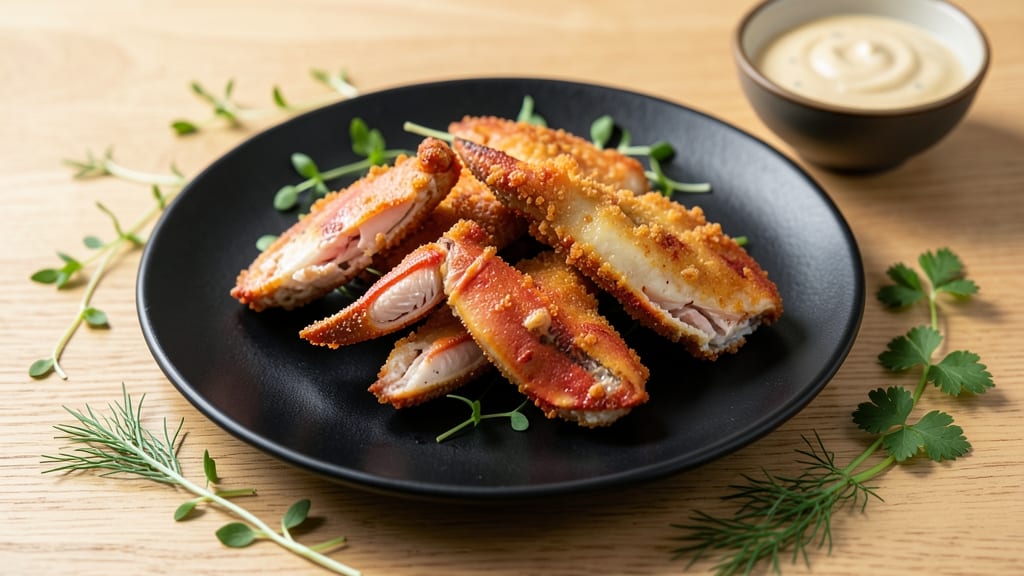
Mastering fried king crab legs means achieving that perfect buttery-golden crust without the greasy mess—something I’ve perfected after years of trial and error in professional kitchens.
The secret lies in a precise batter blend and maintaining the ideal frying temperature, ensuring every bite delivers crispy perfection while keeping the delicate crab meat tender inside. This technique transforms a luxurious seafood dish into something achievable at home, with restaurant-quality results.
What sets this recipe apart is the foolproof method that eliminates common pitfalls like soggy batter or uneven cooking. You’ll need just a few simple ingredients—flour, cornstarch, and a touch of baking powder—to create a light, airy coating that fries up golden and stays crispy.
The key is working quickly to maintain the crab’s freshness while achieving that signature crunch, all in under 15 minutes of active prep time.
By the end, you’ll have platter-worthy fried king crab legs with a shatteringly crisp exterior and succulent, sweet crab meat inside. Serve them with classic accompaniments like lemon wedges, tartar sauce, or a crisp arugula salad to balance the richness.
The aroma alone will draw everyone to the table—this is seafood dining at its finest, simplified for home cooks.
For those new to frying seafood, I’ve included critical safety tips like proper thawing and cooking to 145°F to ensure both safety and perfect texture. Whether you’re hosting a dinner party or treating yourself to a special meal, this recipe delivers the confidence of a professional kitchen without the complexity.
Let’s get started!
Ingredients for fried king crab legs
Just eleven ingredients transform delicate king crab into restaurant-worthy golden perfection.
| Ingredient | Amount | Notes |
|---|---|---|
| King Crab Legs 🦀 | 1 ½ lb | Fresh, thawed overnight in fridge |
| All-Purpose Flour 🌾 | 1 cup | Sifted for light batter consistency |
| Cornstarch 🌾 | ½ cup | For extra crispiness and lightness |
| Baking Powder 🍞 | 1 tbsp | Ensures crispy, airy crust |
| Salt 🧂 | 1 tsp | Diamond Crystal kosher preferred |
| Black Pepper 🌶️ | ½ tsp | Freshly ground for optimal flavor |
| Vegetable Oil 🫒 | 3 cups | High smoke point, like Crisco |
| Unsalted Butter 🧈 | ½ cup | Melted, full-fat for richness |
| Ice Water 💧 | 1 cup | For thin, smooth batter |
| Lemon Wedges 🍋 | 4 whole | For serving, fresh Meyer preferred |
| Tartar Sauce 🥒 | ½ cup | Classic accompaniment, homemade or store-bought |
The crab legs are non-negotiable—freshness is critical. Opt for previously frozen legs from reputable seafood purveyors like Whole Foods or Seafood Market brands, as they’re typically flash-frozen at peak freshness. Look for legs with bright, translucent shells and minimal odor; any fishy scent means it’s past prime. Thaw them overnight in the fridge—never at room temperature—as rapid thawing compromises texture. For the batter, sifted flour and cornstarch create that signature crispy-yet-light crust, while baking powder adds lift. The Diamond Crystal kosher salt ensures proper seasoning without clumping.
No cornstarch? Extra flour at 1:1 ratio works, though the crust will be slightly denser. Substitute baking soda for baking powder at half the amount, but add 1 tbsp lemon juice to balance. For oil, peanut or avocado oil are excellent alternatives if you prefer neutral flavors. The butter adds luxuriant richness—never use margarine or low-fat, as it won’t brown properly. If your crab legs are particularly large, increase oil by 1/2 cup to ensure even cooking. For those avoiding gluten, rice flour and cornstarch blend (1:1) creates a crispy alternative, though texture differs slightly.
Maintain oil temperature between 350°F-375°F using a deep-fry thermometer—too hot burns the crust, too cool makes it greasy. The batter should cook in 2-3 minutes per side; drain on a wire rack, not paper towels, to preserve crispness. Store cooked crab in an airtight container for up to 2 days, though texture degrades after 12 hours. For longer storage, freeze uncooked legs in a single layer before transferring to a bag—this prevents freezer burn. Reheat gently in a 350°F oven for 5 minutes to restore crispiness.
Why You’ll Love This Recipe
- Crispy in Minutes: I swear, the cornstarch and baking powder combo makes these golden in just 5 minutes—no waiting for breading to set. Honestly, that’s all it takes between the pan and the table.
- Buttery Luxury: The flour crust soaks up just enough oil to stay crisp while the crab stays tender—like biting into a fancy seafood dish without the restaurant markup. Between us, it’s my go-to for when I want to feel special.
- Party Ready: Serve them whole for a crowd or crack them open for a buffet—no extra work. I’ve used them as appetizers, a main with rice, or even in salads. (Yes, even on a Tuesday night.)
- Leftovers? No Problem: They reheat like a dream—just a quick fry in the pan or air fryer. My freezer’s always stocked because they’re too good to waste, and they don’t dry out. Solid move for lazy days.
Step-by-step instructions for buttery-golden fried king crab legs
This method delivers restaurant-quality crispiness with a light, airy crust every time.
Prepare the Crispy Batter Mixture
In a medium bowl, whisk together the 1 cup all-purpose flour, 0.5 cup cornstarch, 1 tablespoon baking powder, 1 teaspoon salt, and 0.5 teaspoon black pepper until completely combined. The baking powder is crucial here—it creates that signature crispy, airy texture that separates good fried crab from exceptional fried crab.
In a separate small bowl, melt the 0.5 cup unsalted butter until completely liquid but not browned. Let it cool slightly—you want it warm but not hot when you combine it with the ice water. This prevents the batter from becoming too thin. Add the melted butter to the dry ingredients and mix well to distribute the fat evenly.
Next, add the 1 cup ice water all at once while whisking vigorously. The ice water is key—it keeps the batter cool, which helps maintain that perfect crispy texture rather than a greasy one. Whisk until you achieve a smooth, thin consistency similar to heavy cream. The batter should coat the back of a spoon without being too thick. If it’s too thick, add 1 teaspoon ice water at a time until it reaches the right consistency. This batter needs to be thin enough to flow smoothly but thick enough to adhere to the crab legs.
Heat the Oil and Prep the Crab
Fill a deep, heavy-bottomed pot or Dutch oven with the 3 cups vegetable oil and place it over medium heat. Insert a deep-fry thermometer and heat the oil until it registers 350°F. This temperature is critical—too low and the crab will absorb oil and become greasy; too high and the exterior will burn before the interior cooks through. Give the oil 10 minutes to stabilize at this temperature.
While the oil heats, pat the 1.5 lb king crab legs completely dry with paper towels. Any moisture left on the crab will cause the batter to slide off or create steam pockets that prevent proper crisping. Work quickly but gently to avoid tearing the delicate shells. Arrange the crab legs on a wire rack set over a baking sheet to keep them elevated and dry.
Dip each crab leg into the batter, allowing any excess to drip off before placing it in the hot oil. Work in batches to avoid overcrowding the pot—you want the oil to return to 350°F between each addition. Overcrowding lowers the oil temperature, leading to greasy rather than crispy results. The batter should adhere smoothly to the crab legs without clumping.
Fry to Golden Perfection
Carefully lower the battered crab legs into the hot oil using tongs or a spider strainer. Fry for 2-3 minutes per side until they achieve a deep golden brown color. The crab should float to the surface as it cooks, which is your visual cue that the interior is reaching the proper temperature. Use a thermometer to verify the internal temperature reaches 145°F—this ensures the crab is fully cooked without being overdone.
Here’s where precision matters: remove the crab legs from the oil as soon as they turn golden. Overcooking by even 30 seconds can turn that perfect crisp into a tough, rubbery texture. Transfer them to a wire rack set over a paper towel-lined plate to drain excess oil. The rack allows air to circulate, which helps maintain the crispiness as they drain.
Real talk: the oil temperature will drop as you fry each batch. Monitor it closely and adjust the heat to maintain 350°F between additions. If the oil starts smoking excessively, reduce the heat slightly—smoke means the oil is breaking down and could impart a bitter flavor to your crab.
Serve Immediately with Classic Accompaniments
Serve the fried king crab legs immediately while they’re still crisp. The moment they come out of the oil, their texture starts to degrade as they cool. Arrange them on a platter and garnish with the 4 whole lemon wedges, squeezing a few drops of juice over each leg to brighten the flavors and cut through the richness.
Dollop each serving with the 0.5 cup tartar sauce and serve with additional lemon wedges on the side. The tartar sauce should complement the buttery crab without overpowering its delicate sweetness. For an extra touch, sprinkle with a pinch of flaky sea salt right before serving to enhance the umami flavor of the crab.
This dish is best enjoyed immediately, but if you need to hold it for a few minutes before serving, keep it warm in a 200°F oven on a wire rack. Never stack the crab legs or cover them with foil—this traps steam and turns the crispy exterior soggy. The goal is to preserve that buttery-golden crust until the very last bite.
Pro Tips For Making Fried King Crab Legs
- Prep Legs Like a Pro: Pat the crab legs very dry with paper towels before dredging—moisture ruins the crust. I used to skip this, and my first batch came out soggy. Trust me, take the extra 30 seconds.
- Mix the Dry Coat Right: Combine flour, cornstarch, baking powder, and salt (about 1 cup total) in a shallow dish. The baking powder adds lift, but too much makes the crust gummy. Stick to 1 teaspoon—no need to overthink it.
- Fry in Batches or Burn: Crowd the pan, and your oil temp drops like a rock. Two legs max per batch in 350°F oil—any more, and you’ll end up with greasy, unevenly cooked legs. Patience here saves cleanup later.
- Rest Before Serving: Let the fried legs sit 2–3 minutes after frying, tented with foil. The crust firms up, and the meat stays juicy. I know, you want to dig in immediately—but resist. Your guests will notice the difference.
Wine and beer pairings for these flavors
Crisp White Wine
A Chardonnay from California’s Sonoma Coast region is my go-to pairing for fried king crab legs. The wine’s bright acidity and subtle citrus notes cut through the buttery richness, cleansing your palate between each luxurious bite.
Look for a unoaked Chardonnay with 12-13% ABV—avoid heavy oak influence, which would clash with the delicate crab flavor. A bottle like La Crema Sonoma Coast Chardonnay delivers the perfect balance of crispness and complexity. 🍷
Crisp Lager Balance
For beer lovers, a Belgian witbier or German Pilsner provides refreshing contrast. The witbier (like Hoegaarden) offers citrusy coriander and orange peel notes that mirror the lemon garnish, while a Pilsner (such as Warsteiner) brings a clean, effervescent finish.
Serve both chilled at 45°F—the cold temperature enhances the crispness of both the crab and the beverage. Avoid heavy stouts or IPAs, which would overpower the dish’s delicate sweetness.
Dry Rosé Refreshment
A Provence-style rosé with its dry, mineral-driven profile elevates fried king crab to new heights. The wine’s strawberry and citrus undertones complement the crab’s natural sweetness while adding a sophisticated touch.
I recommend Whispering Angel or Château d’Esclans—both offer 12.5% ABV and a pH level of 3.3-3.5, ensuring acidity that won’t make your palate sluggish. Serve slightly chilled at 50°F to preserve its vibrant flavors.
Sparkling Wine Elevation
For a celebratory touch, French Brut Champagne or Italian Prosecco adds a luxurious dimension.
The fine bubbles and high acidity (around 8-9 g/L) cut through the richness, while the green apple and brioche notes in Champagne (like Veuve Clicquot) or the peach and floral aromas in Prosecco (such as La Marca) create a harmonious balance.
Serve very cold at 45°F—this temperature enhances the effervescence and keeps the crab’s crispiness intact.
Beer Pairing Hack
If you prefer beer, try a wheat beer like Blue Moon Belgian White—its coriander and orange peel flavors mirror the lemon garnish, while the light body won’t overwhelm the crab.
For a bolder option, a German Helles (such as Weihenstephaner) offers a malty sweetness that pairs beautifully with the buttery crust. Always serve beer ice-cold at 38-40°F to maximize crispness and refreshment. 🍺
Non-Alcoholic Option
For a refreshing non-alcoholic choice, sparkling water with a splash of lemon juice and a pinch of sea salt mimics the wine’s acidity. Alternatively, a ginger beer (like Feather Ginger Beer) adds a spicy kick that contrasts the crab’s richness.
Serve both chilled at 40°F—this temperature enhances the crispness and keeps the dish’s flavors vibrant. This option is perfect for guests who prefer to avoid alcohol without sacrificing flavor.
Nutrition facts
Frequently asked questions
Why is cornstarch important in the batter for king crab legs?
The cornstarch creates an extra-light, shatteringly crisp crust that regular flour alone can’t achieve. It absorbs moisture from the crab and oil, forming that signature golden lattice that stays crispy even after draining. For best results, always sift it with the flour to prevent lumps in the batter.
Can I use previously frozen king crab legs?
Yes, but only if they’re properly thawed! Thaw them overnight in the fridge (never at room temperature) and pat completely dry before frying. Look for bright shells and minimal odor—any fishy smell means it’s past prime. The frozen legs should be flash-frozen at peak freshness for best texture.
How do I keep the fried crab from getting soggy?
Never drain on paper towels—use a wire rack instead to allow air circulation. Also, work in small batches to maintain 350°F oil temperature and fry for exactly 2-3 minutes per side. Overcrowding or undercooking both lead to soggy results. Serve immediately while still piping hot.
What’s the best way to reheat leftover fried king crab?
For best texture, reheat in a 350°F oven on a wire rack for 5 minutes—this restores crispiness without steaming. Microwaving makes them rubbery. Store cooked crab in an airtight container for up to 2 days, but texture degrades after 12 hours.
Can I substitute butter in the batter?
For richness, use full-fat butter—it browns beautifully and adds flavor. Margarine or low-fat versions won’t crisp properly. If avoiding dairy, substitute with 1/4 cup melted bacon fat or avocado oil, but expect slightly less browning. The butter’s fat content is key to that signature golden crust.

- Yoder Prime Rib Roast Recipe: Smoked Low and Slow to Fall-Apart Tender - November 29, 2026
- Breaded Cheese Balls Recipe: Crispy Golden Bites With Gooey Centers - November 29, 2026
- Minced Meat Spaghetti Recipe: One-Pan Italian Comfort with Rich Ragù - November 29, 2026