
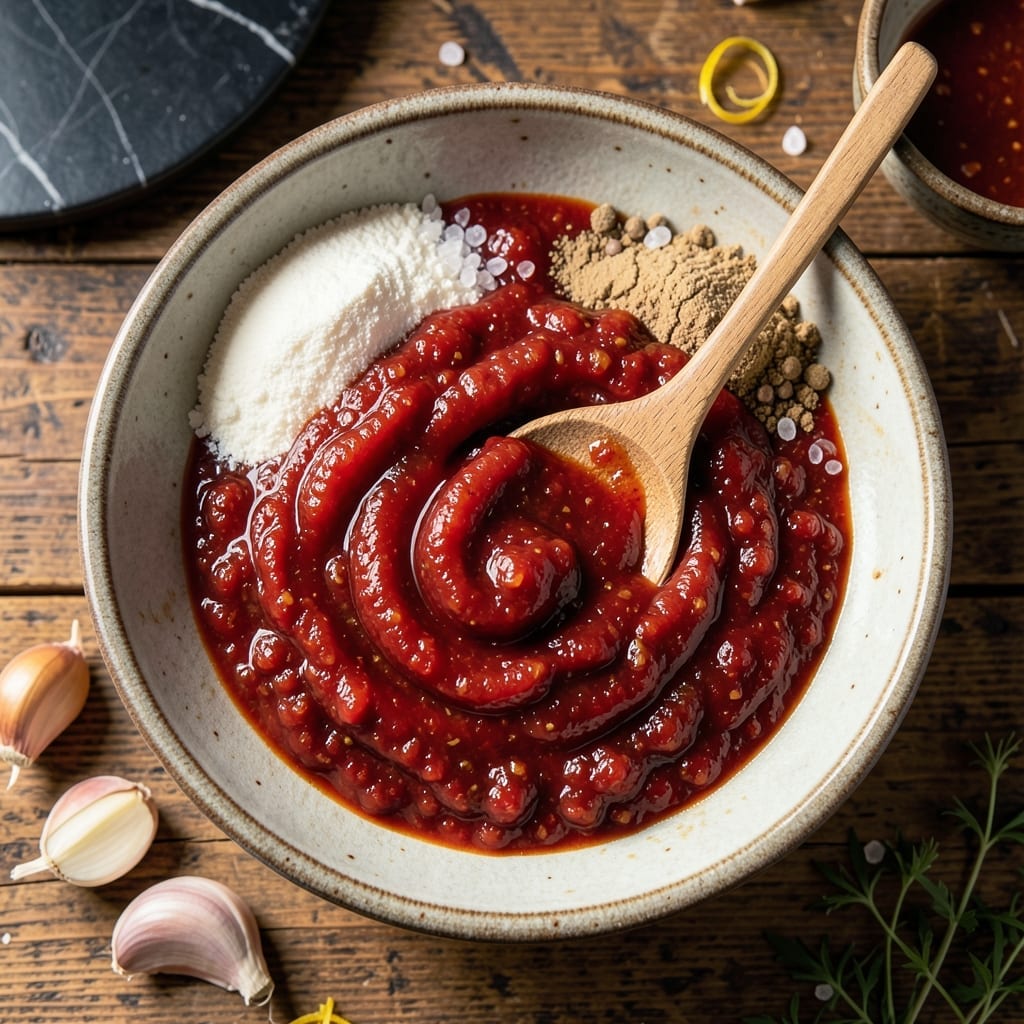
This traditional Korean fermented chili paste delivers umami richness that transforms any dish with its complex, savory heat. I developed this version after studying authentic methods, balancing spice with deep, fermented flavors.
The process combines gochugaru (Korean chili flakes) with sticky rice flour, fermented soybeans, and salt to create a thick, vibrant paste. Fermentation develops the signature deep, tangy character that defines proper gochujang.
You’ll end up with a versatile condiment that elevates soups, marinades, and dipping sauces. The paste keeps for months in the fridge, intensifying in flavor over time.
Use it sparingly at first—its bold, spicy profile packs serious punch in every spoonful.
Ingredients for Gochujang
Nine ingredients create this bold, fermented Korean chili paste with deep, savory complexity.
| Ingredient | Amount | Notes |
|---|---|---|
| Gochugaru 🌶️ | 1 cup | Korean chili flakes, coarse |
| Sweet Rice Flour 🌾 | ½ cup | Also called glutinous rice flour |
| Fermented Soybean Powder 🫘 | ¼ cup | Or doenjang paste |
| Sea Salt 🧂 | 2 tbsp | Fine grain preferred |
| Granulated Sugar 🍚 | 2 tbsp | Or maple syrup for vegan |
| Garlic Cloves 🧄 | 6 cloves | Minced finely |
| Fresh Ginger 🌿 | 1 tbsp | Peeled and grated |
| Onion 🧅 | ½ whole | Finely grated or minced |
| Water 💧 | ½ cup | For adjusting consistency |
Gochugaru is non-negotiable—look for coarse, vibrant red flakes at a Korean market or well-stocked Asian grocery. The sweet rice flour (not regular rice flour) binds everything together. For the fermented soybean, doenjang paste works perfectly if you can’t find powder. I grab mine from H Mart (the gochugaru in the yellow bag is my go-to).
No doenjang? Miso paste at half the amount is a decent stand-in. Sugar can be swapped for maple syrup or coconut sugar (just as vegan-friendly). The garlic and ginger are flexible—fresh is ideal, but powdered works at one-third the amount. If your paste is too thick, add water 1 tbsp at a time until it’s spreadable.
Ferment in a glass jar (not metal) at room temp for 2-3 days, then refrigerate. Keeps 6-12 months in the fridge, getting funkier and more complex with age. The flavor deepens if left out for up to 1 week (cover loosely with a cloth).
Why You’ll Love This Recipe
- 5-Minute Mix: Honestly, it’s just gochugaru, sweet rice flour, and a few pantry staples—stir, rest, done.
- Umami Bomb: The fermented soybean powder adds this deep, funky richness that makes everything taste crave-worthy.
- Sauce for Days: I use it on eggs, noodles, even soups—one jar lasts me weeks and never gets boring.
- Pantry Hero: Five cheap ingredients I already had, and now I skip the store-bought stuff that’s twice the price.
Step-by-Step Instructions for Gochujang
This traditional method yields a rich, complex paste with the perfect balance of heat and umami.
Step 1: Combine Dry Ingredients for the Base
In a large mixing bowl, whisk together the 1 cup Gochugaru, 0.5 cup Sweet Rice Flour, and 0.25 cup Fermented Soybean Powder until evenly distributed. I use a fine-mesh sieve for the rice flour to prevent clumping—this ensures a smooth, consistent texture in your final paste.
The gochugaru provides the signature heat and vibrant color, while the sweet rice flour acts as a thickener and helps bind the mixture. The fermented soybean powder adds that deep, funky umami that defines gochujang. Don’t rush this step; thorough mixing prevents dry pockets in your paste.
Step 2: Incorporate Aromatics and Seasonings
Add the 2 tbsp Sea Salt, 2 tbsp Granulated Sugar, 6 cloves minced Garlic Cloves, 1 tbsp Fresh Ginger, and 0.5 whole Onion (finely grated) to the dry mixture. Stir with a wooden spoon until everything is fully integrated and the paste begins to darken slightly.
The salt and sugar will start drawing moisture from the ginger, garlic, and onion, creating a sticky, cohesive mixture. I always use fine sea salt here—it dissolves more evenly than coarse varieties and ensures seasoning is perfectly distributed throughout the batch.
Step 3: Adjust Consistency with Water
Gradually add the 0.5 cup Water, 1-2 tablespoons at a time, mixing continuously until the paste reaches a thick but spreadable consistency. You might not need all the water—stop when the mixture clings to your spoon but isn’t dry or crumbly.
This is where the magic happens. The water activates the rice flour, transforming the mixture from a dry blend into a glossy, cohesive paste. I like to let it sit for 5 minutes after adding the water, then give it a final stir to ensure everything is fully hydrated. The paste should be thick enough to hold its shape but still easy to scoop.
Step 4: Ferment and Store for Optimal Flavor
Transfer the paste to a clean, airtight glass jar, pressing down to remove any air pockets. Seal the jar and let it ferment at room temperature for 1-2 days before moving it to the refrigerator. This initial fermentation jumpstarts the flavor development, allowing the ingredients to meld and deepen.
Once refrigerated, your gochujang will continue to mature over time, becoming more complex and funky the longer it sits. I recommend waiting at least 1 week before using it, though I’ve found the flavor peaks after about 1 month. Store it in the fridge for up to 6 months—if it lasts that long!
Pro Tips For Making Gochujang
- Toast the Rice Flour: Lightly toast the sweet rice flour in a dry pan over medium heat until it turns pale golden—about 3-4 minutes. I learned this the hard way: raw flour can give your gochujang a starchy, uncooked taste.
- Use Fine Gochugaru: Coarse gochugaru makes a gritty paste. Grind it briefly in a spice grinder or mortar and pestle first if yours is too chunky—sounds fussy, but it actually changes the texture.
- Measure Salt Last: Fermented soybean powder varies in saltiness. Taste the mixture before adding the full amount of sea salt, then adjust. After ruining a batch with oversalting, I now always do this.
- Rest Before Jarring: Let the finished gochujang sit at room temperature for 1-2 hours before sealing. This lets the flavors meld and the paste thicken slightly—I skip this when I’m lazy, but the texture is noticeably better when I don’t.
Wine and Beer Pairings for gochujang
Crisp White Wines
Off-dry Riesling from Germany or Alsace balances the heat beautifully—the slight sweetness tames the spice while acidity cuts through the richness. I love Dr. Loosen Blue Slate for its mineral edge. Serve chilled at 45-50°F. 🍷
Light Red Options
Chill a Beaujolais or Pinot Noir to 55°F for a red option that won’t overpower. The bright red fruit in Morgon Beaujolais complements the chili’s heat. Avoid heavy, tannic reds—they clash with the paste’s bold flavors.
Korean Beer Pairings
Hite or Kloud beer’s clean, crisp profile acts like a palate cleanser. The light carbonation lifts the paste’s weight off your tongue. I grab these at my local H Mart—they’re perfect with spicy foods. ❄️
Craft Beer Choices
A slightly sweet wheat beer like Hoegaarden or Allagash White works wonderfully. The citrus notes and effervescence contrast the deep umami. For a bolder choice, try a Belgian tripel with its spicy, fruity complexity.
Non-Alcoholic Options
Sparkling yuzu soda or ginger beer offers refreshing contrast. The citrus in San Pellegrino Aranciata enhances the chili’s brightness. I always keep these on hand for guests who don’t drink alcohol.
Serving Temperature Tip
Chill whites to 45°F and light reds to 55°F for best results. Too-warm whites lose their crispness against the heat, while overly cold reds mute their fruit. This small detail makes a noticeable difference with spicy foods.
Nutrition Facts
Frequently Asked Questions
Can I make this without fermented soybean powder?
Yes! Use 2 tablespoons doenjang paste or 1 tablespoon miso paste as substitutes. Both provide the necessary umami depth, though doenjang stays truest to the traditional flavor.
How long does homemade gochujang last?
Properly stored in an airtight glass jar in the fridge, it keeps for 6-12 months. The flavor deepens over time, so let it age at least 1 month for best results.
Why is my paste too thin or runny?
This usually means too much water was added. Fix it by mixing in 1-2 teaspoons sweet rice flour until thickened. Let it rest 10 minutes to fully absorb.
Is there a quick version without fermentation?
For immediate use, skip the room-temp fermentation and refrigerate right away. The flavor won’t be as complex, but it’ll still be delicious after 24 hours.

- BBQ Sausage Recipe Oven: Smoky Depth Without the Grill - September 28, 2026
- BBQ Chicken Bowl Recipe Rice: Smoky Sweetness Over Fluffy Grains - September 28, 2026
- Beef Cutlet Recipe Ideas: Crispy Breaded Patties With Bold Seasonings - September 28, 2026