
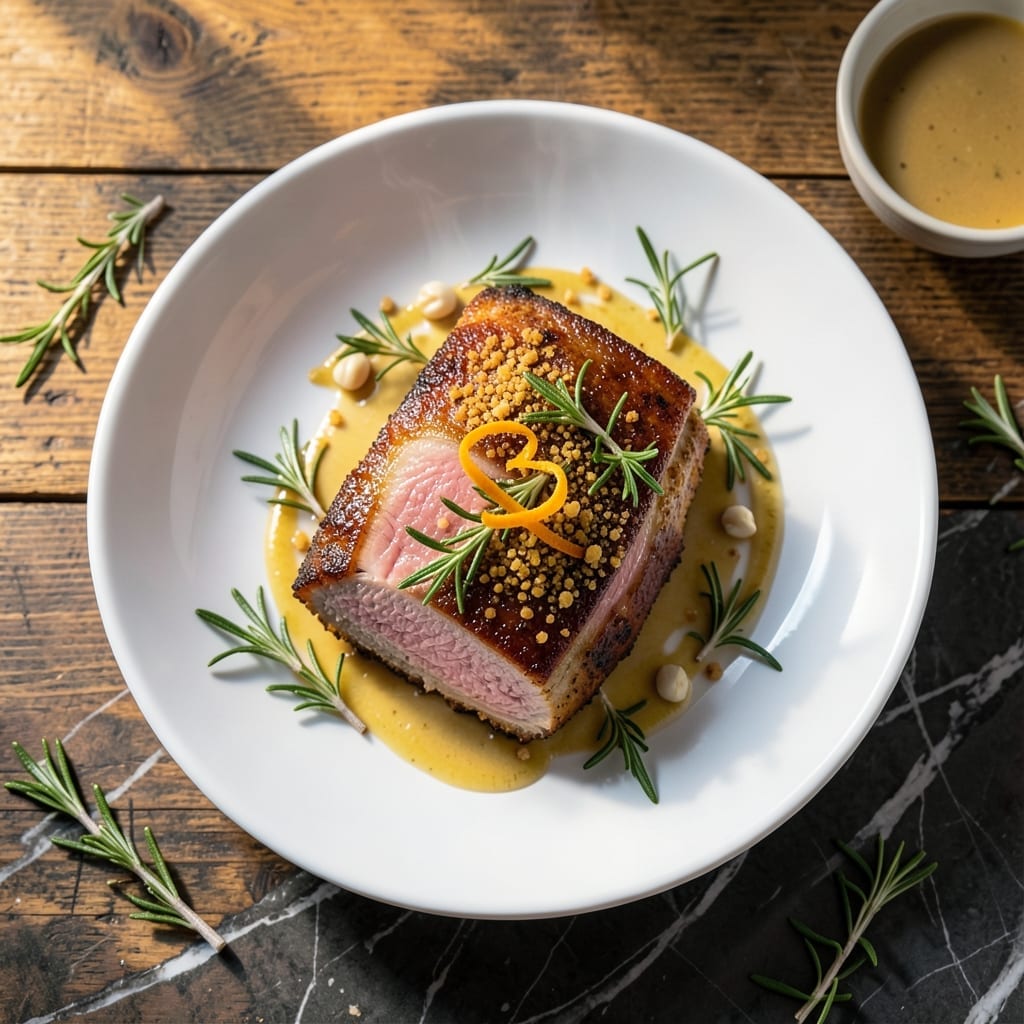
This herb-crusted pork loin filet transforms a simple cut into a centerpiece worthy of any dinner table. The technique is straightforward yet delivers restaurant-quality results every time.
I start with a Smithfield pork loin filet, which stays tender and juicy when cooked properly. A blend of fresh herbs, garlic, and breadcrumbs creates a flavorful crust that locks in moisture while adding texture.
The oven-roasting method ensures even cooking and a golden-brown exterior. With precise timing and temperature control, you’ll achieve perfectly cooked pork that’s tender throughout.
Serve this elegant dish with roasted vegetables or mashed potatoes for a complete meal that impresses without the fuss.
Ingredients for Smithfield Pork Loin Filet
Elegant centerpiece requires just twelve ingredients. Restaurant-quality results guaranteed with proper technique.
| Ingredient | Amount | Notes |
|---|---|---|
| Smithfield Pork Loin Filet 🥩 | 2 lb | Boneless, trimmed of excess fat |
| Fresh Rosemary 🌿 | 2 tbsp | Finely chopped, stems discarded |
| Fresh Thyme 🍃 | 2 tbsp | Leaves stripped from stems |
| Garlic Cloves 🧄 | 4 cloves | Minced to fine paste |
| Dijon Mustard 🟡 | 2 tbsp | Smooth, not grainy variety |
| Panko Breadcrumbs 🍞 | 1 cup | Japanese-style for crisp texture |
| Extra-Virgin Olive Oil 🫒 | ¼ cup | Divided for crust and searing |
| Kosher Salt 🧂 | 1 ½ tsp | Diamond Crystal preferred |
| Black Pepper 🌶️ | 1 tsp | Freshly cracked for best flavor |
| Unsalted Butter 🧈 | 2 tbsp | Melted for breadcrumb mixture |
| Dry White Wine 🍷 | ½ cup | For deglazing pan, optional |
| Chicken Stock 🍲 | ½ cup | Low-sodium preferred |
| Fresh Parsley 🌿 | ¼ cup | Chopped, for garnish |
The pork loin filet quality is paramount. Smithfield offers consistent marbling and tenderness, essential for oven-roasting. Source from Whole Foods or Costco for reliable cuts. Fresh herbs—rosemary and thyme—must be vibrant green with no wilting. For the breadcrumbs, Kikkoman Panko provides superior crispness. Avoid pre-grated Parmesan as it contains anti-caking agents that inhibit browning.
No fresh herbs? Dried at one-third the quantity works in a pinch, though flavor intensity suffers. Panko substitutes include crushed melba toast or cornflake crumbs. White wine can be replaced with additional stock plus lemon juice. For dairy-free preparation, vegan butter melts identically. The Dijon mustard is non-negotiable—it emulsifies the crust and adds depth.
Prepare the herb mixture up to 24 hours ahead. The crusted pork loin keeps for 3-4 days refrigerated but tastes best immediately. Freeze uncooked portions for up to 3 months. Always bring pork to room temperature before roasting for even cooking.
Why You’ll Love This Recipe
- One Pan Wonder: I love that this comes together in a single baking dish—just rub the filet with Dijon, toss in rosemary, thyme, and garlic, then roast.
- That First Bite: The herbs and mustard form this crazy-good crust, and the pork stays juicy every time.
- Feeds a Crowd: I made it for Sunday dinner and had enough for leftovers the next day.
- Budget Hero: Smithfield pork loin filet is affordable, and the flavor makes it taste way fancier than it is.
Step-by-Step Instructions for Herb-Crusted Smithfield Pork Loin Filet
This method ensures perfectly cooked pork with a crisp, aromatic crust every time.
Step 1: Prepare the Herb Crust Mixture
In a medium bowl, combine the 1 cup Panko Breadcrumbs, 2 tbsp Fresh Rosemary, 2 tbsp Fresh Thyme, minced 4 cloves Garlic Cloves, 1.5 tsp Kosher Salt, and 1 tsp Black Pepper. Stir in the 2 tbsp Dijon Mustard and 2 tbsp Unsalted Butter until the mixture resembles wet sand with visible herb flecks.
The mustard and butter act as binders while the herbs infuse every bite with earthy aroma. I use my fingers to work the mixture thoroughly—this ensures even distribution of flavors and that the crust adheres properly to the pork loin filet.
Step 2: Sear and Crust the Smithfield Pork Loin Filet
Preheat your oven to 400°F. Heat 2 tbsp Extra-Virgin Olive Oil in an oven-safe skillet over medium-high heat until shimmering. Pat the 2 lb Smithfield Pork Loin Filet dry with paper towels and sear on all sides for 2-3 minutes per side until golden brown.
Remove from heat and brush the seared filet all over with the remaining 2 tbsp Extra-Virgin Olive Oil. Press the herb crust mixture onto the top and sides of the pork, creating an even ½-inch thick layer. The crust should cling firmly—if it doesn’t, press harder or add a touch more mustard as adhesive.
Step 3: Roast to Perfection
Transfer the skillet to the preheated oven and roast for 20-25 minutes or until an instant-read thermometer inserted into the thickest part registers 145°F. The crust should be deep golden brown and the pork juices should run clear when pierced.
I check the temperature at the 20-minute mark to prevent overcooking. Remember that the pork loin filet will continue cooking as it rests, rising about 5°F in temperature. The internal color should be just barely pink in the center when done.
Step 4: Rest and Prepare the Pan Sauce
Transfer the pork to a cutting board and tent loosely with foil. Let it rest for 10 minutes—this allows the juices to redistribute, ensuring moist, tender slices. Meanwhile, place the skillet on the stovetop over medium heat.
Add the 0.5 cup Dry White Wine to deglaze, scraping up all the browned bits with a wooden spoon. Simmer for 2 minutes, then add the 0.5 cup Chicken Stock and reduce by half to create a light sauce. This captures all the caramelized flavors from the crust and pork.
Step 5: Slice and Serve
Slice the pork loin filet into 1-inch thick medallions against the grain. Arrange on a serving platter and drizzle with the pan sauce. Garnish with the 0.25 cup Fresh Parsley for a pop of color and freshness.
The herb crust should be crisp and fragrant, while the pork remains juicy and tender. Serve immediately while the crust is at its peak texture and the sauce is warm.
Pro Tips For Making Smithfield Pork Loin Filet
- Rest After Cooking: Let the pork loin rest for 10 minutes under foil before slicing—I learned this the hard way after serving dry meat that lost all its juices to the cutting board.
- Score the Fat: Make shallow cuts in the fat cap every inch or so to help the rosemary, thyme, and garlic penetrate deeper and render the fat more evenly.
- Don’t Skip the Mustard: Brushing the loin with Dijon mustard before seasoning creates a sticky base for the herbs to cling to—sounds weird, but it works.
- Use a Meat Thermometer: Pull the pork at 145°F internal temp; it’ll rise to 150°F while resting, guaranteeing juicy, tender slices every time.
Wine and Beer Pairings for This Recipe
White Wine Pairings
A crisp Sauvignon Blanc from New Zealand complements the herb crust beautifully with its citrus and grassy notes. The acidity cuts through the richness while enhancing the rosemary and thyme flavors. I love Kim Crawford for this pairing. 🍷
Red Wine Options
For red lovers, a light Pinot Noir from Oregon works wonderfully—its earthy undertones mirror the herbs without overpowering. Meiomi offers a reliable, food-friendly option that won’t break the bank.
Beer Pairings
A malty Amber Ale like Fat Tire balances the savory crust with caramel sweetness. The carbonation cleanses your palate between bites. Avoid hoppy IPAs that can clash with the herb flavors. 🍺
Sparkling Choices
For celebrations, a dry Prosecco or Cava adds effervescent contrast to the pork’s richness. The bubbles refresh your palate, making each bite taste like the first. Serve chilled at 45-50°F.
Non-Alcoholic Options
A citrus-forward sparkling water with lime or lemon works surprisingly well. For more depth, try a ginger beer like Fever-Tree—its spicy kick complements the herb crust perfectly.
Nutrition Facts
Frequently Asked Questions
What internal temperature should I aim for?
Remove the pork from the oven when it reaches 145°F internally. It will rise to 150°F while resting. Use an instant-read thermometer for accuracy.
Can I use dried herbs instead of fresh?
Yes, but reduce the quantity to 1/3 of the fresh amount. Soak dried herbs in warm water for 10 minutes to rehydrate before mixing into the crust.
How long should the pork rest before slicing?
Let it rest for 10 minutes under loose foil. This keeps the juices inside the meat rather than on your cutting board.
Can I prepare the herb mixture ahead?
The crust mixture keeps in the fridge for up to 24 hours. Just bring it to room temperature before applying to the pork.

- BBQ Sausage Recipe Oven: Smoky Depth Without the Grill - September 28, 2026
- BBQ Chicken Bowl Recipe Rice: Smoky Sweetness Over Fluffy Grains - September 28, 2026
- Beef Cutlet Recipe Ideas: Crispy Breaded Patties With Bold Seasonings - September 28, 2026