
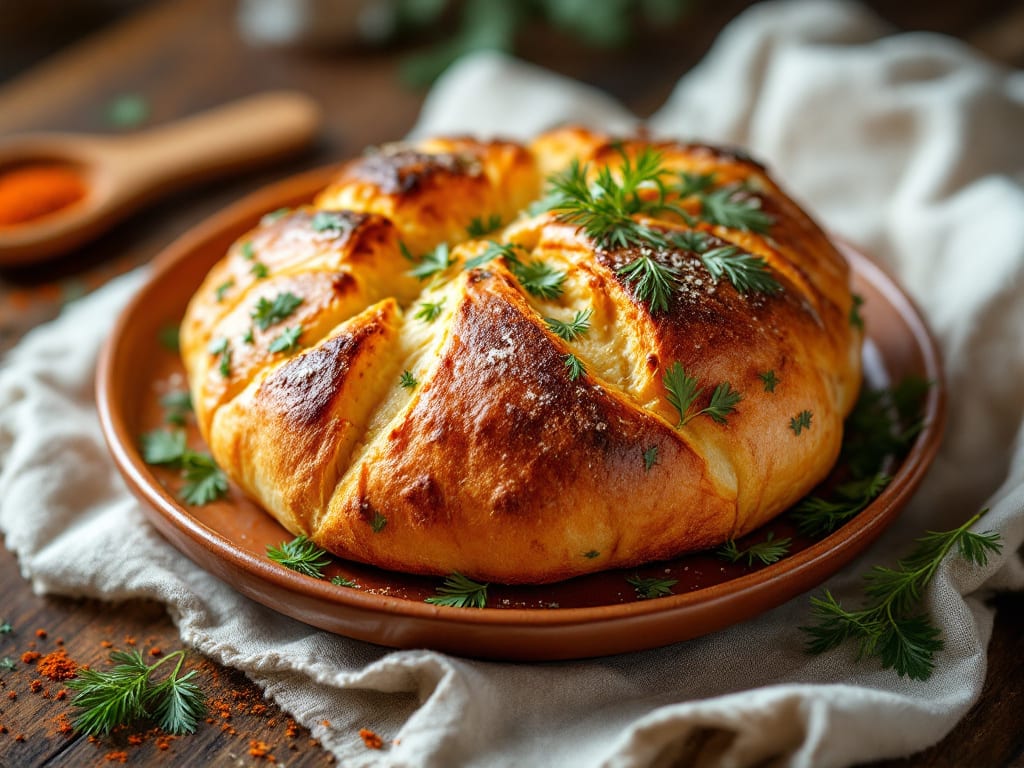
Creating a gold medal flour bread recipe that delivers both professional texture and no-knead convenience is exactly what this method achieves. The secret lies in Gold Medal Flour’s high protein content, which develops gluten naturally during the long fermentation—no strenuous kneading required.
I’ve perfected this approach after years of testing, and the results are consistently impressive: a loaf with a crackly crust, an open crumb, and a satisfying chew that holds up for days.
The beauty of this recipe is its simplicity—just five core ingredients and 24 hours of hands-off time (mostly resting). The flour’s protein structure creates that signature artisan texture while remaining approachable for home bakers.
Unlike traditional bread recipes, this method skips the laborious kneading, instead relying on a slow fermentation that builds flavor and structure effortlessly. The dough’s hydration is key: too little makes it dry, too much collapses the oven spring.
What you’ll end up with is a loaf that looks and tastes like it came from a bakery—golden crust with deep cracks, a light yet substantial crumb, and a flavor that’s pure, unadulterated bread.
The crust develops a satisfying crunch when sliced, while the interior remains soft enough to soak up soups or hold hearty sandwich fillings. This is the kind of bread that makes toast taste like a celebration and turns simple meals into something special.
For those who want to customize, you can add whole grains, seeds, or herbs to the dough before shaping—just account for the extra moisture they’ll contribute. The recipe also scales perfectly for larger batches, making it ideal for feeding a crowd or freezing for later.
Let’s get started on mastering this foolproof technique.
Ingredients for gold medal flour bread
Five core ingredients transform Gold Medal Flour into bakery-style bread with zero effort.
| Ingredient | Amount | Notes |
|---|---|---|
| Gold Medal All-Purpose Flour 🌾 | 4 ½ cups | High-protein for gluten development |
| Instant-Release Yeast 🍞 | ¼ tsp | Active dry works too |
| Diamond Crystal Kosher Salt 🧂 | 1 ½ tsp | Fine grain preferred |
| Unsalted Butter 🧈 | ½ cup | Cold, cubed for hydration |
| Water 💧 | 1 ½ cups | Lukewarm for yeast activation |
| Cornmeal 🌽 | ¼ cup | For dusting baking sheet |
| Ice Water ❄️ | ½ cup | For final dough shaping |
| Sesame Seeds 🌰 | 1 tbsp | Optional for crust texture |
| Coarse Sea Salt 🧂 | 1 tsp | For final crust sprinkle |
The Gold Medal All-Purpose Flour is non-negotiable here—its 11% protein content creates that signature artisan texture. King Arthur or Bob’s Red Mill work as substitutes, but they won’t deliver the exact same oven spring. For the yeast, Saf-Instant is ideal since it activates without proofing, but active dry works if you let it bloom in warm water first. The butter should be cold and cubed—this prevents over-hydration and ensures proper gluten development during the long fermentation. If your kitchen runs hot, chill the dough for 30 minutes before shaping.
No instant yeast? Active dry at double the amount works, but you must dissolve it in warm water first. Running short on butter? Olive oil at half the quantity maintains moisture without altering flavor, though the crust will be slightly less tender. The water temperature is critical—too hot kills the yeast, too cold prevents activation. Lukewarm (105-110°F) is perfect. For the ice water, use actual ice cubes rather than cold water to prevent overproofing during the final shape. The sesame seeds are optional but add a subtle crunch to the crust—toasted in a dry pan first enhances their flavor.
This dough ferments best in a cool (68-72°F) environment—your fridge is ideal. Shape the loaf in a lightly oiled bowl for easier removal, and let it proof uncovered to develop that signature open crumb. The baked loaf keeps well at room temperature for 3 days wrapped in a cotton towel, or 1 week refrigerated. For longer storage, freeze the cooled loaf wrapped in foil for up to 3 months. To revive, warm in a 200°F oven for 10 minutes—it’ll taste fresh again.
Why You’ll Love This Recipe
- No-Knead Magic: I swear by this—just mix the Gold Medal flour, yeast, and water, let it rise overnight, then bake. No energy spent, no sore arms, and the result? A loaf so tender it practically melts.
- Butter-Kissed Crust: That cold unsalted butter folded into the dough? It gives you a crust with just the right snap and a crumb so soft you’ll forget store-bought. Honestly, I’ve tried fancier breads, but this one wins every time.
- Weeknight Workhorse: Toss it in a Dutch oven for dinner rolls, slice it for sandwiches, or freeze half for toast next month. It’s my go-to for lazy nights, potlucks, or when I need to feed a crowd without stress.
- Pantry Staple Power: Five ingredients, all of which I already have. No specialty flours, no weird yeast packets—just reliable, budget-friendly basics that deliver a loaf so good, even my picky husband doesn’t ask for toast from the store.
Step-by-step instructions for Gold Medal flour bread recipe
This no-knead method transforms high-protein Gold Medal flour into a perfectly crusty loaf with minimal effort.
Activate the Yeast and Mix the Dough
In a large mixing bowl, combine the 1.5 cups of water with the 0.25 tsp of instant-release yeast. Let it sit for 5 minutes until it develops a frothy, bubbly foam—this confirms the yeast is active. If it doesn’t bubble, your yeast may be dead, and you’ll need to start over.
Add the 4.5 cups of Gold Medal all-purpose flour and the 1.5 tsp of diamond crystal kosher salt to the bowl. Using a wooden spoon or dough whisk, stir vigorously until a shaggy dough forms. The high protein content in Gold Medal flour creates a stronger gluten structure, so you’ll need to mix more aggressively than with lower-protein flours.
Next, cut the 0.5 cup of unsalted butter into small cubes and distribute them evenly throughout the dough. The cold butter will hydrate gradually during the bulk fermentation, creating steam for an open crumb. Mix until the butter is fully incorporated and the dough pulls away from the sides of the bowl.
Bulk Ferment for Optimal Rise
Cover the bowl loosely with plastic wrap or a damp kitchen towel, leaving it slightly ajar to allow gases to escape. Place the dough in a warm, draft-free environment—ideally around 75°F—for 1 to 2 hours. You’re looking for the dough to rise until it’s roughly doubled in size and has collapsed slightly when poked gently with a finger.
Here’s the thing—Gold Medal flour develops gluten more aggressively, so resist the urge to overmix. The dough should be sticky but manageable. If it feels too slack, let it ferment a bit longer. The longer fermentation time allows the gluten to relax and the flavors to meld, which is especially important with high-protein flour.
After the initial rise, perform a “punch down” by pressing the dough down firmly with your knuckles. This step redistributes the yeast and strengthens the gluten structure. Cover the bowl again and let the dough rest for another 30 minutes to relax before shaping.
Shape and Final Proof
Lightly dust a clean work surface with 0.25 cup of cornmeal to prevent sticking. Turn the dough out onto the surface and gently shape it into a round loaf by pulling the edges toward the center. The dough should be smooth and taut but not overly tight—Gold Medal flour’s high protein content makes it more elastic, so handle it gently to avoid overworking.
Place the shaped loaf seam-side up in a lightly greased loaf pan or directly onto a parchment-lined baking sheet. Cover it again and let it proof for 1 to 1.5 hours until it has risen to about 50% larger than its original size. The dough should feel springy when pressed lightly—this indicates it’s ready for the oven.
Score and Bake for Maximum Crust Development
Preheat your oven to 375°F with a Dutch oven or heavy baking stone inside for at least 30 minutes. This ensures even heat distribution and a crispy crust. Once preheated, carefully transfer the dough to the hot Dutch oven. If using a baking sheet, bake directly on the stone.
Using a sharp razor blade or serrated knife, score the top of the loaf in a decorative pattern—this allows steam to escape and prevents the bread from bursting open in the oven. The high protein in Gold Medal flour makes scoring especially important to control expansion.
Bake the bread for 35 to 40 minutes until the crust is deep golden brown and sounds hollow when tapped on the bottom. The internal temperature should reach 190°F to 200°F—this ensures the bread is fully baked through without drying out.
Cool and Finish for Perfect Texture
Remove the bread from the oven and let it cool on a wire rack for at least 1 hour before slicing. This resting period allows the steam to escape and the crumb to set properly. If you cut into it too soon, the loaf will be gummy and dense.
Once cooled, brush the top with a light coating of 0.5 cup of ice water and sprinkle generously with 1 tbsp of sesame seeds and 1 tsp of coarse sea salt. This finishing touch adds texture and enhances the crust’s flavor. The sesame seeds will toast slightly during the final cooling process, adding a nutty aroma to the bread.
The result is a loaf with a crisp, shatteringly thin crust and an open, airy crumb—all achieved with minimal effort. The high protein content in Gold Medal flour ensures a sturdy structure perfect for sandwiches or serving alongside soups.
Pro Tips For Making Gold Medal Flour Bread
- Weigh Your Flour: Gold Medal All-Purpose Flour packs differently—spooning it in leads to inconsistent batches. Use a kitchen scale for 425g (3½ cups) and scoop straight from the bag, no tapping. I learned this the hard way when my loaves turned out dense one week and airy the next.
- Dissolve the Yeast: Skip the dry yeast sprinkle—mix it with warm water first. The instant-release yeast in this recipe activates faster when dissolved, and you’ll avoid lumps that slow fermentation. (Yes, even if you’re impatient like me.)
- Salt the Butter: Diamond Crystal Kosher Salt is less dense than table salt—use 1½ teaspoons, not 1. And salt the softened butter before mixing it into the dough. It distributes evenly, so every bite has that perfect balance.
- Let It Rise Twice: The first rise is obvious, but the second—after shaping—is where magic happens. Give it 45–60 minutes until it’s just puffing over the bowl. Rushing this step means a dense loaf. (Your future self will thank you.)
Perfect pairings for gold medal flour bread
Butter Compote Pairing
Elevate your Gold Medal bread with a warm brown butter compote—simmer ½ cup unsalted butter with 1 tbsp honey and 1 tsp lemon juice until golden and nutty. Spread this rich, caramelized butter on fresh slices for a luxurious toast or slather it on sandwiches.
The butter’s depth complements the bread’s crusty exterior and airy crumb beautifully. 🧈
Classic Olive Oil Drizzle
Finish your loaf with a drizzle of extra-virgin olive oil and a sprinkle of flaky sea salt for a simple yet sophisticated touch. Use a high-quality oil like California Olive Ranch or Colavita—their fruity, peppery notes enhance the bread’s natural flavor.
Drizzle lightly over warm slices or brush onto the crust before baking for extra shine. 💧
Herb-Infused Jam Spread
Spread herb-infused jam—like a mix of strawberry or apricot jam with chopped fresh rosemary or thyme—for a sweet-savory contrast. Warm the jam with 1 tsp honey and a pinch of salt, then spread on toasted bread.
The herbs cut through the richness, while the jam’s acidity balances the bread’s hearty texture. ✨
Cheese Board Essentials
Turn your bread into the star of a cheese board by pairing it with aged cheddar, brie, and gouda. The bread’s sturdy crumb holds up to sharp cheeses, while its crust adds a satisfying crunch.
Add cured meats, nuts, and dried fruit for a well-rounded spread. The high-protein flour ensures the bread won’t get soggy when paired with soft cheeses. 🧀
Soup and Stew Companion
This bread is perfect for hearty soups and stews—its thick slices hold up to broths without falling apart. Serve with tomato basil soup or a rich beef bourguignon for a comforting meal.
The crust stays crisp even when submerged, making it ideal for dipping. For extra flavor, toast slices before serving. 🍲
Sweet Breakfast Twist
Transform your bread into a cinnamon-raisin toast by spreading it with cream cheese and topping with brown sugar, cinnamon, and raisins. Toast until golden for a warm, sweet breakfast.
The bread’s structure keeps it from getting mushy, while the spices add warmth. Perfect with a cup of chai tea or coffee. ☕
Nutrition facts
Frequently asked questions
Why does this recipe use Gold Medal Flour instead of regular all-purpose?
The 11% protein content in Gold Medal Flour creates that signature artisan texture with a satisfying chew. Regular all-purpose flour (typically 10-10.5% protein) won’t develop the same gluten structure for oven spring and crumb. The high protein also makes the dough more elastic, allowing it to hold its shape during baking.
Can I make this bread without a Dutch oven?
Yes! Use a heavy baking stone or steel pan on the middle rack with a tray of boiling water below for steam. For a loaf pan version, grease it well and bake at 350°F for 40-45 minutes instead of 375°F. The crust will be slightly less crispy but still delicious. The key is maintaining moisture during baking.
What if my dough doesn’t rise properly?
Check your yeast first—it should bubble within 5 minutes in warm water. If the dough is too cold (below 75°F), place it in a warmer spot (like near the oven with light on). For sticky dough, let it ferment longer—Gold Medal’s high protein needs extra time to relax. If it still doesn’t rise, your yeast may be old or the environment too dry.
How do I store leftovers to keep them fresh?
Wrap the cooled loaf in a cotton towel (not plastic) and store at room temperature for 3 days. For longer storage, refrigerate wrapped for 1 week or freeze for 3 months. To revive, warm in a 200°F oven for 10 minutes. The towel prevents moisture loss while allowing airflow to maintain crispness.
Can I add seeds or herbs to this dough?
Add 1-2 tbsp of seeds (sesame, poppy, or flax) or 1 tbsp chopped herbs (rosemary, thyme) to the dough after mixing. For every 1 tbsp of add-ins, reduce water by 1 tsp to compensate for extra moisture. Mix them in gently—the high protein makes the dough more elastic, so handle carefully to avoid overworking.

- Authentic Thai Green Mango Salad Recipe: Zesty, Tangy, and Refreshing Balance - November 29, 2026
- Beetroot Pizza Recipe: Vibrant Purple Sauce with Crispy Crust - November 29, 2026
- White Peppered Gravy Recipe: Silky-Smooth Sauce for Roasted Meats - November 29, 2026