
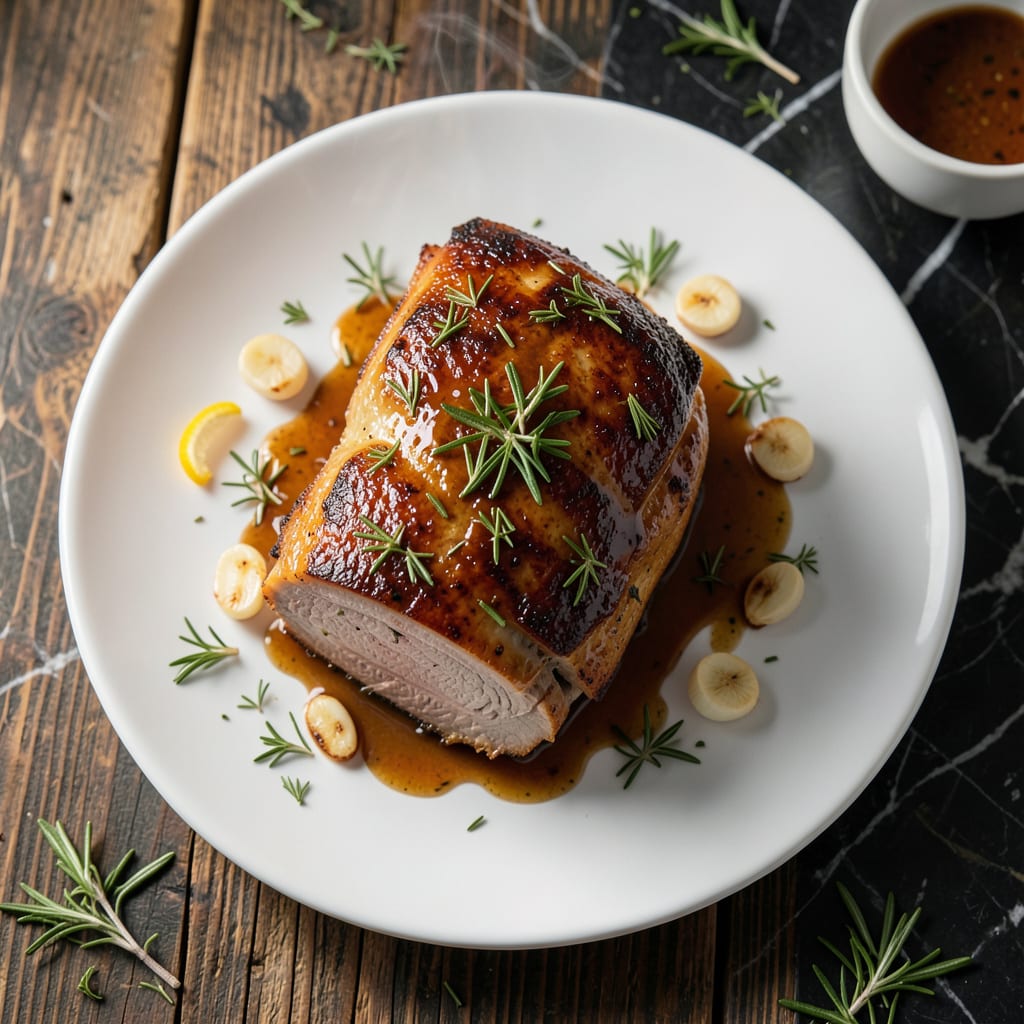
This herb-crusted pork loin delivers restaurant-quality results with a perfectly caramelized edge every time. The technique combines simple prep with precise timing to lock in juices while creating that signature golden crust.
I’ve refined this method to ensure tender meat with a flavorful herb coating that stays crisp. The result is a centerpiece dish that impresses without demanding complex skills or specialty tools.
Ingredients for Gordon Ramsay Pork Loin
Restaurant-quality pork loin starts with these carefully selected ingredients for perfect caramelization and juiciness.
| Ingredient | Amount | Notes |
|---|---|---|
| Boneless Pork Loin 🥩 | 2 lb | Trimmed of excess fat |
| Olive Oil 🫒 | 2 tbsp | Extra-virgin for searing |
| Dijon Mustard 🟡 | 3 tbsp | Whole grain preferred |
| Fresh Rosemary 🌿 | 2 tbsp | Finely chopped, stems removed |
| Fresh Thyme Leaves 🍃 | 2 tbsp | Stripped from stems |
| Garlic Cloves 🧄 | 4 cloves | Minced to fine paste |
| Breadcrumbs 🍞 | ¾ cup | Panko for extra crunch |
| Kosher Salt 🧂 | 1 ½ tsp | Diamond Crystal brand preferred |
| Black Pepper 🌶️ | 1 tsp | Freshly cracked for best flavor |
| Butter 🧈 | 3 tbsp | Unsalted, for basting |
| Shallot 🧅 | 1 whole | Finely minced for depth |
| White Wine Vinegar 💧 | 1 tbsp | For acidity balance |
| Low-Sodium Chicken Stock 🍲 | ½ cup | For deglazing pan |
For the pork loin, source from a reputable butcher—look for even marbling and a pale pink hue. Whole Foods or Costco offer consistent quality. The herbs must be fresh; dried simply won’t deliver the vibrant aroma needed for that signature crust. Diamond Crystal kosher salt is non-negotiable for its clean flavor and precise grain size, which adheres better to the meat.
Substitutions must maintain the dish’s integrity. No fresh herbs? Dried at one-third the quantity, but expect muted flavor. Panko breadcrumbs can replace regular for extra crunch. For the Dijon, whole grain mustard adds texture, but smooth works too. If avoiding alcohol in the stock, substitute low-sodium vegetable broth—just reduce the salt accordingly.
The herb crust stays crisp for 1 day in the fridge. Store pork loin whole, uncooked, for up to 3 days. Freeze raw pork for 6 months. Always bring meat to room temperature before cooking for even doneness. Leftovers reheat best in a 350°F oven with a splash of stock.
Why You’ll Love This Recipe
- One Pan Wonder: I love that I can sear the pork loin in the same pan I roast it in—minimal cleanup, maximum flavor.
- Herb-Crusted Perfection: That Dijon and fresh rosemary crust? It’s the reason my family lingers at the table.
- Sunday Roast, Wednesday Leftovers: Serve it fancy for guests or slice cold for sandwiches the next day. Honestly, it’s just as good.
- Budget-Friendly Feast: A pork loin feeds a crowd without breaking the bank, and the leftovers stretch further than you’d expect.
Step-by-Step Instructions for Herb-Crusted Pork Loin
Master the technique behind this restaurant-quality dish with precision and finesse.
Step 1: Prepare and Season the Pork Loin
Pat the boneless pork loin completely dry with paper towels to ensure a perfect sear. Season all sides generously with the kosher salt and black pepper, pressing gently to adhere. This foundational step guarantees the crust will cling properly and develop maximum flavor.
I always let the seasoned pork loin sit at room temperature for 20-30 minutes before cooking. This allows the meat to cook more evenly and reduces the risk of a tough, dried-out exterior. The surface should feel slightly tacky—this helps the herb crust bond during searing.
Step 2: Create the Herb Crust and Sear
In a small bowl, combine the breadcrumbs, finely chopped fresh rosemary, fresh thyme leaves, and minced garlic cloves. Stir in the Dijon mustard until the mixture resembles a thick paste. This aromatic blend will form the signature caramelized crust that defines the dish.
Heat the olive oil in a large oven-safe skillet over medium-high heat until shimmering. Sear the pork loin on all sides for 2-3 minutes per side until deeply golden brown. The goal is to build a flavorful fond in the pan without overcooking the meat at this stage.
Step 3: Apply the Crust and Finish in the Oven
Brush the seared pork loin generously with any remaining Dijon mustard mixture, then press the breadcrumb-herb mixture evenly onto the top and sides. The crust should form a thick, even layer that will crisp beautifully during roasting.
Transfer the skillet to a preheated 400°F oven and roast for 20-25 minutes, or until the internal temperature reaches 145°F. Baste the pork loin with the butter halfway through cooking to enhance the golden crust and add richness.
Step 4: Rest and Prepare the Pan Sauce
Remove the pork loin from the oven and transfer it to a cutting board. Tent loosely with foil and let it rest for 10-15 minutes. This critical step allows the juices to redistribute, ensuring each slice is moist and tender.
While the pork rests, place the skillet over medium heat. Add the minced shallot and cook for 1-2 minutes until softened. Deglaze with the white wine vinegar, scraping up any browned bits, then add the low-sodium chicken stock. Simmer for 3-4 minutes until slightly reduced, then whisk in any remaining butter for a glossy finish.
Step 5: Slice and Serve
Slice the rested pork loin against the grain into ½-inch thick medallions. Arrange on a warm platter and spoon the pan sauce over the top. The crust should be deeply caramelized with a crisp texture, while the interior remains juicy and perfectly pink.
Serve immediately while the crust is at its peak. The sauce should have a balanced acidity from the vinegar and depth from the shallots, complementing the herbaceous crust and tender pork without overpowering it.
Pro Tips For Making Gordon Ramsay Pork Loin
- Sear It Hard: Crank the pan to high heat and get a deep golden crust on all sides of the pork loin—this locks in juices and builds flavor before it goes in the oven.
- Dry the Meat First: Pat the pork loin completely dry with paper towels before seasoning; any moisture will steam instead of sear, and you’ll lose that crispy exterior.
- Don’t Overcook It: Pull the pork out at 145°F internal temp and let it rest 10 minutes—it’ll rise to 150°F and stay juicy. I learned this the hard way after ruining a few cuts with that extra 5 minutes.
- Crush the Herbs: Lightly crush the fresh rosemary and thyme before rubbing them into the Dijon mustard coating—it releases the oils and makes the flavor actually stick to the meat.
Best Sauces and Condiments for This Recipe
Classic Pan Sauce
The pan sauce you already make with this recipe is perfectly balanced—shallots, vinegar, and chicken stock create a bright, savory complement. I always let it reduce by about half to concentrate those flavors before finishing with butter. 💫
Apple Cider Glaze
Reduce 1 cup apple cider with 2 tbsp apple cider vinegar and 1 tbsp brown sugar until syrupy. This sweet-tart glaze pairs beautifully with the herb crust, especially in fall. Drizzle lightly over slices just before serving.
Mustard Cream Sauce
Whisk ½ cup heavy cream, 2 tbsp whole grain mustard, and 1 tsp honey until smooth. Warm gently and spoon over pork for a creamy contrast to the crisp crust. This works great for leftovers too.
Spicy Chimichurri
Blend 1 cup parsley, ¼ cup cilantro, 3 garlic cloves, ¼ cup olive oil, 2 tbsp red wine vinegar, and ½ tsp red pepper flakes. The fresh, bold flavors cut through the richness. 🌿
Mushroom Demiglace
Sauté 8 oz mushrooms in the pan after removing pork, then deglaze with ½ cup beef stock and reduce. This adds earthy depth that complements the herb crust wonderfully.
Nutrition Facts
Frequently Asked Questions
What’s the best way to keep the herb crust from falling off?
Press the crust firmly onto the seared pork loin before roasting. Let the meat rest for 10-15 minutes after cooking—the crust sets as it cools.
Can I use a different cut of pork for this recipe?
Pork tenderloin works but cooks faster—reduce oven time to 15-20 minutes. Avoid fatty cuts like shoulder; they won’t crisp as well.
How do I prevent dry pork loin?
Remove from oven at 145°F internal temp and rest before slicing. Basting with butter during roasting adds moisture.
What if I don’t have an oven-safe skillet?
Sear in a regular pan, then transfer to a baking dish. Pour pan juices over the pork before roasting.

- BBQ Sausage Recipe Oven: Smoky Depth Without the Grill - September 28, 2026
- BBQ Chicken Bowl Recipe Rice: Smoky Sweetness Over Fluffy Grains - September 28, 2026
- Beef Cutlet Recipe Ideas: Crispy Breaded Patties With Bold Seasonings - September 28, 2026