
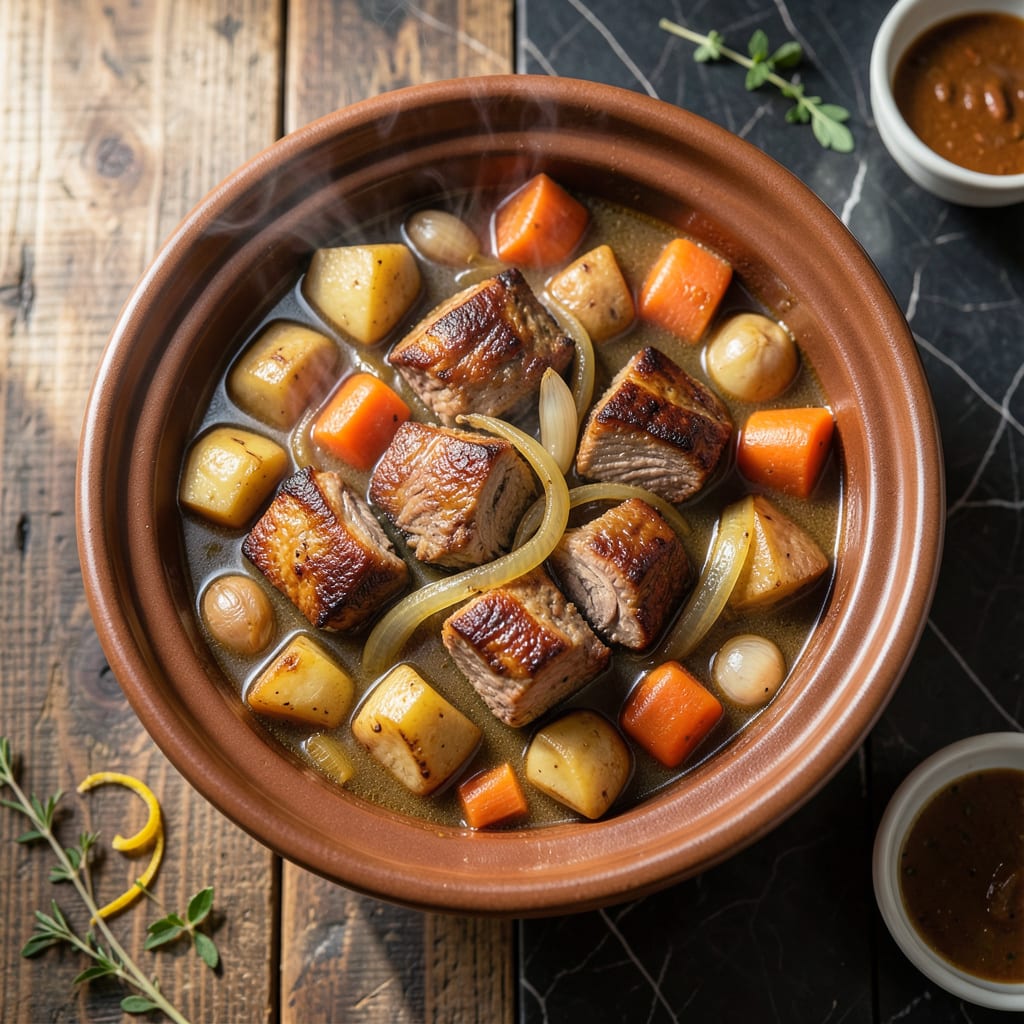
This slow cooker pork stew delivers restaurant-quality results with minimal effort. Tender pork, hearty vegetables, and a rich broth develop complex flavors over hours of gentle cooking.
Set it in the morning, return to a house filled with incredible aroma. The long, slow cooking transforms tough cuts into melt-in-your-mouth tenderness while building layers of savory depth.
Ingredients for Slow Cooker Pork Stew
Tender pork, hearty veggies, and rich broth—set it and forget it for serious flavor.
| Ingredient | Amount | Notes |
|---|---|---|
| Pork Shoulder 🥩 | 2 lb | Boneless, cut into 1-inch cubes |
| Russet Potatoes 🥔 | 1 ½ lb | Peeled and cubed into 1-inch pieces |
| Carrots 🥕 | 3 whole | Peeled and sliced into thick rounds |
| Yellow Onion 🧅 | 1 whole | Diced into medium pieces |
| Garlic Cloves 🧄 | 4 cloves | Minced for depth of flavor |
| Low-Sodium Chicken Broth 🥣 | 2 cups | For rich, savory base |
| Tomato Paste 🍅 | 2 tbsp | For umami richness |
| Dried Thyme 🌿 | 1 tsp | Earthy, warm herb |
| Dried Rosemary 🌿 | 1 tsp | Crushed to release oils |
| Bay Leaf 🍃 | 2 whole | Whole, removed before serving |
| Worcestershire Sauce 💧 | 1 tbsp | Adds deep savory complexity |
| Salt 🧂 | 1 ½ tsp | Diamond Crystal kosher preferred |
| Black Pepper 🌶️ | 1 tsp | Freshly ground for best flavor |
| Olive Oil 🫒 | 1 tbsp | For searing pork |
The pork shoulder is key here—look for well-marbled cuts at Costco or your local butcher. It’s forgiving, turns melt-in-your-mouth tender, and costs less than pricier cuts. Potatoes should be firm and blemish-free (Russets are ideal). If you’ve got time, sear the pork first in a hot pan for an extra depth of flavor that’s worth the 10 minutes.
No pork shoulder? Pork butt works the same. Swap potatoes for sweet potatoes if you like them sweeter. Out of fresh thyme? Dried thyme at one-third the amount gets you close. The Worcestershire sauce is non-negotiable for that umami punch, but if you’re in a pinch, soy sauce plus a pinch of sugar can sub in. Fresh herbs? Overkill here—dried hold up better to the long cook.
Leftovers taste even better the next day. Stores in the fridge for 4-5 days (the flavors keep deepening) or freeze for 3 months. I always double the batch—one for now, one for later (trust me, you’ll want it).
Why You’ll Love This Recipe
- Set and Forget: I toss everything in the slow cooker before work and come home to a house that smells like a cozy Sunday dinner.
- Feeds the Crew: I make a big batch on Sunday and we’re set for leftovers—lunches, quick dinners, even a midnight snack.
- Budget Hero: Pork shoulder is cheap, and this stretch-a-meal recipe fills us up without breaking the bank.
Step-by-Step Instructions for Slow Cooker Pork Stew
Here’s the method that delivers deep, hands-off flavor with minimal effort.
Step 1: Sear the Pork Shoulder for Depth
Heat the 1 tablespoon olive oil in a large skillet over medium-high heat until shimmering. Pat the 2 lb pork shoulder cubes dry with paper towels—this ensures a proper sear rather than steaming. Season them with 1.5 teaspoons salt and 1 teaspoon black pepper, then add to the hot pan in a single layer.
Sear the pork in batches if needed to avoid crowding, turning occasionally, for 5-7 minutes total until all sides develop a rich golden-brown crust. This step builds the Maillard reaction, creating complex flavors that will infuse the entire dish. Transfer the seared pork to your slow cooker.
Step 2: Build the Aromatic Base
In the same skillet, add the diced yellow onion and cook over medium heat for 3-4 minutes until softened and just beginning to brown. Stir in the minced 4 cloves garlic cloves, then add the 2 tablespoons tomato paste. Cook for 1 minute, stirring constantly, until the tomato paste darkens slightly—this intensifies its umami character.
Deglaze the pan with 1 tablespoon Worcestershire sauce, scraping up all the browned bits with a wooden spoon. These fond bits are pure flavor. Transfer this mixture to the slow cooker with the pork.
Step 3: Add Vegetables and Seasonings
Add the prepared 1.5 lb russet potatoes, 3 whole carrots, 1 teaspoon dried thyme, 1 teaspoon dried rosemary, and 2 whole bay leaf to the slow cooker. The rosemary should be crushed between your fingers before adding to release its aromatic oils.
Pour in the 2 cups low-sodium chicken broth, ensuring the liquid just covers the solids. Stir everything gently to distribute the seasonings and vegetables evenly. The liquid should come about three-quarters up the side of the slow cooker for optimal heat transfer.
Step 4: Slow Cook to Perfection
Cover the slow cooker and set it to low heat for 7-8 hours or high heat for 4-5 hours. The stew is ready when the pork is fork-tender and falls apart with minimal pressure, and the potatoes are soft enough to pierce easily with a fork.
About 30 minutes before serving, remove the 2 whole bay leaf and discard them. Taste and adjust seasoning if needed—the flavors should be balanced and rich, with the pork incredibly tender and the vegetables perfectly cooked through.
Pro Tips For Making Slow Cooker Pork Stew
- Brown the Pork: I learned this the hard way—searing the pork shoulder in a hot pan before slow cooking adds a depth of flavor that skipping this step just can’t match.
- Cut Uniformly: Keep your potatoes and carrots roughly the same size, about 2-inch chunks, so everything cooks evenly and you’re not left with mushy spuds and crunchy carrots.
- Skip the Pre-Softening: Resist the urge to parboil your potatoes or carrots first; they’ll break down too much in the slow cooker and turn your stew into a thick, pasty mess.
- Deglaze the Pan: After browning the pork, pour a cup of broth or water into the pan and scrape up all those browned bits—this liquid gold goes straight into the slow cooker for extra richness.
Health Benefits of This Slow Cooker Pork Stew
Protein Powerhouse
The 2 lb pork shoulder in this dish delivers about 100 grams of protein per serving, supporting muscle repair and immune function. Slow cooking preserves these nutrients while breaking down connective tissue for easy digestion. 💪
Rich in B Vitamins
Pork is packed with B vitamins, especially B12 and thiamine, which help convert food into energy. A serving provides over 50% of your daily B12 needs, crucial for nerve function and red blood cell production.
Iron and Zinc Boost
This creation offers heme iron, the most easily absorbed form, helping prevent fatigue. The 2 lb pork shoulder also provides zinc, supporting immune health and wound healing.
Veggie Nutrients
The 1.5 lb russet potatoes contribute potassium and vitamin C, while the 3 carrots add beta-carotene for eye health. Together, they create a balanced meal with essential vitamins and minerals.
Low-Fat Cooking
Slow cooking with 2 cups low-sodium chicken broth keeps fat content lower than frying. The 1 tablespoon olive oil adds healthy monounsaturated fats, supporting heart health without excess calories.
Collagen Benefits
Pork shoulder’s connective tissue breaks down into gelatin during cooking, which may support joint and gut health. This natural collagen source is a bonus in every comforting spoonful. ✨
Nutrition Facts
Frequently Asked Questions
Can I skip searing the pork first?
You can, but searing adds deep flavor. The 5-7 minutes creates a caramelized crust that enhances the stew’s richness. Without it, the dish may taste flatter.
What if my slow cooker runs hot?
Check the stew at 6 hours on low. If pork is already tender, switch to warm. Overcooking can make veggies mushy.
Can I use a different cut of pork?
Pork butt works identically to shoulder. Avoid lean cuts like tenderloin—they’ll dry out during the 7-8 hours of cooking.
How do I thicken the broth?
Mix 2 tablespoons cornstarch with cold water, stir into the stew 30 minutes before serving, then cook uncovered.

- Bluefin Tuna Recipe Ideas: Sushi-Grade Seared and Sesame-Crusted - September 28, 2026
- Blue Zone Recipe Ideas: Longevity-Boosting Meals for Vibrant Living - September 28, 2026
- Beefaroni Recipe With Tomato Soup: One-Pot Nostalgic Comfort - September 28, 2026