
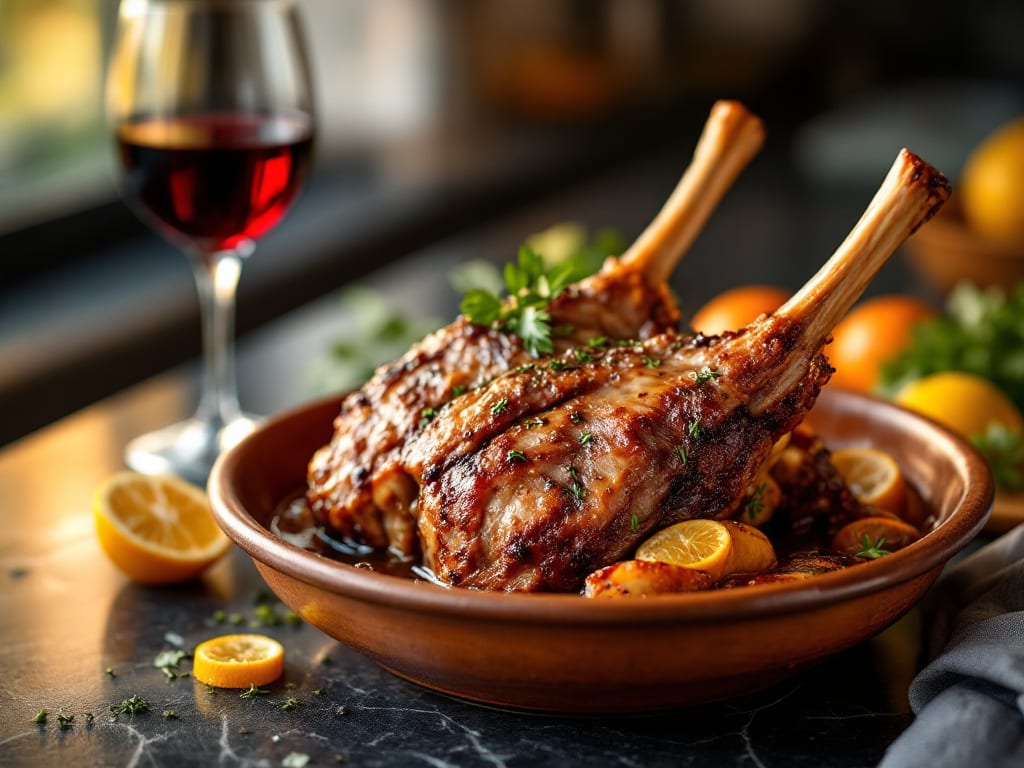
A Greek-style roast leg of lamb delivers the perfect balance of herbed crust and juicy pink centers—just like in a Greek taverna. This recipe captures the essence of Mediterranean roasting with garlic, lemon, and oregano, creating a dish that’s rich in flavor and tradition.
The secret lies in slow roasting and careful basting to lock in moisture while building a fragrant crust.
The process begins with a simple yet transformative marinade of olive oil, garlic, and fresh herbs, which infuses the lamb with authentic Greek flavors. Roasting at a moderate temperature ensures the meat stays tender while developing that signature caramelized exterior.
Basting with pan juices every 30 minutes keeps the lamb moist and enhances its natural richness.
What you’ll achieve is a juicy, flavorful center surrounded by a golden, aromatic crust that’s impossible to resist. The dish pairs beautifully with roasted potatoes, fresh salad, or crusty bread to soak up every last drop of the savory juices.
This is the kind of meal that brings warmth and tradition to your dinner table.
Perfect for special occasions or a Sunday family feast, this recipe delivers restaurant-quality results with minimal effort. The key is patience—letting the lamb cook slowly to achieve that ideal balance of texture and flavor. Here’s how to make it happen in your own kitchen.
Ingredients for greek style roast leg of lamb
Simple Mediterranean ingredients transform a leg of lamb into restaurant-worthy perfection.
| Ingredient | Amount | Notes |
|---|---|---|
| Leg of Lamb 🐑 | 4 lb | Bone-in, frenched preferred |
| Extra-Virgin Olive Oil 🫒 | ½ cup | High quality, fruity |
| Garlic Cloves 🧄 | 8 cloves | Peeled, smashed slightly |
| Fresh Oregano 🌿 | ¼ cup | Chopped, stems removed |
| Fresh Rosemary 🌿 | ¼ cup | Chopped, fronds separated |
| Lemon Zest 🍋 | 1 tbsp | From 1 large lemon |
| Lemon Juice 🍋 | ¼ cup | Freshly squeezed |
| Sea Salt 🧂 | 2 tbsp | Coarse grain preferred |
| Freshly Ground Black Pepper 🌶️ | 1 tsp | Freshly cracked |
| Honey 🍯 | 2 tbsp | Wildflower preferred |
| Red Wine Vinegar 🍷 | 2 tbsp | Dry, not sweet |
| Potatoes 🥔 | 2 lb | Baby or Yukon Gold |
| Olive Oil 🫒 | 2 tbsp | For roasting potatoes |
| Dried Thyme 🌿 | 1 tsp | Or 1 tbsp fresh |
The lamb is the star, so pick a bone-in leg with good fat cap—this keeps it juicy. Whole Foods or your local butcher often have the best cuts. If you’re buying frozen, thaw it in the fridge overnight. The herbs? Fresh oregano and rosemary from the grocery store’s produce section work fine, but if you can find them at a Greek market, go for it—they’ve got more flavor. I usually grab a big bunch of rosemary and just use half, saving the rest for other dishes. The lemon should be bright yellow with no soft spots—those Meyer lemons at Trader Joe’s add a nice floral note.
No fresh oregano? Dried oregano at one-third the amount works in a pinch, but fresh is ideal. Short on rosemary? Thyme or marjoram can step in. The honey should be raw or wildflower—avoid that overly processed grocery store kind. For the wine vinegar, any dry red wine vinegar works, but Balsamic vinegar adds depth if you’re feeling fancy. The potatoes? Baby potatoes or Yukon Golds—whatever you’ve got. Just make sure they’re firm and unblemished. And don’t skip the zest—it brightens everything up.
This lamb reheats beautifully, but honestly, it’s best served fresh. Keep leftovers covered in the fridge for up to 3 days, but I usually eat it all in one sitting. The potatoes reheat well too—just toss them in the oven at 375°F for 10 minutes. For extra flavor, brush the lamb with any leftover pan juices before serving. The crust gets even more flavorful if you let it rest for 15 minutes before carving. Trust me, it’s worth the wait.
Why You’ll Love This Recipe
- Minimal Prep Required: I swear by this—just sear the lamb with olive oil, stuff it with garlic and herbs, then let the oven do the work. No chopping, no fuss, no stress.
- Herb-Crusted Magic: That rosemary and oregano combo? It turns simple lamb into something ridiculously flavorful—crispy edges, juicy inside, and a scent that fills the whole house like a Greek taverna.
- Leftovers for Days: Roast a big leg, and you’ve got meals for a week: sandwiches, salads, or even lamb gyros. Honestly, I make this on purpose just to have easy lunches.
- Weeknight Crowd-Pleaser: Between us, this is my go-to for dinner parties or family nights. Feeds six without breaking the bank, and everyone asks for seconds—no one ever guesses how little effort it took.
Step-by-step instructions for Greek style roast leg of lamb
Here’s how to create a perfectly juicy center with a fragrant herbed crust.
Prepare the Lamb with Herbed Rub
Start by patting the 4 lb leg of lamb completely dry with paper towels—this ensures a crisp crust. In a small bowl, whisk together the 0.5 cup extra-virgin olive oil, 2 tbsp sea salt, 1 tsp freshly ground black pepper, 2 tbsp honey, 2 tbsp red wine vinegar, 1 tbsp lemon zest, and 0.25 cup lemon juice until fully combined.
Next, add the 8 smashed garlic cloves, 0.25 cup chopped fresh oregano, 0.25 cup chopped fresh rosemary, and 1 tsp dried thyme to the mixture. Rub this herbed paste all over the lamb, pressing it into the meat so it adheres well. Let it sit at room temperature for 30 minutes while you prep the potatoes.
Roast the Potatoes for Crispy Sides
Preheat your oven to 425°F. Cut the 2 lb potatoes into 1-inch chunks and toss them in a large bowl with the 2 tbsp olive oil, 1 tsp dried thyme, 1 tsp sea salt, and ½ tsp freshly ground black pepper. Spread the potatoes on a rimmed baking sheet in a single layer.
Roast the potatoes for 25 minutes, stirring once halfway through, until they’re golden brown and tender. Remove them from the oven and set aside—they’ll stay warm while the lamb cooks. This step ensures your potatoes are crispy on the outside and fluffy inside, balancing the rich lamb.
Roast the Lamb to Juicy Perfection
Place the seasoned lamb on a rack set inside a roasting pan, fat-side up. Roast at 425°F for 20 minutes to develop a golden crust. Then reduce the oven temperature to 325°F and continue roasting for 1 hour and 20 minutes, or until the internal temperature reaches 135°F for medium-rare.
Here’s the key: the lamb needs to rest after roasting. Transfer it to a cutting board, tent loosely with foil, and let it rest for 30 minutes. This resting period allows the juices to redistribute, ensuring every slice stays juicy. The crust will stay intact while the center remains perfectly pink.
Carve and Serve with Herbed Gravy
After resting, carve the lamb into ½-inch thick slices against the grain. Arrange the slices on a platter and spoon any accumulated pan juices over the top. For extra flavor, you can reduce the pan juices with a splash of water and 1 tbsp extra-virgin olive oil to make a quick herbed gravy.
Serve the lamb with the crispy roasted potatoes and a side of fresh lemon wedges. The combination of the herbed crust, juicy pink center, and bright lemon creates a dish that’s both elegant and satisfying—just like a Greek taverna would serve.
Pro Tips For Making Greek Style Roast Leg Of Lamb
- CRUST FIRST, THEN HEAT: I used to roast this lamb at a steady 325°F (160°C) and ended up with bland, dry meat. Now I sear it hard in a screaming-hot oven (425°F/220°C) for 15 minutes—no oil needed—before dropping to 300°F (150°C). That crust locks in flavor and moisture while the inside cooks evenly.
- SMASH THAT GARLIC: Peeling whole garlic cloves is a pain, but mincing them too finely makes them disappear into the fat. Instead, crush them lightly with the flat side of your knife—just enough to bruise the skins. They’ll brown beautifully and release aroma without turning to mush.
- DON’T SKIP THE FOIL: After the initial sear, tent that lamb with foil for the first hour. I learned this the hard way—my first attempt dried out because I resisted covering it. The steam keeps the meat tender while the herbs infuse, and it’s easier to crisp later if you want that golden finish.
- UPGRADE THE OIL: Cheap olive oil burns and tastes bitter. Use a high-quality extra-virgin (like Kalamata or Greek Arbequina) and brush it on after searing, not before. The heat will caramelize the oil’s flavors, turning the crust into a rich, herby blanket. (Yes, it’s worth the splurge for this dish.)
Wine and beer pairings for this recipe
Bold Red Wines
Greek-style roasted lamb pairs beautifully with bold red wines that complement its herbed crust and juicy center. I always reach for a Greek Agiorgitiko from Nemea—its rich berry notes and subtle spice mirror the oregano and rosemary in the rub.
For something more robust, try a Syrah or Grenache from the Rhône Valley, both of which stand up to the dish’s richness while cutting through the fat. 🍷
Crisp Whites
If you prefer white wine, a Greek Assyrtiko from Santorini is my go-to choice. Its bright acidity and citrus undertones cleanse the palate between bites, balancing the lamb’s richness.
For a non-Greek option, a Sauvignon Blanc from New Zealand—like Cloudy Bay—adds herbal notes that harmonize with the dish’s aromatic profile.
Light Beers
For beer lovers, a Greek lager like Fix or Mytilineos offers a crisp, refreshing contrast to the lamb’s richness. If you prefer craft options, a Belgian witbier with its citrusy, peppery notes works beautifully. Avoid heavy stouts or IPAs—they can overpower the delicate herbed flavors.
After-Dinner Sweet
Finish the meal with a Greek mastiha liqueur or a glass of Commandaria, the world’s oldest dessert wine. These sweet options provide a perfect contrast to the savory lamb. For a non-alcoholic choice, serve Greek coffee with a side of loukoumades (honey-drizzled doughnuts) for a traditional touch.
Nutrition facts
Frequently asked questions
Why does the recipe call for resting the lamb after roasting?
Resting the lamb for 30 minutes after roasting is crucial to lock in juices that would otherwise leak out when sliced. This ensures every bite stays moist and flavorful. The crust stays intact while the center remains perfectly pink and tender.
Can I substitute fresh herbs with dried ones?
Yes, but use one-third the amount of dried herbs (e.g., 1 tbsp dried oregano instead of 0.25 cup fresh). Fresh herbs provide brighter flavor, but dried works in a pinch. For best results, combine 1 tsp dried thyme with 0.1 cup dried oregano.
What’s the best way to check doneness without a meat thermometer?
For medium-rare, press the lamb gently with your finger—it should feel firm but still slightly springy. The internal temperature should reach 135°F. Alternatively, cut into a small section: a pink center with a slightly firm exterior indicates perfect doneness.
How can I make this dish ahead of time?
Marinate the lamb overnight for deeper flavor. Roast it up to 2 days ahead, then refrigerate. Reheat slices in a 350°F oven for 10 minutes with a splash of water to restore moisture. Potatoes reheat best fresh but can be made 1 day ahead at 375°F for 10 minutes.
What’s the secret to a crispy herbed crust?
Pat the lamb completely dry before seasoning and roast it fat-side up. Baste with pan juices every 30 minutes to build flavor and moisture. The high-heat 425°F start helps develop the crust before lowering to 325°F for even cooking.

- 1950’s Betty Crocker Banana Bread Recipe: Nostalgic Spice Perfection - November 29, 2026
- Meghan Markle’s Pasta Recipe: Creamy Garlic Mushroom Twist for Weeknights - November 29, 2026
- Applebee’s Lemon Chicken with Quinoa Recipe: Bright Citrus Glaze and Fluffy Quinoa Fusion - November 29, 2026