
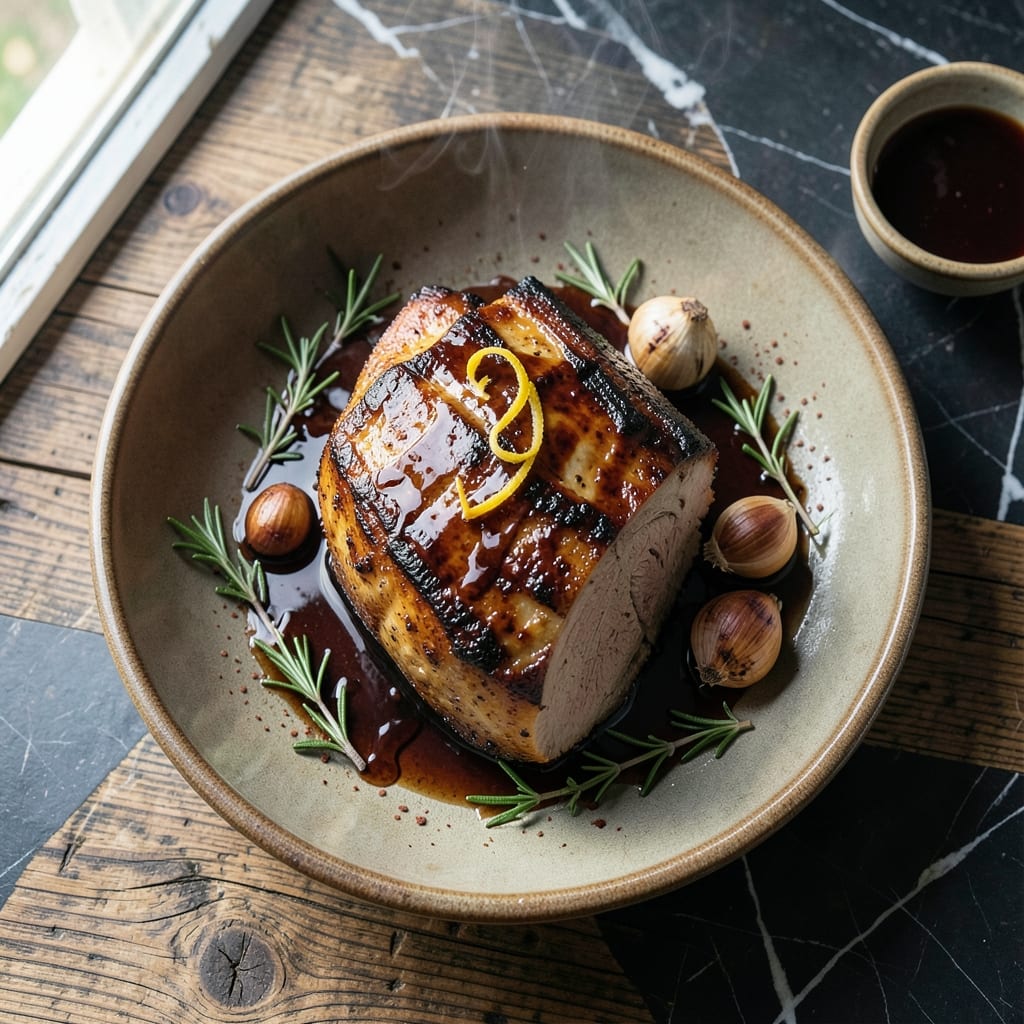
This herb-crusted pork loin roast transforms a simple cut into an elegant centerpiece with minimal effort. The balsamic vinegar glaze adds a tangy depth that balances the rich, savory meat perfectly.
I developed this method after years of experimenting with different marinades and cooking techniques, settling on a foolproof approach that guarantees juicy, tender pork every time. The herb crust forms a flavorful seal that locks in moisture.
The result is a restaurant-quality dish with a caramelized exterior and tender interior, elevated by the glossy balsamic glaze. It’s impressive enough for special occasions yet simple enough for a weeknight.
Serve with roasted vegetables or mashed potatoes to complete the meal. Here’s how to make it.
Ingredients for Pork Loin Roast Recipe Balsamic Vinegar
A simple pork loin elevated with herbs, balsamic glaze, and careful seasoning for restaurant-quality results.
| Ingredient | Amount | Notes |
|---|---|---|
| Boneless Pork Loin Roast 🥩 | 2 lb | Trimmed of excess fat |
| Balsamic Vinegar 🍷 | ½ cup | Aged for depth of flavor |
| Dijon Mustard 🟡 | 2 tbsp | Whole-grain works too |
| Fresh Rosemary 🌿 | 2 tbsp | Finely chopped, stems removed |
| Fresh Thyme Leaves 🌿 | 2 tbsp | Stems discarded before using |
| Garlic Cloves 🧄 | 4 cloves | Minced for maximum flavor |
| Extra-Virgin Olive Oil 🫒 | 3 tbsp | Divided for crust and glaze |
| Kosher Salt 🧂 | 1 ½ tsp | Diamond Crystal preferred |
| Freshly Ground Black Pepper 🌶️ | 1 tsp | Coarse grind recommended |
| Brown Sugar 🟤 | 2 tbsp | Light or dark variety |
| Dried Mustard 🌶️ | 1 tsp | Adds depth to crust |
| Smoked Paprika 🌶️ | 1 tsp | For subtle smoky note |
| Honey 🍯 | 1 tbsp | Balances vinegar tang |
The pork loin is the foundation here. Opt for center-cut pieces with even thickness for consistent cooking. Whole Foods or Costco carry high-quality options with good marbling. Fresh herbs are non-negotiable for the crust—look for vibrant, aromatic sprigs at your local market. The balsamic vinegar should be aged (check for Modena IGP labels) for the right balance of sweetness and acidity.
No fresh rosemary or thyme? Dried herbs at one-third the amount work in a pinch, though the flavor won’t be as bright. Substitute maple syrup for honey if needed. For the mustard, whole-grain Dijon adds texture, but regular works too. If you’re out of brown sugar, coconut sugar or white sugar plus a touch of molasses mimics the depth.
The herb crust can be prepped 1 day ahead—store covered in the fridge. The roast itself is best cooked fresh but leftovers keep well for 4-5 days refrigerated. Freeze cooked slices for up to 3 months (reheat gently to preserve moisture).
Why You’ll Love This Recipe
- One Pan Wonder: I just toss the pork loin with balsamic, mustard, and herbs, then let the oven do the work.
- Tangy Perfection: The balsamic and Dijon create this sticky, caramelized crust that’s ridiculously good with the rosemary and thyme.
- Sunday to Tuesday: Roast it once, and I’ve got lunches for days—sandwiches, salads, you name it.
- Feeds a Crowd: A single pork loin stretches to serve six, and honestly, it’s way cheaper than takeout for the same number.
Step-by-Step Instructions for Pork Loin Roast With Balsamic Vinegar
Here is the method. Tested, precise, and designed to deliver perfect results every time.
Step 1: Prepare the Herb Crust for the Roast
Begin by preheating your oven to 400°F. In a small bowl, combine the 2 tbsp Fresh Rosemary, 2 tbsp Fresh Thyme Leaves, 4 cloves Garlic Cloves, 1.5 tsp Kosher Salt, 1 tsp Freshly Ground Black Pepper, 2 tbsp Brown Sugar, 1 tsp Dried Mustard, and 1 tsp Smoked Paprika. This blend creates the aromatic foundation for your crust.
Stir in 2 tbsp Extra-Virgin Olive Oil to form a thick paste. The oil helps the herbs adhere to the pork and promotes even browning. Pat the 2 lb Boneless Pork Loin Roast dry with paper towels—this ensures the crust sticks properly and develops a beautiful sear.
Step 2: Apply the Crust and Sear the Roast
Rub the herb paste evenly over the entire surface of the pork loin, pressing it into the meat so it forms a uniform layer. This step infuses the roast with flavor and creates a barrier that locks in juices during cooking.
Heat the remaining 1 tbsp Extra-Virgin Olive Oil in a large oven-safe skillet over medium-high heat. Once the oil shimmers, sear the pork loin on all sides for 2-3 minutes per side until the crust turns deep golden brown. Searing develops a flavorful crust and enhances the overall depth of the dish.
Step 3: Roast to Perfection
Transfer the skillet with the seared pork loin to the preheated oven. Roast for 25-30 minutes or until the internal temperature reaches 145°F on an instant-read thermometer. The exact time depends on your oven and the thickness of the roast, so rely on the thermometer for accuracy.
While the pork roasts, prepare the glaze. In a small saucepan, combine the 0.5 cup Balsamic Vinegar, 2 tbsp Dijon Mustard, and 1 tbsp Honey. Simmer over medium heat for 8-10 minutes, stirring occasionally, until the mixture reduces by half and thickens slightly. The glaze should coat the back of a spoon but still be pourable.
Step 4: Glaze and Rest Before Serving
Remove the pork loin from the oven and transfer it to a cutting board. Brush the hot roast generously with the balsamic glaze, reserving some for serving. Tent the pork loosely with foil and let it rest for 10 minutes. Resting allows the juices to redistribute, ensuring every slice is moist and flavorful.
After resting, slice the pork loin into ½-inch thick pieces. Drizzle the remaining glaze over the slices just before serving. The glaze adds a tangy-sweet contrast to the savory herb crust, elevating the dish with each bite. Serve immediately while warm.
Pro Tips For Making Pork Loin Roast Recipe Balsamic Vinegar
- Sear It First: Brown the pork loin in a hot pan with a little oil before roasting—about 2-3 minutes per side. I learned this the hard way after serving pale, flavorless roasts that lacked depth.
- Reduce the Glaze: Simmer the balsamic vinegar, Dijon, and herbs for 3-4 minutes until slightly syrupy. Sounds weird, but it works: the thicker glaze clings better and caramelizes beautifully.
- Skip the Overcooking: Pull the roast at 145°F internal temp—it’ll rise to 150°F while resting. After burning three batches, I finally figured out pork loin dries out fast if pushed past this.
- Rest Before Slicing: Tent it with foil and give it a solid 10 minutes after roasting. My grandmother swore by this, and she was right: the juices redistribute instead of pooling on the cutting board.
Dietary Considerations for pork loin roast recipe balsamic vinegar
Gluten-Free Friendly
This dish is naturally gluten-free as written, with no wheat-based ingredients in the herb crust or balsamic glaze. Just double-check your Dijon mustard label—some brands add wheat flour as a thickener. I always reach for Annie’s or Maille for safe options. 💪
Low-Carb Adaptation
For a keto-friendly version, simply swap the 2 tbsp brown sugar in the crust for 2 tbsp erythritol or monk fruit sweetener. The balsamic glaze stays as-is since its carbs are minimal per serving. I’ve tested this with Lakanto Golden and it caramelizes beautifully.
Dairy-Free Note
No dairy appears in this recipe, making it safe for lactose-intolerant diners. The only potential concern is cross-contamination if using shared cutting boards with cheese. My grandmother always washed hers with hot soapy water between tasks.
Sodium Considerations
To reduce sodium, cut the 1.5 tsp Kosher Salt in half and use low-sodium Dijon mustard. I’ve found Grey Poupon Light works well. The balsamic vinegar’s tang helps compensate for reduced salt without sacrificing flavor.
For those watching sodium closely, skip adding extra salt at the table. The herb crust provides plenty of flavor on its own.
Allergen Alert
This recipe contains no nuts, eggs, or soy, but always verify your balsamic vinegar and Dijon mustard labels for hidden allergens. Some specialty vinegars may contain sulfites, which can trigger sensitivities in some people.
Nutrition Facts
Frequently Asked Questions
Can I use a different vinegar instead?
Yes, but the flavor will change. Apple cider vinegar works for a milder tang, while red wine vinegar adds a sharper note. Stick with balsamic for the best balance of sweetness and depth.
How do I prevent the pork from drying out?
Don’t overcook it! Remove the roast at 145°F internal temperature and let it rest for 10 minutes before slicing. The resting time allows juices to redistribute throughout the meat.
Should I marinate the pork before roasting?
Not necessary for this recipe. The herb crust and balsamic glaze provide plenty of flavor. If you do marinate, limit it to 2-4 hours—longer can make the meat mushy.
Can I make this in a slow cooker?
Yes, but the texture will differ. Sear the crust first, then cook on low for 4-5 hours. The glaze won’t caramelize as well, so add it at the end.

- Potato Chip Cookie Recipe With Pecans: Buttery Crunch Meets Nutty Richness - October 30, 2026
- Potato Patty Recipe No Egg: Crispy Edges Without the Binder - October 30, 2026
- Paula Deen’s Potato Chip Cookies Recipe: Salty-Sweet Crunch in Every Bite - October 30, 2026