
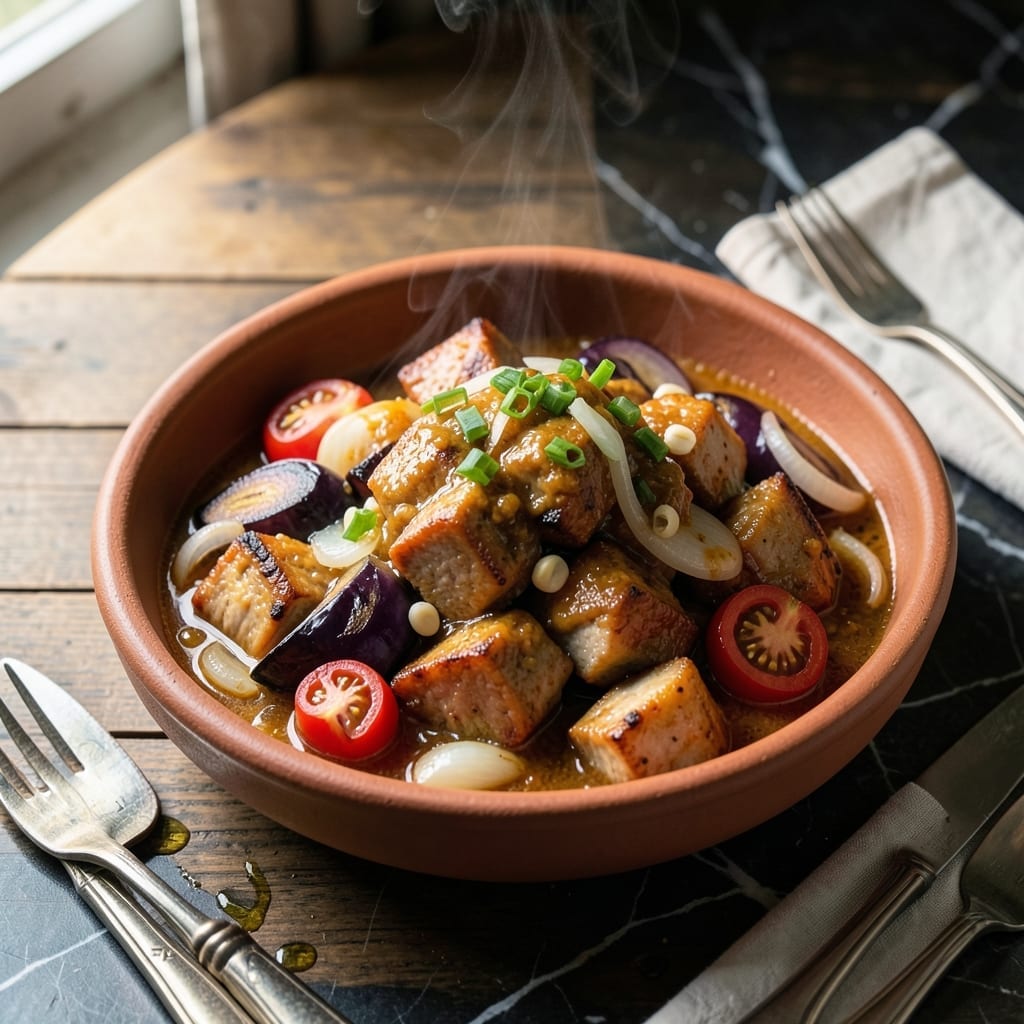
This Filipino pork stew transforms simple ingredients into a deeply savory dish with its signature shrimp paste base. The rich, salty flavor of bagoong pairs perfectly with tender pork and vegetables.
I developed this version after years of testing ratios to balance the bold shrimp paste without overpowering the other elements. The key is sautéing the bagoong first to mellow its intensity.
What emerges is a hearty, aromatic stew where each bite delivers layers of umami from the pork, shrimp paste, and eggplant. The dish improves overnight as flavors meld together.
Serve with steamed rice to soak up every bit of the flavorful sauce. This is comfort food at its most authentic and satisfying.
Ingredients for Pork Binagoongan Recipe Panlasang Pinoy
A handful of fresh produce and pantry staples create this rich, umami-packed Filipino stew.
| Ingredient | Amount | Notes |
|---|---|---|
| Pork Belly 🥩 | 1 ½ lb | Cut into 1-inch cubes |
| Shrimp Paste 🦐 | ¼ cup | Bagoong alamang preferred |
| Eggplant 🍆 | 2 whole | Asian variety, sliced |
| Tomatoes 🍅 | 2 whole | Medium, quartered |
| Onion 🧅 | 1 whole | Large, diced |
| Garlic Cloves 🧄 | 6 cloves | Minced finely |
| Red Chili Pepper 🌶️ | 2 whole | Sliced, seeds removed |
| Green Beans 🌿 | 1 cup | Trimmed, cut into 2-inch pieces |
| Vegetable Oil 🫒 | 2 tbsp | For sautéing shrimp paste |
| Water 💧 | 1 cup | For adjusting sauce consistency |
| Fish Sauce 🐟 | 1 tbsp | Patis or Thai fish sauce |
| Salt 🧂 | ½ tsp | Adjust to taste |
| Black Pepper 🌶️ | ½ tsp | Freshly ground |
The shrimp paste is non-negotiable here. Bagoong alamang is the gold standard—look for it in the Asian aisle at Whole Foods or any Filipino market. If you’re new to it, start with a smaller jar; a little goes a long way. The pork belly should have a good ratio of meat to fat for that melt-in-your-mouth texture. Costco often has pre-cut cubes that save prep time.
No pork belly? Pork shoulder at 1:1 ratio works but won’t be as rich. Short on eggplant? Zucchini or bitter melon can step in. Fresh shrimp paste can be swapped for bagoong isda (salted fish paste), but reduce the amount by half—it’s saltier. For a milder flavor, rinse the shrimp paste before using (not traditional, but it works in a pinch).
This stew tastes even better the next day after flavors meld. Store in an airtight container for up to 4 days in the fridge or freeze for 3 months. Reheat gently to preserve the eggplant’s texture.
Why You’ll Love This Recipe
- One Pot Wonder: I just toss the pork belly, shrimp paste, and veggies in a single pan—minimal cleanup, maximum flavor.
- Umami Bomb: The shrimp paste and pork belly create this rich, salty-savory depth that’s honestly hard to beat.
- Weeknight Hero: Between us, this is my go-to when I need dinner fast but still want something hearty.
- Stretches Far: Leftovers taste even better the next day, and it’s budget-friendly with cheap ingredients like eggplant and tomatoes.
Step-by-Step Instructions for Savory Shrimp Paste Pork Stew
Here’s the method to achieve the perfect balance of salty, umami, and tender texture.
Step 1: Sauté Aromatics and Shrimp Paste
Heat the 2 tbsp vegetable oil in a large pot over medium heat. Add the diced onion and sauté for 3-4 minutes until it turns translucent and begins to soften. This builds the flavor foundation for the dish.
Stir in the minced garlic cloves and cook for an additional 30 seconds until fragrant. Immediately add the 0.25 cup shrimp paste and cook for 2 minutes, stirring constantly. The shrimp paste should darken slightly and release its rich aroma, signaling it’s ready for the next step.
Step 2: Brown the Pork Belly
Add the 1.5 lb pork belly cubes to the pot and increase the heat to medium-high. Cook for 5-7 minutes, stirring occasionally, until the pork is lightly browned on all sides. This step ensures the pork retains moisture while developing a deep, caramelized exterior.
The pork should release some of its fat, which will meld with the shrimp paste to create a rich, savory base. Avoid overcrowding the pot—if needed, brown the pork in batches to ensure even cooking.
Step 3: Add Vegetables and Liquids
Incorporate the sliced eggplant, quartered tomatoes, sliced red chili pepper, and 1 cup green beans. Stir to combine with the pork and aromatics, then pour in the 1 cup water and 1 tbsp fish sauce.
Season with 0.5 tsp salt and 0.5 tsp black pepper. Bring the mixture to a gentle boil, then reduce the heat to low. Cover and let it simmer for 30-40 minutes, stirring occasionally, until the pork is fork-tender and the vegetables are soft.
Step 4: Simmer and Adjust Consistency
Once the pork is tender, uncover the pot and let the stew simmer for an additional 10 minutes. This allows the sauce to thicken slightly and the flavors to meld together. The sauce should coat the back of a spoon but still have a loose, stew-like consistency.
If the mixture becomes too thick, add a splash of water and stir. Taste and adjust seasoning if needed—the shrimp paste is salty, so go easy on additional salt. The eggplant should be creamy, and the green beans tender but still vibrant.
Pro Tips For Making Pork Binagoongan Recipe Panlasang Pinoy
- Render the Fat First: Start by cooking the pork belly on medium heat without any liquid to render out the fat—about 8-10 minutes. This builds a rich base for the shrimp paste to cling to and prevents a greasy finished dish.
- Bloom the Shrimp Paste: Sauté the shrimp paste in a little oil for 1-2 minutes until fragrant before adding anything else. I learned this the hard way—raw shrimp paste can taste harsh and overpower the dish.
- Salt the Eggplant: Sprinkle sliced eggplant with a pinch of salt and let it sit for 5 minutes before cooking. Sounds weird, but it works: this removes bitterness and helps it absorb the binagoongan sauce better.
- Simmer Uncovered: Once everything’s in the pot, simmer uncovered for the last 10 minutes. This thickens the sauce and concentrates the flavors—my grandmother swore by this, and she was right.
Essential Equipment for This Dish
Essential Pot
I use a 5-quart Dutch oven from Lodge for this stew—its heavy base prevents hot spots that can burn the shrimp paste. The deep walls contain splatters during browning.
Wooden Spoon
A sturdy wooden spoon is non-negotiable for stirring the shrimp paste without scratching your pot. I prefer bamboo for its durability and natural resistance to odors.
Chef’s Knife
Invest in a sharp 8-inch chef’s knife for clean cuts on pork and vegetables. My Victorinox Fibrox handles all prep with ease. Dull knives bruise eggplant instead of slicing it. 💡
Cutting Board
A large plastic cutting board gives you space to prep all ingredients before cooking. I use a 12×18-inch board from OXO with non-slip edges for stability.
Measuring Tools
Accurate measurements matter, especially with salty ingredients like shrimp paste. I rely on OXO Good Grips measuring cups and spoons—the magnetic set stays organized.
Tongs
For turning pork belly cubes, 12-inch locking tongs from TongMaster give you precision without piercing the meat. They also help fish out eggplant slices to check doneness. ✨
Nutrition Facts
Frequently Asked Questions
Can I use regular shrimp paste instead of bagoong alamang?
Yes, but reduce the amount by half as regular shrimp paste is often saltier. Bagoong alamang offers the most authentic flavor, but other types work in a pinch.
How do I make it less salty?
Rinse the shrimp paste before cooking or add 1-2 potatoes to absorb excess saltiness. Balance with extra tomatoes or a splash of vinegar.
Can I cook this in a slow cooker?
Brown the pork first, then cook on low for 6-8 hours. Add eggplant during the last 30 minutes to prevent mushiness.
What if my eggplant turns mushy?
Prevent this by adding eggplant later in cooking. If it happens, serve immediately—the texture won’t improve with more cooking.

- Potato Chip Cookie Recipe With Pecans: Buttery Crunch Meets Nutty Richness - October 30, 2026
- Potato Patty Recipe No Egg: Crispy Edges Without the Binder - October 30, 2026
- Paula Deen’s Potato Chip Cookies Recipe: Salty-Sweet Crunch in Every Bite - October 30, 2026