
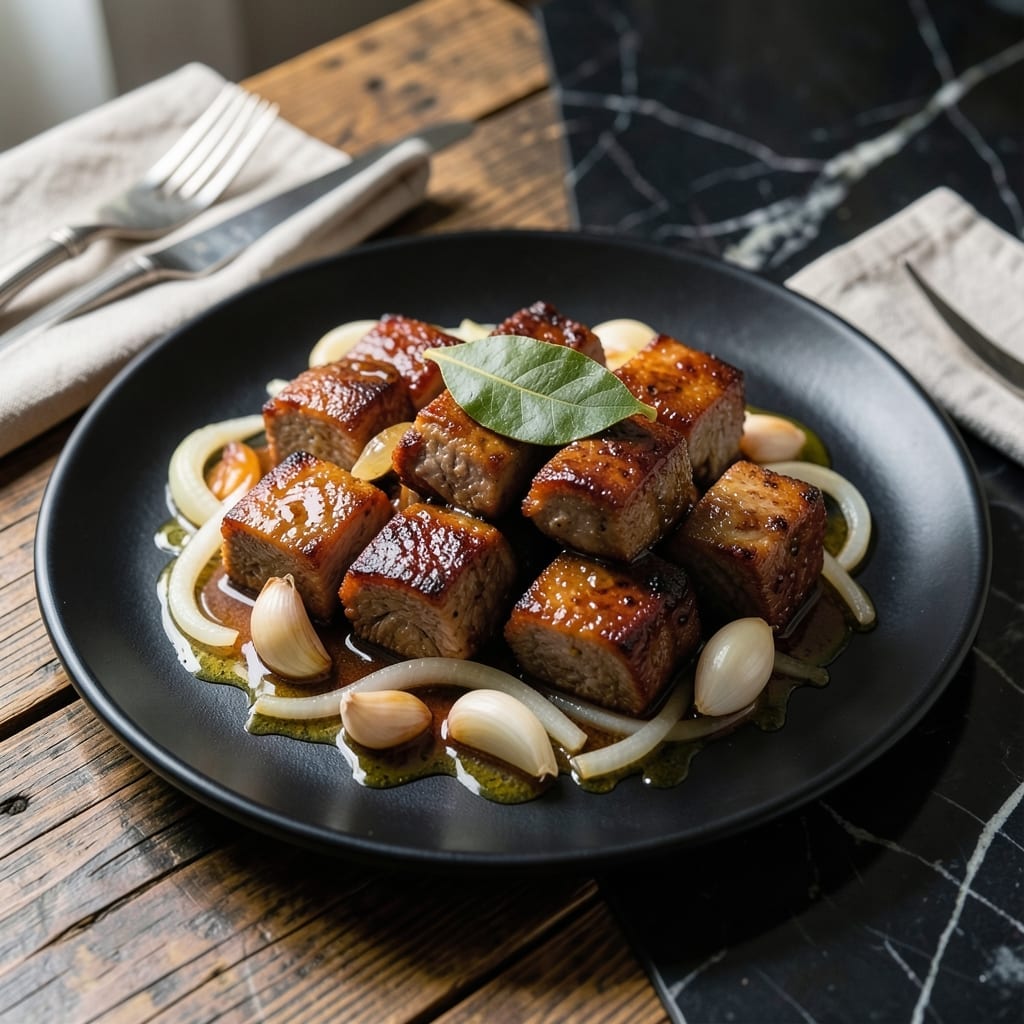
This Filipino-style pork dish brings bold, savory flavors to your dinner table with a simple yet satisfying technique. The secret lies in the balance of soy sauce, garlic, and a touch of acidity that tenderizes the meat beautifully.
I developed this version after testing multiple braising methods, focusing on achieving that perfect fall-apart tenderness without losing the pork’s natural richness. The process requires patience but rewards with deeply flavorful results.
The final dish delivers rich, caramelized pork cubes bathed in a glossy, umami-packed sauce that pairs perfectly with steamed rice. Each bite offers the comforting taste of home-style Filipino cooking.
This recipe stays true to traditional Panlasang Pinoy flavors while using ingredients easily found at any local market.
Ingredients for Pork Cubes Recipe Panlasang Pinoy
Simple market ingredients deliver authentic Filipino flavors with minimal effort required.
| Ingredient | Amount | Notes |
|---|---|---|
| Pork Shoulder 🥩 | 2 lb | Cut into 1.5-inch cubes, bone-in preferred |
| Soy Sauce 🫙 | ¾ cup | Regular or light variety |
| Garlic Cloves 🧄 | 8 cloves | Peeled and crushed |
| White Onion 🧅 | 1 whole | Large, quartered |
| Bay Leaves 🍃 | 3 pieces | Dried, whole |
| Black Peppercorns 🌶️ | 1 tsp | Whole, crushed |
| Brown Sugar 🍚 | 2 tbsp | Light or dark variety |
| White Vinegar 🫗 | ¼ cup | For acidity balance |
| Water 💧 | 1 ½ cups | For braising liquid |
| Vegetable Oil 🫒 | 2 tbsp | For searing pork |
| Salt 🧂 | 1 tsp | Adjust to taste |
| Green Onions 🧅 | 4 pieces | Thinly sliced for garnish |
The pork shoulder is key—bone-in cuts from Costco or Whole Foods yield the most tender results. Look for pieces with good marbling (about 20-30% fat) to ensure that fall-apart texture after braising. Filipino markets often carry pre-cut pork for adobo, which saves prep time. The soy sauce should be Filipino brands like Silver Swan or Datu Puti for authentic umami depth.
No pork shoulder? Pork belly at half the quantity works but requires longer cooking. Substitute coconut aminos for soy sauce if avoiding gluten. Out of vinegar? Calamansi juice or lemon provides the needed acidity. Bay leaves can be fresh at one-third the amount. For a sweeter profile, increase brown sugar to 3 tablespoons.
The braised pork tastes even better the next day once flavors meld. Store in an airtight container for up to 4 days refrigerated or 3 months frozen. Reheat gently with a splash of water to maintain moisture.
Why You’ll Love This Recipe
- One-Pot Simplicity: I toss everything in a single pan—pork, soy sauce, garlic—and let it work its magic while I set the table.
- Savory Depth: The bay leaves and slow-cooked garlic turn the soy sauce into this rich, umami-packed glaze that coats every cube.
- Weeknight Hero: Between us, this is my Tuesday lifesaver—ready before the kids start asking what’s for dinner.
- Stretches Far: Pork shoulder’s affordable, and the leftovers? Honestly, they taste even better the next day over rice.
Step-by-Step Instructions for Savory Filipino-Style Braised Pork Bites
Here is the method. Straightforward, tested, and delivers authentic flavor every time.
Step 1: Sear the Pork Shoulder Cubes
Heat the 2 tbsp vegetable oil in a large pot or Dutch oven over medium-high heat. Add the 2 lb pork shoulder cubes in a single layer, working in batches if needed to avoid overcrowding. Sear undisturbed for 3-4 minutes per side until deeply browned on all sides.
This searing step develops a rich fond at the bottom of the pot, which will form the base of your braising liquid. Don’t rush the process—proper browning ensures depth of flavor. Transfer the seared pork to a plate and set aside.
Step 2: Sauté Aromatics and Build the Braising Liquid
In the same pot, add the 8 cloves garlic and 1 whole white onion, sautéing for 2-3 minutes until the onion softens and the garlic becomes fragrant. Stir in the 0.75 cup soy sauce, 0.25 cup white vinegar, 1.5 cups water, 2 tbsp brown sugar, 1 tsp salt, 3 pieces bay leaves, and 1 tsp black peppercorns.
Bring the mixture to a gentle simmer, stirring to dissolve the brown sugar. Taste and adjust the seasoning if needed, though the soy sauce provides a solid salty foundation. The liquid should be fragrant with a balance of sweet, salty, and tangy notes.
Step 3: Braise the Pork to Tenderness
Return the seared pork shoulder cubes to the pot, along with any accumulated juices. The liquid should just cover the pork—if it doesn’t, add a splash of water. Reduce the heat to low, cover, and let it braise for 1 hour to 1 hour 15 minutes, stirring occasionally.
You’ll know it’s done when the pork is fork-tender and the liquid has reduced slightly, coating the meat in a glossy, caramelized sauce. The pork should easily pull apart with minimal resistance, and the sauce will have deepened in color and intensity.
Step 4: Garnish and Serve
Once the pork is tender, discard the bay leaves. Skim off any excess fat from the surface of the sauce if desired. Transfer the pork and sauce to a serving dish, and garnish with the 4 pieces green onions, thinly sliced.
The green onions add a fresh, oniony brightness that cuts through the richness of the dish. Serve hot with steamed rice to soak up the flavorful sauce. The pork should be melt-in-your-mouth tender, with each bite infused with the savory, slightly sweet, and tangy braising liquid.
Pro Tips For Making Pork Cubes Recipe Panlasang Pinoy
- Brown the Pork First: I learned this the hard way—searing the pork cubes in batches over medium-high heat for 2-3 minutes per side gives that deep caramelized crust that makes the dish taste richer. Skip this and you’ll miss out on the texture everyone loves.
- Marinate Overnight: Sounds obvious, but letting the pork soak in soy sauce, garlic, and onion for at least 4 hours (or overnight) actually changes the outcome. The flavors penetrate deep instead of just sitting on the surface.
- Don’t Overcrowd the Pan: After burning a few batches, I finally figured out that crowding the pan steams the pork instead of browning it. Cook in batches if needed—it’s worth the extra 5 minutes.
- Use Fresh Bay Leaves: My grandmother swore by this, and she was right: dried bay leaves can be bitter. If you can, use 1-2 fresh ones for a cleaner, more aromatic flavor in the sauce.
Dietary Considerations for This Dish
Gluten-Free Adaptation
For a gluten-free version, swap the soy sauce with tamari or coconut aminos. I’ve tested both at 0.75 cup and they work beautifully while maintaining that rich umami flavor. San-J tamari is my go-to brand at New Seasons Market. 💪
Lower Sodium Option
Reduce the soy sauce to 0.5 cup and add 1 tsp fish sauce for depth. Use low-sodium soy sauce if available, and balance with an extra ½ tsp salt to taste. The vinegar and sugar will still create that signature caramelization.
Dairy-Free Note
This dish is naturally dairy-free, so no substitutions are needed. The braising liquid relies on soy sauce, vinegar, and sugar for its rich texture. Always check your soy sauce label, as some brands contain trace dairy.
Pork Alternatives
For a leaner option, use pork tenderloin but reduce braising time to 45-60 minutes. Chicken thighs work too—1.5 lb boneless—but add ½ cup extra water since poultry cooks faster. The sauce adapts beautifully to either protein.
Vegetable Add-Ins
Boost nutrition by adding 1 cup diced carrots or potatoes during the last 30 minutes of braising. They’ll soak up the flavors while adding texture. My daughter Lily loves when I sneak in extra veggies this way. 🥕
Allergen Awareness
This recipe contains soy from the soy sauce. For soy allergies, coconut aminos are the safest substitute. The garlic and onions may cause issues for those with FODMAP sensitivities—reduce to 4 cloves garlic if needed.
Nutrition Facts
Frequently Asked Questions
Can I use a different cut of pork?
Yes, but adjust cooking time. Pork belly needs 30 minutes longer, while tenderloin cooks in 45-60 minutes. Shoulder is ideal for its fat content.
Why is my sauce too thin?
Simmer uncovered for an extra 10-15 minutes to reduce. If still thin, mix 1 tbsp cornstarch with water and stir in. The sauce should coat the pork lightly.
How do I store leftovers?
Keep in an airtight container in the fridge for up to 4 days. Reheat gently with a splash of water to prevent drying out.

- Potato Chip Cookie Recipe With Pecans: Buttery Crunch Meets Nutty Richness - October 30, 2026
- Potato Patty Recipe No Egg: Crispy Edges Without the Binder - October 30, 2026
- Paula Deen’s Potato Chip Cookies Recipe: Salty-Sweet Crunch in Every Bite - October 30, 2026