
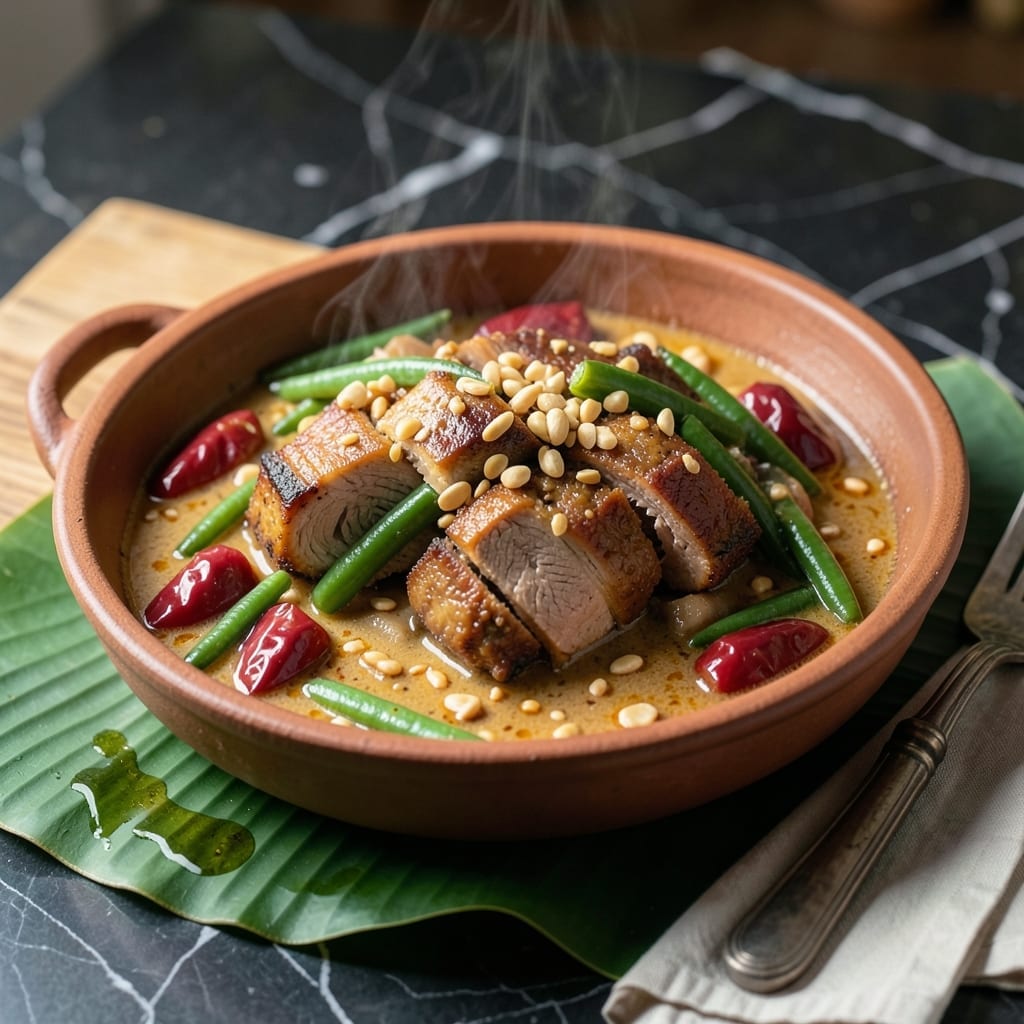
This traditional Filipino dish brings rich, peanut-based flavors to your table with a technique I perfected over years of testing.
Tender pork, tripe and vegetables simmer in a thick, savory peanut sauce that’s both hearty and deeply satisfying. The slow cooking process ensures every bite absorbs the complex layers of flavor.
What emerges is a dish with a velvety sauce, fork-tender meat and a balance of textures that makes it unforgettable. It’s a celebration of Filipino comfort food at its finest.
Serve with steamed rice and bagoong for the authentic experience. Here’s how to make it right.
Ingredients for Pork Kare Kare Recipe Filipino Style
Rich peanut sauce, tender meats, and hearty vegetables make this dish unforgettable.
| Ingredient | Amount | Notes |
|---|---|---|
| Pork Hock 🐖 | 1 ½ lb | Cut into large chunks |
| Beef Tripe 🥩 | 1 lb | Cleaned and pre-boiled |
| Peanut Butter 🥜 | ½ cup | Smooth, unsweetened variety |
| Ground Peanuts 🥜 | ½ cup | Toasted for deeper flavor |
| Eggplant 🍆 | 1 whole | Sliced into rounds |
| String Beans 🌿 | ½ lb | Trimmed and cut into 2-inch pieces |
| Bok Choy 🥬 | 2 whole | Separated into leaves |
| Onion 🧅 | 1 whole | Diced for sauce base |
| Garlic Cloves 🧄 | 6 cloves | Minced for aromatics |
| Ginger Root 🌿 | 1 whole | Julienned, about 2 inches |
| Annato Seeds 🌶️ | 2 tsp | Soaked in oil for color |
| Fish Sauce 🐟 | 2 tbsp | Or patis for authenticity |
| Beef Broth 🥣 | 4 cups | Low-sodium preferred |
| Cornstarch 🌾 | 2 tbsp | For thickening sauce |
| Cooking Oil 🫒 | ¼ cup | Neutral flavor like canola |
The meat cuts are key here. Pork hock and beef tripe give that authentic texture—look for them at Filipino markets or ask your butcher in advance. Tripe needs a good pre-boil to remove impurities (30 minutes in salted water does it). For the peanuts, freshly ground at a natural foods store beats jarred every time. Annato seeds for that signature golden color are in the Latin or Asian aisle.
No tripe? Oxtail or beef shank work well but need longer cooking. For a shortcut, pre-cooked pork belly saves hours. Peanut butter too sweet? Balance it with extra fish sauce. The annato can be swapped for safflower or turmeric (just a pinch). If you’re missing eggplant, zucchini or daikon radish hold up well in the sauce.
This tastes even better the next day. Store in the fridge for up to 4 days or freeze for 3 months. The sauce thickens as it cools—just thin with broth when reheating. Always serve with steamed rice and bagoong on the side.
Why You’ll Love This Recipe
- Set It and Forget It: Honestly, once the pork hock and tripe are simmering, the hardest part is waiting for that tender fall-off-the-bone moment.
- Peanut Butter Magic: That rich, nutty depth from the peanut butter and ground peanuts turns the broth into something you’ll want to drink straight from the bowl.
- Feeds a Crowd: I make a big pot and it’s always the star at family gatherings—even my picky cousin goes back for seconds.
- Leftovers for Days: The flavors just get better overnight, and it reheats like a dream. I’ll be real: I sometimes double the batch just for this.
Step-by-Step Instructions for Pork Kare Kare
This is the traditional method. Rich, nutty, and deeply satisfying every time.
Step 1: Sear the Meat and Infuse the Oil
Heat the 0.25 cup Cooking Oil in a large pot over medium-high heat. Add the 2 tsp Annato Seeds and cook for 1-2 minutes until the oil turns a vibrant red-orange. Remove the seeds with a slotted spoon—this colored oil will give your dish that classic kare kare hue.
Pat the 1.5 lb Pork Hock and 1 lb Beef Tripe dry, then sear in the same pot until browned on all sides. This builds a flavorful fond that deepens the sauce. Don’t rush; you want a good crust on each piece before moving on.
Step 2: Simmer the Meat Until Tender
Pour in the 4 cups Beef Broth, ensuring the meat is fully submerged. Add the 1 whole Onion, 6 cloves Garlic Cloves, and 1 whole Ginger Root. Bring to a boil, then reduce heat to low. Cover and simmer for 1.5-2 hours until the pork hock and tripe are fork-tender.
Check occasionally and skim off any foam that rises to the surface. The meat should easily pull apart with a fork when done. If the liquid reduces too much, add a splash of water to keep everything submerged.
Step 3: Prepare and Add the Vegetables
Once the meat is tender, add the 1 whole Eggplant, 0.5 lb String Beans, and 2 whole Bok Choy. Simmer for 8-10 minutes until the vegetables are tender-crisp. The eggplant should be soft but still hold its shape, and the string beans should retain a slight bite.
Avoid overcooking the vegetables—they should still have some texture. If your eggplant absorbs too much liquid, you can add a bit more beef broth to maintain the right consistency.
Step 4: Thicken and Finish the Sauce
In a small bowl, mix the 0.5 cup Peanut Butter, 0.5 cup Ground Peanuts, and 2 tbsp Cornstarch with a little of the hot broth to create a smooth paste. Stir this into the pot and simmer for 5 minutes until the sauce thickens to a creamy consistency.
Add the 2 tbsp Fish Sauce and adjust the seasoning to taste. The sauce should coat the back of a spoon but still be pourable. If it’s too thick, thin it with a bit more broth. Let everything simmer together for another 5 minutes to meld the flavors.
Pro Tips For Making Pork Kare Kare Recipe Filipino Style
- Pre-Boil the Tripe: Soak beef tripe in vinegar and water for 30 minutes first, then parboil for 10-15 minutes to remove the strong odor. I learned this the hard way when my first batch smelled more like a barnyard than a feast.
- Slow Cook the Hock: Let pork hock simmer for at least 1.5-2 hours until fork-tender—rushing this step leaves it chewy. After burning the first few batches by cranking the heat, I now keep it at a gentle bubble.
- Toast the Peanuts: Lightly toast ground peanuts in a dry pan for 2-3 minutes before adding to the sauce. Sounds weird, but it actually changes the outcome, giving the dish a deeper, nuttier flavor.
- Salt the Eggplant: Sprinkle eggplant slices with salt and let sit for 10 minutes before cooking to draw out bitterness. My grandmother swore by this, and she was right—it makes a real difference in the final dish.
Storing and Reheating This Recipe
Refrigerator Storage
Let your kare kare cool for no more than 2 hours before transferring to airtight containers. I use glass containers from New Seasons Market. Store at 40°F or below for up to 4 days. The flavors deepen overnight as the sauce absorbs into the meat. ❄️
Freezer Storage
This dish freezes beautifully for up to 3 months without losing quality. I recommend portioning into meal-sized containers before freezing. Leave 1 inch of headspace for expansion and use freezer-safe bags for space efficiency.
Stovetop Reheating
My preferred method is gentle reheating on the stove. Transfer to a pot, add ¼ cup beef broth to thin the sauce, and warm over medium-low heat for 10-15 minutes. Stir occasionally to prevent sticking. 🔥
Microwave Reheating
For quick meals, microwave individual portions covered with a damp paper towel. Heat on 70% power for 2-3 minutes, stir, then continue in 1-minute intervals until reaching 165°F. The sauce may separate slightly – just stir it back together.
Sauce Consistency Tip
The peanut sauce thickens significantly when chilled. If it seems too thick after reheating, thin with additional beef broth or water. I often add a splash of broth and let it simmer for 5 minutes to restore the perfect creamy texture.
Nutrition Facts
Frequently Asked Questions
Can I use chicken instead of pork?
Yes, chicken thighs work well as a quicker alternative. Simmer for 30-40 minutes until tender, as they cook much faster than pork. The peanut sauce pairs beautifully with poultry too.
Why does my sauce turn out grainy?
This happens when peanut butter isn’t fully dissolved. Mix it with warm broth first to create a smooth paste before adding to the pot. Stir constantly while incorporating.
What can I serve with this dish?
Steamed jasmine rice is traditional. For authenticity, include bagoong (fermented shrimp paste) on the side. A crisp green salad balances the richness perfectly.

- Potato Chip Cookie Recipe With Pecans: Buttery Crunch Meets Nutty Richness - October 30, 2026
- Potato Patty Recipe No Egg: Crispy Edges Without the Binder - October 30, 2026
- Paula Deen’s Potato Chip Cookies Recipe: Salty-Sweet Crunch in Every Bite - October 30, 2026