
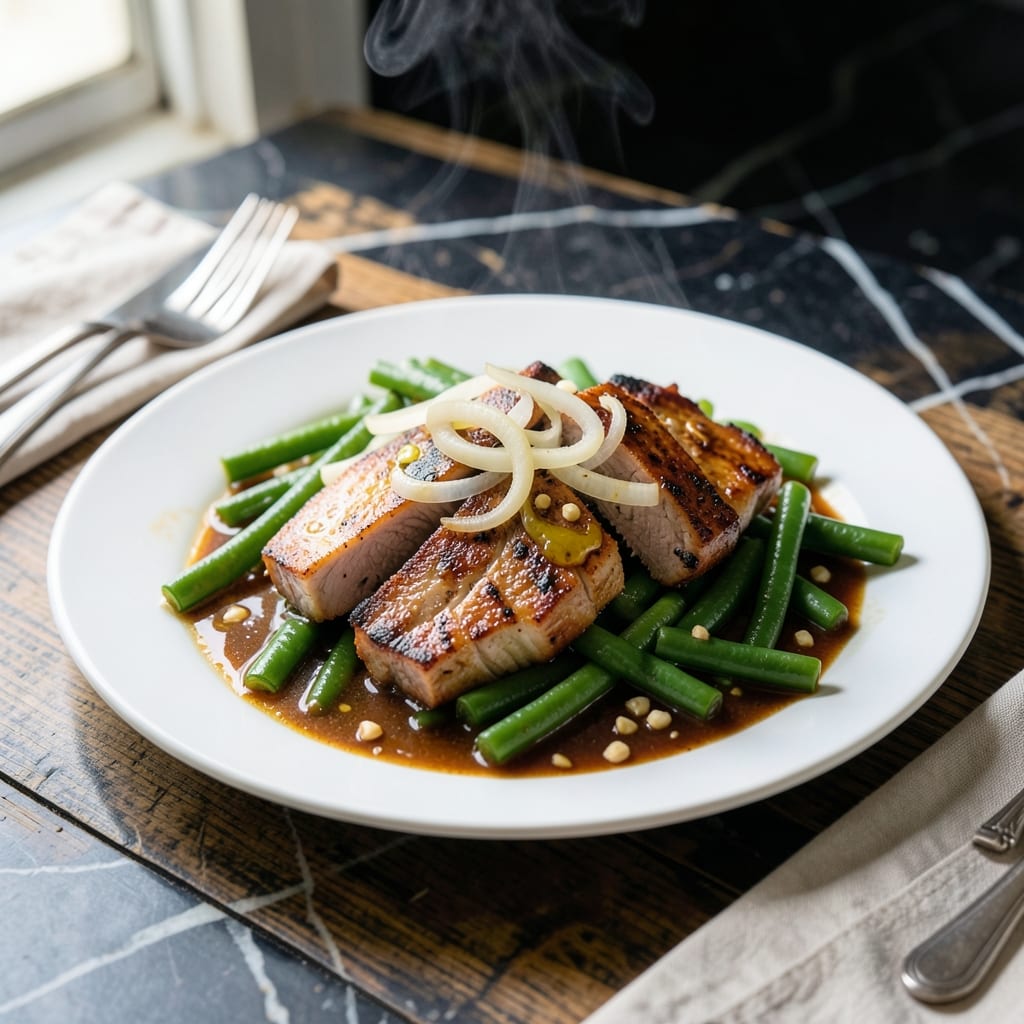
This Filipino stir-fry brings together tender pork and crisp string beans in a dish that’s both simple and deeply flavorful. I learned this technique from my grandmother’s handwritten notes, where she emphasized the importance of quick cooking to preserve the vegetables’ texture.
The secret lies in the garlic—plenty of it—sautéed until fragrant before adding the pork. This builds a rich base that coats every bite. A splash of soy sauce and a pinch of sugar balance the savory and sweet notes typical of Filipino home cooking.
You’ll end up with pork so tender it melts in your mouth, paired with string beans that stay crisp yet fully infused with flavor. It’s a dish that turns an ordinary weeknight into something special, just like in my grandmother’s kitchen.
Serve it over steamed rice to soak up every last drop of the garlicky sauce. Here’s how to make it.
Ingredients for Pork and String Beans Recipe Filipino
Simple ingredients create that nostalgic garlicky stir-fry with crisp-tender veggies and melt-in-your-mouth pork.
| Ingredient | Amount | Notes |
|---|---|---|
| Pork Shoulder 🥩 | 1 ½ lb | Cut into thin strips |
| Green Beans 🫑 | 1 lb | Trimmed, cut into 2-inch pieces |
| Garlic Cloves 🧄 | 8 cloves | Minced finely |
| Soy Sauce 🫙 | ⅓ cup | Low-sodium if preferred |
| Oyster Sauce 🫙 | 2 tbsp | Or vegetarian oyster sauce |
| Brown Sugar 🍚 | 1 tsp | Light or dark variety |
| Vegetable Oil 🫒 | 3 tbsp | For stir-frying |
| White Onion 🧅 | 1 whole | Thinly sliced |
| Ground Black Pepper 🌶️ | ½ tsp | Freshly ground preferred |
| Bay Leaf 🍃 | 2 pieces | Optional for depth |
| Water 💧 | ¼ cup | For deglazing pan |
| Steamed Rice 🍚 | 4 cups | Cooked, for serving |
The pork is everything here. Pork shoulder gives that melt-in-your-mouth texture my grandmother swore by—Costco has great pre-cut packages if you’re short on time. For the green beans, fresh and firm is key (skip the floppy ones). Filipino or Asian markets often carry longer beans that are traditional, but regular green beans work just fine.
No oyster sauce? Hoisin or soy sauce with a pinch more sugar gets you close. Out of brown sugar? White sugar plus a splash of molasses works. The garlic can’t be skipped though—it’s the soul of this dish. And if you’re feeding a crowd, double the sauce ingredients (the pork and beans can stretch).
This tastes even better the next day as the flavors meld. Keeps in the fridge for 3-4 days, reheats beautifully. The rice? Make extra—it soaks up that garlicky sauce like a dream.
Why You’ll Love This Recipe
- One Pan Wonder: I toss everything in a single pan—pork, green beans, and that garlic-soy-oyster sauce combo—and let it work its magic.
- Umami Bomb: The oyster sauce and soy sauce create this deep, savory richness that clings to every green bean and tender pork bite.
- Feeds the Crew: I make a big batch for Sunday lunch, and it’s just as good reheated for busy weeknight dinners.
- Budget Hero: Pork shoulder stays affordable, and a heap of green beans stretches this dish to feed more without breaking the bank.
Step-by-Step Instructions for Pork and String Beans
Here’s how I make this dish with perfectly tender pork and crisp-tender veggies every time.
Step 1: Sear the Pork Shoulder Until Browned
Heat 3 tbsp vegetable oil in a large wok or skillet over medium-high heat. When the oil shimmers, add the 1.5 lb pork shoulder strips in a single layer, working in batches if needed to avoid crowding.
Let the pork sear undisturbed for 2-3 minutes until the edges turn golden brown. Flip and cook another 2 minutes until evenly browned. The pork won’t be fully cooked yet—that happens later. Transfer to a plate and set aside.
This browning step builds deep flavor through the Maillard reaction. Don’t rush it; you want a good crust on each piece. If the pan looks dry between batches, add a splash more oil.
Step 2: Sauté Aromatics Until Fragrant
In the same pan, add the thinly sliced white onion and sauté for 2 minutes until it starts to soften. Then add the 8 cloves minced garlic cloves and cook for 30 seconds, stirring constantly to prevent burning.
You’ll know the garlic is ready when it turns light golden and releases a rich, nutty aroma. Burnt garlic turns bitter, so keep the heat at medium and watch closely. Add the 2 pieces bay leaf and stir for another 10 seconds.
Step 3: Combine everything and Simmer
Return the pork to the pan along with any accumulated juices. Add the 1 lb green beans, 0.33 cup soy sauce, 2 tbsp oyster sauce, 1 tsp brown sugar, and 0.5 tsp ground black pepper. Stir everything together to coat evenly.
Pour in the 0.25 cup water and bring to a simmer. Reduce the heat to medium-low, cover, and let it cook for 8-10 minutes. Stir occasionally and check that the pork is tender and the green beans are crisp-tender.
If the sauce reduces too much before the pork is done, add 2 tbsp water and continue cooking. The green beans should retain a slight bite—they’re done when they’re bright green and snap when bent.
Step 4: Finish and Serve with Steamed Rice
Once the pork is tender and the green beans are cooked to your liking, remove the bay leaves. Taste and adjust seasoning if needed. The sauce should be glossy and lightly coat the back of a spoon.
Transfer everything to a serving dish and serve immediately over 4 cups steamed rice. This dish tastes best fresh, while the pork is juicy and the green beans still have a slight crunch.
Pro Tips For Making Pork And String Beans Recipe Filipino
- Brown the Pork First: Sear the pork shoulder pieces in batches over medium-high heat until golden brown—this builds flavor and prevents the meat from stewing instead of frying.
- Trim the Beans: Snap off the tough ends of the green beans and cut them into 2-inch pieces so they cook evenly and absorb the sauce better.
- Skip the Overcrowding: I learned this the hard way—cook the pork in a single layer so it browns properly instead of steaming in its own juices.
- Bloom the Garlic: Cook the minced garlic cloves in hot oil for just 20-30 seconds until fragrant, then add the pork back in—any longer and it turns bitter.
Troubleshooting Great pork and string beans recipe filipino
Pork Too Tough
If your pork turns out chewy, it likely needed more time to break down. I learned the hard way that pork shoulder requires at least 8-10 minutes of simmering after browning. For extra toughness, add ¼ cup more water and cook covered for another 5-7 minutes on low heat. 💡
Beans Too Soft
Overcooked green beans lose their signature crunch. To fix this, add them to the pan 3-4 minutes later in your next batch. If they’re already mushy, briefly bluish them in ice water to stop cooking, then reheat just before serving.
Sauce Too Thin
For a thicker sauce, uncover the pan and let it reduce for 2-3 minutes on medium heat after the pork is tender. A cornstarch slurry (1 tsp cornstarch mixed with 1 tbsp water) stirred in at the end works too. I keep cornstarch in my pantry for this exact reason.
Garlic Burnt
Burnt garlic turns bitter and ruins the dish. Always cook it on medium heat and stir constantly—it only needs 30 seconds to turn fragrant. If it burns, start fresh with new oil and garlic. My grandmother always said, “Watch the garlic like it’s your firstborn.”
Sauce Too Salty
If the sauce is overly salty, add 1-2 tbsp water or a splash of rice vinegar to balance it. A pinch of brown sugar can also help counteract the saltiness. Taste as you go—Filipino cooking is all about that perfect savory-sweet harmony.
Pork Not Browned
For better browning, ensure your pan is ripping hot before adding the pork and don’t crowd the pan. Work in batches if needed—this gives each piece enough space to develop that beautiful golden crust. Trust me, it’s worth the extra few minutes. 🔥
Nutrition Facts
Frequently Asked Questions
Can I use a different cut of pork?
Yes, but pork shoulder is ideal for its tenderness. Pork loin works too but may need 2-3 minutes less simmering. Avoid lean cuts like tenderloin—they dry out quickly.
Why are my green beans mushy?
They likely cooked too long. Add them 3-4 minutes later next time, or blanch briefly in ice water to stop cooking. Crisp-tender is the goal!
How do I make the sauce thicker?
Simmer uncovered for 2-3 minutes or mix 1 tsp cornstarch with 1 tbsp water and stir in at the end. A glossy sauce clings better to rice.
Can I make this ahead of time?
Yes! Flavors meld beautifully overnight. Store in an airtight container for up to 3-4 days. Reheat gently to preserve texture.

- Potato Candy Recipe 1933: Vintage Peanut Butter Roll Delight - October 30, 2026
- Potato Chip Cookie Recipe With Pecans: Buttery Crunch Meets Nutty Richness - October 30, 2026
- Potato Patty Recipe No Egg: Crispy Edges Without the Binder - October 30, 2026