
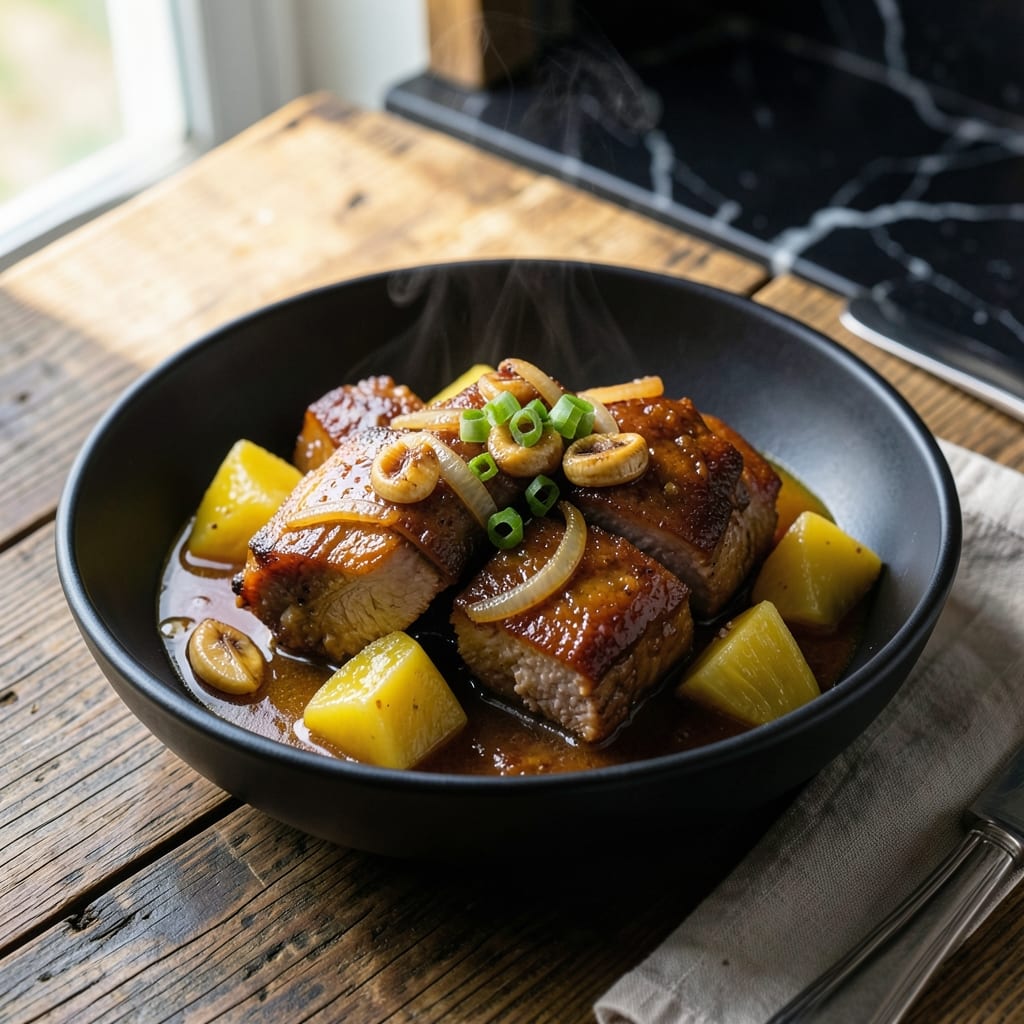
This Filipino braised pork dish delivers a perfect balance of sweet and tangy flavors that’s hard to resist. The pineapple juice adds a natural sweetness that complements the savory pork beautifully.
I developed this recipe after testing multiple versions to achieve the ideal texture and flavor. The pork becomes incredibly tender after slow cooking, soaking up every bit of the rich, caramelized sauce.
The combination of soy sauce, pineapple juice, and brown sugar creates a glaze that coats the pork in a sticky, flavorful layer. It’s a dish that brings comfort and satisfaction with every bite.
Serve this with steamed rice to soak up the delicious sauce. Here’s how to make it right in your own kitchen.
Ingredients for Pork Hamonado Recipe Filipino Style with Pineapple Juice
Sweet, tangy, and deeply savory ingredients for a Filipino classic everyone loves.
| Ingredient | Amount | Notes |
|---|---|---|
| Pork Shoulder 🥩 | 2 lb | Cut into 2-inch cubes |
| Pineapple Juice 🍍 | 2 cups | 100% pure, unsweetened |
| Soy Sauce 🫙 | ½ cup | Regular or low-sodium |
| Brown Sugar 🍚 | ½ cup | Light or dark variety |
| Garlic Cloves 🧄 | 6 cloves | Minced for maximum flavor |
| Yellow Onion 🧅 | 1 whole | Sliced into rings |
| Bay Leaves 🌿 | 3 pieces | Dried, for aromatic depth |
| Black Peppercorns 🌶️ | 1 tsp | Whole, lightly crushed |
| Apple Cider Vinegar 🍏 | 2 tbsp | For tangy balance |
| Water 💧 | 1 cup | To adjust sauce consistency |
| Vegetable Oil 🫒 | 2 tbsp | For browning pork |
| Salt 🧂 | 1 tsp | Adjust to taste |
The pork is the star here—pork shoulder gives that melt-in-your-mouth texture after braising. Costco or Sam’s Club are great for bulk purchases, but any grocery store with a decent meat section works. Look for cuts with good marbling (that fat = flavor). I always buy a little extra since leftovers taste even better the next day. The pineapple juice? Dole or Del Monte are solid choices.
No pork shoulder? Pork butt works just as well (it’s basically the same cut). Short on pineapple juice? Crushed pineapple with juice adds texture too—just blend it smooth first. Soy sauce can be swapped for tamari (gluten-free) or coconut aminos for a lighter touch. Brown sugar is non-negotiable for that caramelized glaze, but coconut sugar works in a pinch (slightly different flavor).
This keeps beautifully—4-5 days in the fridge, and the flavors deepen daily. Freeze for up to 3 months (best in portioned containers). The sauce thickens as it cools, so thin with water when reheating. Even better the next day, honestly.
Why You’ll Love This Recipe
- One Pot Wonder: I just toss the pork shoulder, pineapple juice, and the rest into a pot and let it simmer—no fancy techniques, no stress.
- Sweet-Savory Magic: The brown sugar caramelizes with the soy sauce and pineapple juice, while the garlic cloves infuse every bite with that deep, aromatic kick.
- Feeds a Crowd: I made this for a family gathering last weekend, and it was the first dish to disappear—great for parties or meal prep.
- Budget Stretcher: Pork shoulder is affordable, and one batch gives me leftovers for days—honestly, it tastes even better reheated the next day.
Step-by-Step Instructions for Sweet and Tangy Braised Pork
Here’s my foolproof method for this Filipino favorite—sweet, tangy, and fall-off-the-bone tender.
Step 1: Sear the Pork Shoulder Until Golden
Heat the 2 tbsp vegetable oil in a large pot or Dutch oven over medium-high heat. Once shimmering, add the 2 lb pork shoulder cubes in batches, being careful not to overcrowd the pot. Sear for 3-4 minutes per side until the pieces are deep golden brown on all sides.
This browning step builds a rich, caramelized base for your sauce. Don’t rush it—if the pork sticks, let it release naturally before flipping. Transfer the seared pork to a plate and set aside while you build the braising liquid.
Step 2: Sauté the Aromatics and Toast the Spices
In the same pot, add the sliced yellow onion and cook for 2 minutes until softened and fragrant. Stir in the 6 cloves minced garlic and cook for another 30 seconds—just until the raw edge is gone but not browned.
Add the 1 tsp black peppercorns, 3 pieces bay leaves, and 0.5 cup brown sugar, stirring constantly for 1 minute to toast the sugar and spices. This deepens the flavor and prevents a raw sugar aftertaste. The mixture should smell sweet and aromatic.
Step 3: Deglaze and Build the Braising Liquid
Pour in the 2 cups pineapple juice, 0.5 cup soy sauce, 2 tbsp apple cider vinegar, and 1 cup water. Use a wooden spoon to scrape up all the browned bits from the bottom of the pot—this is where the magic happens. Stir in the 1 tsp salt.
Return the seared pork to the pot, along with any accumulated juices. The liquid should just cover the pork; if it doesn’t, add a splash more water. Bring the mixture to a gentle boil, then reduce the heat to low to maintain a steady simmer.
Step 4: Braise Until Fork-Tender
Cover the pot and let the pork braise for 1.5 to 2 hours, stirring occasionally. You’ll know it’s done when the pork is fork-tender and the sauce has reduced slightly, coating the back of a spoon. The liquid will transform into a glossy, sweet-tangy glaze.
If the sauce thickens too quickly, add a little water to loosen it. Taste and adjust the seasoning if needed, but remember the flavors will concentrate as it cooks down. The pork should practically melt in your mouth when pierced with a fork.
Step 5: Reduce the Sauce and Serve
Once the pork is tender, remove the lid and increase the heat to medium. Simmer uncovered for 5-10 minutes to thicken the sauce to your desired consistency. Discard the bay leaves and black peppercorns before serving.
Spoon the braised pork and sauce into a serving dish. The sauce should cling to the pork, with a perfect balance of sweetness from the pineapple juice and brown sugar, tang from the vinegar, and umami from the soy sauce. Serve hot with steamed rice to soak up every last bit.
Pro Tips For Making Pork Hamonado Recipe Filipino Style With Pineapple Juice
- Simmer Low and Slow: Cook the pork shoulder on low heat for at least 45 minutes after boiling to let the pineapple juice and soy sauce deeply penetrate the meat—I learned this the hard way when my first batch tasted more like soup than hamonado.
- Brown the Pork First: Sear the pork shoulder pieces in a hot pan until golden before adding liquids. Sounds weird, but it works: this builds a flavor base that makes the sweet-savory sauce cling better.
- Skip the Pre-Salting: Resist the urge to season the pork with salt before cooking, since soy sauce already adds plenty. After burning a batch with over-salted meat, I now just rely on the sauce for seasoning.
- Use Fresh Pineapple Juice: Canned juice works in a pinch, but fresh pineapple juice (or even blended fresh pineapple) adds a brighter, more natural sweetness that pairs perfectly with the brown sugar and garlic.
Dietary Considerations for These Flavors
Gluten-Free Friendly
This dish can easily be made gluten-free by swapping regular soy sauce with tamari or a certified gluten-free soy sauce. I’ve tested both with great results—just ensure your tamari is 100% wheat-free. The rest of the ingredients, including pineapple juice and brown sugar, are naturally gluten-free. 💡
Dairy-Free and Nut-Free
The recipe is naturally dairy-free and nut-free as written. No modifications are needed, which makes it perfect for those with lactose intolerance or nut allergies. I love that this dish accommodates so many dietary needs without sacrificing flavor.
Lower Sodium Option
To reduce sodium, use low-sodium soy sauce and cut the added salt in half. You can also boost flavor with extra garlic, onion, or a splash of fish sauce for umami. David, my taste-tester, prefers this version when we’re watching our salt intake.
Sugar Alternatives
For a lower glycemic impact, replace the brown sugar with coconut sugar or a sugar-free brown sugar substitute. The flavor will be slightly different but still delicious. I’ve had success with Swerve Brown Sugar in a 1:1 ratio.
Pork-Free Variation
If pork isn’t an option, try this recipe with chicken thighs or tofu. For chicken, reduce the braising time to 45 minutes. For tofu, use extra-firm and pan-fry first for texture. The sauce works beautifully with both.
Pineapple Juice Substitutes
No pineapple juice on hand? Use orange juice with 1 tsp pineapple extract for a similar tropical flavor. Or, try apple juice with a splash of lemon juice for tang. The dish will still be delicious, just with a slightly different profile.
Nutrition Facts
Frequently Asked Questions
Can I use a different cut of pork?
Yes, pork butt works just as well as shoulder. Both cuts have enough marbling to stay tender during the 1.5-2 hour braise. Avoid lean cuts like tenderloin as they can dry out.
Why does the sauce need to reduce?
Reducing concentrates the flavors and creates a glossy glaze that clings to the pork. Simmer uncovered for 5-10 minutes at the end to achieve the perfect consistency. Too thin, and it won’t coat properly.
How do I prevent the sugar from burning?
Toast the brown sugar with spices for only 1 minute over medium-high heat. Stir constantly and watch for darkening. If it starts to smoke, lower the heat immediately.

- Potato Candy Recipe 1933: Vintage Peanut Butter Roll Delight - October 30, 2026
- Potato Chip Cookie Recipe With Pecans: Buttery Crunch Meets Nutty Richness - October 30, 2026
- Potato Patty Recipe No Egg: Crispy Edges Without the Binder - October 30, 2026