
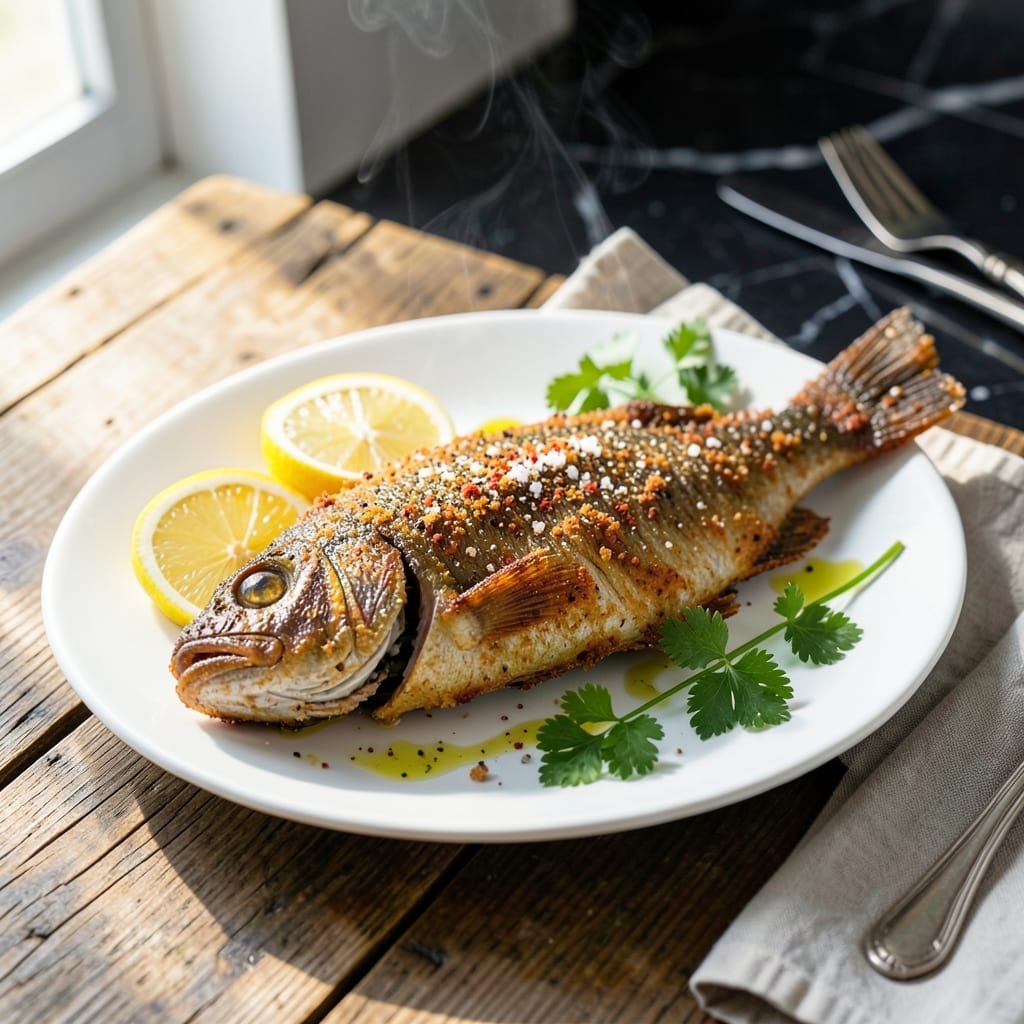
There’s a reason porgy is a favorite among seafood lovers—its delicate white flesh and crispy skin make it perfect for frying. I’ve perfected this method to ensure every bite delivers that ideal texture contrast.
The key is high heat and precise timing. A hot oil bath ensures the skin becomes shatteringly crispy while the inside stays flaky and tender. Freshness is crucial, so look for clear eyes and firm flesh when selecting your fish.
This technique transforms simple ingredients into restaurant-quality seafood. The result is golden, crispy skin giving way to moist, flaky flesh that melts in your mouth with each bite.
Serve immediately with lemon wedges and your favorite dipping sauce. Here’s how to achieve perfect results every time.
Ingredients for Porgy Fish Recipe Fried
Fresh porgy, a crispy coating, and bright lemon—simple ingredients for showstopping results.
| Ingredient | Amount | Notes |
|---|---|---|
| Whole Porgy Fish 🐟 | 4 whole | Fresh, 1-1.5 lb each, cleaned |
| All-Purpose Flour 🌾 | 1 ½ cups | For dredging, seasoned |
| Cornstarch 🌾 | ½ cup | For extra crispiness |
| Kosher Salt 🧂 | 2 tsp | Diamond Crystal preferred |
| Ground Black Pepper 🌶️ | 1 tsp | Freshly ground for best flavor |
| Paprika 🌶️ | 1 tsp | Sweet or smoked variety |
| Garlic Powder 🧄 | 1 tsp | Not garlic salt |
| Vegetable Oil 🫒 | 4 cups | High smoke point for frying |
| Lemon 🍋 | 2 whole | Cut into wedges for serving |
| Fresh Parsley 🌿 | ¼ cup | Chopped for garnish |
| Lemon Juice 🍋 | 2 tbsp | Freshly squeezed |
| Buttermilk 🥛 | 1 cup | For soaking fish before dredging |
The fish is everything here. Whole Foods or local fishmongers usually carry fresh porgy—look for clear eyes, shiny skin, and that sweet ocean smell (not fishy). Ask them to scale and gut it for you if you’re not comfortable doing it yourself. Size matters: 1-1.5 lb fish cook evenly and fit nicely in a standard pan. If you can only find fillets, that works too (just adjust cooking time).
No buttermilk? Whole milk plus 1 tbsp vinegar or lemon juice does the trick. Cornstarch is non-negotiable for that shatteringly crisp skin—don’t swap it for more flour. For a gluten-free version, rice flour plus cornstarch (1:1) works beautifully. The oil needs to be neutral with a high smoke point—peanut or canola oil are great alternatives to vegetable oil.
Fry and eat immediately—this doesn’t hold well. Leftovers (if you have any) keep in the fridge for 1-2 days but the skin won’t stay crisp. The dredge mix can be prepped ahead and stored in an airtight container for up to a week. Always bring fish to room temp before frying for even cooking.
Why You’ll Love This Recipe
- One Pan Wonder: I just coat the porgy in flour and cornstarch, then fry it up—minimal mess, maximum crisp.
- Crispy Perfection: That combo of salt, pepper, and cornstarch gives the skin an addictive crunch with every bite.
- Weeknight Hero: Honestly, it’s my go-to for busy evenings when I need dinner on the table fast.
- Budget Friendly: Porgy is affordable, and a little goes a long way—feeds my family without breaking the bank.
Step-by-Step Instructions for Porgy Fish Fried
Here’s the method I use to achieve perfectly crispy skin and flaky white flesh every time.
Step 1: Prepare and Season the Dredging Mixture
In a large shallow dish, combine the 1.5 cups all-purpose flour, 0.5 cup cornstarch, 2 tsp kosher salt, 1 tsp ground black pepper, 1 tsp paprika, and 1 tsp garlic powder. Whisk these ingredients together until evenly distributed and no lumps remain.
This cornstarch addition is what gives the coating its extra crispiness. I like to let the mixture sit for a few minutes while I prepare the whole porgy fish, allowing the flavors to meld together slightly.
Step 2: Soak and Coat the Fish
Pour the 1 cup buttermilk into another shallow dish. Dip each whole porgy fish into the buttermilk, making sure it’s completely coated on all sides. Let any excess drip off for a moment before transferring to the flour mixture.
Press each fish gently into the dredging mixture, turning to coat completely. You want an even layer that adheres well to the skin. Shake off any excess flour—too much will create a thick, gummy coating rather than a crisp one. Place the coated fish on a wire rack while you heat the oil.
Step 3: Fry to Golden Perfection
In a large, deep skillet or Dutch oven, heat the 4 cups vegetable oil over medium-high heat to 350-375°F. The oil is ready when a pinch of flour sizzles immediately when sprinkled in.
Carefully place one or two fish in the hot oil at a time—don’t crowd the pan, as this will lower the oil temperature and result in soggy coating. Fry for 4-5 minutes per side until the coating is deep golden brown and crispy. The fish should float to the surface when done.
Use a slotted spatula to transfer the fish to a paper towel-lined plate to drain. The coating should be audibly crisp when it comes out of the oil.
Step 4: Serve with Fresh Garnishes
While the fish is still hot, squeeze 2 tbsp lemon juice over each serving. This bright acidity cuts through the richness of the fried coating beautifully.
Garnish with the 0.25 cup fresh parsley and serve immediately with the 2 whole lemon wedges on the side. The contrast of the crispy exterior with the flaky, tender flesh inside is what makes this dish so special.
Pro Tips For Making Porgy Fish Recipe Fried
- Heat the Oil High: I learned this the hard way—porgy needs oil at 375°F to crisp up before it overcooks. Use a thermometer or test with a pinch of flour: it should sizzle violently.
- Dry the Fish First: Pat the whole porgy thoroughly with paper towels, inside and out. Water is the enemy of a good crust, and this step takes 30 seconds but actually changes the outcome.
- Skip the Overcrowding: Fry one fish at a time unless you’ve got a massive pot. Crowding drops the oil temp fast, and you’ll end up with greasy, sad porgy instead of golden, crispy perfection.
- Rest Before Serving: Give it 2-3 minutes on a rack or paper towels after frying. Sounds weird, but it works: the crust stays crispy, and the juices redistribute so every bite is moist.
Dietary Considerations for These Flavors
Gluten-Free Option
Swap the all-purpose flour for a 1:1 blend of rice flour and cornstarch. The rice flour provides structure while the cornstarch ensures that signature crispiness. I’ve tested this with Bob’s Red Mill products with excellent results. 💪
Dairy-Free Alternative
Replace the buttermilk with 1 cup unsweetened almond milk mixed with 1 tbsp vinegar. Let it sit for 5 minutes to curdle before using. This maintains the acidity needed for tenderizing the fish.
Lower-Calorie Approach
Use an air fryer at 400°F for 12-15 minutes, flipping halfway. Lightly spray the fish with avocado oil for crispiness. You’ll save 200+ calories per serving compared to traditional frying.
Pescatarian-Friendly
This dish is naturally pescatarian, but verify your dredging spices for hidden non-vegetarian additives. Some garlic powder brands contain anti-caking agents derived from animal sources. I recommend Simply Organic for guaranteed purity.
Allergy Considerations
For nut allergies, avoid peanut oil and use sunflower or safflower oil instead. The cornstarch is naturally gluten-free but check for cross-contamination warnings if celiac is a concern. 💡
Sodium Reduction
Cut the kosher salt in half and boost flavor with 1 tsp lemon zest in your dredge. The citrus enhances the fish’s natural sweetness without relying on salt. Fresh herbs like dill or thyme also add depth.
Nutrition Facts
Frequently Asked Questions
What oil works best for frying?
Use vegetable, peanut, or canola oil for their high smoke points. Avoid olive oil as it can burn. Always maintain 350-375°F for crispy results.
How do I know when the fish is done?
The coating turns deep golden brown in 4-5 minutes per side. The fish will float and the internal temp should reach 145°F.
Can I use fillets instead of whole fish?
Yes! Adjust cooking time to 2-3 minutes per side. Whole fish holds moisture better, but fillets work if that’s what you have.
Why did my coating turn out soggy?
Likely causes: oil wasn’t hot enough, pan was crowded, or fish wasn’t dry before dredging. Always pat fish dry first and fry in batches.

- Potato Chip Cookie Recipe With Pecans: Buttery Crunch Meets Nutty Richness - October 30, 2026
- Potato Patty Recipe No Egg: Crispy Edges Without the Binder - October 30, 2026
- Paula Deen’s Potato Chip Cookies Recipe: Salty-Sweet Crunch in Every Bite - October 30, 2026