
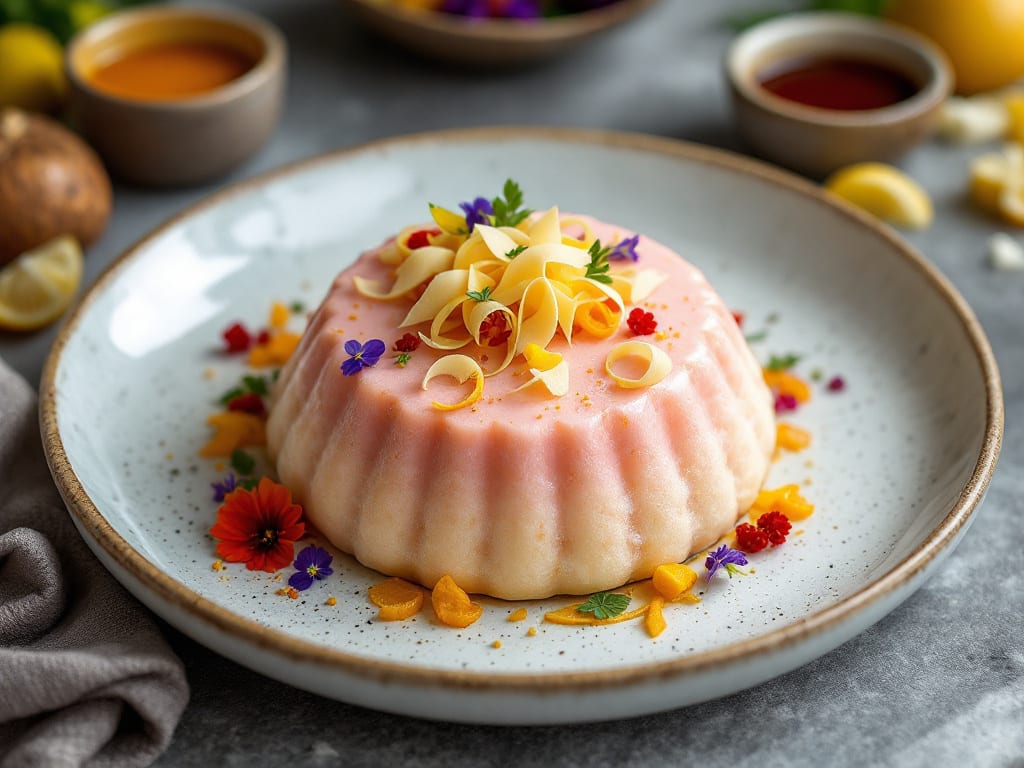
Creating Japanese cloud cake—that dreamy, airy dessert with layers so light they seem to defy gravity—requires precision and patience. This delicate treat, known as wataame, transforms simple ingredients into a masterpiece of texture, where each bite feels like melting cotton.
I’ve perfected the technique over years of trial and error, ensuring the signature cloud egg whites and delicate sponge layers come together flawlessly.
The secret lies in whipping egg whites to stiff peaks and folding them into a tender batter, creating an almost ethereal structure. Traditional recipes rely on cloud egg whites—egg whites whipped with sugar to create a meringue-like base—but modern adaptations allow for variations like matcha-infused or fruit-filled layers.
With just 10 simple ingredients, this recipe delivers restaurant-quality results that will impress even the most discerning dessert lovers.
What you’ll achieve is a cake that’s light as a whisper, with layers so delicate they seem to dissolve on the tongue. The exterior remains just slightly crisp, while the interior stays impossibly soft, making every slice a moment of pure indulgence.
Whether you’re baking for a special occasion or treating yourself to a luxurious dessert, this cloud cake is a showstopper that requires no shortcuts.
Ready to master the art of wataame? Let’s dive into the step-by-step process, from preparing the cloud egg whites to baking the perfect layers. This recipe is your gateway to creating a dessert that looks as magical as it tastes—foolproof once you know the tricks.
Ingredients for japanese cloud cake
Ten ingredients transform into a dessert so light it seems to vanish on your tongue.
| Ingredient | Amount | Notes |
|---|---|---|
| Large Egg Whites 🥚 | 8 whole | Room temperature, separated carefully |
| Granulated Sugar 🍚 | 1 ½ cups | Superfine preferred for smooth texture |
| All-Purpose Flour 🌾 | 1 cup | Sifted, light and airy |
| Unsalted Butter 🧈 | ½ cup | Cold, cubed for even distribution |
| Vanilla Extract 🌸 | 1 tsp | Pure, high-quality extract |
| Baking Powder 🧴 | ½ tsp | Aluminum-free preferred |
| Salt 🧂 | ¼ tsp | Fine sea salt, dissolved in liquid |
| Cornstarch 🌾 | 1 tbsp | For cloud egg white stability |
| Lemon Juice 🍋 | 1 tbsp | Freshly squeezed for acidity |
| Matcha Powder 🍵 | 1 tbsp | Ceremonial grade, sifted |
The egg whites are non-negotiable—room temperature is critical for proper whipping. Kirby brand or Organic Valley are reliable sources for consistent quality. For the sugar, superfine granulated dissolves more easily, but if unavailable, pulse regular sugar in a food processor for 30 seconds. The matcha must be ceremonial grade—culinary grade is bitter and overpowering. Purchase from Japanese specialty stores or reputable online retailers like Matcha Kari for authentic flavor. Store matcha in an airtight container away from light to preserve freshness.
No matcha? Espresso powder at half the amount provides depth without bitterness. Substitute vanilla with 1 tsp vanilla bean paste for richer flavor. For a dairy-free option, replace butter with 0.5 cup coconut oil, though texture may vary slightly. The baking powder should be aluminum-free—brands like Bob’s Red Mill or Diamond Crystal are reliable. If your flour lacks lift, add 0.25 tsp cream of tartar to enhance the cloud egg whites’ stability. For the cornstarch, Arrowhead brand is preferred for its purity and fine texture.
Cloud egg whites lose stability quickly—prepare them last and fold gently. Store matcha in the freezer for up to 6 months to maintain potency. Leftover cake keeps 3 days at room temperature, wrapped in plastic. For longer storage, freeze slices individually wrapped for 1 month. Reheat briefly in the oven at 300°F for 5 minutes to restore crispness.
Why You’ll Love This Recipe
- No Fuss Whipped Magic: I swear, this cake is foolproof—just egg whites, sugar, and a whisk. The meringue folds in so effortlessly, even if you’re not a baking pro, you’ll nail it. No mixing bowls to scrub, no precise measurements—just fold, bake, and admire that cloud-like texture.
- Vanilla Butter Bliss: That first bite? Pure comfort. The butter layers in the batter create this melt-in-your-mouth richness, while the vanilla extract adds a subtle warmth. It’s not too sweet, not too heavy—just right, like a hug from your favorite bakery.
- Party-Ready in Minutes: Slice it, stack it, or serve it whole—this cake is the star of any gathering. I’ve brought it to potlucks, birthdays, and even just because. The lightness makes it feel special, but the simplicity means you won’t stress over last-minute baking disasters.
- Leftovers? No Problem: One cake lasts my family for days—breakfast toast, afternoon snacks, or late-night cravings. The texture holds up surprisingly well, and the butter keeps it from drying out. Honestly, I’ve eaten this cold, warm, and even reheated, and it’s still delicious.
Step-by-step instructions for Japanese cloud cake
Mastering this delicate dessert requires precision—follow these exacting steps for flawless results.
Prepare the Egg White Mixture for Maximum Stability
In a spotless, grease-free mixing bowl, combine the 8 whole large egg whites with the 1 tablespoon cornstarch and 0.25 teaspoon salt. Use a hand mixer on medium speed until the mixture is fully incorporated and slightly thickened—this prevents graininess in your final meringue. The cornstarch acts as a stabilizer, creating the signature cloud-like texture.
Gradually add the 1.5 cups granulated sugar while mixing continuously on high speed. Increase to high speed and whip for 8-10 minutes until the mixture forms stiff, glossy peaks that hold their shape when the whisk is lifted. The sugar should dissolve completely, and the mixture should be thick enough to leave clean trails when drawn across the bowl with the whisk. This stage is critical—under-whipping results in dense cake, while over-whipping can cause collapse.
Fold in Dry Ingredients with Gentle Precision
In a separate bowl, sift together the 1 cup all-purpose flour and 0.5 teaspoon baking powder to aerate the mixture. This prevents dense pockets in your cake. Gently fold one-third of the flour mixture into the egg white base using a spatula, cutting through the center to deflate the meringue slightly while maintaining its structure. Real talk: Be gentle here—overmixing deflates the air bubbles you’ve worked so hard to create.
Continue folding in the remaining flour in two additions, alternating with the 1 tablespoon matcha powder and 1 teaspoon vanilla extract. The matcha should be evenly distributed, giving the cake its signature vibrant hue. The batter should resemble a thick, airy pudding with no visible streaks of flour. This ensures an even texture throughout each layer.
Layer and Bake for Ethereal Lightness
Preheat your oven to 325°F and prepare four 6-inch round cake pans by lining the bottoms with parchment paper. Divide the batter evenly among the pans, spreading each layer to create an even surface. The key here is thin, even layers—about ¼-inch thick—to ensure consistent baking and that signature cloud-like texture.
Bake for 18-22 minutes until the edges are set and the centers spring back when gently pressed. The cakes should be pale green (from the matcha) with no browning. Rotate the pans halfway through baking for even heat distribution. Immediately after removing from the oven, invert the cakes onto a wire rack to cool completely. This prevents them from absorbing moisture and becoming dense.
Assemble with Buttercream for Perfect Layers
In a separate bowl, beat the 0.5 cup unsalted butter to room temperature, then gradually add the 1 tablespoon lemon juice and 1 teaspoon vanilla extract. Whip on medium speed until light and fluffy—this creates the ideal buttercream for layering. The acidity from the lemon juice brightens the matcha flavor while adding stability to the filling.
Place the first cake layer on a serving plate and spread a thin, even layer of buttercream. Repeat with the remaining layers, ensuring each is level. The final layer should have buttercream on top for a smooth finish. Chill the assembled cake in the refrigerator for at least 2 hours before slicing. This allows the layers to set properly, preventing crumbling and ensuring clean cuts.
Pro Tips For Making Japanese Cloud Cake
- Whip Egg Whites Cold: Pop your egg whites straight from the fridge—room temperature makes them clingy and unpredictable. I learned this the hard way when my meringue collapsed mid-bake. Use a chilled bowl and beaters for stiffer, glossier peaks that hold their shape.
- Sift Flour Like You Mean It: Japanese cloud cakes rely on that light, airy texture, so don’t just dump the flour. Sift it twice—once before mixing, once after—through a fine-mesh sieve. I skip this and end up with dense, heavy layers that taste like they’re fighting gravity.
- Butter at Room Temp Only: Cold butter creates pockets of steam that tear through the cake; room temp butter blends smoothly. Take it out 30 minutes before mixing—yes, even if you’re impatient like me. The cake will be tender, not greasy, and slice cleanly.
- Bake Low and Slow: Preheat to 325°F (160°C), not 350°F. I used to blast the oven and got golden crusts with undercooked centers. A gentle bake lets the sugar caramelize evenly while keeping the middle fluffy. Check at 40 minutes—it’s done when the edges pull away but the top still jiggles slightly.
Storing and reheating this dish
Room Temperature Storage
Store your Japanese cloud cake at room temperature in an airtight container for up to 3 days. The delicate layers need protection from humidity, which can make them soggy. I wrap mine in parchment paper first, then place it in a clear plastic container with a tight seal.
This keeps the cake light and prevents it from absorbing fridge odors. 🌿
Refrigerator Refresh
If you need to store it longer than 3 days, refrigerate the cake for up to 5 days. The cold air can make the layers slightly denser, so I recommend bringing it back to room temperature before serving.
To revive the texture, place the cake on a wire rack and let it sit for 15-20 minutes before slicing. A quick pass under a kitchen torch adds back that signature crispness to the exterior. ✨
Freezer Preservation
For longer storage, freeze individual slices wrapped in plastic wrap and placed in a freezer bag. This method preserves the texture best for up to 1 month. When ready to serve, thaw the slices at room temperature for 30 minutes.
To restore crispness, warm them in the oven at 300°F for 5 minutes—just until the edges are lightly golden. 🧊
Reheating for Best Texture
Never microwave cloud cake—it turns rubbery! Instead, reheat slices in a 325°F oven for 3-5 minutes on a wire rack. This method keeps the layers light and prevents moisture buildup. For a quick fix, use a handheld kitchen torch to lightly crisp the top layer.
The heat should be gentle—just enough to warm through without drying out the delicate structure. 🔥
Reviving Stale Cake
If your cake loses its airy texture, don’t toss it! Place slices between two sheets of parchment paper and press gently with a rolling pin to compress them. Then, bake at 300°F for 8-10 minutes until they puff back up slightly.
This trick works wonders for restoring that melt-in-your-mouth quality. A dusting of matcha powder on top adds freshness and visual appeal. 💫
Serving After Storage
Always serve cloud cake at room temperature for the best experience. If it’s been refrigerated, let it sit for 20-30 minutes before slicing. For an extra touch, garnish with fresh berries or a drizzle of white chocolate ganache.
The contrast of colors and flavors elevates the presentation, making it feel like a restaurant-worthy dessert. 🍓
Nutrition facts
Frequently asked questions
Why does Japanese cloud cake need such precise measurements?
The signature airy texture comes from perfectly balanced egg whites and sugar. Using superfine sugar ensures even dissolution, while 8 large egg whites at room temperature whip to stiff peaks without graininess. Even a 0.25 tsp difference in salt can affect the meringue’s stability—this isn’t a cake where you can eyeball ingredients!
Can I substitute matcha powder with something else?
Yes! For a neutral version, omit the matcha entirely. For depth without bitterness, use 0.5 tbsp espresso powder or 1 tsp vanilla bean paste. If you want color, try 1 tsp turmeric (for golden hues) or 1 tbsp beetroot powder (for pink). Just remember—matcha’s earthy notes are what make this dessert uniquely Japanese.
What’s the biggest mistake beginners make with cloud cake?
Overmixing the batter after folding in flour! The moment you see streaks disappear, stop mixing. Also, under-whipping egg whites (less than 8 minutes) or using cold eggs will prevent that signature cloud texture. And never grease your mixing bowl—even a trace of fat prevents proper meringue formation.
How do I make this recipe gluten-free?
Replace the 1 cup all-purpose flour with a 1:1 gluten-free baking flour blend (like Bob’s Red Mill 1-to-1). Add 0.25 tsp xanthan gum to improve structure. For the cloud egg whites, ensure your bowl is completely free of flour residue. The texture will be slightly denser but still light—just not as ethereal as traditional versions.
Can I make cloud cake in a different shape?
While round layers are traditional, you can bake the batter in square pans (for bars) or even individual ramekins (for mini desserts). For cupcakes, use 24 mini pans and reduce baking time to 12-15 minutes. The key is thin, even layers—never more than ¼-inch thick—to maintain that melt-in-your-mouth quality.

- Broccili Salad Recipe: Crunchy, Creamy, and Crowd-Pleasing - November 29, 2026
- Rum Simple Syrup Recipe: Balanced Sweetness for Cocktails and Desserts - November 29, 2026
- Avocado Cloud Bread Recipe: Light, Fluffy, and Egg-Free Magic - November 29, 2026