
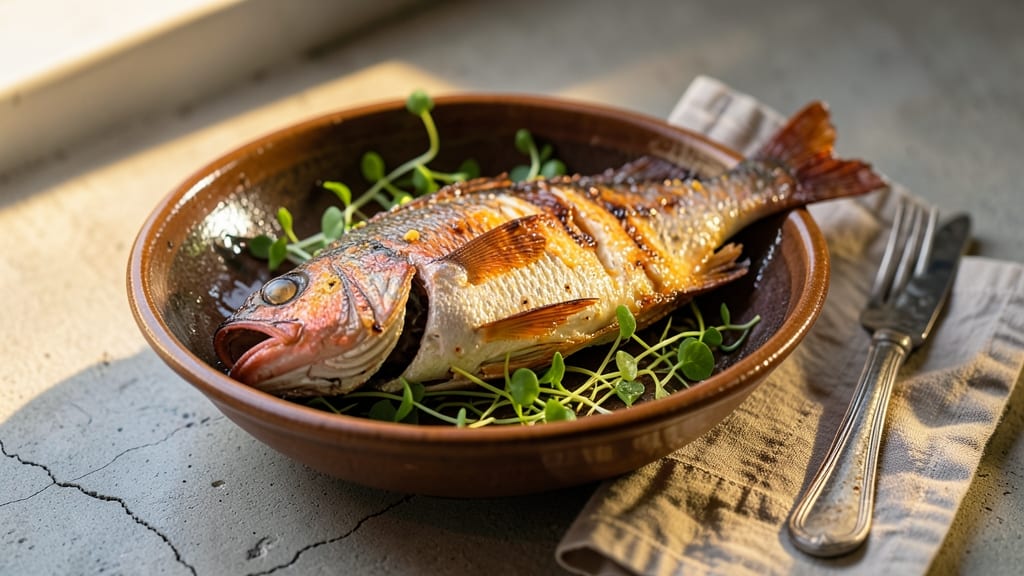
Roasting whole red snapper at 375°F transforms this delicate fish into a showstopper with buttery skin and flaky flesh that falls apart at the touch of a fork. The secret lies in proper preparation—cleaning the fish thoroughly, seasoning just before roasting, and timing the cook to perfection.
After years of perfecting this technique, I’ve found that 25 minutes is all it takes to achieve restaurant-quality results without overcooking.
What sets this recipe apart is the balance of simplicity and precision. You’ll need just a few pantry staples—lemon, garlic, olive oil, and herbs—to create a flavor profile that’s bright, aromatic, and perfectly complementary to the snapper’s natural sweetness.
The high-heat roasting method ensures the skin crisps beautifully while the flesh remains tender, a technique that’s surprisingly foolproof once you master the timing.
By the time you pull this golden, fragrant fish from the oven, you’ll have a dish that’s elegant enough for a dinner party but quick enough for a weeknight.
The crispy skin gives way to moist, flaky flesh that practically melts in your mouth, while the citrusy aroma fills your kitchen. Serve it with a simple side of roasted vegetables or a fresh salad to let the snapper shine as the star of the meal.
This method works equally well for special occasions or casual dinners, making it a versatile addition to your repertoire. The key is confidence—once you’ve tried it, you’ll never go back to fillets or frozen portions again. Let’s get started on creating your perfect whole roasted red snapper.
Ingredients for whole roasted red snapper
Fresh snapper plus a handful of pantry staples—this elegant dish comes together in under 30 minutes.
| Ingredient | Amount | Notes |
|---|---|---|
| Whole Red Snapper 🐟 | 1 lb | Fresh, scaled and cleaned |
| Extra-Virgin Olive Oil 🫒 | ½ cup | High-quality, fruity variety |
| Lemon 🍋 | 1 whole | Zest and juice, organic preferred |
| Garlic Cloves 🧄 | 6 cloves | Fresh, minced or finely chopped |
| Fresh Dill 🌿 | ¼ cup | Chopped, stems removed |
| Fresh Parsley 🌿 | ¼ cup | Chopped, flat-leaf preferred |
| Kosher Salt 🧂 | 1 ½ tsp | Diamond Crystal preferred |
| Ground Black Pepper 🌶️ | 1 tsp | Freshly ground for best flavor |
| Red Pepper Flakes 🌶️ | ½ tsp | Optional for subtle heat |
| Unsalted Butter 🧈 | 2 tbsp | Cold, cubed for skin crisping |
The snapper is the star, so pick the freshest whole fish you can find. Seafood counters at Whole Foods or your local fishmonger are your best bets—they’ll clean and scale it for you if you ask. Look for vibrant red gills and clear eyes; avoid any fish with a strong ammonia smell. If you’re buying frozen, thaw it overnight in the fridge, never under running water. The lemon should be bright yellow with a firm texture—no soft spots or brown patches. For the herbs, fresh is non-negotiable here. Trader Joe’s usually has affordable bundles of dill and parsley, but if you’re growing your own, that’s even better. The olive oil? Use something you’d drizzle on good bread—none of that cheap cooking oil stuff.
No fresh dill? Substitute with 2 tbsp chopped fresh tarragon or 1 tbsp dried dill, but you’ll lose some brightness. Short on parsley? Cilantro works in a pinch, though the flavor profile shifts slightly. Running out of olive oil? Avocado oil is a great substitute—it has a higher smoke point, which is perfect for roasting. The butter is crucial for that golden, crispy skin. If you’re dairy-free, use vegan butter or extra olive oil, but expect slightly less crispiness. For the salt, Diamond Crystal kosher salt is ideal because it dissolves easily, but any kosher salt will work. Want to skip the red pepper flakes? Add a pinch of smoked paprika instead for depth without heat.
This fish reheats poorly, so plan to serve it immediately after roasting. If you must store leftovers, keep them in the fridge for up to 2 days, but honestly, it’s best eaten fresh. The butter will melt and the skin will soften, so reheat gently in a 300°F oven for 8-10 minutes if you’re reviving portions. For prep ahead, clean and scale the fish, then store it uncovered in the fridge for up to 24 hours before roasting. The aromatics—lemon, garlic, and herbs—can be prepped in a bowl and refrigerated for a day too, saving you time on cooking day.
Why You’ll Love This Recipe
- One-Pan Magic: I swear by this for lazy nights—just slap the fish on a sheet pan, drizzle it with olive oil, and let the oven do the work. No chopping, no fuss, and zero cleanup beyond one pan.
- Citrus-Garlic Crunch: That bright lemon juice and minced garlic? It’s like a flavor explosion—crispy skin, tender flesh, and fresh dill that makes every bite taste like a Mediterranean vacation. Honestly, the smell alone makes my kitchen feel like a restaurant.
- Weeknight or Weekend Star: I’ve served this for date nights, family dinners, and even a last-minute dinner party. It’s fancy enough to impress but simple enough that I don’t stress over timing—just adjust the oven time based on the size of your snapper.
- Budget-Friendly Feast: A whole snapper feeds four for less than takeout, and leftovers? Perfect for grain bowls or salads the next day. Between us, it’s the kind of meal that makes grocery money stretch without sacrificing taste.
Step-by-step instructions for whole roasted red snapper
Here’s how to transform simple ingredients into a restaurant-worthy seafood centerpiece.
Prepare the Snapper for Maximum Flakiness
Pat the 1 lb whole red snapper completely dry with paper towels—this is non-negotiable for crispy skin. I press firmly along the scales and inside the cavity to remove all moisture. The drier the surface, the better the butter will crisp rather than steam.
Make diagonal slits about ½-inch deep along both sides of the snapper, being careful not to cut into the flesh. This creates channels for the marinade to penetrate deeply while allowing the butter to render into those perfect pockets of flavor. Real talk: this step makes the difference between good and exceptional.
Create the Herb-Infused Marinade
In a small bowl, combine the 0.5 cup extra-virgin olive oil, juice of the 1 whole lemon, minced 6 cloves garlic, 0.25 cup fresh dill, 0.25 cup fresh parsley, 1.5 tsp kosher salt, 1 tsp ground black pepper, and 0.5 tsp red pepper flakes. Whisk vigorously until the herbs are fully incorporated and the oil becomes fragrant—this should take about 30 seconds.
Pour this vibrant marinade over the snapper, rubbing it gently but thoroughly into the slits and all over the surface. Let it sit at room temperature for 15 minutes while you prepare the oven. This brief marinating ensures the fish absorbs enough flavor to stand up to the high-heat roasting without becoming mushy.
Butter the Skin for Crispy Perfection
Preheat your oven to 425°F with a rack positioned in the middle position. Line a baking sheet with parchment paper for easy cleanup. Arrange the 2 tbsp unsalted butter in small cubes over the snapper’s skin, pressing them gently into the marinade channels. The butter should melt slightly from the fish’s warmth.
Here’s the moment that matters: place the snapper on the prepared baking sheet, skin-side up. The butter will create a golden, crackling crust while protecting the delicate flesh underneath. I like to add a few lemon slices around the snapper—their aroma will infuse the surrounding air as it roasts.
Roast to Flaky Perfection
Roast the snapper for 12-15 minutes, depending on its size. You’ll know it’s done when the skin is deep golden brown and crispy, and an instant-read thermometer inserted into the thickest part of the flesh (not touching bone) reads 145°F. The flesh should flake easily with a fork when tested gently.
Don’t be tempted to overcook—seafood continues cooking slightly after removal from heat. If you’re unsure, err on the side of undercooking; you can always return it to the oven for 30 seconds if needed. The goal is that first bite of buttery, flaky perfection that falls apart effortlessly.
Rest and Serve Immediately
Transfer the snapper to a serving platter and tent loosely with aluminum foil. Let it rest for 3-5 minutes—this crucial step allows the juices to redistribute throughout the flesh, ensuring every bite is moist and flavorful. I know it’s hard to wait when it smells this amazing, but trust me on this.
Garnish with additional fresh parsley and lemon wedges before serving. The snapper should be presented whole at the center of the table, its crispy skin contrasting beautifully with the tender, flaky flesh underneath. Serve immediately with your favorite sides to experience the full flavor profile at its peak.
Pro Tips For Making Whole Roasted Red Snapper
- Pat Dry First: Snapper stays moist, but a damp fish steams instead of sears. Grab paper towels and dry the skin thoroughly—especially the belly—before oiling. I used to skip this and ended up with fish that tasted like it was boiled, not roasted.
- Stuff the Cavity Last: The lemon and garlic belong inside, but don’t cram them in until the fish hits the pan. A few minutes of high-heat searing first locks in flavor better than a soggy, overstuffed belly. (Yes, even if you’re impatient like me.)
- Watch the Skin’s Color: The snapper’s skin should be deep golden, not blackened. If it’s browning too fast, lower the heat or move the pan to a cooler spot. I learned this the hard way—burnt skin means bitter fish, and nobody wants that.
- Rest Under Foil: Pull the snapper from the oven and tent it loosely with foil for 5–10 minutes. This keeps the flesh from shrinking and falling apart when you cut into it. (Your future self will thank you—trust me.)
Troubleshooting perfect results
Skin Not Crispy?
If your snapper’s skin stays soft instead of crispy, the issue is almost always moisture. I’ve found that even a slightly damp surface prevents proper browning. Double-check that you’ve patted the fish completely dry with paper towels—press firmly along the scales and cavity to remove all traces of moisture.
Also, ensure your butter is cold when you press it onto the skin. Warm butter will melt too quickly, creating steam instead of a crisp crust. 🔥
Fish Overcooked?
Overcooked snapper turns rubbery and dry, which happens when you exceed 145°F internal temperature or leave it in the oven too long. Use an instant-read thermometer to check the thickest part of the flesh (not touching bone) for accuracy.
If you’re unsure about timing, start checking at 10 minutes—fish cooks faster than you think. Remove it immediately when the skin is golden brown and the flesh flakes easily with a fork.
Uneven Cooking?
Uneven cooking often occurs when the snapper isn’t positioned correctly in the oven. Place it on the middle rack for even heat distribution, and avoid crowding the pan. If your oven runs hot, reduce the temperature to 400°F and add 2-3 minutes to the cook time.
I also recommend using a baking sheet with low sides to prevent heat from escaping around the fish.
Flavor Too Mild?
If your snapper tastes bland, the marinade may not have had enough time to penetrate. Let the fish marinate for the full 15 minutes at room temperature—don’t skip this step! For extra depth, add 1 tsp smoked paprika or ½ tsp ground coriander to the marinade.
Fresh herbs are key, too—if using dried, double the amount but soak them in warm water for 5 minutes first to rehydrate.
Butter Melting Too Fast?
If the butter melts before the skin crisps, your oven may be too hot or the butter isn’t cold enough. Chill the butter cubes for 10 minutes before pressing them onto the fish.
For extra insurance, place the snapper on a wire rack over a baking sheet—this allows heat to circulate underneath, preventing steam buildup that softens the skin. A 425°F oven is ideal, but if your kitchen runs hot, drop it to 400°F.
Fish Sticking to Pan?
Sticking happens when moisture escapes during roasting, creating a glue-like residue. Always use parchment paper or a silicone baking mat on your sheet pan. If you’re using a glass or ceramic dish, avoid metal racks—opt for a wire cooling rack instead.
For extra protection, brush the pan lightly with ½ tsp olive oil before placing the snapper on it. This creates a nonstick barrier without affecting the fish’s flavor. ✨
Nutrition facts
Frequently asked questions
Can I use frozen red snapper for this recipe?
Yes, but thaw it properly first. Place the frozen snapper in the refrigerator overnight (about 12-24 hours) for even thawing. Never thaw at room temperature, as this can promote bacterial growth. Once thawed, pat it completely dry before proceeding with the recipe. The texture and results will be just as good as with fresh fish.
How do I know when the snapper is fully cooked?
Use an instant-read thermometer to check the thickest part of the flesh (not touching bone) – it should reach 145°F. Alternatively, the skin should be deep golden brown and crispy, and the flesh should flake easily with a fork when tested gently. The fish is done when it reaches these visual and textural cues.
What’s the best way to serve this whole roasted snapper?
Present it whole on a platter with lemon wedges and fresh herbs for garnish. For sides, roasted vegetables (like asparagus or Brussels sprouts) or a simple arugula salad with lemon vinaigrette complement beautifully. The crispy skin and flaky flesh make it perfect for sharing family-style at the center of the table.
Can I make this recipe ahead of time?
It’s best served immediately after roasting, but you can prep components ahead. Clean and scale the fish up to 24 hours in advance, storing it uncovered in the fridge. The marinade can be prepped 1 day ahead and kept refrigerated. However, the butter should be added just before roasting for optimal crispiness. Never reheat the cooked snapper – it’s best enjoyed fresh.
What if I don’t have fresh dill or parsley?
For dill, substitute with 2 tbsp chopped fresh tarragon or 1 tbsp dried dill. For parsley, use cilantro (though the flavor will differ slightly). If using dried herbs, double the amount and soak them in warm water for 5 minutes first to rehydrate. The dish will still taste delicious with these alternatives.

- Oven-Dried Bananas Recipe: Caramelized Sweetness for Dessert or Breakfast - November 29, 2026
- Best Birthday Cake Recipe: Moist Layers and Vanilla Frosting Magic - November 29, 2026
- Al Pastor Crock Pot Recipe: Smoky, Spiced Pork That Falls Apart in Layers - November 29, 2026