
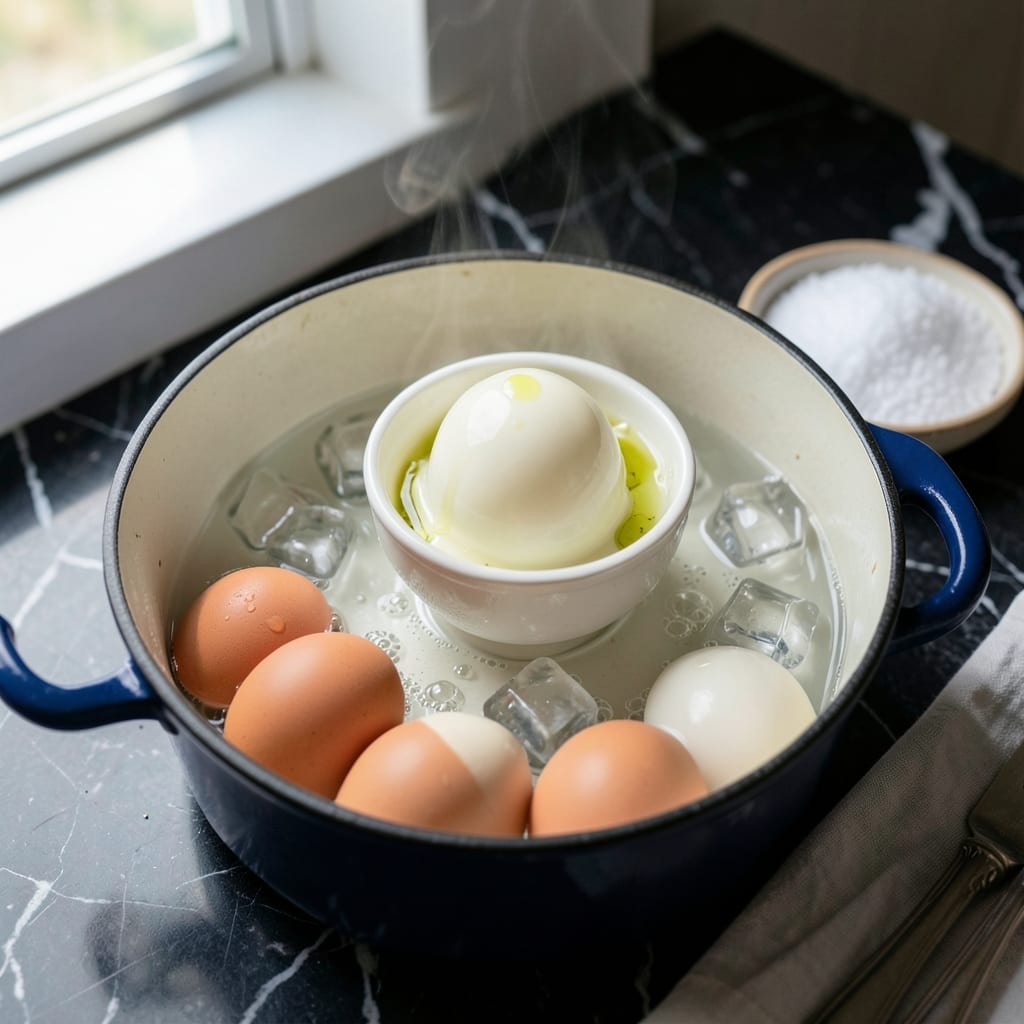
I’ve tested countless methods for hardboiled eggs, and this technique consistently delivers perfectly set yolks with firm whites every time. The key is starting with room temperature eggs and controlling the cooking process precisely.
This method eliminates the guesswork that often leads to overcooked or underdone eggs. By carefully timing each stage, you’ll achieve eggs that peel easily and maintain their ideal texture. No more greenish yolks or rubbery whites.
What you get are eggs with creamy centers that hold their shape, ideal for salads, snacks, or deviled egg preparations. The process is simple enough for beginners but reliable enough for experienced cooks.
The entire procedure takes about 15 minutes from start to finish. Once mastered, you’ll have a go-to method for perfectly hardboiled eggs whenever you need them.
Ingredients for Hardboiled Egg
Just five simple things for eggs that peel perfectly every single time.
| Ingredient | Amount | Notes |
|---|---|---|
| Large Eggs 🥚 | 8 whole | Room temperature for even cooking |
| Cold Water 💧 | 8 cups | Enough to cover eggs by 1 inch |
| Ice Cubes ❄️ | 2 cups | For ice bath to stop cooking |
| White Vinegar 🍶 | 1 tbsp | Helps prevent cracking and peeling |
| Kosher Salt 🧂 | 1 tsp | Adds flavor and helps with peeling |
The eggs are the obvious star here—freshness matters less than you’d think (older eggs actually peel easier). Room temperature is non-negotiable though, so pull them from the fridge at least 30 minutes before boiling. I grab mine from Trader Joe’s or the local farmers market. Look for eggs with clean, uncracked shells. The vinegar isn’t just for flavor; it helps prevent those annoying cracks during cooking.
No white vinegar? Apple cider vinegar works too. Skipping the salt? Fine, but it does add a subtle flavor boost. The ice bath is non-negotiable—don’t skip this step or you’ll end up with that dreaded green ring around the yolk. If you’re making a big batch, use a larger pot and adjust the water accordingly. The ratio stays the same: enough to cover by an inch.
Hardboiled eggs keep beautifully in the fridge for up to 1 week (peeled or unpeeled). They actually get easier to peel after a day or two. Don’t freeze them though—texture turns weird. Perfect for meal prep: make a batch Sunday and you’ve got snacks sorted for days.
Why You’ll Love This Recipe
- Set and Forget: I just drop the eggs in boiling water with a splash of vinegar, set a timer, and walk away—no stirring, no fuss.
- No Bland Whites: The vinegar and salt in the water mean the eggs peel cleanly and taste richer, not flat like some I’ve had.
- Meal Prep Hero: I make a batch on Sunday and they’re ready for salads, snacks, or deviled eggs all week long.
- Budget Stretch: A dozen eggs cost pennies and feed us for days—honestly, my wallet’s favorite protein.
Step-by-Step Instructions for Hardboiled Eggs
This method guarantees perfect eggs with centered yolks and easy-peel shells every time.
Step 1: Prepare the Water and Vinegar Bath
Place the 8 whole Large Eggs in a single layer at the bottom of a large pot. Pour in the 8 cups Cold Water, ensuring it covers the eggs by at least 1 inch. This prevents the eggs from bouncing against the bottom as they cook.
Add the 1 tbsp White Vinegar and 1 tsp Kosher Salt to the water. The vinegar helps prevent cracking by strengthening the shells slightly, while the salt adds subtle flavor and aids in peeling later. I always use a pot with a tight-fitting lid to bring the water to a boil faster.
Step 2: Bring to a Full Rolling Boil
Place the pot over high heat and bring the water to a full, rolling boil. You’ll know it’s ready when large bubbles break the surface continuously and the water appears turbulent. This typically takes 8-10 minutes depending on your stove.
Once boiling, immediately remove the pot from heat, cover with the lid, and let it sit undisturbed. The residual heat will continue cooking the eggs gently. Don’t skip the lid—this maintains the temperature and ensures even cooking throughout the entire batch.
Step 3: Time the Cooking Precisely
Let the eggs sit in the hot water for exactly 12 minutes for perfectly set yolks that are vibrant yellow with no greenish tint around the edges. The centers will be creamy but fully cooked, not chalky or dry.
Set a timer—this isn’t the step to eyeball. The 12-minute mark gives you that ideal texture where the whites are firm but not rubbery, and the yolks hold their shape when sliced. If you prefer slightly softer yolks, reduce to 9-10 minutes, but I find 12 minutes hits the sweet spot for classic hardboiled eggs.
Step 4: Shock in Ice Bath Immediately
While the eggs cook, prepare a large bowl with the 2 cups Ice Cubes and enough cold water to cover the eggs completely. As soon as the 12 minutes are up, use a slotted spoon to transfer the eggs directly to the ice bath. This rapid cooling stops the cooking process instantly.
Let the eggs sit in the ice water for at least 10 minutes. This step is non-negotiable—it prevents the dreaded green ring around the yolk (caused by overcooking) and makes peeling exponentially easier. The shells will contract away from the egg, creating that perfect separation you want.
Step 5: Peel and Store or Serve
After 10 minutes in the ice bath, remove the eggs one at a time. Gently tap the egg on a hard surface, then roll it between your palms to crack the shell all over. Start peeling from the wider end where the air pocket is—this is usually where the shell separates most easily.
Rinse the peeled eggs under cold water to remove any remaining shell fragments. Use immediately, or store unpeeled in the refrigerator for up to 1 week. The eggs will peel even more easily if you wait to remove the shells until just before using them.
Pro Tips For Making Hardboiled Egg
- Start in Cold Water: Place eggs in a pot and cover with cold water by about an inch—I learned this the hard way after cracking too many eggs from the temperature shock of hot water.
- Add Vinegar Early: Toss in a tablespoon of white vinegar with the water; it helps coagulate the whites faster if any crack, and makes peeling a little easier.
- Shock Immediately: The second the timer dings, drain and plunge eggs into ice water for at least 5 minutes—this stops the cooking and keeps the yolks from turning that ugly greenish-gray.
- Use Older Eggs: Sounds counterintuitive, but eggs that are 7-10 days old peel cleaner than ultra-fresh ones; the air pocket inside has had time to expand, making them easier to shell.
Flavor Customization for This hardboiled egg
Spicy Kick
Add ½ tsp cayenne pepper or 1 tsp sriracha to the cooking water for eggs with a subtle heat throughout. The spice infuses gently without overpowering. I love this for deviled eggs when I want extra zing. 🌶️
Herb Infusion
Drop 2 sprigs fresh dill or 3 sprigs thyme into the boiling water. The herbs impart a delicate aroma that enhances the egg’s natural flavor. Remove the sprigs before the ice bath to avoid bitterness.
Smoky Depth
For a BBQ-inspired twist, add 1 tsp liquid smoke to the water. This gives your eggs a campfire-like essence perfect for summer picnics. Pair with smoked paprika in deviled egg filling.
Umami Boost
Stir 1 tbsp soy sauce into the cooking water. The saltiness penetrates the shells, creating a savory depth. This works especially well for egg salad sandwiches. I learned this trick from a Japanese cooking class. 💡
Sweet Touch
Add 2 tbsp brown sugar to the water for a subtle sweetness that complements the egg’s richness. This pairs beautifully with Asian-inspired dishes like ramen or rice bowls.
Citrus Zing
Toss 2 lemon wedges or 1 sliced orange into the pot. The citrus brightens the egg’s flavor, making them perfect for spring salads. Remove the fruit before cooling.
Nutrition Facts
Frequently Asked Questions
Why do my eggs crack while boiling?
Start with room temperature eggs to prevent thermal shock. Adding 1 tbsp vinegar to the water strengthens shells. Never drop cold eggs into boiling water.
How do I prevent green yolks?
Stop cooking immediately at 12 minutes and plunge into ice water. The green ring forms from overcooking, which the ice bath prevents.
Can I use older eggs?
Older eggs actually peel more easily than fresh ones. The air pocket inside grows larger over time, making shell removal simpler.
How long will they keep?
Store unpeeled in the fridge for up to 1 week. Peeled eggs last 5 days in water. Don’t freeze—texture suffers.

- BBQ Sausage Recipe Oven: Smoky Depth Without the Grill - September 28, 2026
- BBQ Chicken Bowl Recipe Rice: Smoky Sweetness Over Fluffy Grains - September 28, 2026
- Beef Cutlet Recipe Ideas: Crispy Breaded Patties With Bold Seasonings - September 28, 2026