
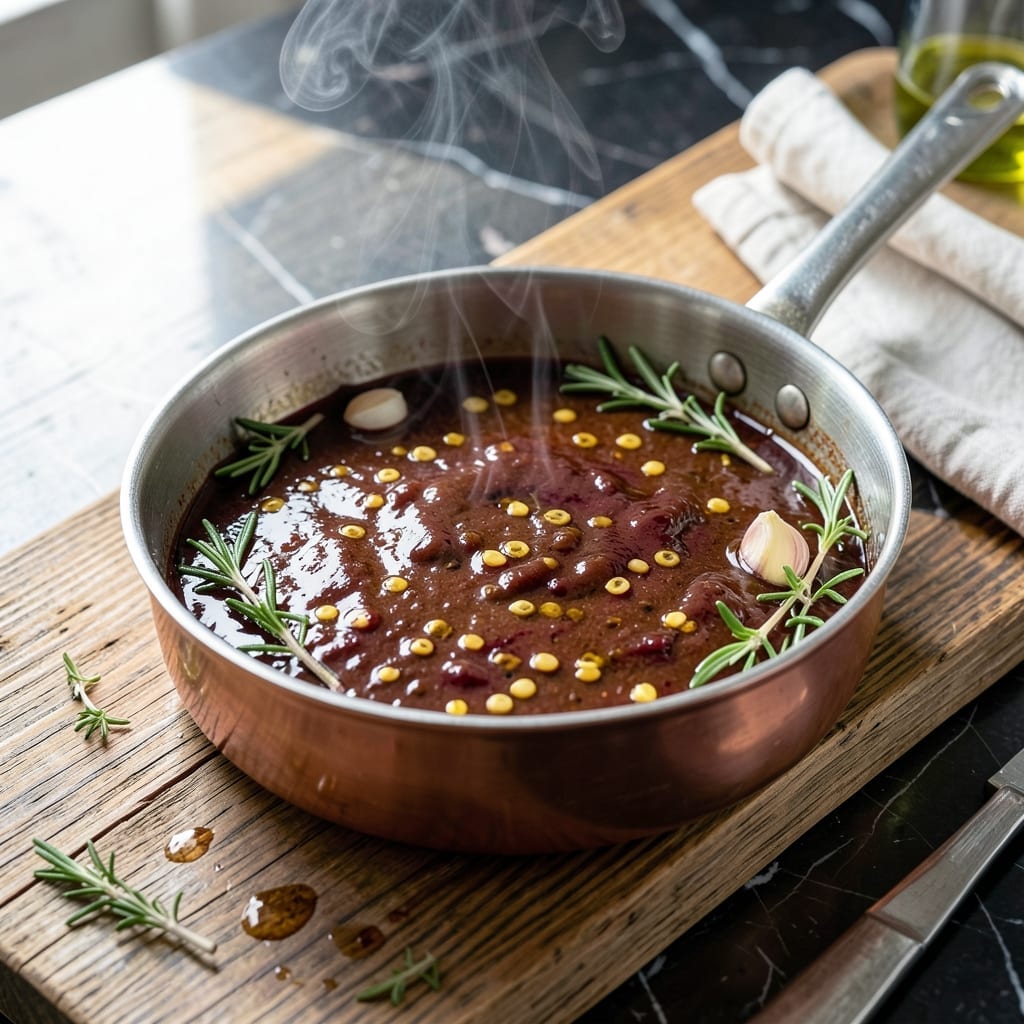
This sauce delivers the depth and complexity you expect from professional kitchens without the intimidation factor. I’ve refined this method to capture that signature richness that elevates lamb from simple to extraordinary.
The foundation is a slow-simmered reduction that concentrates bold flavors—red wine, stock, and aromatics—into a velvety finish. A touch of butter at the end adds a luxurious sheen that clings perfectly to every bite.
What you’ll achieve is a restaurant-quality sauce that balances acidity, sweetness, and umami in every spoonful. It’s versatile enough for roasted lamb, grilled chops, or even as a base for braises.
Master this once, and it’ll become your go-to for special occasions.
Ingredients for Lamb Sauce Gordon Ramsay
Ten ingredients transform into a sauce that rivals any Michelin-starred kitchen creation.
| Ingredient | Amount | Notes |
|---|---|---|
| Red Wine 🍷 | 2 cups | Dry, full-bodied variety preferred |
| Lamb Stock 🍲 | 2 cups | Homemade or high-quality store-bought |
| Shallots 🧅 | 2 whole | Finely minced for even distribution |
| Garlic Cloves 🧄 | 4 cloves | Crushed for maximum flavor release |
| Fresh Rosemary 🌿 | 2 tbsp | Chopped, stems discarded |
| Fresh Thyme 🍃 | 2 tbsp | Leaves stripped from stems |
| Tomato Paste 🍅 | 2 tbsp | Concentrated for depth of flavor |
| Dijon Mustard 🟡 | 1 tbsp | Smooth, not whole grain |
| Unsalted Butter 🧈 | 4 tbsp | Cold, cubed for finishing |
| Balsamic Vinegar 💧 | 1 tbsp | Aged for complexity |
The wine is non-negotiable here. A bold Cabernet Sauvignon or Merlot from Trader Joe’s works beautifully—avoid anything labeled ‘cooking wine’ (it’s salted and flat). Lamb stock is the backbone, so if you’re not making your own, Kettle & Fire or Bonafide Provisions are the best store-bought options. Fresh herbs matter—don’t substitute dried for the rosemary or thyme.
No red wine? Beef stock with a splash of red wine vinegar can work in a pinch, though the depth won’t be the same. Shallots can be swapped for yellow onion at half the quantity. If you’re out of Dijon, whole grain mustard strained gets you close. The butter at the end is key for that velvety finish—don’t skip it, and don’t use margarine.
This sauce keeps beautifully. Refrigerate in an airtight container for up to 5 days, or freeze for 3 months. Reheat gently to avoid breaking the emulsion. The flavors deepen overnight, so it’s even better the next day.
Why You’ll Love This Recipe
- One Pot Wonder: I can make this while roasting the lamb—just toss in shallots, garlic, rosemary, and let the wine and stock do the work.
- Deep Rich Flavor: The red wine and rosemary give it that restaurant-quality taste without the fuss.
- Dinner Party Star: It pairs with everything from mashed potatoes to roasted veggies, so I can serve it with whatever’s in season.
- Makes Great Leftovers: Honestly, it tastes even better the next day—perfect for meal prep or a quick second night of gourmet.
Step-by-Step Instructions for Lamb Sauce
Master this technique and you’ll create a restaurant-quality sauce with layers of sophisticated flavor.
Step 1: Build the Flavor Foundation
Heat a heavy saucepan over medium-high heat until hot. Add the 2 whole Shallots, finely minced, and cook for 2-3 minutes until they soften and become translucent. This gentle start prevents burning and develops their natural sweetness.
Add the 4 cloves Garlic Cloves, crushed, along with the 2 tbsp Fresh Rosemary and 2 tbsp Fresh Thyme. Stir constantly for 1 minute until the herbs release their fragrance. You’ll notice the garlic edges turning just barely golden—this is your cue they’re perfectly cooked.
Step 2: Create Depth with Wine and Tomato
Pour in the 2 cups Red Wine and let it come to a boil. This deglazes the pan, lifting all those caramelized bits from the bottom. Reduce the heat to medium and let it simmer for 8-10 minutes until the liquid reduces by about half.
Stir in the 2 tbsp Tomato Paste and cook for 2-3 minutes until it darkens slightly. The paste should turn from bright red to a deeper brick color, signaling it’s properly cooked and its raw edge is gone. This step creates the backbone of your sauce’s rich, complex flavor.
Step 3: Build Body with Stock and Mustard
Add the 2 cups Lamb Stock and bring the mixture back to a boil. Then reduce heat to medium-low and let it simmer for 15-20 minutes until it reduces by about one-third. You’re looking for the sauce to coat the back of a spoon with a velvety texture.
Whisk in the 1 tbsp Dijon Mustard and 1 tbsp Balsamic Vinegar. The mustard adds a subtle sharpness that balances the richness, while the vinegar brings a touch of acidity to brighten all the deep flavors. Simmer for another 5 minutes to allow these to meld completely.
Step 4: Finish with Butter for Luxurious Texture
Remove the sauce from heat and let it sit for 1 minute to stop the simmering. This prevents the butter from separating. Gradually whisk in the 4 tbsp Unsalted Butter, one cube at a time, until fully incorporated.
The butter should create a glossy, emulisfied sauce. If it looks slightly thin, return it to low heat for 1-2 minutes**—it will thicken as it cools. Taste and adjust seasoning if needed, though the stock and wine should provide enough salt. Serve immediately over lamb or other meats for the ultimate finish.
Pro Tips For Making Lamb Sauce Gordon Ramsay
- Reduce the Wine First: Deglaze with red wine and let it reduce by half before adding stock—I learned this the hard way after my first few sauces tasted harsh and boozy instead of rich.
- Finely Chop Shallots: Dice shallots almost to a paste; their sweetness melts into the sauce better than lazy, chunky cuts, and nobody wants a surprise crunch in a silky lamb reduction.
- Skip Pre-Crushed Garlic: Smash garlic cloves lightly with the flat of your knife and leave them whole, then remove before serving—this keeps the flavor mellow and prevents bitter, burnt bits.
- Use Cold Stock: Add lamb stock straight from the fridge to the hot pan; the sudden temperature drop helps lift all the browned bits from the bottom, saving you from scrubbing and boosting flavor.
Make-Ahead Tips for Leftovers
Prep Ahead Strategy
You can make this sauce 2-3 days in advance—it actually improves as flavors meld. Store in an airtight container in the fridge after cooling completely. I always make extra because it reheats beautifully. 💡
Freezing for Later
This sauce freezes perfectly for up to 3 months. Portion into ice cube trays for small batches, then transfer to freezer bags. Thaw overnight in the fridge before reheating.
Reheating Methods
Gently reheat on the stovetop over low-medium heat, stirring frequently. If it separates, whisk in 1-2 tbsp cold water to re-emulsify. Avoid microwaving, as it can cause uneven heating.
Day-Of Tips
If serving with lamb, prepare the sauce first—it holds well at room temperature for 1-2 hours while you cook the meat. Just reheat gently before serving to maintain that velvety texture.
Flavor Boost
For extra depth, add 1 tsp of the lamb drippings to the sauce when reheating. This integrates the meat’s rich flavors, creating a perfect harmony in every bite.
Nutrition Facts
Frequently Asked Questions
Can I substitute the red wine?
Use beef stock with 1 tbsp red wine vinegar in a pinch. The depth won’t match, but it’ll still deliver rich flavor. Avoid cooking wine—it’s too salty and flat.
How do I fix a broken sauce?
If it separates, remove from heat and whisk in 1-2 tbsp cold water or ice cubes. The temperature shock helps re-emulsify the butter. Stir gently over low heat until smooth.
What’s the best way to store leftovers?
Keep in an airtight container in the fridge for up to 5 days. For longer storage, freeze in ice cube trays for up to 3 months.
Can I use dried herbs instead of fresh?
Not recommended. Fresh rosemary and thyme provide brighter, more complex flavors. Dried herbs can taste flat and overpower the sauce.

- BBQ Sausage Recipe Oven: Smoky Depth Without the Grill - September 28, 2026
- BBQ Chicken Bowl Recipe Rice: Smoky Sweetness Over Fluffy Grains - September 28, 2026
- Beef Cutlet Recipe Ideas: Crispy Breaded Patties With Bold Seasonings - September 28, 2026