
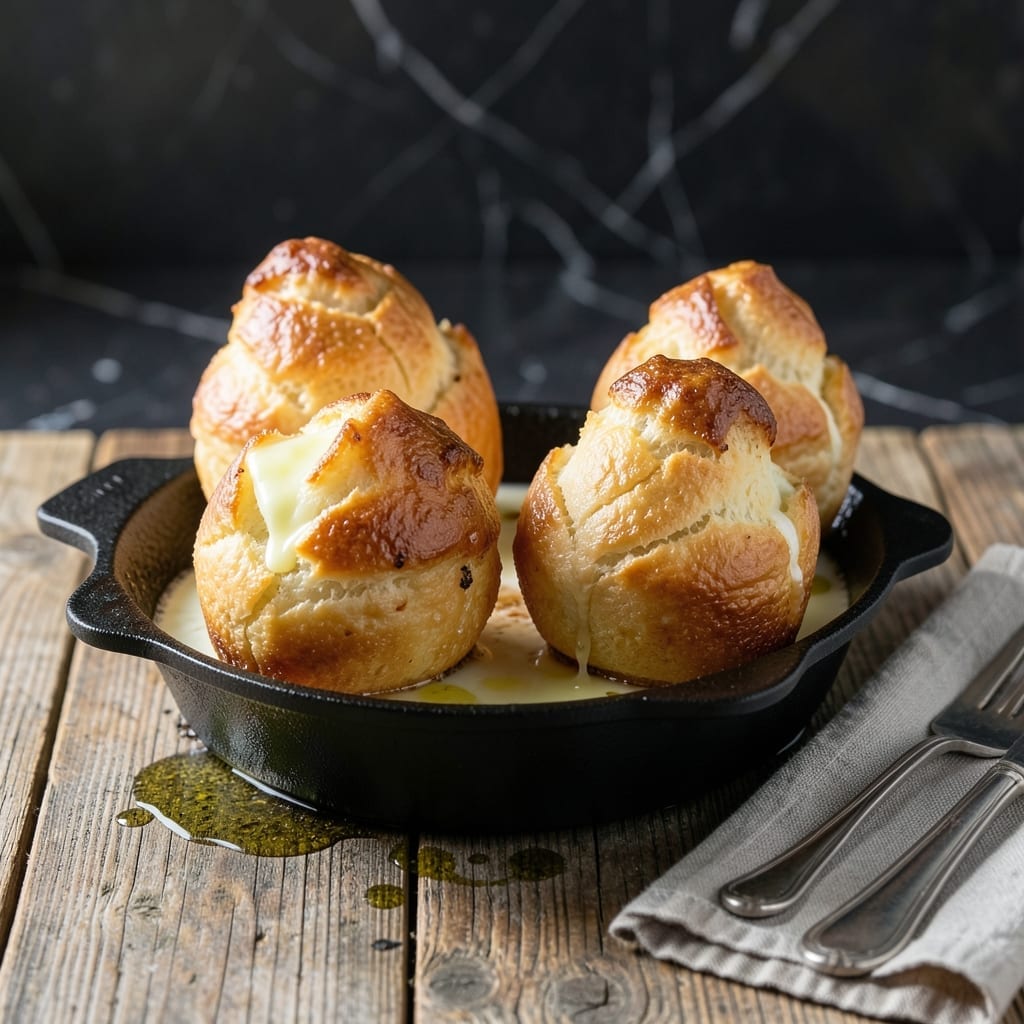
At high elevations, achieving those dramatic, sky-high popovers requires specific adjustments to flourish in thinner air. This recipe delivers the tall, golden puffs you crave without the guesswork.
The key lies in precise liquid ratios and a hot oven—425°F from start to finish. I’ve tested this method repeatedly to ensure consistent rise and hollow centers, even where atmospheric pressure works against you.
You’ll get popovers with shatteringly crisp exteriors and airy, custardy interiors. The batter comes together in minutes, and the oven does the rest, transforming simple ingredients into an impressive side.
Serve warm with butter and jam for a dish that feels special but requires minimal effort. These never fail to impress.
Ingredients for High Altitude Popover
Simple ingredients transform into impressive mile-high golden puffs with this recipe.
| Ingredient | Amount | Notes |
|---|---|---|
| All-Purpose Flour 🌾 | 1 cup | Sifted for lighter texture |
| Whole Milk 🥛 | 1 cup | Room temperature for best rise |
| Large Eggs 🥚 | 2 whole | Room temperature preferred |
| Unsalted Butter 🧈 | 1 tbsp | Melted, for batter |
| Salt 🧂 | ¼ tsp | Fine sea salt recommended |
| Vegetable Oil 🫒 | 1 tsp | For greasing muffin tin |
The flour is critical here—King Arthur or Gold Medal all-purpose give the best structure for high-altitude baking. Use milk at room temperature to prevent the melted butter from solidifying. Eggs should also be room temp for maximum volume. Most supermarkets carry these brands, but Whole Foods has organic options if you prefer. The batter’s thin consistency is intentional—don’t be tempted to thicken it.
No whole milk? 2% works in a pinch, but avoid skim—fat content matters for richness. Need a dairy-free version? Oat milk with a teaspoon of vinegar mimics the tang. The eggs are non-negotiable for structure, but if you’re at extreme altitude (5,000+ ft), add an extra one for stability. Vegetable oil can be swapped for melted coconut oil if desired.
Batter can rest overnight in the fridge (stir before using). Popovers are best served immediately but reheat well at 350°F for 8-10 minutes. Store cooled leftovers in an airtight container for 1 day—they lose their puff but still taste great toasted.
Why You’ll Love This Recipe
- One Bowl Wonder: I just whisk flour, milk, eggs, and melted butter in one bowl—no fancy steps, no fuss.
- Buttery Clouds: That rich whole milk and butter create a popover so airy and golden, it’s like biting into a warm, crisp-edged cloud.
- Breakfast or Dinner: Honestly, these work equally well with jam at sunrise or soaking up gravy at dinner.
- Pennywise Perfection: Five basic ingredients I always have on hand, and they puff up like magic every time.
Step-by-Step Instructions for High Altitude Popovers
These adjustments ensure perfect rise and structure at elevation with reliable results every time.
Step 1: Prepare the Muffin Tin for Maximum Lift
Place a rack in the lower third of your oven and preheat to 425°F. This high heat creates the initial steam burst essential for popovers to puff dramatically. Meanwhile, add 1 tsp Vegetable Oil to each of four muffin cups, dividing it evenly.
Place the tin in the preheating oven for 5-7 minutes until the oil is shimmering hot. The sizzling oil when the batter hits it creates immediate steam, which is the secret to that dramatic rise. At altitude, this step compensates for the lower air pressure that would otherwise inhibit lift.
Step 2: Create the Batter with Precise Technique
In a blender, combine the 1 cup Whole Milk (room temperature), 2 whole Large Eggs, 1 tbsp Unsalted Butter (melted), and 0.25 tsp Salt. Blend on low for 10 seconds until just combined. The room temperature ingredients incorporate more smoothly, preventing butter from solidifying.
Add the 1 cup All-Purpose Flour and blend for 20-30 seconds until smooth. Avoid overmixing, which can develop gluten and result in tough popovers. The batter should resemble heavy cream. At altitude, the slightly thicker consistency helps compensate for the drier air.
Step 3: Fill Cups and Return to Oven Immediately
Carefully remove the hot muffin tin from the oven and quickly fill each prepared cup three-quarters full with batter. The oil should sizzle audibly when the batter contacts it—this confirms the proper temperature for that crucial initial rise.
Return the tin to the oven immediately and bake undisturbed for 20 minutes. Do not open the oven door during this time, as the sudden temperature drop can cause popovers to collapse. You’ll see them transform from liquid to towering puffs through the oven window.
Step 4: Finish Baking for Structural Stability
After 20 minutes, reduce the oven temperature to 350°F without opening the door. Continue baking for 15-20 minutes until the popovers are deep golden brown and sound hollow when tapped on the top.
This two-stage baking process ensures the popovers rise fully at the higher initial temperature, then develop structure and color at the lower temperature. At altitude, the extended baking time compensates for the faster evaporation rate, preventing a gummy interior.
Step 5: Serve Immediately for Maximum Dramatic Effect
Remove the popovers from the oven and let them cool in the pan for 1-2 minutes. They should be dramatically puffed with a deep golden color and slightly crisp exterior. The interior will be airy with a custard-like texture.
Transfer to a serving plate immediately. Popovers begin to deflate as they cool, so serve them fresh from the oven for the most impressive presentation. The contrast between the crisp exterior and tender interior is most pronounced when served warm, ideally within 5 minutes of coming out of the oven.
Pro Tips For Making High Altitude Popover
- Preheat the Pan: I learned this the hard way—cold pans mean flat popovers. Get that muffin tin or popover pan screaming hot in the oven for at least 10 minutes before adding the butter.
- Warm Your Milk: Sounds weird, but it works: take the chill off the whole milk before mixing. Cold milk can shock the batter and stunt the rise at altitude.
- Skip Overmixing: After burning three batches, I finally figured out that a few lumps in the batter are fine. Overmixing develops gluten, and you’ll end up with dense popovers instead of airy ones.
- Add Extra Egg: My grandmother swore by this, and she was right: at high altitude, toss in an extra large egg. It adds structure to compensate for the lower air pressure.
Troubleshooting This Dish
Collapsed Popovers
If your popovers fall flat, the oven door was likely opened too soon. That sudden temperature drop causes the steam inside to condense, collapsing the structure. Always wait until the 20-minute mark before checking, and resist the urge to peek earlier. 💡
Dense or Gummy Centers
This usually means they needed more time at 350°F to set properly. At altitude, the lower air pressure speeds up evaporation, so extend baking by 5-10 minutes if they look underdone. A toothpick inserted should come out clean.
Pale or Under-Risen
Your oven might not have been hot enough. Verify with an oven thermometer—many run 25-50°F cooler than their dial. Also, ensure the oil in the muffin tin was shimmering hot before adding batter; this creates the steam needed for lift.
Tough or Chewy Texture
Overmixing the batter develops too much gluten. Blend just until smooth—about 20-30 seconds after adding flour. Also, use room temperature ingredients to prevent the butter from solidifying, which can create a dense crumb.
Uneven Rising
Fill muffin cups exactly three-quarters full for consistent results. Overfilling causes some to spill over, while underfilling leads to stunted growth. A kitchen scale helps ensure equal portions if your cups vary in size.
Excessive Browning
At high altitude, sugars caramelize faster. If the tops brown too quickly, loosely tent with foil during the final 10 minutes of baking. This prevents burning while allowing the interior to finish cooking through. ✨
Nutrition Facts
Frequently Asked Questions
Why do popovers need different adjustments at elevation?
Lower air pressure causes them to rise too fast and collapse. Extra egg or slightly thicker batter helps stabilize the structure for mile-high success.
Can I use a different pan if I don’t have a muffin tin?
Yes! A popover pan works best, but custard cups or ramkins hold 1 cup batter each. Avoid glass—it heats unevenly and may prevent proper rise.
How do I know when they’re done baking?
They’re ready when deep golden brown and sound hollow when tapped. At altitude, this may take 5-10 minutes longer than sea level.
What’s the best way to reheat leftovers?
Place in a 350°F oven for 8-10 minutes to crisp the exterior. Microwaving makes them soggy—avoid it for best texture.

- BBQ Sausage Recipe Oven: Smoky Depth Without the Grill - September 28, 2026
- BBQ Chicken Bowl Recipe Rice: Smoky Sweetness Over Fluffy Grains - September 28, 2026
- Beef Cutlet Recipe Ideas: Crispy Breaded Patties With Bold Seasonings - September 28, 2026