
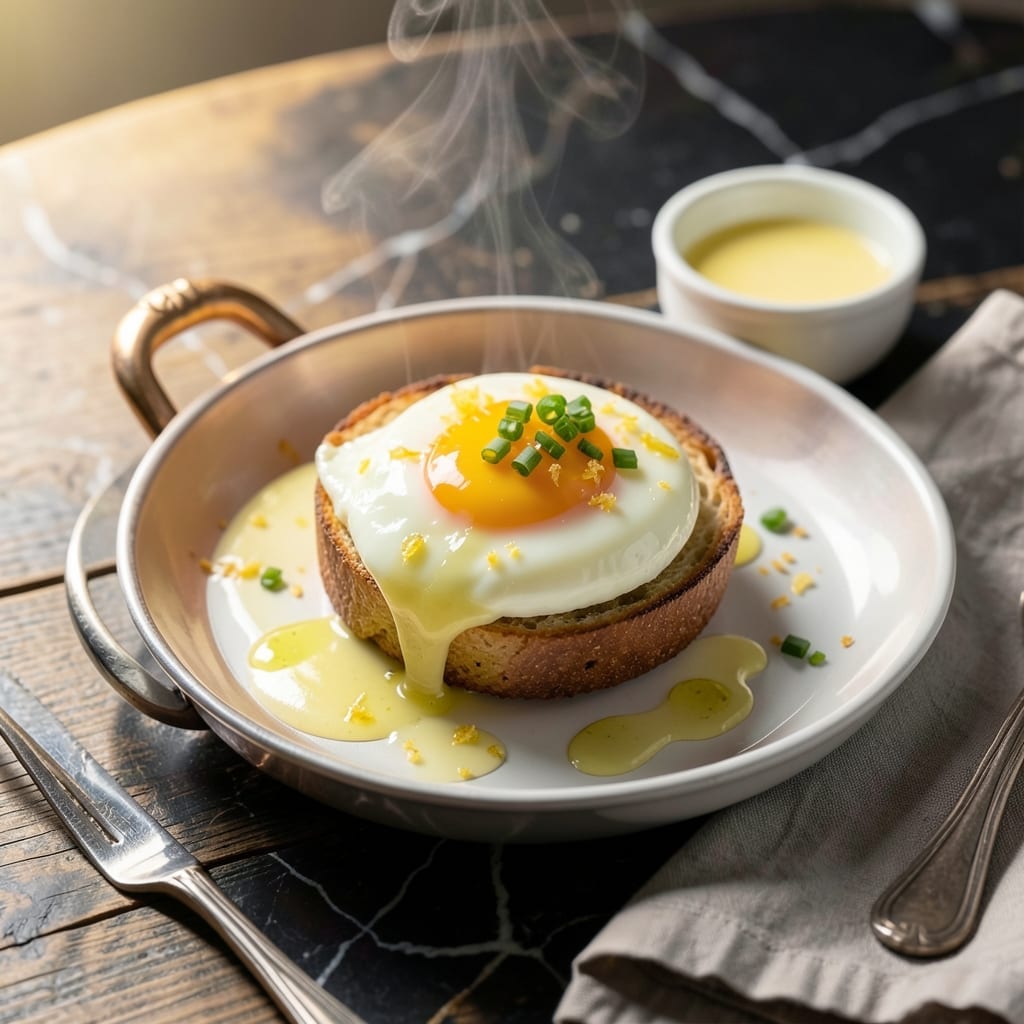
Mastering hollandaise at home transforms any dish with its rich, velvety texture and bright citrus notes. This proven technique delivers silky results without the restaurant price tag.
The key lies in precise temperature control and constant whisking to create a stable emulsion. A small amount of lemon zest adds depth that elevates the classic flavor profile.
You’ll achieve a smooth, creamy sauce that coats the back of a spoon perfectly. The process takes patience but rewards with a sauce far superior to store-bought versions.
Serve immediately over eggs, vegetables, or seafood for professional-quality results every time.
Ingredients for Homemade Hollandaise Sauce
Eight ingredients create this rich, velvety sauce with bright citrus notes.
| Ingredient | Amount | Notes |
|---|---|---|
| Unsalted Butter 🧈 | 1 cup | Melted and clarified, high quality |
| Large Egg Yolks 🥚 | 3 whole | Room temperature, fresh |
| Fresh Lemon Juice 🍋 | 2 tbsp | Newly squeezed for brightness |
| Lemon Zest 🍋 | 1 tsp | Finely grated, organic preferred |
| White Wine Vinegar 💧 | 1 tbsp | Or substitute lemon juice |
| Kosher Salt 🧂 | ¼ tsp | Diamond Crystal preferred |
| Cayenne Pepper 🌶️ | 0.125 tsp | Optional pinch for warmth |
| Cold Water 💧 | 2 tbsp | For temperature control |
The butter is critical here—use high-quality European-style for superior flavor and texture. Plugrá or Kerrygold are excellent choices available at most supermarkets. Clarifying the butter (removing milk solids) prevents breaking and ensures a smooth emulsion. Room temperature egg yolks incorporate air better, creating that signature silky texture. Always use fresh eggs for safety and optimal results.
No white wine vinegar? Apple cider vinegar at half the amount works in a pinch. The lemon zest is non-negotiable—it adds the depth that distinguishes homemade from store-bought. For extra richness, some chefs add a splash of heavy cream, but it’s not traditional. If you’re nervous about raw eggs, pasteurized eggs are available at Whole Foods or Trader Joe’s.
Hollandaise must be served immediately or kept warm in a thermos or over barely simmering water for up to 1 hour. Never microwave to reheat—it will break the emulsion. Leftovers? Honestly, this sauce is best fresh, but you can refrigerate for 24 hours and gently re-emulsify with a whisk and warm water.
Why You’ll Love This Recipe
- Whisk & Done: I can make this in 10 minutes flat with just a whisk and a heatproof bowl—no fancy gadgets.
- Bright & Zesty: The combo of fresh lemon juice, zest, and a splash of white wine vinegar gives it that tangy kick that store-bought just can’t match.
- Brunch MVP: Honestly, it turns eggs Benedict, asparagus, or even roasted veggies into something restaurant-worthy.
- Penny-Wise Luxury: A few egg yolks and butter make a rich, creamy sauce that feels indulgent but costs pennies compared to pre-made versions.
Step-by-Step Instructions for Hollandaise Sauce
Master the classic French emulsion with precise temperature control and proper technique.
Step 1: Clarify the Butter
Melt the 1 cup Unsalted Butter in a small saucepan over medium-low heat. As it melts, the butter will separate into three layers: foam on top, clarified butter in the middle, and milk solids at the bottom. Use a ladle or fine-mesh skimmer to carefully remove the foam.
Slowly pour the clear, golden clarified butter into a separate container, leaving the milk solids behind. This step is crucial—any water or milk solids in your butter will break the emulsion. Keep the clarified butter warm but not hot, around 140°F.
Step 2: Reduce the Acidic Base
In a small saucepan, combine the 2 tbsp Fresh Lemon Juice, 1 tsp Lemon Zest, 1 tbsp White Wine Vinegar, and 0.25 tsp Kosher Salt. Simmer over medium heat until the liquid reduces by half, about 2-3 minutes.
This reduction concentrates the flavors and removes excess water that could destabilize the sauce. The mixture should be syrupy but not dry. Remove from heat and let cool slightly—it should be just warm to the touch, not hot, before adding to the yolks.
Step 3: Whisk Yolks to Ribbon Stage
In a heatproof bowl, whisk the 3 whole Large Egg Yolks with the 2 tbsp Cold Water and 0.125 tsp Cayenne Pepper until the mixture is thick, pale, and forms ribbons when the whisk is lifted. This incorporates air, which helps stabilize the emulsion.
Place the bowl over a saucepan of barely simmering water (ensure the bowl doesn’t touch the water) and continue whisking constantly. The goal is to gently cook the yolks to a light, frothy consistency without scrambling them. This should take about 2-3 minutes.
Step 4: Emulsify with Clarified Butter
With the bowl still over the water bath, begin slowly drizzling in the warm clarified butter, a few drops at a time, while whisking constantly. The mixture will start to thicken and lighten as the emulsion forms.
Once about a third of the butter is incorporated and the emulsion is stable, you can increase the drizzle to a thin stream. If the sauce looks too thick, whisk in a teaspoon of warm water to loosen it. Continue until all the butter is incorporated. The finished sauce should be thick, creamy, and pale yellow.
Step 5: Finish and Adjust Seasoning
Remove the bowl from the heat and whisk in the reduced lemon-vinegar mixture. Taste and adjust seasoning if needed, though the initial measurements should be perfect. If the sauce is too thick, whisk in a little warm water, 1 teaspoon at a time.
Serve immediately over eggs Benedict, asparagus, or poached fish. Hollandaise will hold in a warm place for up to 1 hour, but it’s best fresh. If it starts to separate, whisk in a teaspoon of hot water to bring it back together.
Pro Tips For Making Homemade Hollandaise Sauce
- Warm the Bowl: Place your mixing bowl over a pot of barely simmering water—just hot enough to melt butter, not cook eggs. I learned this the hard way after scrambling yolks with direct heat.
- Clarify Your Butter: Melt the unsalted butter separately, then skim off the milk solids. Sounds fussy, but it prevents the sauce from breaking and gives that silky texture.
- Skip Cold Yolks: Let your egg yolks sit at room temperature for 10-15 minutes before starting. Cold yolks resist emulsifying, and you’ll spend twice as long whisking.
- Use the Vinegar: Don’t skip the white wine vinegar reduction with lemon zest—it cuts the richness and adds depth. My grandmother swore by this, and she was right.
Perfect Pairings for This Dish
Classic Brunch Pairings
This sauce is the star of eggs Benedict—drizzle 2-3 tbsp over poached eggs on English muffins with Canadian bacon. I also love it on crab cake Benedict for a seafood twist. The rich sauce balances the briny crab perfectly. 🥂
Vegetable Enhancements
Steamed asparagus or broccoli become restaurant-worthy with a 1-2 tbsp drizzle. The bright citrus notes complement the natural sweetness. For a spring brunch, pair with roasted artichoke hearts and a sprinkle of chopped chives.
Seafood Perfection
Elevate poached salmon or halibut fillets with a 2 tbsp spoonful. I also serve it alongside grilled shrimp skewers. The sauce adds a luxurious touch without overpowering delicate seafood flavors.
Breakfast Potatoes
Crispy hash browns or home fries benefit from a 1 tbsp dollop. The sauce melts into the crevices, creating irresistible bites. Add a pinch of smoked paprika to your potatoes for extra depth.
Steakhouse Style
For a decadent dinner, spoon 2-3 tbsp over a perfectly cooked filet mignon. The sauce adds French flair to your steak. I like to garnish with finely minced shallots for a gourmet touch.
Simple Bread Upgrade
Toasted sourdough or a baguette slice becomes extraordinary with a 1 tbsp spread. The sauce soaks into the bread beautifully, making every bite luxurious. 💛
Nutrition Facts
Frequently Asked Questions
Why did my sauce break?
This usually happens if the butter was too hot or added too fast. Remove from heat and whisk in 1 tsp hot water to re-emulsify. If that fails, start over with a new yolk and slowly whisk in the broken sauce.
Can I make this ahead of time?
It’s best served fresh, but you can keep it warm for up to 1 hour in a thermos. For longer storage, refrigerate for 24 hours and gently re-emulsify with warm water before serving.
What can I use instead of white wine vinegar?
Apple cider vinegar at half the amount works, or use all lemon juice for a brighter flavor. The acidity is key for balancing the richness of the butter.
How do I fix a sauce that’s too thick?
Whisk in warm water, 1 tsp at a time, until it reaches the desired consistency. The sauce should coat the back of a spoon but still flow smoothly.

- BBQ Sausage Recipe Oven: Smoky Depth Without the Grill - September 28, 2026
- BBQ Chicken Bowl Recipe Rice: Smoky Sweetness Over Fluffy Grains - September 28, 2026
- Beef Cutlet Recipe Ideas: Crispy Breaded Patties With Bold Seasonings - September 28, 2026