
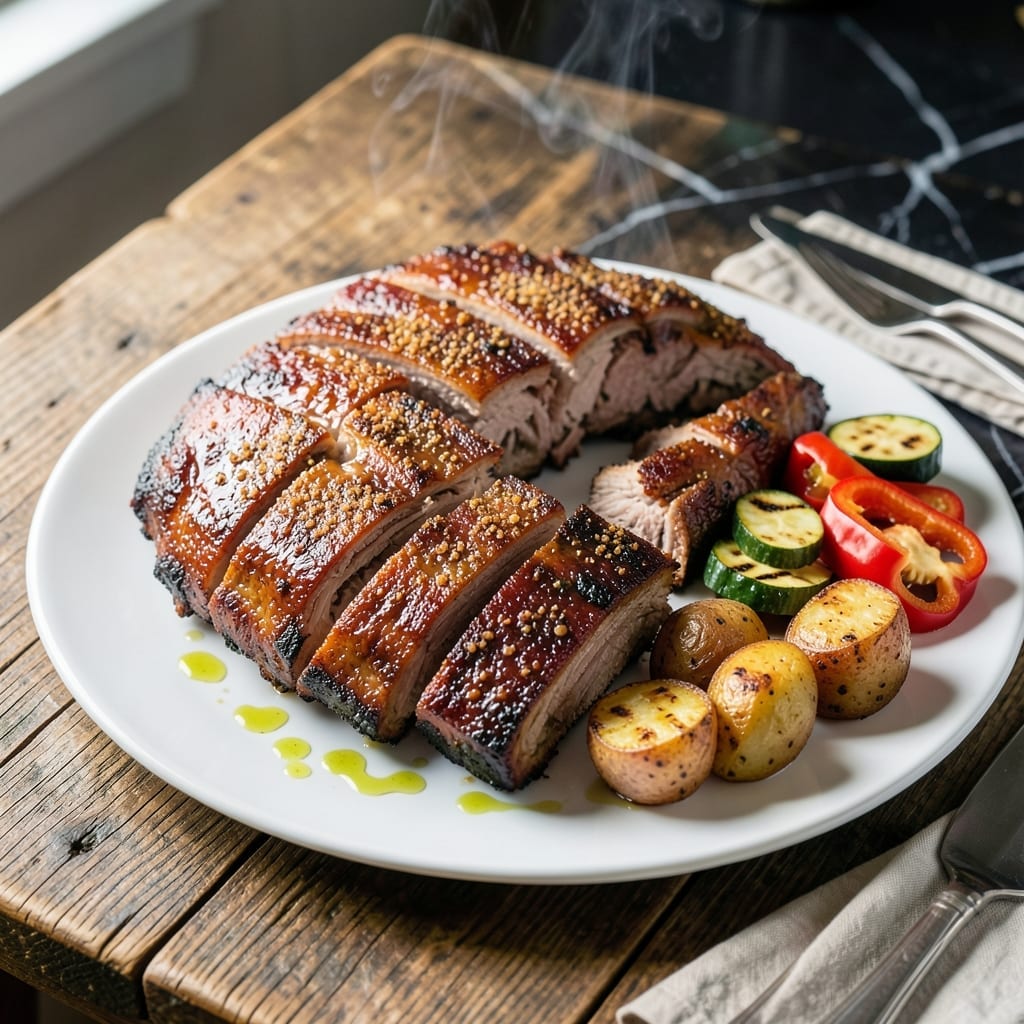
This recipe brings a taste of restaurant-quality ribs to your home kitchen with a signature dry rub and slow cooking method.
I developed this technique to replicate that famous fall-off-the-bone texture without complicated steps. The secret is in the low-and-slow cooking process that tenderizes the meat while keeping it juicy.
What you’ll get is perfectly seasoned ribs with a caramelized crust and meat so tender it nearly slides off the bone. The dry rub creates a flavorful bark that seals in all the natural juices.
Serve these with your favorite sides for a meal that rivals any steakhouse. Here’s how to make them right.
Ingredients for Houston’s Ribs
These ribs need just a handful of bold spices and time to work their magic.
| Ingredient | Amount | Notes |
|---|---|---|
| Pork Baby Back Ribs 🥩 | 4 lb | Full racks, membrane removed |
| Brown Sugar 🍚 | ½ cup | Light or dark variety |
| Smoked Paprika 🌶️ | 2 tbsp | For deep, smoky flavor |
| Garlic Powder 🧄 | 1 tbsp | Freshly ground preferred |
| Onion Powder 🧅 | 1 tbsp | Fine grain for even coating |
| Ground Black Pepper 🌶️ | 1 tbsp | Coarse grind for texture |
| Kosher Salt 🧂 | 1 tbsp | Diamond Crystal preferred |
| Chili Powder 🌶️ | 1 tbsp | Mild or medium heat |
| Ground Cumin 🌿 | 1 tsp | Toasted for warmth |
| Cayenne Pepper 🔥 | ½ tsp | Adjust for heat preference |
| Apple Cider Vinegar 🍏 | ¼ cup | For tangy balance |
| Olive Oil 🫒 | 2 tbsp | For rubbing dry mix |
| Yellow Mustard 🟡 | 2 tbsp | Binder for dry rub |
| Barbecue Sauce 🍯 | 1 cup | For finishing (optional) |
The ribs are the star—baby back ribs from Costco or Sam’s Club give you the best meat-to-bone ratio (and they’re pre-trimmed, which saves time). Look for racks with good marbling and avoid anything that looks dried out. The dry rub spices? Bulk bins at Whole Foods let you buy exactly what you need, but regular grocery store brands work too if they’re fresh.
No smoked paprika? Regular paprika plus a pinch of liquid smoke gets you close. Swap apple cider vinegar for white vinegar in a pinch, but the cider adds a nice depth. The mustard is just a binder—Dijon works too (and adds a little extra kick). If you’re out of brown sugar, coconut sugar is a great substitute, though it might darken the rub a bit more.
Rub the ribs the night before for maximum flavor—just wrap them tightly in plastic. Cooked ribs keep in the fridge for 4-5 days or freeze for 3 months. The dry rub mix itself stays potent for 6 months in a cool, dark place (or 12 months if you toast the cumin first).
Why You’ll Love This Recipe
- Set It and Forget It: Honestly, the hardest part is waiting for these ribs to slow-cook with that brown sugar and smoked paprika rub doing all the work.
- Smoky Sweet Magic: That first bite—the caramelized brown sugar with the deep, earthy smoked paprika? I’ve caught my husband licking his plate.
- Crowd-Pleasing Star: I’ve served these at backyard BBQs and random Tuesdays. Between us, they disappear either way.
- Leftovers? Yes Please: The flavor actually deepens overnight, and I’ll be real: cold ribs straight from the fridge might be my favorite snack.
Step-by-Step Instructions for Dry-Rubbed Fall-Off-The-Bone Ribs
Here’s the method that guarantees tender, flavorful ribs with a perfect crust every time.
Step 1: Prepare and Season the Ribs
Start by patting the 4 lb pork baby back ribs completely dry with paper towels. This ensures the dry rub adheres properly and creates that coveted bark. Remove any remaining membrane from the bone side—it prevents the seasoning from penetrating the meat.
In a bowl, combine the 0.5 cup brown sugar, 2 tbsp smoked paprika, 1 tbsp garlic powder, 1 tbsp onion powder, 1 tbsp ground black pepper, 1 tbsp kosher salt, 1 tbsp chili powder, 1 tsp ground cumin, and 0.5 tsp cayenne pepper. Mix until fully blended.
Brush the 2 tbsp yellow mustard lightly over both sides of the ribs—this acts as a binder for the rub. Sprinkle the dry mix generously over all surfaces, pressing it in firmly so it sticks. Let the ribs sit at room temperature for 30 minutes while you preheat the oven.
Step 2: Slow-Roast the Ribs to Tenderness
Preheat your oven to 275°F. Place the ribs meat-side up on a foil-lined baking sheet. Pour the 0.25 cup apple cider vinegar into the pan—this adds moisture and a subtle tang.
Tightly cover the ribs with foil, creating a sealed environment to trap steam. Roast for 2.5 hours until the meat begins to pull away from the bones. This low-and-slow method breaks down the connective tissue, ensuring fall-off-the-bone tenderness.
Step 3: Finish with a Glaze and Broil
Carefully remove the foil, then brush the ribs with 2 tbsp olive oil to keep them moist. Increase the oven temperature to 375°F and roast uncovered for 20 minutes to let the crust develop.
For the final touch, brush the ribs with 1 cup barbecue sauce (optional but recommended). Switch the oven to broil and cook for 3-5 minutes, watching closely to prevent burning. The sauce should caramelize slightly, creating a sticky, glossy finish.
Step 4: Rest and Serve
Transfer the ribs to a cutting board and let them rest for 10 minutes. This allows the juices to redistribute, so every bite stays moist. Slice between the bones into individual servings.
Serve immediately with extra sauce on the side if desired. The ribs should be tender enough to pull apart with a fork, with a perfect balance of smoky, sweet, and tangy flavors in every bite.
Pro Tips For Making Houston’S Ribs
- Preheat the Smoker: I learned this the hard way—get your smoker to a steady 225°F before the ribs hit the grate, or you’ll fight temperature swings the whole cook.
- Trim the Membrane: Sounds tedious, but peeling that tough silver skin off the back of the ribs lets the brown sugar rub actually penetrate the meat.
- Skip the Over-Saucing: Resist the urge to drown the ribs in sauce early—let the smoked paprika and brown sugar crust form first, then glaze in the last 30 minutes.
- Use a Meat Thermometer: After burning a rack by guessing, I now pull the ribs at 195°F internal—tender every time, no dry edges.
Wine and Beer Pairings for This houstons ribs
Bold Red Wines
A full-bodied Zinfandel from California complements the smoky, sweet dry rub beautifully. Its jammy fruit notes and peppery finish stand up to the ribs’ intensity. I love Ravenswood Old Vine for this pairing. 🍷
Malbec Magic
An Argentine Malbec offers a perfect balance with its dark fruit flavors and soft tannins. The wine’s plummy richness enhances the caramelized bark while cutting through the fat. Try Catena Zapata for a reliable choice.
Craft Beer Options
A robust porter or stout beer works wonders with these ribs. The chocolate and coffee notes in Guinness Foreign Extra or Founders Porter create a delightful contrast to the smoky meat. Serve slightly chilled. 🍺
Amber Ales
Amber ales provide a caramel sweetness that mirrors the brown sugar in the rub. New Belgium Fat Tire or Sierra Nevada Pale Ale offer just enough hop bitterness to balance the rich flavors.
White Wine Surprise
For white wine lovers, an off-dry Riesling from Washington state works surprisingly well. The slight sweetness and acidity in Chateau Ste. Michelle cleanse the palate between bites of savory ribs.
Non-Alcoholic Pairing
Try a smoky black cherry soda or root beer for a non-alcoholic option. The deep, spiced flavors in Dad’s Root Beer echo the dry rub’s complexity without overpowering the meat.
Nutrition Facts
Frequently Asked Questions
Can I use a different type of ribs?
Yes, but adjust the cooking time. Spareribs need 3-4 hours at 275°F since they’re tougher. St. Louis-style ribs work well too, but trim excess fat first for better flavor penetration.
Why do I need to remove the membrane?
It blocks seasoning and makes ribs chewy. Use a butter knife to lift it, then pull it off with a paper towel for grip. This step ensures the dry rub flavors the meat, not just the surface.
Can I skip the apple cider vinegar?
It adds moisture and tang, but you can substitute white vinegar or beer. Without it, add 0.25 cup water to the pan to prevent drying. The acidity helps tenderize the meat.
How do I store leftovers?
Wrap tightly in foil and refrigerate for 4-5 days. Reheat in the oven at 300°F for 15-20 minutes to keep them moist. Avoid microwaving—it can make the meat rubbery.

- BBQ Sausage Recipe Oven: Smoky Depth Without the Grill - September 28, 2026
- BBQ Chicken Bowl Recipe Rice: Smoky Sweetness Over Fluffy Grains - September 28, 2026
- Beef Cutlet Recipe Ideas: Crispy Breaded Patties With Bold Seasonings - September 28, 2026