
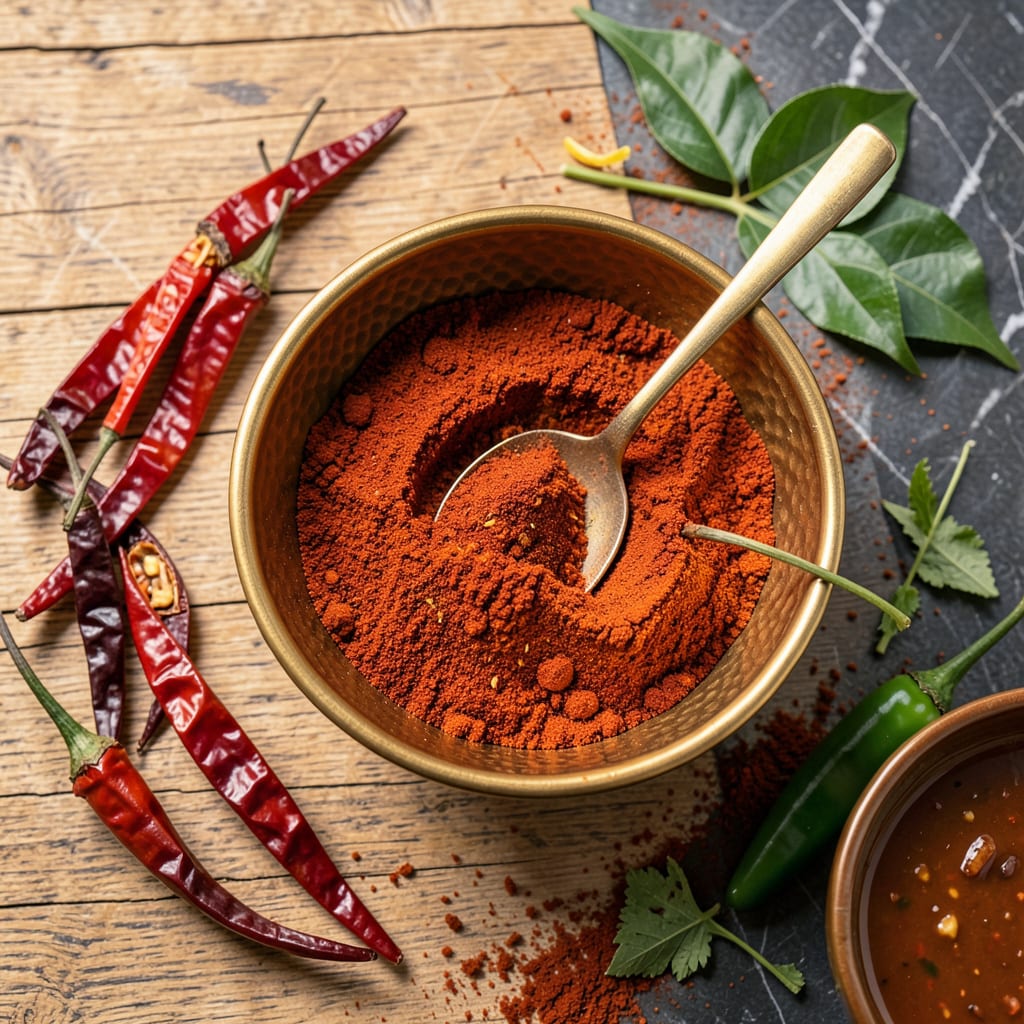
Authentic Kashmiri chili powder is made by sun-drying whole Kashmiri red chilies, deseeded for mild heat, then grinding them into a fine, vibrant red powder. The process preserves its signature deep color and subtle, slightly sweet flavor perfect for curries and marinades.
This traditional spice gets its distinctive qualities from the unique growing conditions in Kashmir’s valleys. 🔥 The region’s mineral-rich soil and cool climate produce chilies with naturally lower capsaicin levels, which means you get that stunning red hue without overwhelming spiciness. I’ve found that when properly dried, these chilies develop complex fruity notes that elevate dishes beyond what standard chili powders can achieve.
What sets this method apart is the careful balance between preserving color and flavor. The sun-drying process concentrates the chilies’ natural carotenoids while removing moisture, which is why authentic versions maintain their vibrancy for months. For best results, I recommend using whole dried chilies and grinding them just before use to maximize freshness and potency.
💡 In This Article
- Why Kashmiri Chilies Create the Perfect Spice Balance
- Step-by-Step Guide to Drying and Grinding Kashmiri Chilies at Home
Why Kashmiri Chilies Create the Perfect Spice Balance
The magic of Kashmiri chilies lies in their unique chemical composition. These peppers contain 0.1-0.5% capsaicin—about 10 times less than jalapeños—giving them mild heat while packing intense color. The secret is their high concentration of carotenoids (especially capsanthin), which creates that signature deep red hue.
When dried properly, these compounds stabilize and intensify, producing a powder that stains dishes with vibrant color without overpowering heat. 🔥
Kashmir’s terroir plays a crucial role in developing these qualities. The region’s mineral-rich alluvial soil (particularly high in potassium and phosphorus) combined with cool nights and sunny days creates ideal growing conditions. Chilies here mature slowly, developing thicker flesh and higher sugar content than varieties from hotter climates.
This results in a subtle sweetness that balances their mild heat—something you won’t find in standard cayenne or paprika powders.
What most people don’t realize is that Kashmiri chilies contain about 2-3% natural sugars by weight when fully ripe. During sun-drying, these sugars caramelize slightly, adding depth to the final powder’s flavor profile. The drying process also concentrates their fruity, almost berry-like notes.
I’ve noticed this makes them particularly well-suited for tomato-based dishes where they enhance rather than compete with other flavors. ✨
The moisture content of fresh Kashmiri chilies (85-90%) drops to just 8-10% after proper drying, which is crucial for both color retention and shelf life. Unlike industrial drying methods that can degrade pigments, traditional sun-drying preserves these compounds.
The result is a powder that maintains its vibrant hue for 6-8 months when stored correctly—far longer than many commercial chili powders.
Here’s what’s actually happening during the drying process: As moisture evaporates, the chili’s cell walls break down, releasing more of those valuable carotenoids. The slow, even heat of sun-drying (typically 85-95°F for 3-5 days) prevents enzyme degradation that would dull the color.
This gentle method also preserves volatile aromatic compounds that give Kashmiri powder its distinctive, slightly floral aroma. 🌟
Compare this to standard chili powders where:
- Heat levels: Typically 5-10x higher in capsaicin (1-5% range)
- Color stability: Often fades within 3-4 months due to harsher processing
- Flavor complexity: Lacks the fruity sweetness that makes Kashmiri powder so versatile
The real test comes when you use it in cooking.
I’ve found that just 1 teaspoon of authentic Kashmiri powder can transform a curry’s appearance and depth of flavor, while 3 teaspoons of regular chili powder would make the same dish unpleasantly spicy.
This balance is why it’s become the secret weapon in so many Indian kitchens—it delivers visual impact and complex flavor without overwhelming the palate. ⚡

- Chicken Breast Recipe Tender: Brine-Soaked Juiciness Without Overcooking - September 28, 2026
- Baked Chicken Recipe for Acid Reflux: Gentle Flavors for Sensitive Stomachs - September 28, 2026
- BBQ Lamb Rack Recipe Grill: Smoky Herb-Crusted Chops in Minutes - September 28, 2026