
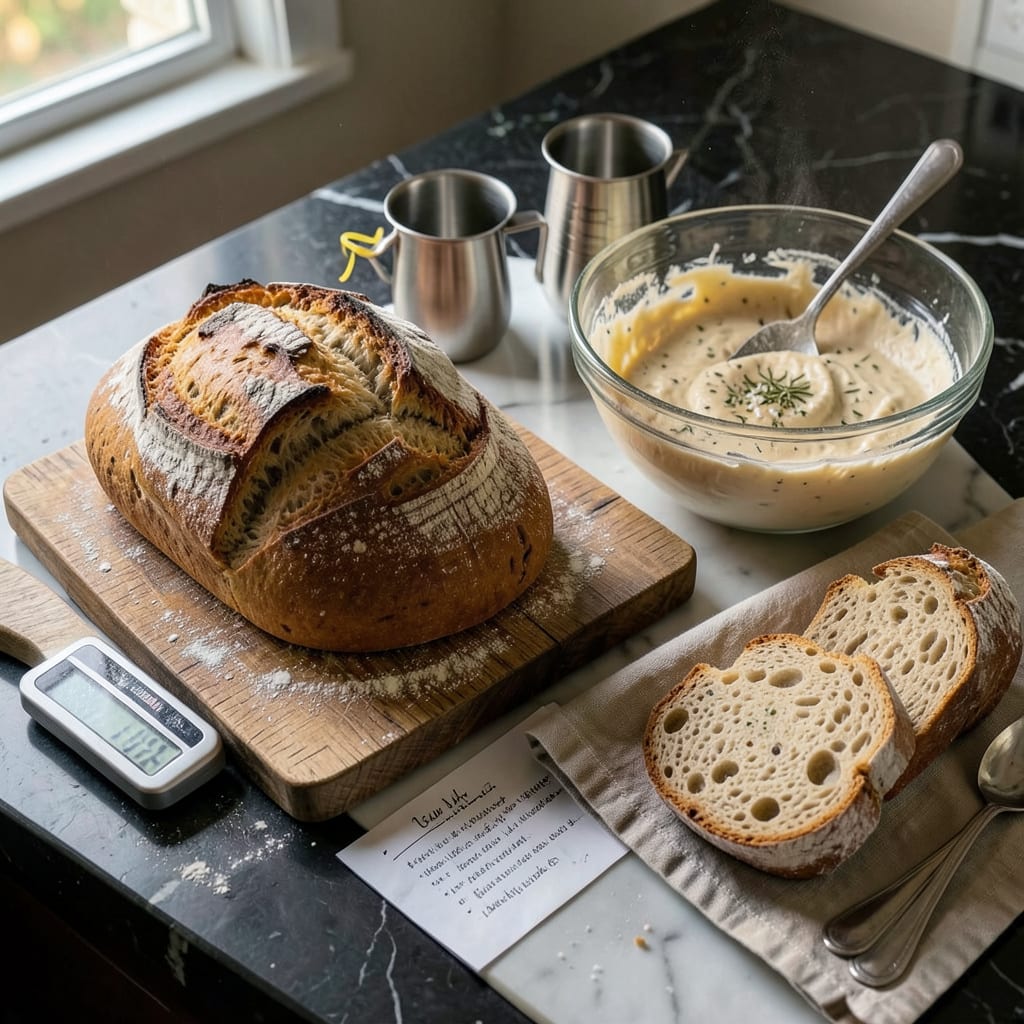
Recipe yield is determined by measuring total output in servings, weight, or volume. For servings, divide total prepared food by portion size. For weight/volume, sum all ingredients after cooking. Always account for moisture loss or expansion during preparation.
I’ve found that precision matters most when calculating yields—especially with baked goods where even small measurement errors can drastically change outcomes. For example, a loaf of bread might yield 12 slices when cut thinly but only 8 slices if you prefer thicker portions. What many home cooks overlook is how cooking methods affect final volume: rice expands by 3x when cooked, while meats often shrink by 25% due to moisture loss. This explains why professional kitchens always weigh ingredients post-cooking for accurate costing and plating. ✨
💡 In This Article
- Understanding Recipe Yield Calculation Methods
- Practical Tools for Accurate Recipe Yield Measurement
Understanding Recipe Yield Calculation Methods
The science behind yield calculations starts with understanding how ingredients transform during cooking. Raw meat loses about 25-30% of its weight as moisture evaporates during cooking—a 16-ounce steak might yield only 11-12 ounces after grilling. Conversely, grains like rice or quinoa expand dramatically, with 1 cup raw yielding 3 cups cooked due to water absorption.
These transformations explain why professional recipes always specify whether measurements are for raw or cooked ingredients. 🔥
For volume-based yields, consider the “packing factor” of ingredients. A cup of shredded cheese weighs significantly less than a cup of grated Parmesan because of air gaps—typically 3-4 ounces versus 2-3 ounces respectively. Liquids are more straightforward: 1 cup = 8 fluid ounces = 240 milliliters, but viscosity affects pouring accuracy.
Thick sauces or batters should be weighed (1 cup flour = 4.5 ounces) rather than volume-measured for consistency. ✨
Portion control reveals hidden yield variations. A standard #16 scoop (1/4 cup) produces 16 level scoops per quart, but heaping scoops reduce yield to 12-14 portions. For irregular items like cookies, calculate by area: a 18×13-inch sheet pan holds about 30 standard 3-inch cookies with 1.5-inch spacing.
Always test with your specific equipment, as pan depth and material affect spreading. 💫
Moisture loss calculations become critical for large batches. Roasting a 20-pound turkey results in about 30% weight loss from evaporation, while braising retains more liquid. Vegetables behave differently: 10 pounds of raw spinach cooks down to roughly 1 pound due to water release.
These factors explain why restaurant recipes often include “after cooking” weights—it’s the only way to ensure consistent plating and cost control. ⚡
Scaling recipes requires understanding yield ratios. Doubling a cake recipe doesn’t simply double the batter volume because mixing efficiency changes in larger bowls. A standard 9×13-inch cake pan holds about 14 cups of batter, while an 8-inch round pan holds 6 cups.
For precise scaling, use baker’s percentages where flour is always 100% and other ingredients are calculated relative to that base weight. 🌟
Temperature and altitude create unexpected yield variations. At 5,000 feet elevation, cakes may rise 25% more due to lower air pressure, while humid environments can add 10-15% moisture to dry ingredients. Professional bakeries account for this by adjusting hydration levels—typically reducing liquids by 1-2 tablespoons per cup at high altitudes.
These environmental factors demonstrate why yield calculations should always include location-specific adjustments. 💛
The golden rule for accurate yields? Weigh everything post-cooking when possible. A 4-pound raw chicken might yield only 2.5 pounds of edible meat after bones and skin removal.
For soups, calculate by volume after all ingredients are combined—1 gallon of broth plus 2 pounds of vegetables typically yields about 1.25 gallons of finished soup due to ingredient displacement. This method eliminates guesswork in professional kitchens and home meal prep alike. 🔥

- BBQ Sausage Recipe Oven: Smoky Depth Without the Grill - September 28, 2026
- BBQ Chicken Bowl Recipe Rice: Smoky Sweetness Over Fluffy Grains - September 28, 2026
- Beef Cutlet Recipe Ideas: Crispy Breaded Patties With Bold Seasonings - September 28, 2026