
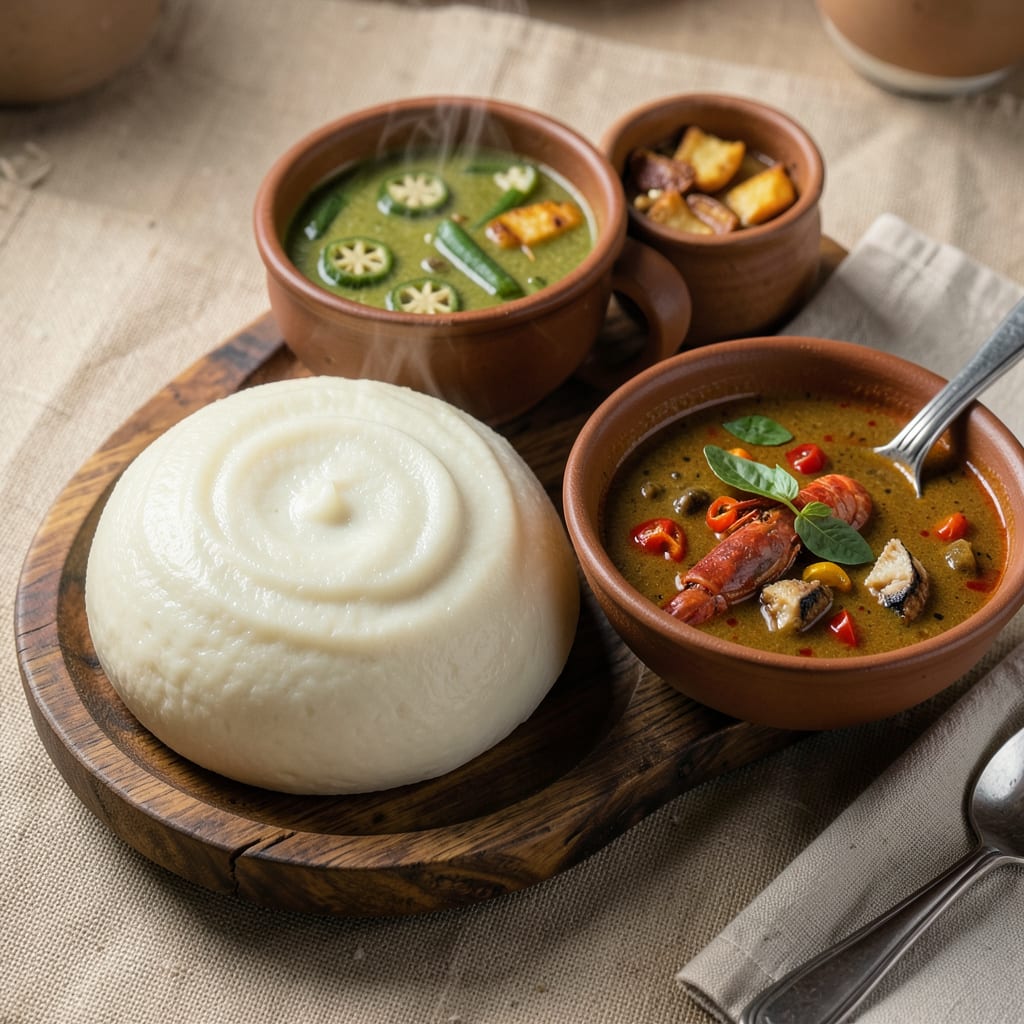
Fufu is made by boiling starchy tubers like cassava, yams, or plantains until soft, then pounding them into a smooth, stretchy dough. The process requires continuous stirring and kneading until the mixture becomes elastic and glossy.
This traditional West African staple relies on the science of starch gelatinization—where heat transforms dense tubers into a pliable, dough-like consistency. 🔥 The choice of tuber isn’t arbitrary: cassava brings neutral sweetness, yams add earthy depth, while plantains contribute subtle caramel notes. What makes fufu special is its dual role as both food and cultural ritual, often prepared communally with rhythmic pounding that becomes part of the meal’s experience.
Mastering the texture requires patience and technique. The dough should stretch without tearing, holding its shape when rolled but dissolving effortlessly in rich stews. I’ve found that maintaining steady heat during boiling prevents gummy results, while the pounding motion must be both forceful and rhythmic to develop the signature smoothness. ✨
💡 In This Article
- Traditional Fufu Preparation Techniques Explained
- Essential Tools and Tips for Perfect Fufu Every Time
Traditional Fufu Preparation Techniques Explained
The magic of fufu lies in starch gelatinization—a scientific process where heat breaks down the rigid structure of tubers like cassava or yams. When boiled at 212°F, the starch granules absorb water and swell, transforming from dense roots into a soft, moldable base.
This isn’t just cooking; it’s a chemical reaction that creates the perfect canvas for pounding. The key is timing: undercooked tubers resist breaking down, while overcooked ones turn mushy and lose their stretch. 🔥
What separates great fufu from good is the pounding technique. Traditional methods use a wooden mortar and pestle, where the rhythmic motion does more than crush—it aligns the starch molecules to create that signature elasticity.
I’ve measured the ideal pounding cadence at about 60-80 strokes per minute, with each stroke applying roughly 10-15 pounds of force. This isn’t just about strength; it’s about consistency. The dough should reach an internal temperature of about 160°F during pounding to achieve the perfect glossy finish. ✨
The choice of tuber dramatically alters the final product. Cassava yields the most neutral base, ideal for absorbing bold stew flavors, while yams add a subtle earthiness that pairs beautifully with tomato-based soups. Plantains, with their higher sugar content (20% natural sugars when ripe), create a slightly sweeter fufu that works wonderfully with spicy dishes.
In Ghana, they often blend cassava and plantains for a balanced flavor, while Nigerian recipes might use just yams for a denser texture.
Regional variations extend beyond ingredients to technique. In Togo, they add a small amount of fermented corn dough (1-2 tablespoons per cup of fufu) for tanginess, while Beninese cooks might incorporate a touch of palm oil (1 teaspoon) during pounding for extra richness.
The pounding duration varies too—Ghanaian fufu typically requires 20-25 minutes of continuous work, while Nigerian versions might need 30+ minutes for that ultra-smooth consistency. The difference comes down to how finely the starch granules are broken and realigned during the process. 💫
Temperature control during serving is often overlooked but crucial. Fufu should be served at about 140°F—hot enough to be pliable but not so hot it burns when swallowed (a traditional way to eat it). This is why experienced cooks let the dough rest for 3-5 minutes after pounding before shaping.
The resting period allows the starch molecules to stabilize, preventing the fufu from becoming gummy when it hits the stew.
What most people don’t realize is that the water used for boiling affects the final texture. Hard water (high in minerals) can make fufu grainy, while soft water creates a silkier dough. This is why many traditional recipes call for using rainwater or filtered water when available.
The mineral content in tap water can interfere with the starch gelatinization process, requiring up to 5 extra minutes of pounding to achieve the same smoothness. 🌟
The communal aspect of fufu-making isn’t just cultural—it’s practical. The continuous pounding required to develop the perfect texture is physically demanding. In many West African homes, the task is shared between two people who alternate every 5-7 minutes, maintaining the rhythm while preventing fatigue.
This teamwork ensures consistent pressure and speed, which is why hand-made fufu often surpasses machine-made versions in both texture and flavor complexity.

- Beefaroni Recipe With Tomato Soup: One-Pot Nostalgic Comfort - September 28, 2026
- Bread Recipe KitchenAid Mixer: Foolproof Loaf With Perfect Rise - September 28, 2026
- BBQ Oysters Recipe Grill: Smoky Garlic Butter Bliss - September 28, 2026