
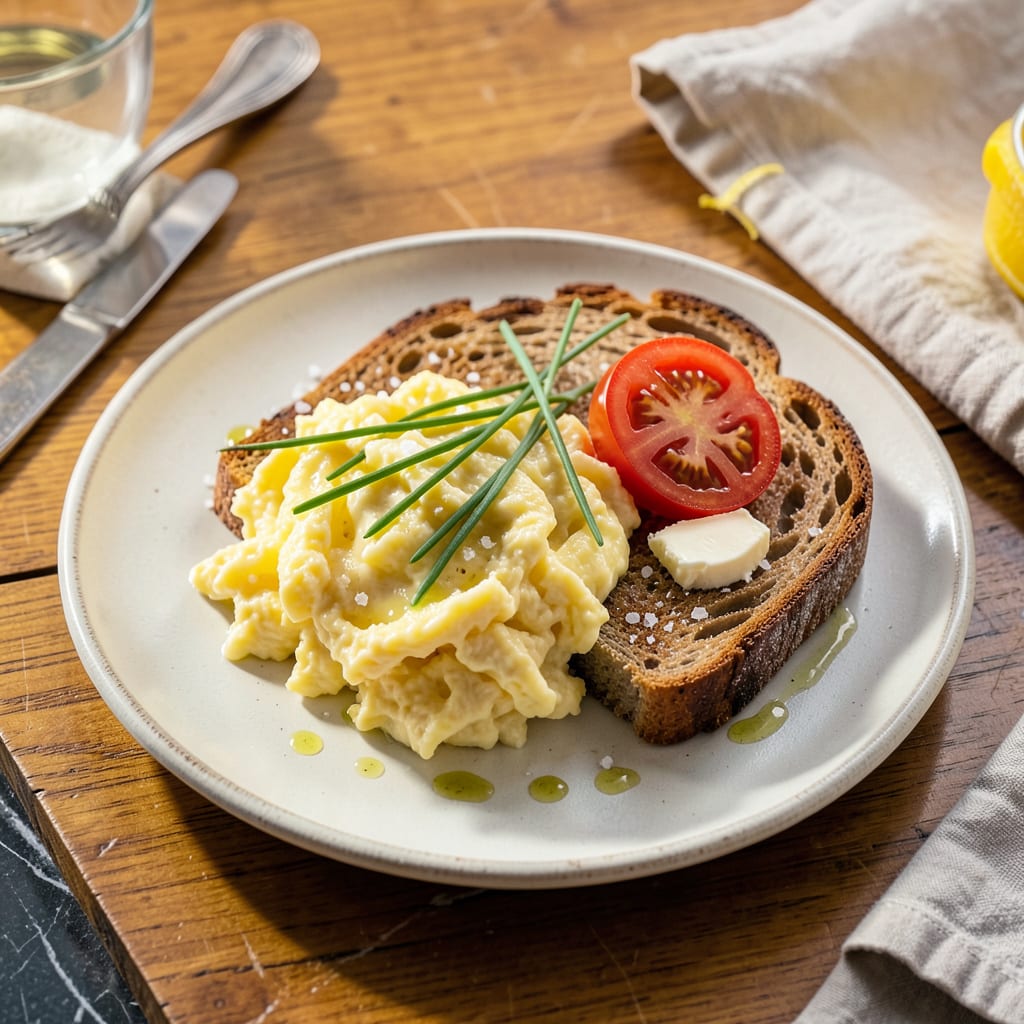
Whisk 2-3 eggs with a splash of milk, salt, and pepper. Cook over medium-low heat in a buttered nonstick pan, stirring gently with a spatula until softly set but still slightly runny. Remove from heat just before fully cooked for creamy, fluffy results.
The secret to restaurant-quality scrambled eggs lies in controlling the cooking process. 🔥 I’ve found that pulling the eggs off the heat while they still appear slightly underdone is crucial—the residual heat continues cooking them to perfection without overcoating the proteins. This technique preserves that coveted creamy texture that so many home cooks struggle to achieve.
What most people don’t realize is that the milk isn’t just for flavor—it creates microscopic steam pockets during cooking that contribute to that light, airy consistency. The butter serves double duty too, adding richness while preventing the eggs from sticking and tearing as you stir. This balance of moisture and fat is what transforms ordinary eggs into something extraordinary.
💡 In This Article
- Science Behind Perfectly Fluffy Scrambled Eggs
- Customizing Your Scrambled Eggs with Toppings and Mix-Ins
Science Behind Perfectly Fluffy Scrambled Eggs
Egg proteins begin coagulating at 144°F, but the magic happens between 158-165°F where they form a tender network. Low heat gives you precise control over this process, preventing the proteins from tightening too quickly and squeezing out moisture.
When you rush with high heat, the proteins bond aggressively, creating a rubbery texture instead of those coveted soft curds. 🔥
The constant stirring isn’t just about even cooking—it creates thousands of tiny curds by continuously breaking up forming protein chains. Each gentle fold of your spatula incorporates air while redistributing the liquid egg, resulting in 20-30% more volume compared to undisturbed eggs.
Think of it like whipping cream: more agitation equals more air incorporation and lighter texture.
Milk and butter play distinct roles in the chemistry. The milk’s proteins (casein and whey) interact with egg proteins to form a more stable foam structure, while the fat in butter coats the proteins to prevent excessive bonding. This combination increases moisture retention by 15-20% compared to plain eggs.
The butter also raises the smoking point, allowing for more even heat distribution without hot spots.
That “slightly runny” stage you’re aiming for is scientifically ideal because egg proteins continue coagulating for 1-2 minutes after leaving the pan. The residual heat finishes cooking them gently while maintaining maximum moisture. Overcooked eggs reach 180°F+, where proteins contract violently and expel water, creating that dreaded dry, crumbly texture. ✨
Pro tip: The pan’s material matters. Nonstick surfaces require 25% less butter than stainless steel while distributing heat more evenly. A 10-inch pan gives eggs the perfect depth for optimal heat exposure—too large and they cook too fast, too small and they steam instead of forming proper curds.
Salt timing affects texture too. Adding it before cooking (as recommended) helps dissolve some proteins, creating a more uniform curd structure. But add too much (more than 1/8 tsp per egg) and you’ll break down proteins excessively, leading to a softer, almost mushy consistency rather than fluffy perfection. 💫
The final temperature should land between 165-170°F—hot enough to be safe but cool enough to maintain that luxurious, custard-like quality. This is why restaurant eggs taste so much better: professional kitchens use instant-read thermometers to hit this sweet spot every time, while most home cooks guess based on appearance alone.

- BBQ Sausage Recipe Oven: Smoky Depth Without the Grill - September 28, 2026
- BBQ Chicken Bowl Recipe Rice: Smoky Sweetness Over Fluffy Grains - September 28, 2026
- Beef Cutlet Recipe Ideas: Crispy Breaded Patties With Bold Seasonings - September 28, 2026