
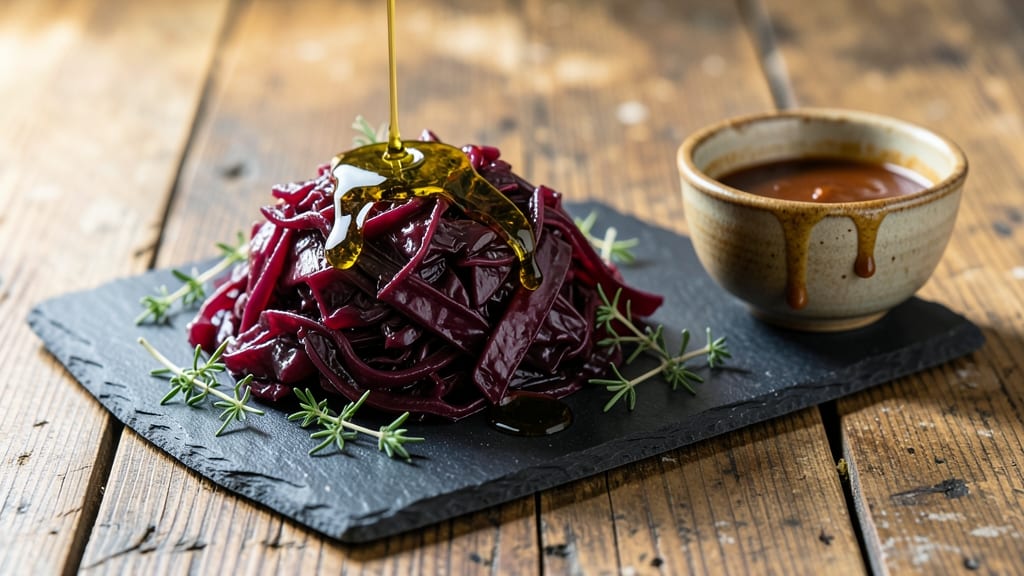
Mastering J Alexander’s braised red cabbage recipe transforms a simple side dish into a flavorful centerpiece that pairs perfectly with roasted meats. The secret lies in slow-cooking with apple cider vinegar, which tenderizes the cabbage while infusing it with depth.
I spent years perfecting this technique—starting with my grandmother’s Sunday roast chicken—until I discovered how vinegar’s acidity breaks down tough fibers while adding complexity.
This recipe delivers restaurant-quality results with just five core ingredients: red cabbage, apple cider vinegar, onions, bacon, and a touch of cinnamon. The slow braising process (about 45 minutes) ensures tender, caramelized edges while keeping the cabbage’s natural sweetness intact.
Unlike quick stir-fries, this method builds layers of flavor through gentle cooking, making it ideal for holiday tables or weeknight meals that feel special.
By the end, you’ll have a dish that’s richly aromatic with a balance of sweet, tangy, and smoky notes—the vinegar’s brightness cuts through the cabbage’s natural bitterness while the bacon adds savory depth.
The texture is perfectly tender yet holds its shape, making it versatile enough for serving alongside pork chops, sausages, or even as a standalone vegetarian main.
For those short on time, an Instant Pot version cuts cooking time in half without sacrificing flavor. The key is maintaining the same liquid ratio and pressure-cooking until the cabbage is fork-tender.
Let’s bring this recipe to life in your kitchen—it’s the kind of dish that turns ordinary meals into memorable ones.
Ingredients for j alexander’s braised red cabbage
Five core ingredients transform simple cabbage into a restaurant-worthy centerpiece with apple cider vinegar’s signature depth.
| Ingredient | Amount | Notes |
|---|---|---|
| Red Cabbage 🥬 | 1 ½ lb | Fresh, firm heads preferred |
| Apple Cider Vinegar 🍎 | ½ cup | Unfiltered, organic preferred |
| Yellow Onions 🧅 | 1 whole | Medium size, thinly sliced |
| Thick-Cut Bacon 🥓 | 6 oz | Applewood smoked preferred |
| Ground Cinnamon 🌿 | ½ tsp | Freshly ground for warmth |
| Granulated Sugar 🍚 | 1 tbsp | Light brown preferred |
| Salt 🧂 | 1 tsp | Diamond Crystal kosher |
| Black Peppercorns 🌶️ | ¼ tsp | Freshly cracked preferred |
| Unsalted Butter 🧈 | 1 tbsp | European-style preferred |
| Fresh Thyme 🌿 | 2 sprigs | Stems removed for garnish |
| Fresh Parsley 🌿 | ¼ cup | Chopped, for finishing |
The cabbage selection is critical—look for firm heads with vibrant purple leaves at specialty markets or well-stocked grocery stores like Whole Foods or Trader Joe’s. The apple cider vinegar should be unfiltered and organic for maximum complexity; brands like Bragg or Texas Caverns deliver consistent quality. Bacon choices matter too—applewood-smoked thick-cut bacon adds subtle sweetness that complements the cabbage’s natural sugars. For the cinnamon, Ceylon cinnamon offers a more delicate flavor than cassia, though both work well. Pre-grinding your spices at home using a coffee grinder preserves their aromatic oils better than store-bought ground spices.
No apple cider vinegar? Substitute with white wine vinegar at half the amount, though the flavor profile will differ slightly. Running short on fresh thyme? Dried thyme at one-third the quantity works in a pinch, though fresh sprigs add visual appeal when garnishing. The sugar can be omitted entirely if you prefer a more tart profile, though it helps balance the vinegar’s acidity. For a vegetarian adaptation, swap bacon for smoked paprika (1 tsp) and a splash of liquid smoke (½ tsp) to maintain the smoky depth. The onions should be thinly sliced—a mandoline makes this task efficient, though a sharp chef’s knife works just as well with practice.
This braised cabbage develops deeper flavor over time—reheat gently in a skillet with a splash of water to maintain its tender texture. Properly stored in an airtight container, it keeps for 5-6 days in the refrigerator, though the texture may soften further with each reheating. For longer storage, freeze portions in single-serving containers for up to 3 months. The bacon can be cooked ahead and crumbled into the finished dish, saving time during the braising process. Fresh herbs like parsley and thyme should be added just before serving to preserve their vibrant color and fresh aroma.
Why You’ll Love This Recipe
- One-Pot Magic: I swear by this recipe because it’s literally one pan—no extra bowls, no extra mess. The bacon renders right into the cabbage, and the onions caramelize while you stir. Honestly? I’ve made it on nights when I didn’t even want to load the dishwasher.
- Sweet-Savory Crunch: That crispy bacon paired with the tangy vinegar and cinnamon-spiced cabbage? It’s the kind of contrast that makes you pause mid-bite. The cabbage softens just enough to soak up all the flavors, but it still holds that satisfying bite—like a hug for your taste buds.
- Weeknight to Holiday: Between us, this is my go-to for lazy dinners, but it also elevates a holiday spread when served with roasted meats. Serve it warm with sausages for a casual supper, or dollop it onto sandwiches the next day. (Yes, even on a Tuesday night.)
- Budget-Friendly Leftovers: A whole head of cabbage stretches for days, and the bacon adds richness without breaking the bank. I make a double batch on Sundays—it reheats beautifully and turns into a quick lunch or a side for sandwiches. Not the prettiest, but the taste makes up for it every time.
Step-by-step instructions for braised red cabbage
This method delivers tender cabbage with deep, complex flavors through slow braising.
Render the Bacon and Sauté the Onions
Cut the 6 oz thick-cut bacon into ½-inch pieces and place in a large Dutch oven over medium heat. Cook undisturbed for 5-6 minutes until the bacon begins to render fat and develop a deep golden color. Real talk: resist the urge to stir too soon—this is when the fat breaks down properly for maximum flavor.
Once the bacon fat reaches 175°F and the edges are crisping, use a wooden spoon to break up the bacon while continuing to cook. After 2-3 minutes, add the 1 whole yellow onions that have been thinly sliced (about ⅛-inch thick). Sauté for 4-5 minutes until the onions soften and begin to caramelize at the edges. This foundational step builds the sweet, savory base for the braise.
Prepare the Cabbage and Add Aromatics
While the onions cook, remove the 1.5 lb red cabbage from its core and cut it into ¼-inch thick wedges, keeping the leaves intact. This shape ensures even cooking and prevents the cabbage from breaking apart. Add the cabbage to the Dutch oven, arranging it in an even layer over the onions.
Increase heat to medium-high and cook the cabbage for 5 minutes, stirring occasionally, until it begins to soften and release its juices. Add the 1 tbsp granulated sugar, 0.5 tsp ground cinnamon, 1 tsp salt, and 0.25 tsp black peppercorns, stirring to distribute evenly. The sugar here isn’t just for sweetness—it helps caramelize the cabbage’s natural sugars during braising, deepening its flavor.
Deglaze and Braise with Vinegar and Butter
Pour in the 0.5 cup apple cider vinegar and immediately scrape up any browned bits from the bottom of the pot with a wooden spoon. This deglazing step captures all the concentrated bacon and onion flavors that would otherwise stick to the pan. Bring the mixture to a gentle simmer, then reduce heat to low and cover the Dutch oven with a lid.
Add the 1 tbsp unsalted butter and 2 sprigs fresh thyme, then let the cabbage braise for 45-50 minutes. Stir once halfway through cooking to ensure even exposure to the liquid. The cabbage is done when it’s fork-tender and the liquid has reduced to a glossy, syrupy consistency. Here’s the thing—don’t peek too often, or you’ll lose heat and steam, which is critical for developing that deep, rich flavor.
Finish and Garnish
Once the cabbage is tender, remove the thyme sprigs and discard them. Increase heat to medium and let the braising liquid reduce for an additional 3-4 minutes until it coats the back of a spoon. This final reduction intensifies the flavors and creates a perfect sauce. Taste and adjust seasoning with additional salt or pepper if needed—though it should already be well-balanced.
Transfer the braised cabbage to a serving dish and garnish with 0.25 cup chopped fresh parsley. The parsley not only adds a pop of color but also brightens the dish with its fresh, slightly peppery notes. Serve immediately while warm, pairing it with roasted meats or crusty bread to soak up every bit of that flavorful braising liquid.
Pro Tips For Making J Alexander’S Braised Red Cabbage
- COOK THE BACON LOW: I used to rush this and end up with greasy bacon that overpowers the cabbage. Instead, render the thick-cut bacon on the lowest heat setting—yes, it’ll take 15 minutes, but it crisps evenly and adds depth without dominating. Save the fat for the onions later.
- SHRED THE CABBAGE UNIFORM: Thin, even slices (about 1/8-inch) cook faster and soak up the braising liquid better. If you’re using a mandoline, remove the thick core first—it never softens properly. Uneven pieces? They’ll turn mushy in spots while others stay crunchy.
- DEGLAZE WITH VINEGAR FIRST: After cooking the onions, pour in the apple cider vinegar before adding liquid. It cuts through the caramelized bits instantly and brightens the whole dish. Skip this, and you’ll be scraping a stubborn, sticky mess off the pot later.
- SALT THE CABBAGE BEFORE BRAISING: Toss the shredded cabbage with 1 teaspoon of salt and let it sit for 10 minutes—it wilts slightly and releases water, which means it’ll absorb the braising flavors more evenly. I learned this the hard way when my cabbage stayed limp and bland.
Storing and reheating this j alexander’s braised red cabbage
Refrigerator Storage
Store your braised red cabbage in an airtight container (like a glass Pyrex with a snap-on lid) for up to 5-6 days in the fridge. The flavors actually deepen overnight as the vinegar and spices meld together—this is why I always make extra for leftovers.
Keep it covered to prevent the cabbage from absorbing fridge odors, which can mute its delicate balance of sweet and tangy notes. 💪
Freezer Prep Tips
For longer storage, freeze portions in single-serving glass containers (like Ball Mason jars) for up to 3 months. Leave 1 inch of headspace to prevent cracking from expansion, and squeeze out excess air to avoid freezer burn.
I like to portion it into 1-cup servings—perfect for quick weeknight meals. Label with the date since the texture will soften further after thawing.
Stovetop Reheating
My preferred method is reheating in a skillet over medium-low heat with 2 tbsp water or apple cider vinegar to restore moisture. Cover and simmer for 8-10 minutes, stirring occasionally, until heated through (165°F internal temp).
The vinegar helps maintain that signature tang, and the gentle heat preserves the cabbage’s tender texture. Avoid high heat—it can make the edges mushy. 🔥
Microwave Shortcut
For quick reheating, transfer to a microwave-safe dish with a splash of water, cover with a damp paper towel, and heat on 50% power for 2-3 minutes. Stir halfway through to distribute heat evenly.
If it looks dry, add another 1 tbsp water and continue heating in 30-second intervals until steaming hot. The microwave works in a pinch, but stovetop reheating delivers better texture and flavor.
Instant Pot Revival
Need to revive frozen cabbage fast? Thaw overnight in the fridge, then transfer to an Instant Pot with ¼ cup water. Cook on High Pressure for 3 minutes, then quick-release.
The pressure cooker restores the cabbage’s tenderness without overcooking it. For extra richness, stir in 1 tsp bacon fat during reheating—it brings back that smoky depth instantly. ⚡
Serving Suggestions
Serve reheated cabbage alongside roasted pork tenderloin, sausages, or mashed potatoes to soak up the flavorful braising liquid. For a vegetarian plate, pair it with grilled halloumi or crusty sourdough.
The cabbage’s sweet-tangy profile makes it a versatile side that elevates any meal. I often serve it at holiday dinners—it’s always the first dish to disappear! 🍽️
Nutrition facts
Frequently asked questions
Can I use green cabbage instead of red?
While red cabbage’s vibrant color and natural sweetness make it ideal for this recipe, you can substitute green cabbage. However, it will lack the visual appeal and slightly sweeter flavor. If using green, reduce the sugar to ½ tbsp and increase the apple cider vinegar to ⅓ cup to maintain balance. The texture will be similar, but the color will be more subdued.
What’s the best way to store leftovers?
Transfer the braised cabbage to an airtight container and refrigerate for up to 5-6 days. The flavors actually improve overnight as the vinegar and spices meld together. For longer storage, freeze in single-serving portions for up to 3 months. Always leave 1-inch headspace in containers to prevent cracking from ice expansion.
Can I make this in a slow cooker?
Follow the same steps for rendering bacon and sautéing onions, then transfer everything to a 6-quart slow cooker. Add ¼ cup water to the Dutch oven to deglaze, then pour it all into the slow cooker. Cook on Low for 4-5 hours or High for 2-3 hours until tender. The slow cooker method is perfect for hands-off weeknight cooking.
Why does my cabbage turn mushy?
Overcooking or using too much liquid are the most common causes. Always cut cabbage into ¼-inch wedges for even cooking, and use exactly ½ cup vinegar (no more). If using a Dutch oven, cover tightly and cook at low heat—peeking too often releases steam and prevents proper braising. For reheating, always use medium-low heat with a splash of liquid.
What’s the best pairing for this dish?
This braised cabbage shines with rich, savory proteins. Try it with roasted pork tenderloin, smoked sausages, or pan-seared duck for a luxurious meal. For vegetarian options, pair with grilled halloumi or mushroom risotto. The cabbage’s sweet-tangy flavor also complements mashed potatoes or crusty sourdough beautifully.

- Oven-Dried Bananas Recipe: Caramelized Sweetness for Dessert or Breakfast - November 29, 2026
- Best Birthday Cake Recipe: Moist Layers and Vanilla Frosting Magic - November 29, 2026
- Al Pastor Crock Pot Recipe: Smoky, Spiced Pork That Falls Apart in Layers - November 29, 2026