
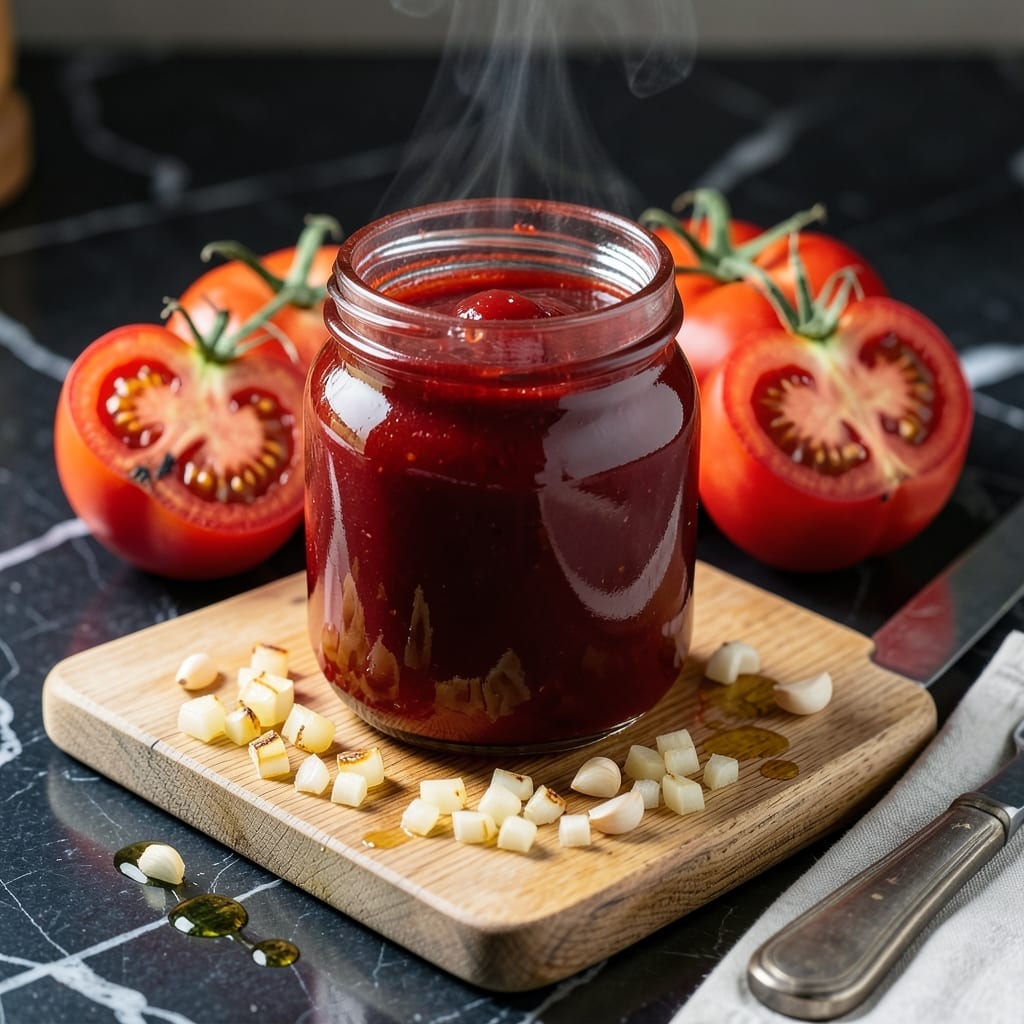
This homemade ketchup transforms fresh garden tomatoes into a tangy, smooth condiment that puts store-bought versions to shame.
By simmering ripe tomatoes with vinegar, sugar, and spices, you create a rich, complex sauce with perfect balance. The slow cooking process deepens the flavor while removing excess moisture.
The result is a thick, glossy ketchup with bright acidity and natural sweetness. It keeps beautifully in the fridge for up to 3 weeks.
Use it on burgers, fries, or anywhere you want that classic ketchup flavor with a homemade touch.
Ingredients for Ketchup Recipe Fresh Tomatoes
Ripe tomatoes and pantry spices blend into a tangy, glossy condiment you’ll reach for daily.
| Ingredient | Amount | Notes |
|---|---|---|
| Fresh Garden Tomatoes 🍅 | 4 lb | Ripe, cored and chopped |
| White Vinegar 💧 | 1 ½ cups | Distilled for clean acidity |
| Granulated Sugar 🍚 | ¾ cup | Adjust to taste preference |
| Yellow Onion 🧅 | 1 whole | Finely diced for flavor base |
| Garlic Cloves 🧄 | 3 cloves | Minced for aromatic depth |
| Ground Allspice 🌿 | ½ tsp | Warm spice for complexity |
| Ground Cloves 🌿 | ¼ tsp | Use sparingly for depth |
| Ground Cinnamon 🌿 | ¼ tsp | Adds subtle warmth |
| Salt 🧂 | 1 tbsp | Diamond Crystal preferred |
| Black Pepper 🌶️ | ½ tsp | Freshly ground for best flavor |
The tomatoes are everything here. Farmers market heirlooms or homegrown varieties give the best flavor, but grocery store vine-riped work too—just make sure they’re fragrant and slightly soft (not rock-hard). I usually grab mine from local stands in late summer when they’re at peak sweetness. The vinegar should be distilled white for that classic ketchup tang without color interference.
No fresh tomatoes? Canned crushed tomatoes (28 oz) work in a pinch—just drain off excess liquid. Swap apple cider vinegar for white if you want a fruitier note. The spices are flexible: one-third the amount of pumpkin pie spice can replace the allspice/clove/cinnamon blend. For a deeper umami, add a dash of smoked paprika—it’s my secret trick for a more complex flavor.
This keeps for 3 weeks in the fridge, but good luck making it last that long. Store in a clean glass jar for best results. Freezing works too (up to 6 months), though the texture may separate slightly—just stir before using.
Why You’ll Love This Recipe
- Minimal Effort: I just toss everything in one pot and let it simmer—no fancy techniques.
- Vibrant Taste: The fresh tomatoes and garlic give it a bright, tangy kick that store-bought can’t match.
- Pantry Staple: Honestly, I use this on burgers, fries, even eggs—it’s my new go-to condiment.
- Budget Friendly: A handful of garden tomatoes and a few pantry basics make a big batch for pennies.
Step-by-Step Instructions for Homemade Ketchup
Transform fresh garden tomatoes into a rich, tangy condiment with this straightforward method.
Step 1: Prepare and Cook the Vegetable Base
Begin by coring and chopping the 4 lb Fresh Garden Tomatoes. I like to quarter them for even cooking. In a large pot, combine the tomatoes with 1 whole Yellow Onion (finely diced) and 3 cloves Garlic Cloves (minced).
Cook over medium heat for 20-25 minutes, stirring occasionally, until the tomatoes break down and the mixture thickens slightly. You’ll notice the tomatoes releasing their juices and the onions becoming translucent—this builds the flavor foundation.
Step 2: Add Spices and Vinegar
Stir in the 1.5 cups White Vinegar, 0.75 cup Granulated Sugar, 1 tbsp Salt, 0.5 tsp Ground Allspice, 0.25 tsp Ground Cloves, 0.25 tsp Ground Cinnamon, and 0.5 tsp Black Pepper. The vinegar and sugar balance the natural acidity and sweetness of the tomatoes.
Increase the heat to medium-high and bring the mixture to a gentle boil. Reduce the heat to low and let it simmer for 45-60 minutes, stirring occasionally. The mixture should reduce by about a third, and you’ll see it thicken as the flavors meld together.
Step 3: Blend and Strain for Smooth Texture
Once the mixture has thickened, remove it from the heat and let it cool for 10 minutes. Using an immersion blender, purée the mixture until smooth. If you prefer a chunkier texture, you can skip this step, but I find a smooth consistency works best for this condiment.
For an ultra-smooth ketchup, press the puréed mixture through a fine-mesh strainer to remove any remaining seeds or skins. This step ensures a silky, professional-quality finish. Discard the solids left in the strainer.
Step 4: Final Reduction and Seasoning Adjustment
Return the strained mixture to the pot and simmer over low heat for an additional 15-20 minutes. Stir frequently to prevent sticking. You’re aiming for a thick, glossy consistency that coats the back of a spoon.
Taste and adjust the seasoning if needed. If it’s too tangy, add a bit more granulated sugar. If it’s too sweet, a splash more white vinegar will balance it. The warm spices should be present but not overpowering.
Step 5: Cool and Store
Let the ketchup cool to room temperature. As it cools, it will thicken further. Transfer it to clean, airtight jars or bottles. Properly stored, this homemade version will keep in the refrigerator for up to 2 weeks.
I always make sure to use sterilized jars for storage to extend shelf life. The flavor deepens after a day or two, so try to wait before diving in. Once you taste this fresh version, you’ll never go back to store-bought.
Pro Tips For Making Ketchup Recipe Fresh Tomatoes
- Simmer Low and Slow: Cook your tomato mixture at a gentle simmer for at least 1 hour—rushing this with high heat will scorch the sugar and leave your ketchup bitter.
- Peel the Tomatoes: I learned this the hard way—blanching tomatoes for 30 seconds in boiling water makes peeling effortless and prevents stringy bits in your finished ketchup.
- Balance the Acid: Taste before bottling and add sugar in small increments if the vinegar taste is too sharp; fresh tomatoes vary in acidity more than you’d expect.
- Strain for Smoothness: Press the cooked mixture through a fine-mesh sieve to remove seeds and skins—it takes 5 extra minutes but gives that classic smooth texture.
Health Benefits of These Flavors
Rich in Lycopene
Fresh tomatoes are packed with lycopene, a powerful antioxidant that supports heart health and may reduce cancer risk. Cooking tomatoes, as we do in this recipe, actually increases lycopene bioavailability. One serving provides about 30% of your daily vitamin C needs too. 💪
No Artificial Additives
Unlike commercial versions, this homemade creation contains no preservatives, artificial colors, or high-fructose corn syrup. You control every ingredient – just fresh tomatoes, natural sweeteners, and real spices. That means no mystery ingredients in your condiment.
Lower Sodium Option
You can easily reduce sodium by using half the salt called for in the recipe or substituting with a low-sodium option. The natural sweetness of ripe tomatoes means you might need less sugar too. I often cut both by 25% with great results.
Digestive Benefits
The vinegar in this condiment aids digestion and may help regulate blood sugar levels. Combined with the fiber from tomato skins (if you skip straining), this creates a more gut-friendly version than store-bought alternatives.
Vitamin Boost
Beyond vitamin C, tomatoes provide vitamin K, potassium, and folate. The garlic adds immune-boosting properties while onions contribute quercetin, a natural anti-inflammatory. Every spoonful adds nutritional value to your meal. 🥗
Natural Energy Source
The natural sugars in tomatoes and the small amount of added sugar provide quick energy without the crash of processed alternatives. The spices like cinnamon may help regulate blood sugar response, making this a smarter choice for active lifestyles.
Nutrition Facts
Frequently Asked Questions
Do I need to peel the tomatoes first?
No peeling required! The skins break down during cooking and get strained out later. This saves time while ensuring maximum flavor extraction from the fruit.
Why is my ketchup too thin?
It likely needs more simmering time. Return it to low heat and cook uncovered for another 10-15 minutes, stirring often. The longer it reduces, the thicker it becomes.
Can I adjust the sweetness?
Taste as you go and add more granulated sugar in 1 tablespoon increments. Remember that flavors intensify as it cools.
How long does homemade ketchup last?
In an airtight container in the fridge, it stays fresh for up to 3 weeks. For longer storage, freeze in ice cube trays for up to 6 months.

- Pea Shoots Recipe Salad: Fresh Greens With Asian-Inspired Dressing - October 9, 2026
- Peanut Butter Bark Recipe With Pretzels: Sweet and Salty Holiday Treat - October 9, 2026
- Peach Crisp Recipe With Fresh Peaches: Buttery Oat Topping Over Juicy Summer Fruit - October 9, 2026