
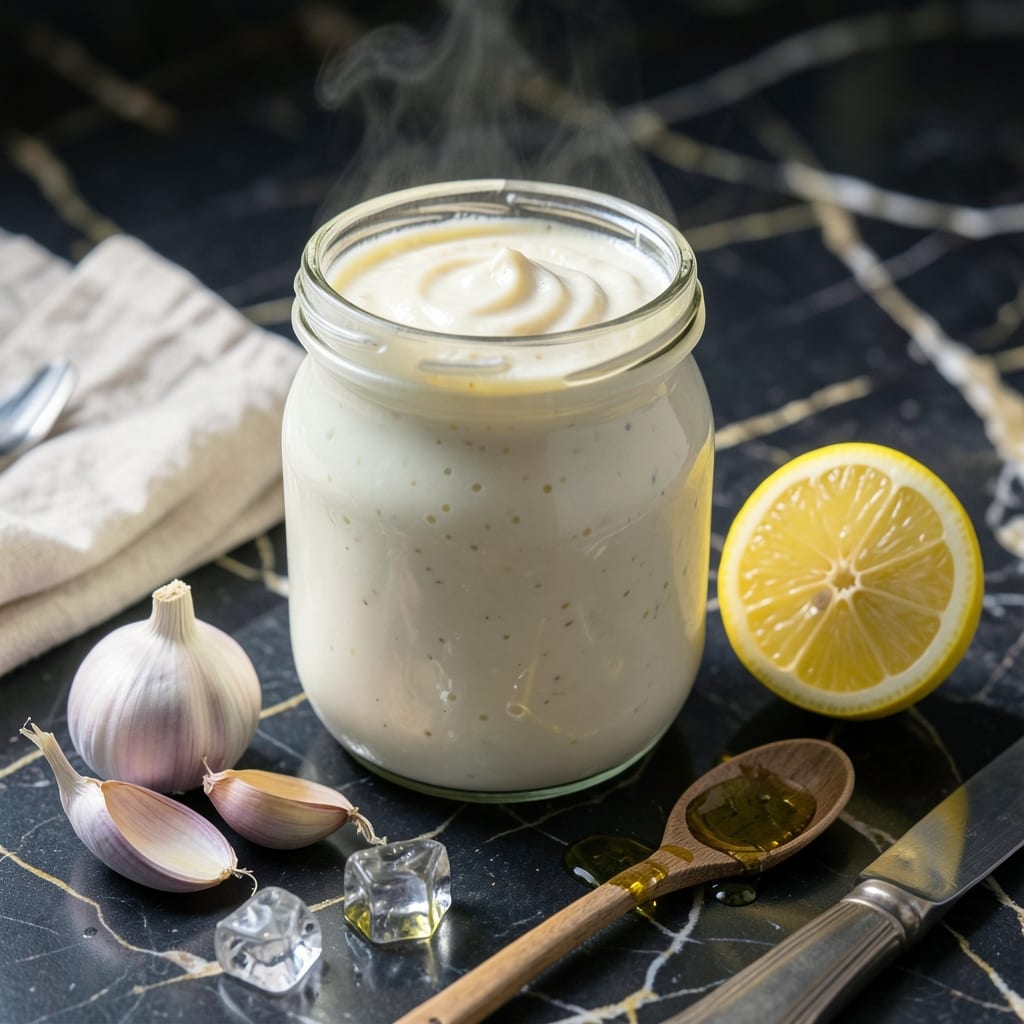
This immersion blender method transforms raw garlic into an ultra-smooth, creamy spread with minimal effort. The key is patience—slowly emulsifying oil into the garlic creates that signature fluffy texture without separation.
I developed this technique after struggling with traditional whisking methods that left my arm sore and the toum inconsistent. The immersion blender does the work for you, delivering restaurant-quality results every time.
What you’ll get is a pale, thick sauce with bold garlic flavor and a velvety consistency. It’s perfect for sandwiches, dips, or drizzling over grilled meats and vegetables.
Vegan by nature, this version relies on simple ingredients and precise timing. No dairy, no shortcuts—just pure, unmistakable toum.
Ingredients for Toum Recipe Immersion Blender
Six simple ingredients. One magic tool. Restaurant-quality toum every time.
| Ingredient | Amount | Notes |
|---|---|---|
| Garlic Cloves 🧄 | 1 whole | Peeled, about 12-15 cloves |
| Neutral-Flavored Oil 🫒 | 2 cups | Like grapeseed or light olive oil |
| Lemon Juice 🍋 | 2 tbsp | Freshly squeezed preferred |
| Ice Cubes ❄️ | 2 whole | For temperature control |
| Salt 🧂 | ½ tsp | Fine sea salt preferred |
| Cold Water 💧 | 2 tbsp | As needed for consistency |
The garlic is everything here. Use fresh, plump cloves—old or sprouted garlic tastes bitter and ruins the flavor. I get mine from farmers markets when possible, but grocery store heads work fine too (just check they’re firm, not soft or shriveled). The oil needs to be neutral—grapeseed or avocado oil are ideal. Extra-virgin olive oil is too strong and will overpower the garlic.
No immersion blender? A food processor works, but you’ll need to scrape the sides constantly. Short on garlic? Don’t skimp—this is a garlic-forward sauce. The lemon juice balances the sharpness, but lime works in a pinch. Need it thicker? Add more oil slowly. Too thick? A splash of cold water thins it right out.
Toum keeps in the fridge for 1 week in a sealed jar. The flavor mellows and deepens over time. Don’t freeze it—the emulsion can break. Always use clean, dry utensils when scooping to prevent spoilage.
Why You’ll Love This Recipe
- Blender Magic: I dump everything in, hit pulse, and the immersion blender does the rest—no whisking arm required.
- Garlic Bomb: The raw garlic mellows into this creamy, dreamy sauce that’s punchy without being overpowering.
- Dressing or Dip: Honestly, I slather it on sandwiches, drizzle it over grilled meats, and even use it as a veggie dip.
- Budget Keeper: A handful of garlic, oil, and lemon turns into a jar of restaurant-worthy sauce for pennies.
Step-by-Step Instructions for Toum
Here’s how to make this creamy garlic spread with your immersion blender—no fancy equipment needed.
Step 1: Prep the Garlic and Blender
Peel all the garlic cloves and place them in the container you’ll use with your immersion blender. I recommend a tall, narrow container to prevent splattering as the mixture thickens. Add the 0.5 tsp salt and 2 tbsp lemon juice to the container with the garlic.
This acidic base helps stabilize the emulsion and gives toum its signature tang. The salt enhances the garlic flavor and balances the richness of the oil. Don’t skip this—it’s essential for both taste and texture.
Step 2: Start the Emulsion with Oil
Insert the immersion blender into the container and pulse the garlic, salt, and lemon juice into a coarse paste. With the blender running continuously, begin slowly drizzling in the 2 cups neutral-flavored oil in a thin, steady stream.
The key here is patience. Drizzle the oil slowly enough that it incorporates completely before adding more. You’ll notice the mixture start to thicken and turn pale yellow as the emulsion forms. If it looks too thick, don’t panic—just keep blending.
Step 3: Control the Temperature with Ice
As you continue blending and adding oil, the mixture will generate heat from the friction. When you feel the container becoming warm to the touch, add 2 whole ice cubes one at a time while blending. This keeps the temperature stable, which is crucial for maintaining the emulsion.
If the toum starts looking grainy or separated, it means the mixture got too warm. Stop blending immediately, add an ice cube, and let it cool for a minute before continuing. The ice cubes will melt into the mixture, which is perfectly fine.
Step 4: Adjust Consistency and Finish
Once all the oil is incorporated, you should have a thick, creamy, pale yellow sauce. If it’s too thick for your preference, add the 2 tbsp cold water one tablespoon at a time while blending until it reaches your desired consistency.
Taste and adjust seasoning if needed, though the initial salt should be sufficient. The perfect toum should be smooth as silk, with a bright garlic flavor that’s mellowed by the oil and lemon. It should hold its shape but still be spreadable.
Step 5: Rest and Serve
Transfer the toum to a jar and let it rest at room temperature for 10-15 minutes before serving. This allows the flavors to meld together and the emulsion to fully stabilize.
Store in the refrigerator for up to 1 week. The toum will thicken further as it chills, so you may need to stir in a little cold water to restore the creamy texture before serving. The flavor actually improves after a day as the garlic mellows.
Pro Tips For Making Toum Recipe Immersion Blender
- Chill the Garlic: Soak garlic cloves in ice water for 10 minutes before blending—it mellows the harshness and prevents that bitter bite I used to get in my early toum attempts.
- Drizzle Slowly: Add the oil in a thin, steady stream while blending; I learned this the hard way after ruining two batches with oil that separated because I poured too fast.
- Use Room-Temp Oil: Cold oil won’t emulsify properly, so take it out of the fridge 30 minutes before starting—sounds simple, but it actually changes the outcome.
- Skip the Overcrowding: Don’t cram all the garlic in at once; blend in small batches for a smoother, creamier texture—your immersion blender will thank you.
Regional Styles of This Dish
Levantine Classic
This is the traditional version from Lebanon and Syria, where toum is a staple. The key difference is using freshly crushed garlic with a mortar and pestle before blending. I add a pinch of citric acid to enhance the tang. 🗺️
Turkish Variation
In Turkey, they often include 1-2 egg whites for extra stability and fluffiness. The result is lighter in color and texture. I’ve found this version holds up better for sandwiches and wraps.
Armenian Style
Armenian toum sometimes incorporates 1 tsp dried mint or a touch of pomegranate molasses for depth. It pairs beautifully with grilled meats like lamb kebabs.
Egyptian Twist
Egyptian cooks often use sour lemon juice (like from preserved lemons) for a more intense citrus note. I love this with falafel or fried foods for extra zing.
Modern Fusion
For a contemporary take, I blend in 1 roasted garlic clove for a sweeter, milder flavor. It’s less pungent but still rich. This works well for those new to toum.
Another fusion idea: swap ½ cup oil for avocado oil for a subtle green tint and buttery taste. 💛
Nutrition Facts
Frequently Asked Questions
Why does my toum separate while blending?
This usually happens if the oil is added too quickly or the mixture gets too warm. Add oil in a thin, steady stream and use ice cubes to control temperature. If it separates, stop blending, cool for 1 minute, then restart.
Can I use a regular blender instead?
Yes, but a tall, narrow container is best to prevent splashing. A regular blender works if you pulse carefully and drizzle oil slowly. The texture may not be as smooth as with an immersion blender.
How do I store leftover toum?
Transfer to an airtight container and refrigerate for up to 1 week. Stir in a splash of cold water if it thickens too much. Always use a clean spoon to avoid contamination.
Can I make toum with less oil?
Reducing oil will make it thicker and more pungent. For a lighter version, use 1.5 cups oil but expect a denser texture. The full 2 cups creates the classic creamy consistency.

- BBQ Sausage Recipe Oven: Smoky Depth Without the Grill - September 28, 2026
- BBQ Chicken Bowl Recipe Rice: Smoky Sweetness Over Fluffy Grains - September 28, 2026
- Beef Cutlet Recipe Ideas: Crispy Breaded Patties With Bold Seasonings - September 28, 2026