
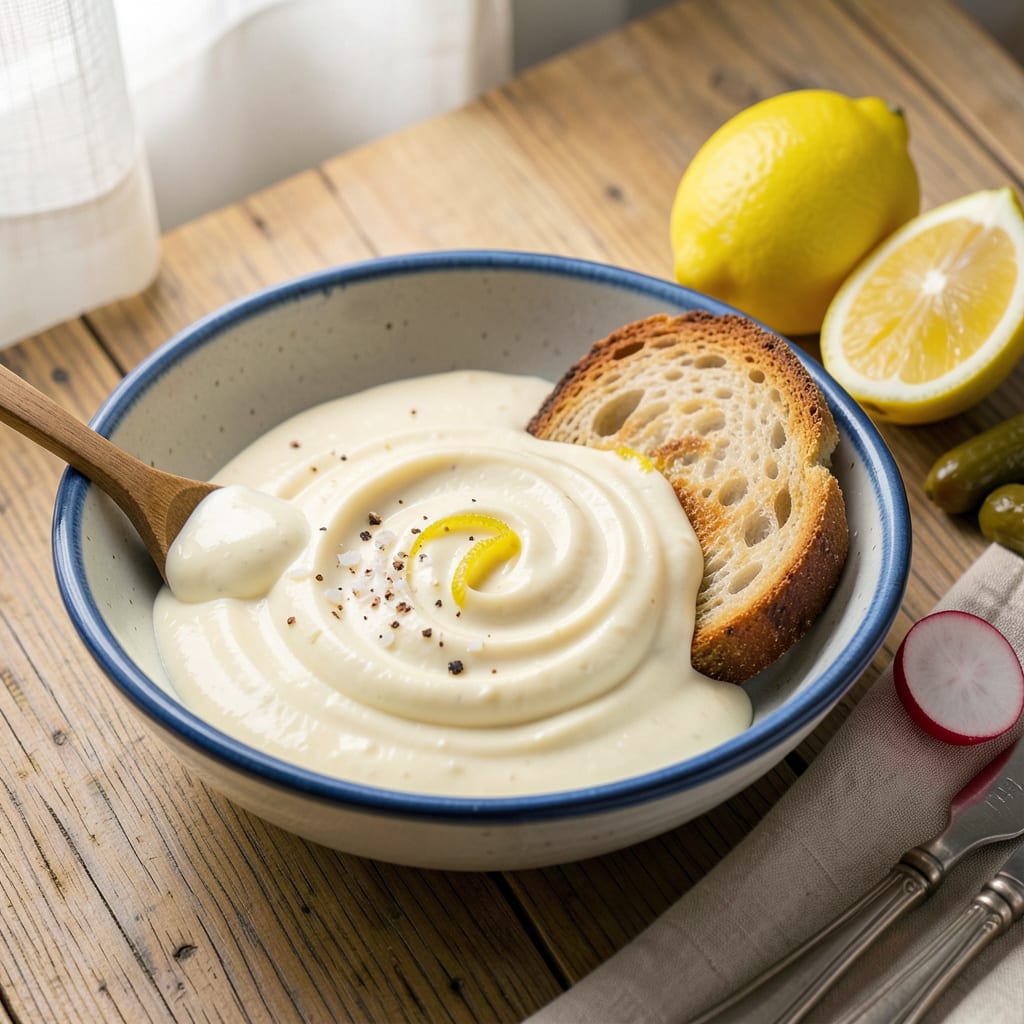
Recreate Kraft mayonnaise at home by blending 1 cup oil, 1 egg, 1 tbsp lemon juice or vinegar, ½ tsp mustard powder, ½ tsp salt, and ¼ tsp sugar until smooth and creamy. Use light-tasting oil for authentic flavor.
The secret to nailing that classic deli-style texture lies in the emulsification process. 🔥 When you slowly incorporate oil into the egg base, the lecithin in the yolk acts as a natural binder, creating a stable suspension that mimics commercial brands. I’ve found that room-temperature ingredients blend more smoothly, and a pinch of sugar helps balance the acidity—just like Kraft’s signature taste profile.
What sets this homemade version apart is your control over ingredients. ✨ You can adjust the tanginess by swapping lemon juice for white vinegar, or experiment with different oils for subtle flavor variations. The key is maintaining the proper ratio of fat to liquid, which is why I recommend using a blender or immersion blender for consistent results every time.
💡 In This Article
- How Emulsification Creates Kraft-Style Mayonnaise Texture
- Customizing Your Homemade Kraft Mayonnaise Recipe
How Emulsification Creates Kraft-Style Mayonnaise Texture
The magic behind that perfectly smooth Kraft mayonnaise texture comes down to oil-in-water emulsification. When you slowly drizzle oil into egg yolks while blending, the lecithin molecules in the yolks act like tiny magnets—one end attracts water molecules while the other grabs oil droplets.
This creates millions of microscopic oil bubbles suspended in the water-based egg mixture, giving mayo its signature creamy consistency.
Temperature plays a crucial role in this process. 🔥 Egg yolks emulsify best at room temperature (68-72°F), while cold ingredients can cause the mixture to seize up. The oil should also be at room temperature to maintain proper viscosity.
Kraft achieves their uniform texture through precise temperature control during production—something you can replicate at home by letting all ingredients sit out for 30-60 minutes before blending.
The rate of oil addition determines whether your mayo will be silky or separated. Adding oil too quickly overwhelms the emulsifiers, causing the mixture to “break.” Professional manufacturers use high-shear mixers that can incorporate oil at controlled rates.
At home, a slow, steady stream (about 1 teaspoon per second) while blending gives the lecithin time to coat each oil droplet properly.
What most people don’t realize is that mustard powder isn’t just for flavor—it contains natural emulsifiers that reinforce the egg yolks’ binding power. The ½ teaspoon in the recipe acts as an insurance policy against separation, especially when making larger batches.
This dual-emulsifier system is exactly how commercial brands like Kraft maintain stability through shipping and storage.
The final texture also depends on your blending method. Immersion blenders create the smoothest results because their narrow blades generate a vortex that pulls oil downward for even incorporation. Traditional blenders work too, but you’ll need to stop and scrape the sides occasionally.
For that perfect Kraft-like consistency, blend for a full 2-3 minutes after all oil is incorporated to fully develop the emulsion.
You’ll know you’ve nailed the texture when the mayo holds soft peaks when you lift the blender—just like the commercial version. The ideal finished product should coat a spoon thickly but still drip slowly in ribbons.
This balance between stability and spreadability is the hallmark of properly emulsified mayonnaise, whether homemade or from the store shelf. ✨

- BBQ Sausage Recipe Oven: Smoky Depth Without the Grill - September 28, 2026
- BBQ Chicken Bowl Recipe Rice: Smoky Sweetness Over Fluffy Grains - September 28, 2026
- Beef Cutlet Recipe Ideas: Crispy Breaded Patties With Bold Seasonings - September 28, 2026