
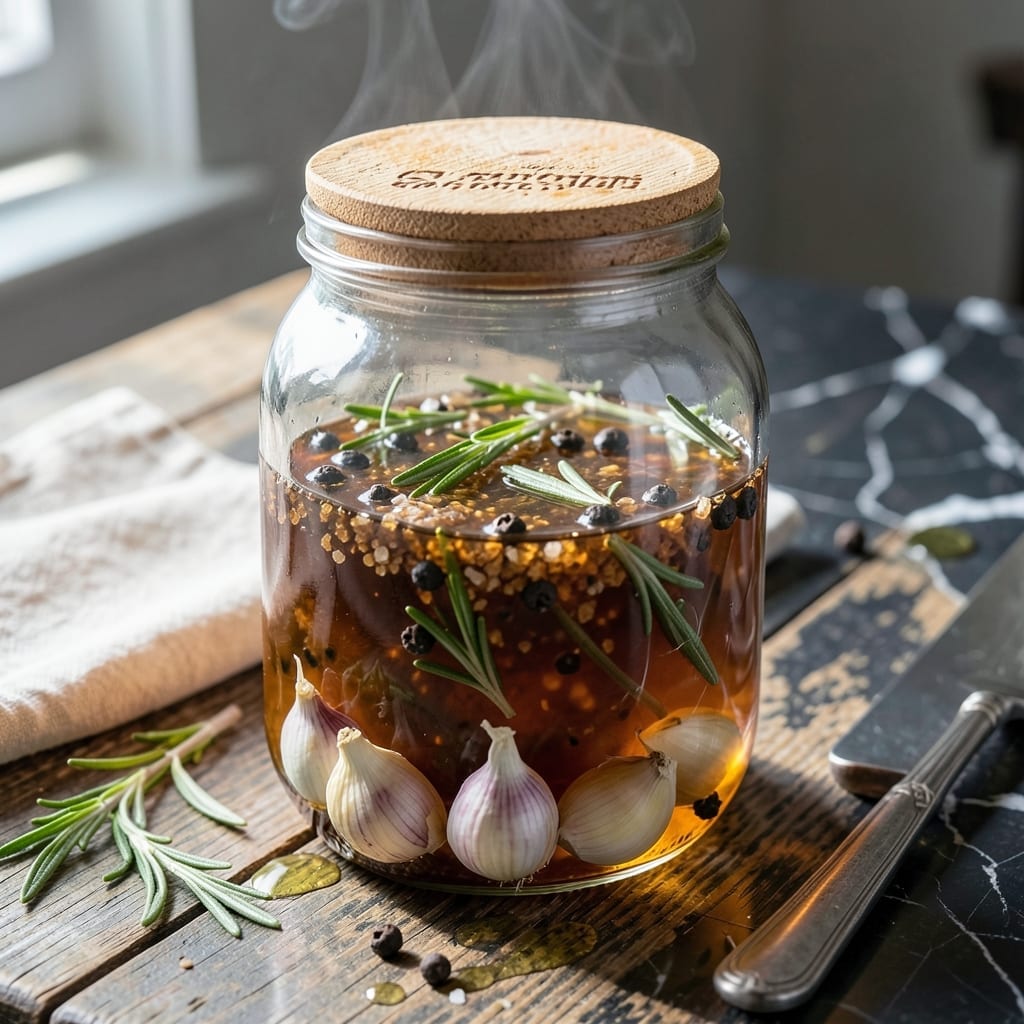
This brine transforms even the most affordable lamb cuts into juicy, tender masterpieces with minimal effort.
The science is simple: salt breaks down muscle fibers while sugar balances moisture retention. Aromatics like garlic and rosemary add depth without overpowering the meat’s natural flavor.
Whether preparing a leg of lamb or chops, a 12-24 hour soak ensures consistent results. The difference between brined and unbrined lamb is undeniable.
One batch works for multiple cuts, making it an efficient solution for any lamb dish. The process requires just minutes of active preparation time.
Ingredients for Lamb Brine
Nine ingredients transform affordable lamb into tender, juicy perfection every time.
| Ingredient | Amount | Notes |
|---|---|---|
| Water 💧 | 4 cups | Filtered for best results |
| Kosher Salt 🧂 | ½ cup | Diamond Crystal preferred |
| Brown Sugar 🍚 | ¼ cup | Light or dark variety |
| Garlic Cloves 🧄 | 6 cloves | Smashed to release oils |
| Fresh Rosemary Sprigs 🌿 | 4 sprigs | Lightly bruised |
| Black Peppercorns 🌶️ | 1 tbsp | Lightly crushed |
| Bay Leaves 🍃 | 2 whole | Dried or fresh |
| Lemon Zest 🍋 | 1 tbsp | From 1 large lemon |
| Juniper Berries 🫒 | 1 tsp | Optional for depth |
The salt is non-negotiable—Diamond Crystal kosher salt dissolves cleanly without metallic aftertaste. Water quality matters too; filtered or spring water prevents chlorine flavors from interfering with the brine. For aromatics, fresh rosemary and garlic are essential—dried simply won’t deliver the same depth. Most supermarkets carry these, but Whole Foods or a local spice shop will have higher-quality options.
No kosher salt? One-third less table salt by volume, but dissolve completely first. Swap brown sugar for white in a pinch (loses molasses complexity). Dried rosemary at half the amount works if fresh isn’t available. Juniper berries add subtle piney depth—omit if unavailable, but worth hunting down at Penzeys or specialty stores for authentic flavor.
Brine keeps 1 week refrigerated—strain out solids before using. Discard after 2 uses to prevent bacterial growth. For best results, use within 24 hours of preparation. Always brine in non-reactive containers (glass or stainless steel).
Why You’ll Love This Recipe
- 5-Minute Mix: Five ingredients in a pot, stir, done. I’ve made this between Zoom calls.
- Garlic-Rosemary Punch: The brown sugar caramelizes while the rosemary and garlic sink deep into every bite.
- Weekend or Weeknight: I brine a leg overnight for Sunday roast or quick-chop chops for a Tuesday grill.
- Stretches the Budget: A cheap cut turns tender and flavorful, so I serve it twice—once hot, once cold in wraps.
Step-by-Step Instructions for Lamb Brine
This method ensures maximum moisture retention and flavor penetration for your creation.
Step 1: Bloom Aromatics and Sweetener
In a medium saucepan, combine the 4 cups Water, 0.5 cup Kosher Salt, and 0.25 cup Brown Sugar. Heat over medium-high heat until the salt and sugar fully dissolve, stirring occasionally. This creates the base solution that will carry flavors deep into the meat.
As the mixture heats, add the 1 tbsp Lemon Zest—this infuses the brine with bright citrus notes that complement lamb beautifully. Remove from heat just as the liquid begins to steam; you want it hot enough to dissolve everything but not boiling, which could make the brine too harsh.
Step 2: Infuse with Herbs and Spices
Add the 6 cloves Garlic Cloves (smashed to release their oils), 4 sprigs Fresh Rosemary Sprigs (lightly bruised), 1 tbsp Black Peppercorns (lightly crushed), 2 whole Bay Leaves, and 1 tsp Juniper Berries to the warm brine. These aromatic elements will impart complex, layered flavors.
Let the mixture steep for 15-20 minutes off heat. This allows the herbs and spices to fully infuse the liquid. You should smell a robust, fragrant blend—this is the sign that your brine is developing the depth needed to transform the lamb.
Step 3: Cool Completely Before Use
Transfer the brine to a non-reactive container or large bowl and let it cool to room temperature. This is critical—adding hot brine to raw lamb can partially cook the outer layers, leading to a tough, uneven texture rather than the juicy, tender result you want.
For faster cooling, place the container in an ice bath and stir occasionally. The brine should feel cool to the touch before you introduce the lamb. This step typically takes 30-45 minutes, depending on your kitchen’s temperature.
Step 4: Brine the Lamb to Perfection
Submerge the lamb completely in the cooled brine. Ensure the meat is fully immersed—any exposed sections won’t benefit from the flavor and moisture retention. Use a plate or a brine bag to keep it under the surface if needed.
Refrigerate and brine for 12-24 hours. For smaller cuts like chops, 12 hours is sufficient, while larger roasts benefit from the full 24 hours. The longer soak allows the brine to penetrate deeply, ensuring every bite is infused with flavor and remains succulent during cooking.
Pro Tips For Making Lamb Brine
- Chill the Brine: I learned this the hard way—always refrigerate your brine before adding the lamb, otherwise the meat sits in a lukewarm bath that breeds bacteria instead of flavor.
- Crush the Garlic: Smash the garlic cloves with the side of your knife before adding them—this releases way more aroma than whole cloves, and you’ll taste the difference in the finished lamb.
- Skip the Metal: Use a non-reactive container like glass or food-grade plastic for brining, or your rosemary and sugar will react with metal and give the lamb an off, tinny flavor.
- Don’t Over-Salt: Stick to 1/4 cup kosher salt per quart of water—any more and the lamb will end up unpleasantly salty, no matter how long you rinse it afterward.
Essential Equipment for lamb brine
Non-Reactive Containers
I always use glass or stainless steel for brining because reactive metals can impart off-flavors. A 2-gallon food-grade bucket from restaurant supply stores works perfectly for large cuts. For smaller batches, a large Pyrex bowl fits nicely in my fridge.
Accurate Measuring Tools
Precision matters with brine ratios. I trust my OXO Good Grips measuring cups for the 4 cups Water and ½ cup salt. A digital kitchen scale ensures consistent results, especially when adjusting batch sizes. 💡
Brining Bags
For space efficiency, Ziploc freezer bags work wonders—just double-bag to prevent leaks. I’ve found the gallon-size accommodates most lamb cuts while fitting in my refrigerator. Squeeze out excess air before sealing for even distribution.
Cooling Equipment
An ice bath in your sink speeds up cooling significantly. I use a large stainless steel mixing bowl for the brine and surround it with ice. A digital thermometer helps verify it’s reached 40°F before adding meat.
Storage Solutions
After brining, transfer the meat to a wire rack over a baking sheet to drain. I keep a rimmed half-sheet pan dedicated for this purpose. The rack elevates the lamb, allowing air circulation for even drying.
Cleanup Tools
A fine-mesh strainer removes all aromatics when reusing brine. I rinse my containers immediately with hot soapy water to prevent salt buildup. This maintains your equipment for future batches. ✨
Nutrition Facts
Frequently Asked Questions
How long should I brine lamb chops?
For lamb chops, 12 hours in the fridge is ideal. Any longer may make them overly salty. Smaller cuts absorb the brine faster than larger roasts.
Can I reuse the brine?
Discard after 2 uses to prevent bacterial growth. Always strain out solids and store in the fridge between uses for up to 1 week.
What if I don’t have kosher salt?
Use 1/3 less table salt by volume, but dissolve it completely first. The finer grains pack more densely, so adjusting the amount is key.
Do I rinse the lamb after brining?
No rinsing needed! Just pat dry with paper towels before cooking. Rinsing washes away flavor and can spread bacteria in your sink.

- Bread Recipe KitchenAid Mixer: Foolproof Loaf With Perfect Rise - September 28, 2026
- BBQ Oysters Recipe Grill: Smoky Garlic Butter Bliss - September 28, 2026
- Crock Pot Mac and Cheese Recipe Paula Deen: Ultra Creamy Southern-Style Comfort - September 28, 2026