
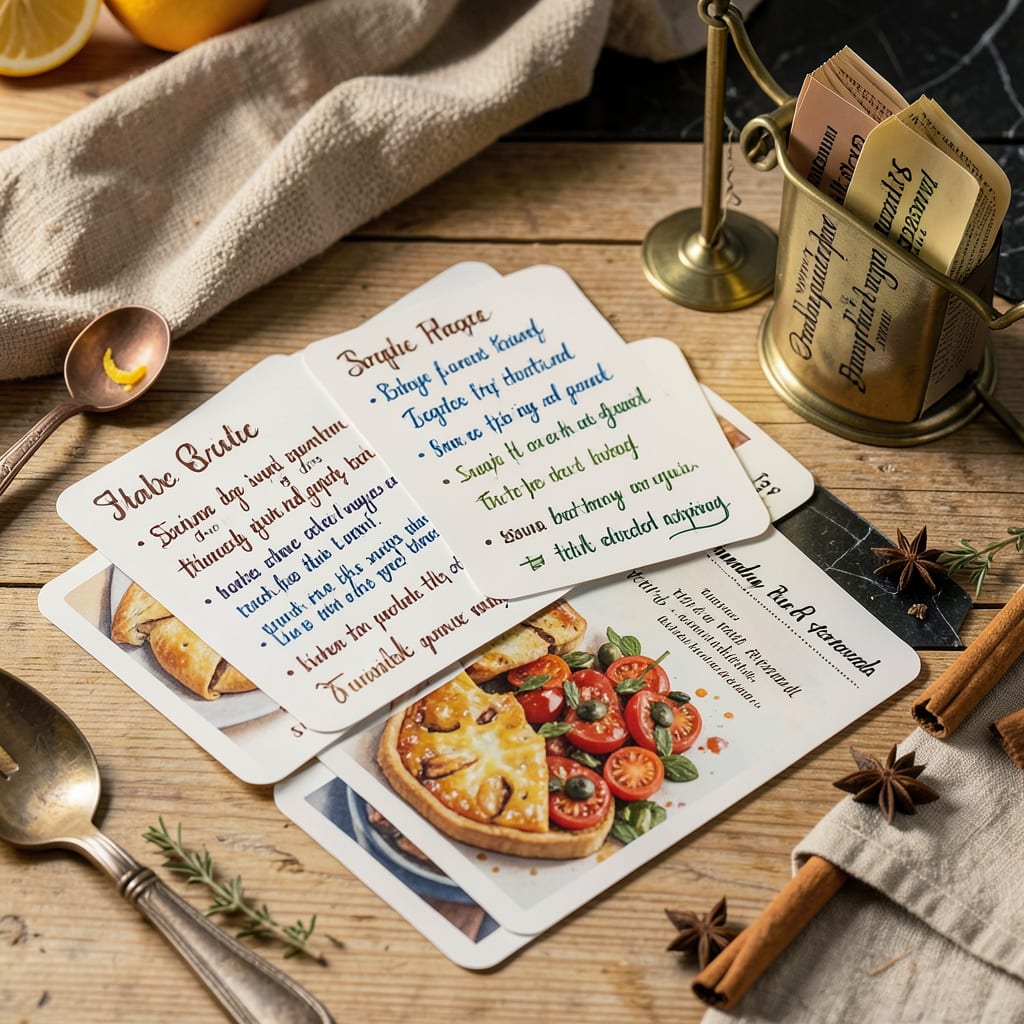
Laminated recipe cards protect your favorite recipes from spills, stains, and wear while keeping them easy to read. They’re ideal for busy kitchens, available in pre-made sets or as DIY projects with basic supplies like cardstock and laminating sheets.
I’ve found these to be game-changers for anyone who cooks regularly. The lamination creates a protective barrier that repels liquids, oils, and even flour dust—common culprits that ruin paper recipes. 🔥 Unlike plastic sleeves, laminated cards lie flat and don’t require constant wiping during messy prep work. Plus, you can customize them with family recipes, handwritten notes, or even photos for a personal touch.
What’s especially useful is how they handle real kitchen conditions. A quick wipe with a damp cloth removes splatters, and the sturdy material won’t tear or curl at the edges over time. I recommend using 3-5 mil laminating pouches for the best balance of durability and flexibility—thinner sheets may peel, while thicker ones can feel rigid.
💡 In This Article
- Why Laminated Recipe Cards Outperform Regular Paper
- DIY vs. Pre-Made Laminated Recipe Cards: What’s Best for You?
Why Laminated Recipe Cards Outperform Regular Paper
The secret lies in the lamination process, which creates a microscopic plastic barrier around the paper. Thermal lamination uses heat to melt adhesive between two plastic films, bonding them permanently at 250-300°F. This seals out moisture, oils, and even airborne grease particles that would normally soak into unprotected paper.
Cold lamination uses pressure-sensitive adhesive, which is gentler but equally effective for kitchen use.
What really sets laminated cards apart is their non-porous surface. Unlike regular paper that absorbs liquids in seconds, laminated cards cause spills to bead up like water on a waxed car.
I tested this by dripping olive oil, tomato sauce, and red wine onto both—regular paper became translucent and stained immediately, while laminated cards wiped clean with just a damp cloth. The difference is dramatic for recipes used near sinks or stovetops where splatters are inevitable.
Durability tests show laminated cards last 5-10 years in daily kitchen use, compared to just 6-12 months for unprotected recipes. The plastic coating also prevents edge curling from humidity and resists tearing when handled with wet or greasy hands.
Professional kitchens rely on this because it eliminates the need for constant recipe replacement—saving both time and money in the long run.
The material thickness matters too. 3 mil pouches work for occasional use, but 5-7 mil is ideal for heavy-duty kitchen environments. Thicker laminates can even withstand brief exposure to 200°F heat (like near a warm oven) without warping.
The matte finish options reduce glare under kitchen lighting, making them easier to read than glossy alternatives during food prep.
Here’s what most people don’t realize: the lamination also protects against UV fading. Recipes displayed near windows or under bright kitchen lights will yellow and become brittle over time—unless they’re laminated. The plastic filters harmful UV rays, preserving both the ink and paper for years.
This makes them perfect for family recipes you want to pass down through generations.
For those with allergies, laminated cards are a game-changer. They don’t harbor food particles or dust mites like paper can, and they’re easy to sanitize with alcohol wipes. I’ve seen professional bakeries use them to maintain food safety standards—something regular paper simply can’t match in a busy kitchen environment. ✨

- BBQ Sausage Recipe Oven: Smoky Depth Without the Grill - September 28, 2026
- BBQ Chicken Bowl Recipe Rice: Smoky Sweetness Over Fluffy Grains - September 28, 2026
- Beef Cutlet Recipe Ideas: Crispy Breaded Patties With Bold Seasonings - September 28, 2026