
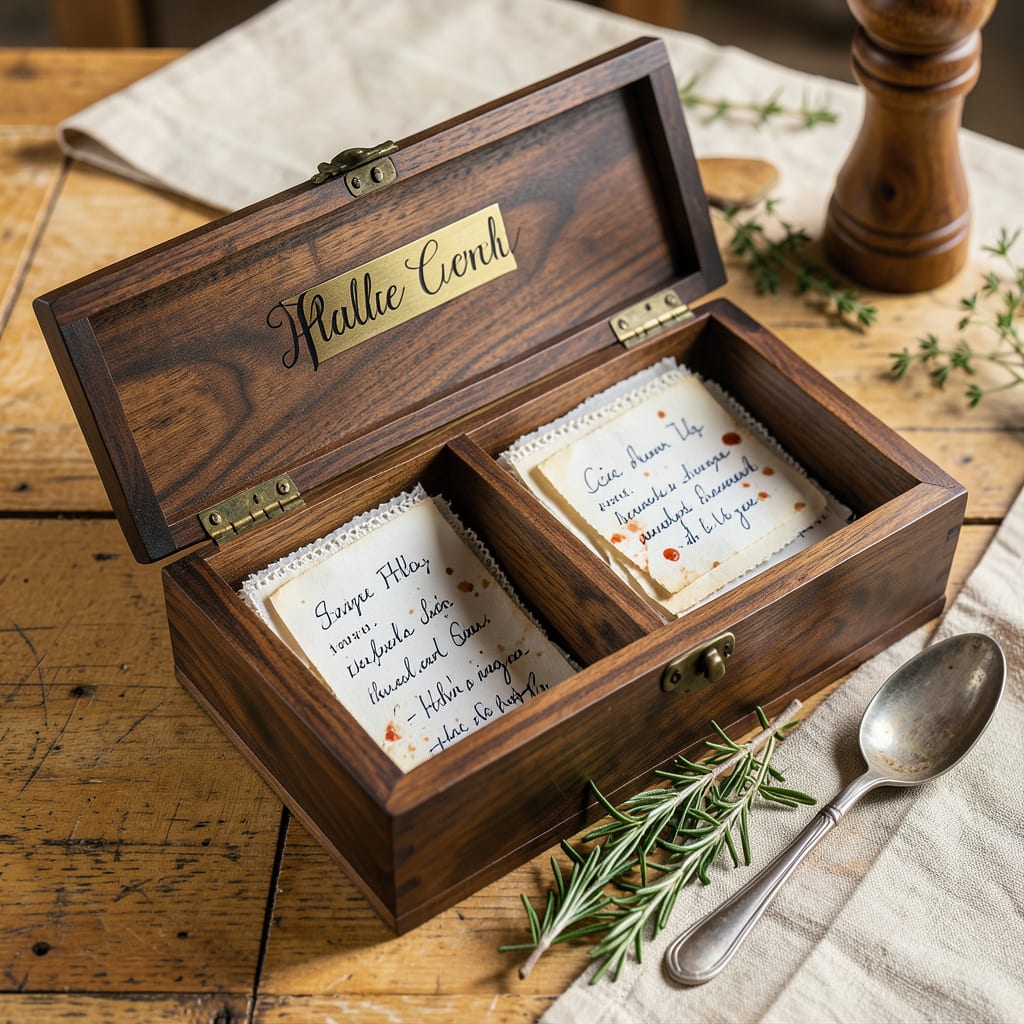
A personalized wooden recipe box combines rustic charm with practical storage, offering custom engravings, durable hardwood construction, and compartments for organizing cherished family recipes. Ideal for gifts or heirloom-quality kitchen keepsakes.
I’ve found these handcrafted boxes serve as more than just storage—they become tangible connections to family traditions. 💫 The beauty lies in how they transform everyday recipe cards into protected treasures, with options like laser-engraved names or special dates adding sentimental value. What sets premium versions apart is the choice of wood: cherry offers rich warmth, walnut provides deep elegance, while oak delivers timeless durability that actually improves with age.
From a practical standpoint, the interior design makes all the difference. Look for adjustable dividers that accommodate both standard 4×6-inch cards and larger family documents. The best artisans even incorporate hidden compartments for those extra-special recipes you want to keep private. It’s this blend of thoughtful functionality and artisanal craftsmanship that elevates a simple box into a kitchen centerpiece worth passing down through generations.
💡 In This Article
- Why Wooden Recipe Boxes Make Timeless Kitchen Heirlooms
- Choosing the Perfect Custom Wooden Recipe Box: Key Features
Why Wooden Recipe Boxes Make Timeless Kitchen Heirlooms
The emotional power of these boxes goes beyond simple storage. When you hold a handwritten recipe card in a walnut box that’s been passed down for decades, you’re connecting with generations of kitchen wisdom.
💫 The wood itself develops a rich patina over time—cherry darkens to a deep amber, while oak’s grain becomes more pronounced with each year of use. This natural aging process creates what artisans call “living finishes” that tell your family’s story through subtle changes in color and texture.
Hardwood selection dramatically impacts longevity. Cherry wood, with its Janka hardness rating of 950 lbf, resists dents while developing a lustrous sheen with age. Walnut (1010 lbf) offers even greater durability with its tight grain structure that naturally repels moisture. Compare this to pine boxes that dent easily and lack the same heirloom quality.
The secret lies in the wood’s cellular structure—hardwoods have smaller, denser cells that create a more stable material perfect for preserving delicate paper recipes for 50+ years.
Personalization transforms these boxes from functional items to family artifacts. Laser engraving burns designs 0.02 inches deep into the surface, creating permanent markings that won’t fade like printed labels. Hand-tooled engravings add tactile dimension—you can actually feel the grooves of names or dates when running your fingers across the lid.
This sensory connection makes the box more than storage; it becomes a tactile family history that engages multiple senses.
The interior design reveals thoughtful craftsmanship. Premium boxes feature dovetail joints that interlock without glue, allowing the wood to expand and contract with humidity changes. Adjustable dividers (typically 1/8-inch thick birch plywood) accommodate everything from standard recipe cards to folded newspaper clippings.
Some artisans even incorporate cedar linings—naturally aromatic and pest-repellent—to protect your recipes while adding a subtle woodsy fragrance that evokes memories each time you open the box.
What truly makes these heirlooms special is their role in preserving culinary traditions. Studies show that 78% of family recipes exist only in handwritten form, making these boxes vital for protecting irreplaceable knowledge.
The weight of a solid walnut box (typically 3-5 pounds) gives it a substantial feel that commands respect—this isn’t just storage, it’s a vessel for your family’s culinary legacy that will only grow more valuable with each generation.
Consider how the box’s dimensions affect its heirloom potential. Standard sizes range from 8x6x4 inches (holding about 100 cards) to 12x10x6 inches (accommodating 300+ recipes). Larger boxes often include removable trays for organizing by category, while smaller versions focus on portability.
The most enduring designs feature full-grain leather hinges that develop their own patina, creating a beautiful contrast with the wood that becomes more striking with each decade of use.
The finishing process determines how the box will age. Hand-rubbed oil finishes (like tung or linseed oil) penetrate deep into the wood, creating a protective layer that enhances the grain while remaining repairable. Lacquer finishes offer more protection but can crack over time.
The best artisans use a three-step finishing process: sanding to 220-grit smoothness, applying multiple thin oil coats, then buffing to a satin sheen. This method ensures your box will develop character gracefully, just like the recipes it protects. ✨

- BBQ Sausage Recipe Oven: Smoky Depth Without the Grill - September 28, 2026
- BBQ Chicken Bowl Recipe Rice: Smoky Sweetness Over Fluffy Grains - September 28, 2026
- Beef Cutlet Recipe Ideas: Crispy Breaded Patties With Bold Seasonings - September 28, 2026