
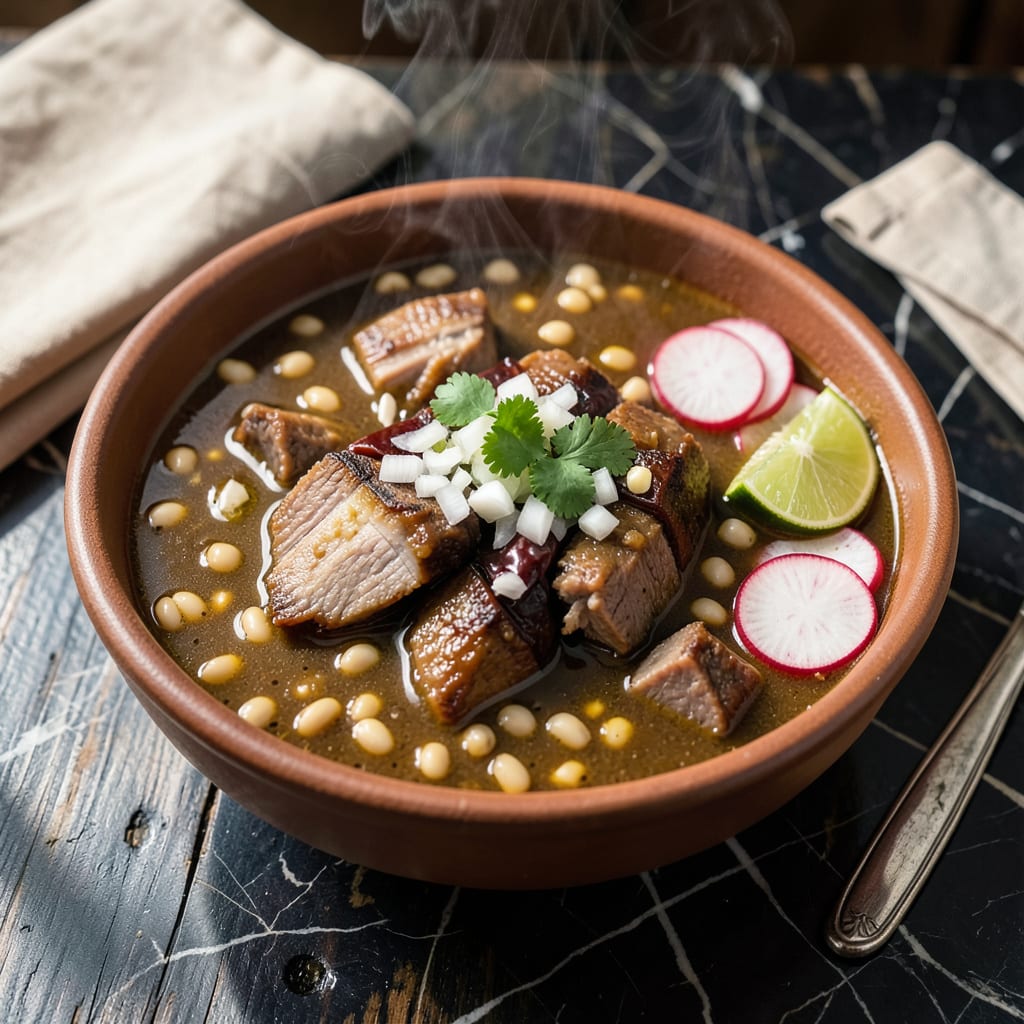
This traditional stew brings generations of Mexican culinary heritage to your kitchen. The authentic preparation honors the classic combination of tender pork, hominy, and a rich, spiced broth that defines Las Palmas-style pozole.
What makes this version special is its adherence to time-tested methods—slow-cooked pork shoulder, carefully prepared hominy, and a perfectly balanced chile sauce that delivers restaurant-quality results at home.
Ingredients for Las Palmas Pozole
Authentic ingredients deliver restaurant-quality pozole with generations of tradition in every bite.
| Ingredient | Amount | Notes |
|---|---|---|
| Pork Shoulder 🥩 | 3 lb | Boneless, cut into 1-inch cubes |
| Dried Hominy 🌽 | 2 cups | Rinsed and soaked overnight |
| Guajillo Chiles 🌶️ | 6 whole | Stems and seeds removed |
| Ancho Chiles 🌶️ | 3 whole | Stems and seeds removed |
| White Onion 🧅 | 1 whole | Large, quartered |
| Garlic Cloves 🧄 | 6 cloves | Peeled and halved |
| Ground Cumin 🌿 | 1 tbsp | Freshly toasted and ground |
| Dried Oregano 🍃 | 1 tbsp | Mexican oregano preferred |
| Bay Leaves 🌿 | 2 whole | Dried, for broth infusion |
| Chicken Broth 💧 | 8 cups | Low-sodium preferred for control |
| Salt 🧂 | 2 tbsp | Kosher or sea salt, to taste |
| Lime 🍋 | 1 whole | Juiced, for finishing |
| Radishes 🥬 | 1 cup | Thinly sliced, for garnish |
| Fresh Cilantro 🌿 | ½ cup | Chopped, for garnish |
| Dried Chile de Arbol 🌶️ | 2 whole | Optional, for extra heat |
The pork shoulder is non-negotiable for authentic texture. Look for well-marbled cuts at Mexican butchers or specialty markets—this fat renders down to create the rich broth. Dried hominy (maíz pozolero) is essential; Goya or Juanita’s brands are widely available. For the chiles, freshness matters most—buy from stores with high turnover, not dusty old packages.
No guajillo chiles? New Mexico chiles work in a pinch, though the flavor profile shifts slightly. Substitute chile powder at 1 tbsp per 2 dried chiles if absolutely necessary, but the depth won’t be the same. For the hominy, canned works (drained and rinsed) if you’re short on time, but the texture won’t be as firm. The broth can be vegetable-based for a lighter version, but chicken broth delivers the traditional richness.
Pork keeps in the fridge for 3-4 days or can be frozen for 3 months. Dried chiles last 6-12 months in a cool, dark place. The pozole itself tastes even better the next day—store in the fridge for up to 5 days or freeze for 3 months.
Why You’ll Love This Recipe
- Set It and Forget It: The pork shoulder simmers low and slow with the chiles until it falls apart—hardly any hands-on work.
- Smoky and Deep: Guajillo and ancho chiles blend into this rich, earthy broth that makes the hominy taste like it’s been partying all night.
- Feeds a Hungry Table: I make a huge pot for birthdays and Sunday suppers, and it’s always the first thing gone.
- Leftovers for Days: Honestly, it tastes even better the next day, and it freezes like a dream for lazy future me.
Step-by-Step Instructions for Hominy and Pork Stew
Authentic technique delivers rich, complex flavors in this traditional dish every time.
Step 1: Prepare theChile Base and Aromatics
Remove stems and seeds from the 6 whole Guajillo Chiles, 3 whole Ancho Chiles, and 2 whole Dried Chile de Arbol. Toast them in a dry skillet over medium heat for 1-2 minutes until fragrant but not burnt. This awakens their deep, smoky flavors.
Place the toasted chiles in a bowl and cover with 2 cups of hot water to soften for 15 minutes. Meanwhile, quarter the 1 whole White Onion and peel the 6 cloves Garlic Cloves, halving each clove. These will infuse the broth with aromatic depth.
Step 2: Build the Flavorful Broth
In a large pot, combine the 8 cups Chicken Broth, 1 whole White Onion, 6 cloves Garlic Cloves, 1 tbsp Ground Cumin, 1 tbsp Dried Oregano, and 2 whole Bay Leaves. Bring to a boil, then reduce to a simmer for 10 minutes to meld the flavors.
Drain the soaked chiles and add them to the broth. Blend the mixture until completely smooth, then strain through a fine-mesh sieve back into the pot. This creates a rich, velvety base with no gritty texture. Add the 2 tbsp Salt and adjust to taste.
Step 3: Cook the Pork and Hominy
Return the broth to a simmer and add the 3 lb Pork Shoulder, cut into 1-inch cubes. Maintain a gentle simmer for 1 hour, skimming any foam that rises to the surface. The pork should become tender and begin to absorb the chile flavors.
Add the 2 cups Dried Hominy (rinsed and soaked overnight) to the pot. Simmer for another 1.5 to 2 hours until the pork is fork-tender and the hominy has softened and plumped. Stir occasionally to prevent sticking and ensure even cooking.
Step 4: Finish and Serve with Traditional Garnishes
Once the pork shreds easily with a fork, remove the pot from heat. Discard the 2 whole Bay Leaves and adjust the seasoning with additional salt if needed. The stew should have a deep red color and a balanced, slightly smoky flavor.
Ladle the stew into bowls and finish with a squeeze of 1 whole Lime juice. Garnish generously with 1 cup Radishes (thinly sliced) and 0.5 cup Fresh Cilantro (chopped). The brightness of the lime and freshness of the garnishes cut through the richness of the stew perfectly.
Pro Tips For Making Las Palmas Pozole
- Toast the Chiles: Heat the guajillo and ancho chiles in a dry skillet for 30 seconds per side—just until fragrant, not burnt. I learned this the hard way after my first batch tasted bitter from over-toasting.
- Soak the Hominy: Cover dried hominy with water by 2 inches and soak overnight. Sounds tedious, but it cuts the cooking time in half and guarantees a tender bite.
- Skim the Foam: When the pork shoulder starts simmering, skim off the gray foam that rises to the top. My grandmother swore by this, and it keeps the broth clean and rich.
- Use Pork Fat: After browning the pork, leave about 2 tablespoons of fat in the pot to sauté the onions. It adds depth that oil just can’t match.
Common Mistakes When Making This Dish
Skipping the Soak
Never skip soaking the 2 cups dried hominy overnight. This step softens the kernels and reduces cooking time by 1-2 hours. I learned this the hard way when my hominy stayed tough despite 3 hours of simmering. 💡
Rushing the Chile Blend
Don’t blend the chiles without straining the sauce. Those tiny seeds and skins create a gritty texture that ruins the velvety broth. Use a fine-mesh sieve for the smoothest result. I use my All-Clad strainer for this.
Overcrowding the Pot
Use a large, heavy pot—at least 8 quarts—to give the pork and hominy room to cook evenly. Crowding leads to uneven cooking and can cause the pork to steam instead of simmer. A Dutch oven works perfectly for this.
Neglecting the Skim
Skim the foam that rises during the first hour of cooking. This foam contains impurities that can make your broth cloudy. A simple ladle or fine skimmer does the trick. I skim every 15-20 minutes initially.
Underseasoning the Broth
Taste and adjust the salt after adding the hominy. The dried corn absorbs liquid and can dilute the seasoning. Start with 2 tbsp salt, then add more to taste. The flavors should be bold, not flat.
Remember, the hominy will plump as it cooks, so check the seasoning again before serving. 🌟
Nutrition Facts
Frequently Asked Questions
What’s the best cut of pork for this?
Use boneless pork shoulder for the most tender results. The marbling melts during cooking, creating a rich broth. Avoid lean cuts like tenderloin, as they dry out in long simmers.
Can I use canned hominy instead?
Yes, canned hominy works in a pinch. Rinse and drain it first to remove excess sodium. The texture will be softer than dried, but it cuts cooking time by 1.5-2 hours.
How do I know when it’s done?
The pork should shred easily with a fork, and hominy should be plump yet firm. The broth will deepen to a rich red color. Total cook time is typically 2.5-3 hours.
Can I make this in a slow cooker?
Brown the pork first, then add all ingredients. Cook on low for 6-8 hours or high for 4-5 hours. Strain and blend the chile broth before adding it back.

- BBQ Sausage Recipe Oven: Smoky Depth Without the Grill - September 28, 2026
- BBQ Chicken Bowl Recipe Rice: Smoky Sweetness Over Fluffy Grains - September 28, 2026
- Beef Cutlet Recipe Ideas: Crispy Breaded Patties With Bold Seasonings - September 28, 2026