
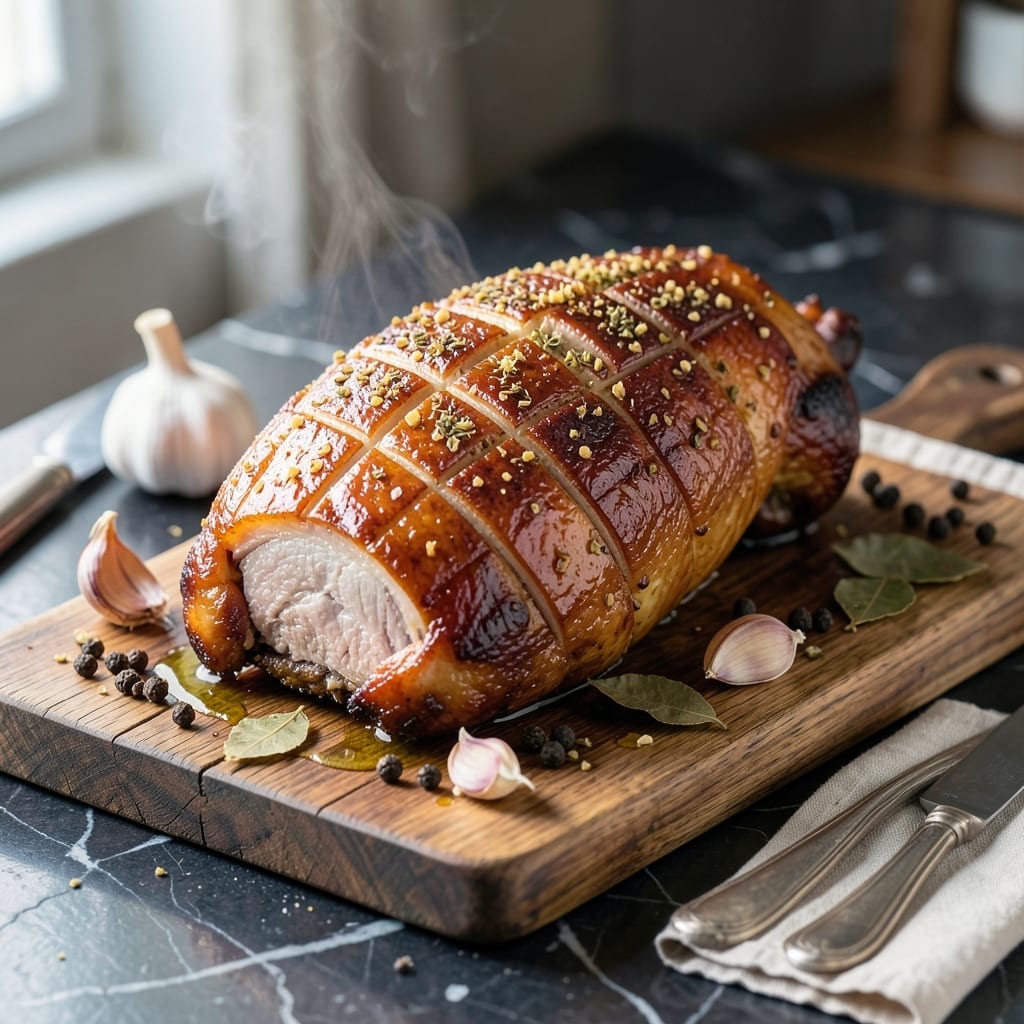
Achieving the crispy skin and tender meat of traditional lechon is possible right in your home oven. This method delivers the authentic experience without the need for a rotisserie.
I’ve refined this technique to ensure the pork roasts evenly, with the skin turning perfectly golden and shatteringly crispy. The marinade infuses every bite with rich, savory flavor.
The key is patience—slow-roasting at a steady temperature allows the fat to render while keeping the meat succulent. A final blast of high heat guarantees that signature crackling skin.
This dish brings the celebration-worthy taste of lechon to your kitchen, no special equipment required. Here’s how to make it happen.
Ingredients for Lechon Recipe Oven
Eleven ingredients transform pork shoulder into celebration-worthy lechon with golden crackling skin.
| Ingredient | Amount | Notes |
|---|---|---|
| Pork Shoulder 🐖 | 5 lb | Bone-in, skin-on preferred |
| Garlic Cloves 🧄 | 12 cloves | Peeled and crushed |
| Kosher Salt 🧂 | 2 tbsp | Diamond Crystal preferred |
| Black Peppercorns 🌶️ | 1 tbsp | Freshly ground |
| Dried Bay Leaves 🍃 | 4 pieces | Whole, not crushed |
| Dried Oregano 🌿 | 1 tbsp | Mediterranean variety |
| Dried Thyme 🌿 | 1 tbsp | Rubbed between fingers |
| White Vinegar 💧 | ½ cup | For marinade acidity |
| Soy Sauce 🫒 | ½ cup | Low-sodium preferred |
| Brown Sugar 🍚 | ¼ cup | Light or dark variety |
| Whole Peppercorns 🌶️ | 1 tsp | For marinade depth |
| Water 💧 | 2 cups | For braising liquid |
| Lemon Juice 🍋 | 2 tbsp | Freshly squeezed |
The pork shoulder is non-negotiable—bone-in, skin-on gives the authentic texture and crisp. Source from a reputable butcher or specialty meat counter at Whole Foods or Local Asian markets often carry the right cut. The skin should be intact and unblemished. Ask for the shoulder with the fat cap still attached; this renders down beautifully during the long roast.
No soy sauce? Coconut aminos work in a pinch (use the same amount). Fresh garlic is essential—pre-minced lacks the punch. If you can’t find whole peppercorns, coarsely ground black pepper is acceptable. The vinegar can be apple cider for a fruitier note. Brown sugar substitutes like coconut sugar work, but avoid honey to keep the flavor profile clean and savory.
The pork can marinate overnight for deeper flavor penetration. Store the raw pork in the fridge for up to 24 hours before cooking. Leftovers keep well in the fridge for 4-5 days and reheat beautifully in the oven, covered, at 325°F.
Why You’ll Love This Recipe
- Set It and Forget: Honestly, just rub the pork shoulder with garlic, salt, and bay leaves, pop it in the oven, and let the magic happen—no babysitting required.
- Garlic Lovers’ Dream: The slow-roasted garlic cloves turn sweet and mellow, infusing every bite with that deep, savory punch I crave.
- Feeds a Party: I’ve served this at birthdays and Sunday dinners alike—it’s the kind of dish that disappears fast and still tastes amazing the next day in tacos or sandwiches.
- Budget-Friendly Centerpiece: Pork shoulder is affordable, and one roast stretches to feed a crowd. I’ll be real: it’s my go-to when I want to impress without breaking the bank.
Step-by-Step Instructions for Oven Lechon
This method delivers perfectly crispy skin and tender meat without specialized equipment.
Step 1: Prepare and Marinate the Pork Shoulder
Pat the 5 lb Pork Shoulder dry with paper towels, ensuring the skin is completely free of moisture. Using a sharp knife, score the skin in a crosshatch pattern, cutting just through the skin and fat without piercing the meat beneath. This allows the fat to render out while keeping the meat juicy.
Rub the pork shoulder all over with the 2 tbsp Kosher Salt. In a mortar, crush the 12 cloves Garlic Cloves, 1 tbsp Black Peppercorns, 4 pieces Dried Bay Leaves, 1 tbsp Dried Oregano, 1 tbsp Dried Thyme, and 1 tsp Whole Peppercorns into a coarse paste. Rub this mixture thoroughly over the meat and into the scored skin.
In a bowl, whisk together the 0.5 cup White Vinegar, 0.5 cup Soy Sauce, 0.25 cup Brown Sugar, 2 cups Water, and 2 tbsp Lemon Juice until the sugar dissolves. Pour this marinade over the pork, ensuring it is fully coated. Refrigerate uncovered for at least 4 hours, or preferably overnight, to allow the flavors to penetrate deeply.
Step 2: Preheat and Position for Roasting
Remove the pork from the refrigerator and let it sit at room temperature for 1 hour to take the chill off. During this time, preheat your oven to 375°F. Position the rack in the lower third of the oven to ensure the skin gets maximum direct heat for crisping.
Place a wire rack inside a roasting pan. This setup allows air to circulate around the pork, promoting even cooking and crisping. Transfer the pork shoulder to the rack, skin-side up. Pour 1 cup of the marinade into the bottom of the pan to create a braising liquid—this will keep the meat moist during the long roasting process.
Step 3: Roast Low and Slow for Tenderness
Roast the pork in the preheated oven for 2 hours. After this initial period, increase the oven temperature to 425°F and continue roasting for another 1 to 1.5 hours, basting every 30 minutes with the pan juices. This dual-temperature method renders the fat and achieves crispy skin while keeping the meat succulent.
You’ll know it’s nearing completion when the skin turns a deep golden brown and becomes blistery. The internal temperature should reach 195°F in the thickest part of the meat, ensuring it is fall-apart tender. If the skin isn’t crisping sufficiently, broil for the final 5-10 minutes, watching closely to avoid burning.
Step 4: Rest and Serve
Once fully cooked, transfer the pork to a cutting board and tent loosely with foil. Allow it to rest for 20-30 minutes. This resting period is crucial—it lets the juices redistribute, ensuring every bite is moist and flavorful rather than dry.
Carve the pork by first separating the crispy skin in large pieces to serve as a garnish. Then, shred or slice the meat according to preference. Serve with the pan juices strained and reduced slightly on the stovetop for a rich, savory sauce. The skin should be shatteringly crisp, while the meat remains juicy and infused with the aromatic marinade.
Pro Tips For Making Lechon Recipe Oven
- Preheat the Oven: Start with a high temperature of 450°F for the first 30 minutes to get that crispy skin, then drop it to 325°F for the remaining cook time—I learned this the hard way after ending up with tough skin more than once.
- Score the Skin: Cut 1/2-inch deep slits in a diamond pattern across the pork shoulder skin so the fat renders out and the garlic/salt mix penetrates deeper.
- Skip the Overcrowding: Use a roasting rack in the pan so air circulates all around the pork—without it, the bottom just steams and you lose that even crispiness.
- Rest Before Carving: Let the lechon rest for at least 20 minutes under foil after roasting, or all those juices you worked for will end up on the cutting board instead of in the meat.
Dietary Considerations for These Flavors
Gluten-Free Friendly
This dish is naturally gluten-free as long as you use tamari or certified gluten-free soy sauce. I always check labels—some brands like San-J offer reliable gluten-free options. The rest of the ingredients are inherently safe for gluten-sensitive diets. 💪
Sodium Considerations
The recipe uses 2 tbsp kosher salt and ½ cup soy sauce, which can be high in sodium. I recommend using low-sodium soy sauce and reducing the added salt by ½ tbsp if you’re watching your intake. The marinade still penetrates deeply with these adjustments.
Low-Carb Adaptation
For a lower-carb version, omit the ¼ cup brown sugar from the marinade. The pork will still develop beautiful color and flavor from the other ingredients. I’ve made it this way many times—the crispy skin remains the star of the dish.
Allergen Alert
The primary allergen here is pork, which is obvious. However, those with soy allergies should substitute coconut aminos for soy sauce. Also, ensure your spices are free from cross-contamination if you have severe sensitivities.
Dairy-Free Naturally
This creation contains no dairy ingredients at all. The marinade and roasting process rely solely on pork, spices, vinegar, and soy sauce. It’s a great option for anyone avoiding dairy or cooking for lactose-intolerant guests. ✨
Paleo Modifications
To make this paleo-friendly, replace soy sauce with coconut aminos and swap brown sugar for coconut sugar. These changes maintain the dish’s authentic flavor while aligning with paleo guidelines. The crispy skin stays just as irresistible.
Nutrition Facts
Frequently Asked Questions
What’s the best oven temperature for crispy skin?
Start at 375°F for 2 hours, then increase to 425°F for the final hour. Finish with 5-10 minutes under the broiler for maximum crispiness.
Can I use a different cut of pork?
Pork shoulder is ideal for its fat content and texture. Pork belly can work but may be too fatty. Avoid lean cuts like tenderloin—they won’t produce the same juicy result.
How do I prevent dry meat?
Don’t skip the marinade or resting period. Roast until the internal temperature reaches 195°F, and always let it rest for 20-30 minutes before carving.
Can I make this ahead of time?
Marinate the pork overnight for deeper flavor. After cooking, store leftovers in the fridge for up to 4-5 days. Reheat in the oven at 325°F to maintain texture.

- Beefaroni Recipe With Tomato Soup: One-Pot Nostalgic Comfort - September 28, 2026
- Bread Recipe KitchenAid Mixer: Foolproof Loaf With Perfect Rise - September 28, 2026
- BBQ Oysters Recipe Grill: Smoky Garlic Butter Bliss - September 28, 2026