
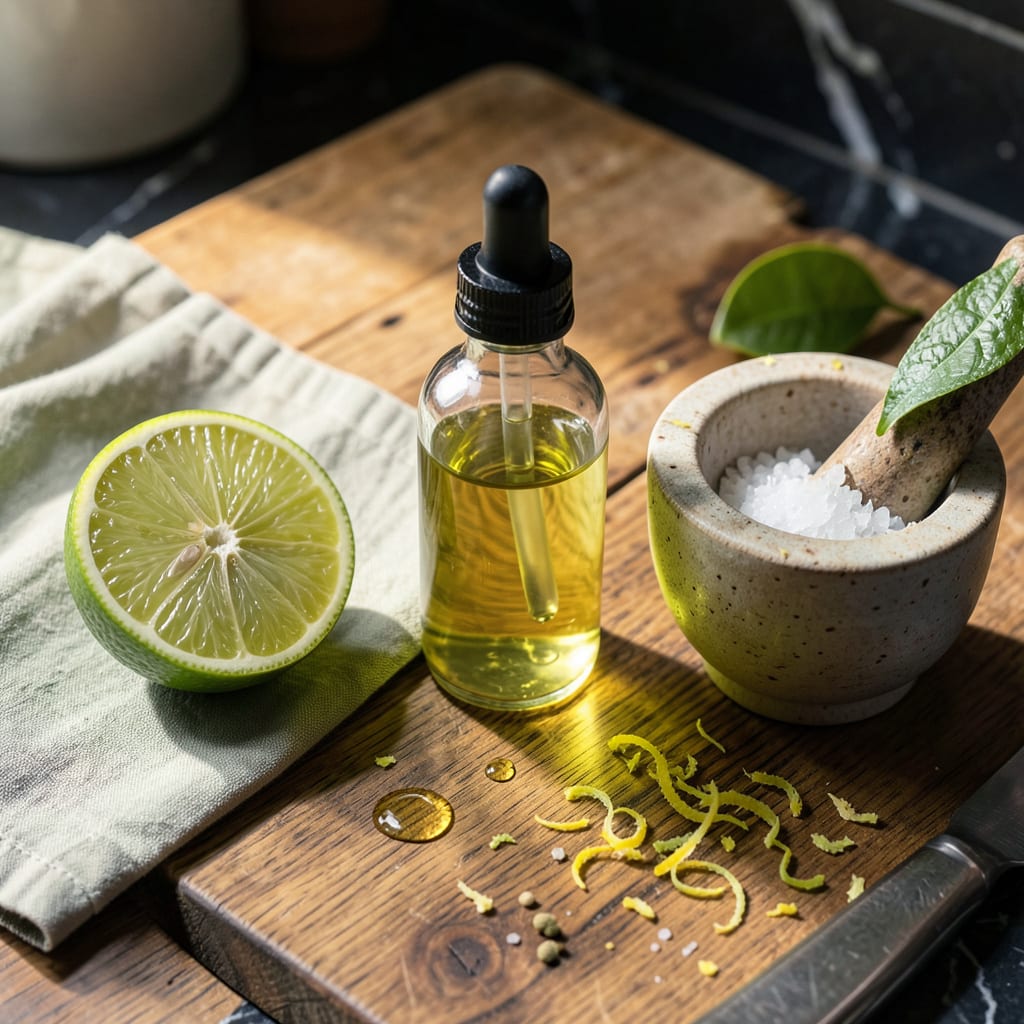
Make lime extract by steeping lime zest in high-proof alcohol (like vodka) for 4-6 weeks in a cool, dark place. Strain and store in an airtight container for a concentrated citrus flavor perfect for baking and cocktails.
This simple infusion method unlocks the bright, zesty essence of limes by dissolving their aromatic oils into alcohol. 🔥 I prefer using 80-proof vodka because it’s neutral enough to preserve the pure lime character without overpowering it. The waiting period is crucial—it allows the alcohol to fully extract the volatile compounds that give limes their signature tangy, floral notes. What’s fascinating is how the flavor evolves: early on it’s sharp and acidic, but by week 6 it mellows into a complex, well-rounded citrus concentrate.
Think of this as your secret weapon for recipes where you want intense lime flavor without added liquid. ✨ It’s particularly game-changing in buttercreams, where fresh juice would throw off the texture, or in cocktails where you need consistent citrus notes without dilution. The concentrated nature means a little goes a long way—typically 1/2 teaspoon replaces 1 tablespoon of fresh zest.
💡 In This Article
- How Lime Extract Captures Intense Citrus Flavor
- Best Uses for Homemade Lime Extract in Recipes
How Lime Extract Captures Intense Citrus Flavor
The magic happens at the molecular level when alcohol meets lime zest. 🔥 Lime peel contains tiny sacs filled with essential oils—primarily limonene, citral, and linalool—that give limes their bright, tangy aroma.
When you submerge zest in high-proof alcohol (I recommend 80-100 proof vodka), the alcohol acts as a solvent, breaking down cell walls and dissolving these oils. This process is called solvent extraction, and it’s far more efficient than water-based methods because alcohol can penetrate plant materials more effectively.
Freshness dramatically impacts the final product. Limes lose about 30% of their essential oils within a week of picking, so always use zest from firm, glossy-skinned limes. The outer green layer (flavedo) contains the most oils, while the white pith underneath is bitter—this is why you only want the colored portion.
Time transforms the flavor too: after 2 weeks, you’ll get bright citrus notes; by 6 weeks, the extract develops deeper, more complex floral undertones as secondary compounds break down.
Temperature plays a crucial role in extraction quality. Cold infusion (room temperature or below) preserves delicate top notes that would evaporate with heat. This is why I avoid speeding up the process with warmth—heat can drive off volatile compounds like citral, leaving you with a flat, one-dimensional flavor.
The ideal storage temperature is 55-65°F, which is why a cool pantry works better than the refrigerator (too cold can slow extraction).
What you’re left with is a concentrated liquid where 1 teaspoon contains the aromatic equivalent of 2-3 whole limes. The alcohol not only extracts but also preserves these compounds, giving your extract a shelf life of 2-3 years when stored properly.
This is why professional bakers and mixologists prefer extracts over fresh zest—they deliver consistent, potent flavor without moisture content that could throw off recipes.
Compare this to commercial extracts, which often use steam distillation. While faster, this method applies heat that can alter the natural flavor profile. Your homemade version will have brighter, truer lime character because the cold alcohol extraction maintains the original balance of compounds.
The difference is noticeable in delicate applications like meringues or white cake batters, where the extract’s purity really shines.
The alcohol base also creates versatility. Unlike water-based infusions that can introduce bacteria, the high-proof environment makes this extract safe for no-bake applications. I’ve successfully used it in everything from homemade marshmallows to ceviche marinades, where the concentrated flavor adds depth without extra liquid.
The key is remembering that extracts are 3-4 times more potent than fresh zest, so you’ll need to adjust your measurements accordingly.

- BBQ Sausage Recipe Oven: Smoky Depth Without the Grill - September 28, 2026
- BBQ Chicken Bowl Recipe Rice: Smoky Sweetness Over Fluffy Grains - September 28, 2026
- Beef Cutlet Recipe Ideas: Crispy Breaded Patties With Bold Seasonings - September 28, 2026