
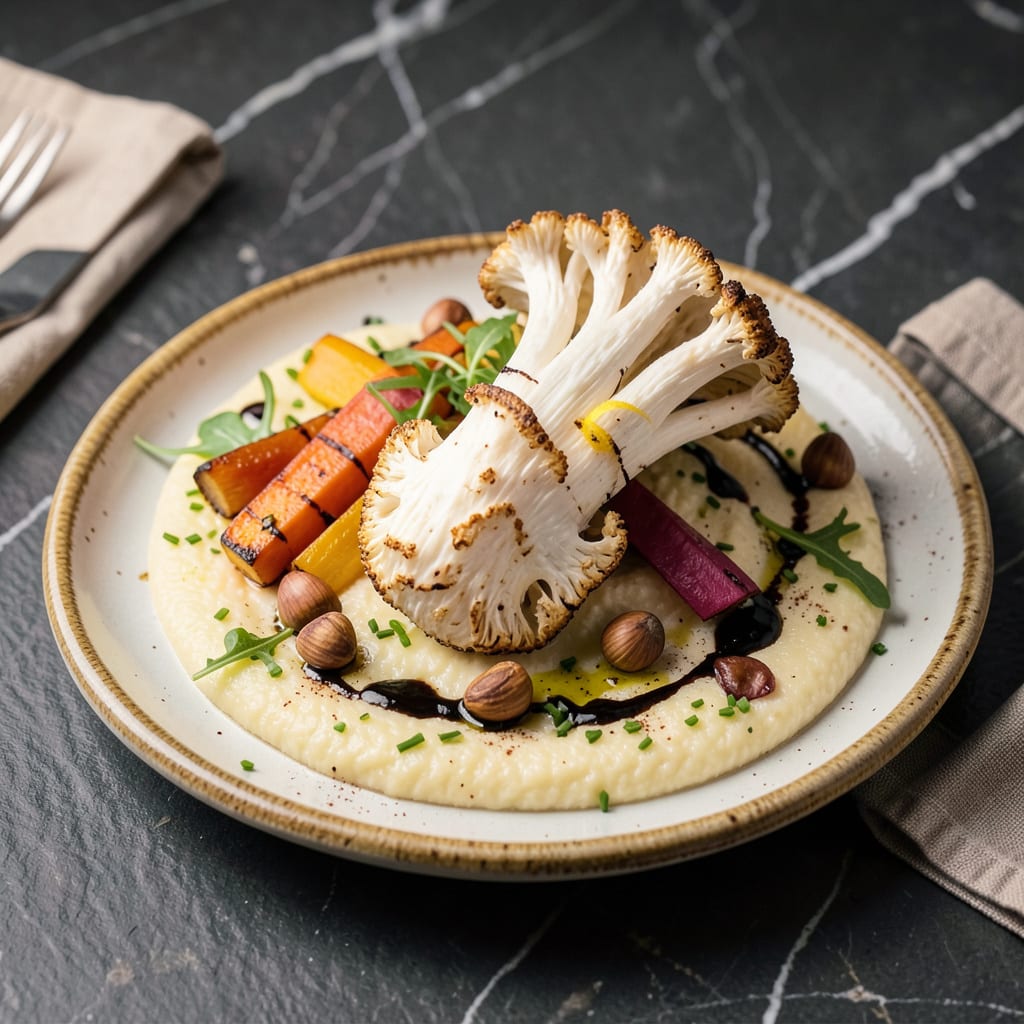
Lion’s mane mushrooms star in this dish, featuring a crispy pan-seared exterior with a tender, seafood-like texture. Garlic, butter, and fresh herbs enhance its delicate, slightly sweet flavor, often paired with pasta or rice for a satisfying vegetarian meal.
This recipe transforms lion’s mane into a showstopper by leveraging its natural umami depth and fibrous structure. 🔥 The key lies in high-heat searing to develop a golden crust while preserving the mushroom’s delicate interior—think scallops or crab meat in texture. I’ve found that a splash of white wine or lemon juice during deglazing elevates the flavor profile, cutting through the richness of butter and garlic. What’s fascinating is how this mushroom absorbs flavors while maintaining its own distinct character, making it versatile for both simple weeknight meals and elegant dinner parties.
💡 In This Article
- Why Lion’s Mane Mushroom Mimics Seafood Flavor
- Key Techniques for Perfect Lion’s Mane Recipes
Why Lion’s Mane Mushroom Mimics Seafood Flavor
The secret lies in its unique chemical composition. Lion’s mane contains hericenones and erinacines—compounds that contribute to its delicate, slightly sweet flavor profile. When cooked, these compounds interact with heat to produce volatile aromatics similar to those found in shellfish.
The mushroom’s fibrous structure, made up of long, parallel hyphae, breaks down during cooking to create a texture remarkably close to crab or lobster meat.
What’s fascinating is how the cooking process transforms its texture. At 375°F, the mushroom’s cell walls collapse just enough to create a tender interior while allowing the exterior to develop a crispy crust. This dual-texture effect mimics perfectly seared scallops.
The natural umami compounds (like glutamates) in lion’s mane are about 3-5 times more concentrated than in button mushrooms, giving it that rich, savory depth that pairs so well with butter and garlic. 🔥
The flavor transformation happens through Maillard reactions during searing. When the mushroom’s natural sugars and amino acids react at high heat, they create hundreds of new flavor compounds. This is why a properly seared lion’s mane develops complex notes of caramelization alongside its inherent seafood-like qualities.
The addition of acidic elements like lemon juice or white wine during cooking helps balance these rich flavors while enhancing the mushroom’s natural sweetness.
Here’s what most home cooks miss: the mushroom’s ability to absorb flavors while maintaining its own character. Unlike other mushrooms that can become overwhelmed by seasonings, lion’s mane has a porous yet dense structure that allows it to marry beautifully with bold flavors.
A 1:2 ratio of butter to olive oil in the pan creates the ideal medium for both flavor absorption and crispy texture development. ✨
The seafood comparison isn’t just about taste—it’s about mouthfeel too. When sliced into 1-inch steaks and cooked properly, lion’s mane develops the same flaky yet cohesive texture as perfectly cooked fish.
The strands of hyphae separate just enough to mimic the pull-apart quality of crab meat, while the exterior develops that coveted crispness that makes seafood dishes so satisfying.
Pro tip: For maximum seafood-like quality, pat the mushroom slices completely dry before cooking. Any residual moisture creates steam instead of searing, preventing that crucial crust formation.
I’ve found that resting the cooked slices for 2-3 minutes before serving allows the fibers to relax and reabsorb some juices, making each bite even more reminiscent of buttery lobster tail. 💫

- BBQ Sausage Recipe Oven: Smoky Depth Without the Grill - September 28, 2026
- BBQ Chicken Bowl Recipe Rice: Smoky Sweetness Over Fluffy Grains - September 28, 2026
- Beef Cutlet Recipe Ideas: Crispy Breaded Patties With Bold Seasonings - September 28, 2026