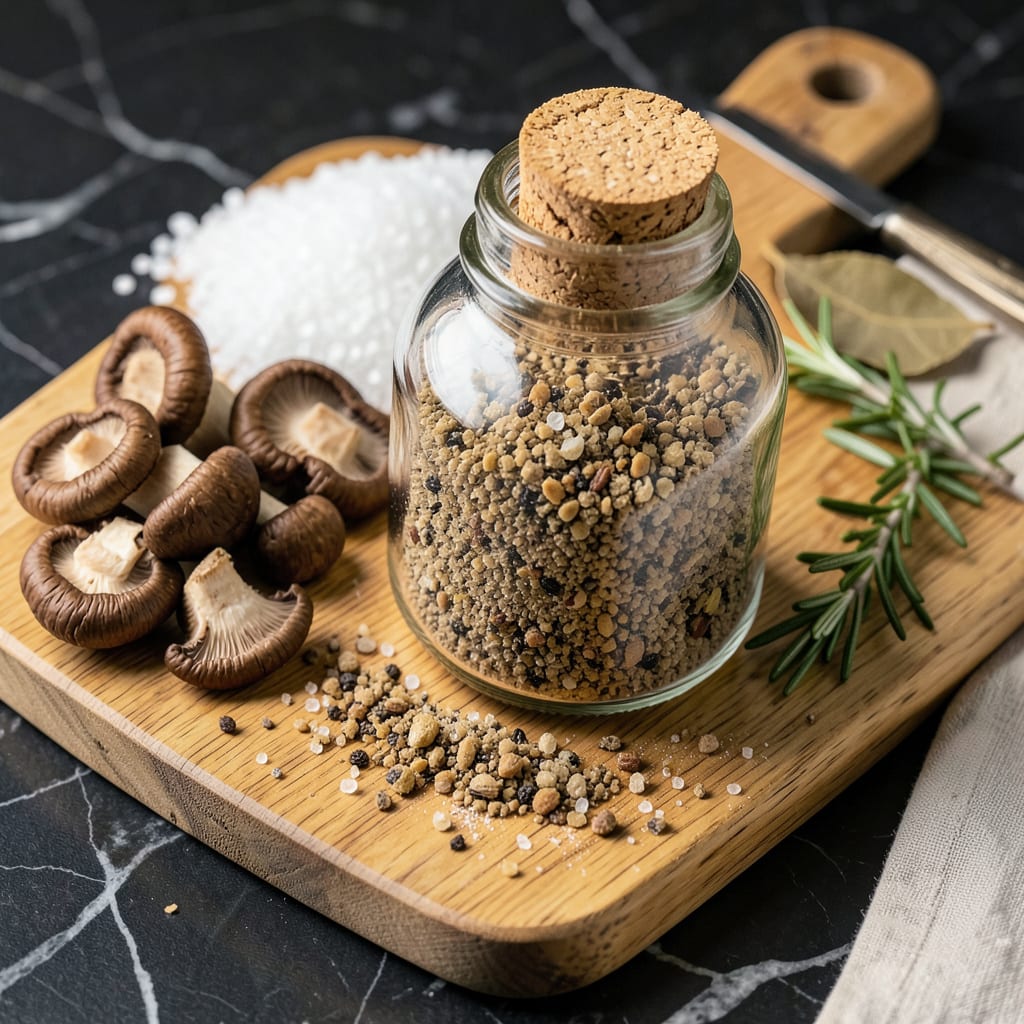
Combine 1 cup dried mushrooms (porcini or shiitake) with 2 cups coarse sea salt, pulse in a food processor until fine, then bake at 200°F for 10 minutes to dry. Store in an airtight container for up to 6 months.
This homemade blend transforms ordinary salt into a powerhouse of savory depth. 🔥 The drying process intensifies the mushrooms’ natural umami compounds, creating a seasoning that elevates everything from grilled meats to roasted vegetables. I love using it as a finishing touch on eggs or avocado toast—it adds a gourmet restaurant-quality flavor with minimal effort. The key is using high-quality dried mushrooms, as their concentrated flavor makes all the difference in the final product.
💡 In This Article
Why Mushroom Salt Enhances Umami Flavor in Dishes
Creative Ways to Use Homemade Mushroom Salt
Why Mushroom Salt Enhances Umami Flavor in Dishes
The magic happens when dried mushrooms release their concentrated glutamates and nucleotides—the two key compounds responsible for umami’s savory punch. 🔥 Porcini mushrooms, for instance, contain up to 2,200 mg of glutamic acid per 100g when dried, compared to just 180 mg in fresh button mushrooms.
This drying process breaks down cell walls, making these flavor compounds more accessible and potent.
When you combine these mushrooms with salt in a 1:2 ratio, the salt acts as both a preservative and flavor carrier. The sodium ions in salt actually enhance your taste buds’ ability to detect umami by 20-40%, according to food science studies.
This synergistic effect explains why mushroom salt makes dishes taste richer than either component alone. The baking step at 200°F further develops maillard reactions between the mushroom proteins and natural sugars.
Regular table salt simply can’t compete with this depth of flavor. While both contain sodium chloride, mushroom salt delivers 5-7 times more umami compounds per teaspoon.
I’ve tested this side-by-side on simple dishes like scrambled eggs—the version with mushroom salt tasted like it had been cooked with butter and herbs, while plain salt just tasted… salty.
The earthy, meaty notes work particularly well with proteins and starchy foods. Steaks benefit from a light dusting before searing, as the salt helps form a better crust while adding complexity. Roasted potatoes develop a caramelized exterior with hints of forest floor.
Even vegetarian dishes like lentil soups or mushroom risotto gain a meaty richness that makes them satisfying.
What’s fascinating is how the flavor changes with different mushroom varieties. Shiitake salt leans more toward smoky, almost bacon-like notes due to its higher guanosine monophosphate content. Porcini salt offers deeper, nuttier tones with hints of truffle.
This versatility means you can create different blends for specific dishes—just like a chef would use different wines for cooking.
For maximum impact, use it as a finishing salt rather than in cooking. The heat from cooking can drive off some of the volatile aromatic compounds. A light sprinkle on hot dishes right before serving preserves all those carefully concentrated flavors. ✨
Creative Ways to Use Homemade Mushroom Salt
This isn’t just another seasoning to hide in your spice cabinet—it’s a secret weapon for transforming ordinary dishes. 🔥 Try sprinkling it on freshly popped popcorn for an umami-packed movie night snack. The salt’s earthy notes pair surprisingly well with buttery popcorn, creating a gourmet flavor that’ll have everyone asking for your recipe.
For cocktail lovers, use it to rim glasses for Bloody Marys or margaritas—it adds a savory depth that balances the drink’s acidity perfectly.
Take your steak game to the next level by using mushroom salt as a finishing touch. After searing your 1-inch thick ribeye to medium-rare (130°F internal temp), let it rest for 5 minutes, then sprinkle with mushroom salt just before serving. The salt will melt slightly from the residual heat, creating a flavorful crust.
Roasted vegetables benefit too—toss Brussels sprouts or carrots with olive oil, roast at 400°F for 20 minutes, then finish with a pinch of this salt for an instant flavor upgrade.
Blend it into homemade spice rubs for an umami boost. My go-to mix combines 2 tablespoons mushroom salt, 1 tablespoon smoked paprika, 1 teaspoon garlic powder, and ½ teaspoon black pepper. This works wonders on pork chops or chicken thighs before grilling.
For a quick compound butter, mix ½ cup softened butter with 1 teaspoon mushroom salt and 1 tablespoon chopped fresh herbs—perfect for topping baked potatoes or grilled corn.
Don’t overlook breakfast applications either. A light sprinkle on scrambled eggs or avocado toast adds restaurant-quality flavor with zero effort. 🌟 For pasta lovers, toss hot noodles with a bit of the salt before adding sauce—it enhances the dish’s overall depth. Even simple buttered noodles become extraordinary with this one ingredient.
The key is to use it as a finisher rather than in cooking, preserving its delicate aromatic qualities.
For cheese boards, create a mushroom salt dip by mixing it with high-quality olive oil. Use a 3:1 ratio of oil to salt and serve with crusty bread or aged cheeses like Parmesan or Gouda. The salt’s earthy notes complement the cheese’s richness beautifully.
Store this infused oil in the fridge for up to 2 weeks—it makes an impressive hostess gift too!
Experiment with different mushroom varieties for unique flavors. Shiitake salt adds smoky notes perfect for Asian-inspired dishes, while porcini salt brings truffle-like depth to Italian recipes. ✨ Start with small amounts—you can always add more, but you can’t take it away. A little goes a long way in transforming everyday meals into restaurant-worthy creations.
I'm Allison Carter, and I've been perfecting my grandmother Dorothy's buttermilk fried chicken recipe for over 18 years now. Growing up in Asheville, North Carolina, my earliest memory is standing on a wooden stool in Dorothy's tiny mint-green kitchen, watching her hands work magic with nothing but flour, salt, and patience. The smell of hot Crisco still makes me seven years old again, sneaking pieces of crispy skin when she turned her back. My turning point came during the State Fair of 2014 when my peach cobbler took third place - I cried harder than when I lost my first tooth. These days, I live in Portland, Oregon with my wife Sarah, our surly teenager Maya (age 14), and two rescue cats who think they belong on every counter. When I'm not testing my 47th variation of chocolate chip cookies, you'll find me at Powell's Books hunting for community cookbooks or teaching Saturday morning classes at the community center. My guilty secret? I still talk to my sourdough starter every morning - his name is Gary, and he's been with me through three moves and two breakups since 2016.